Artwork
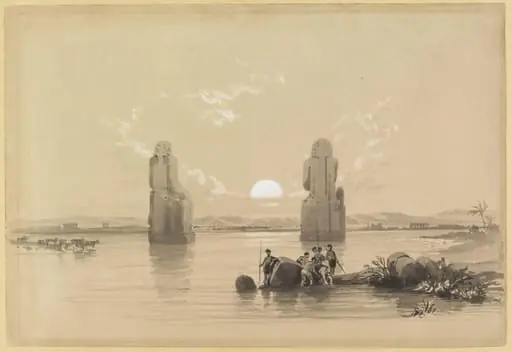
Egypt and Nubia, Volume II: Statues of Memnon at Thebes, during the Inundation
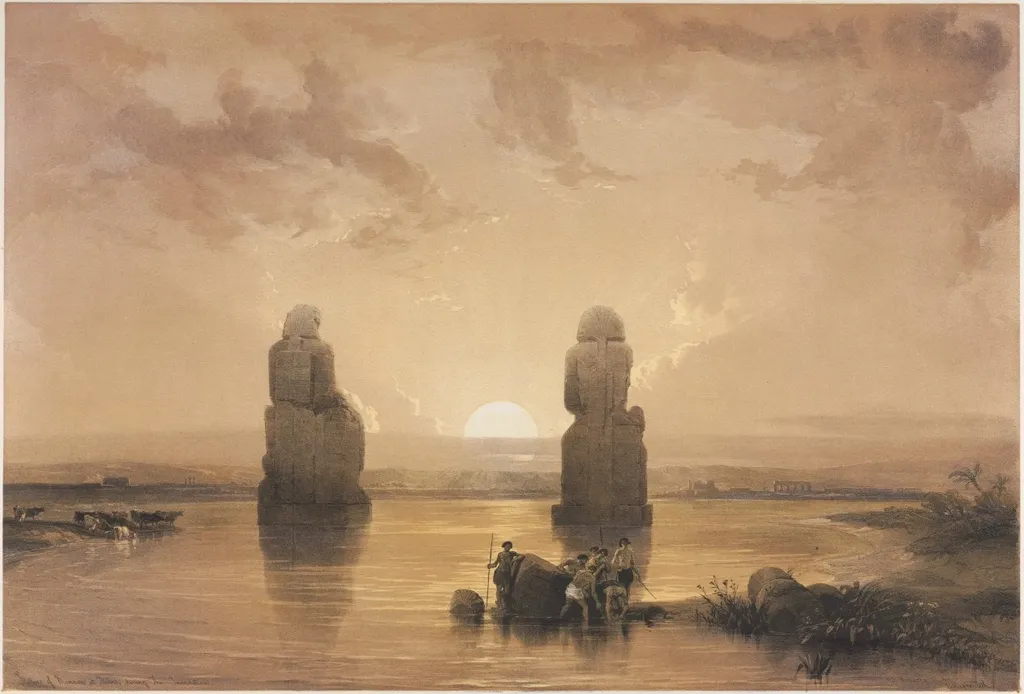
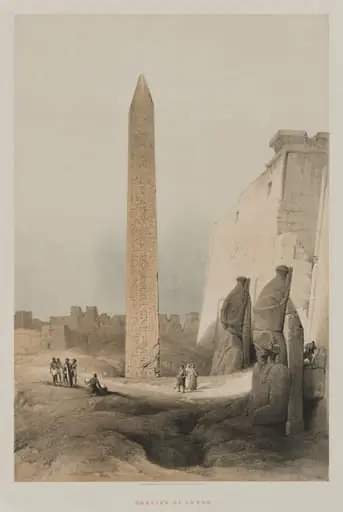
Egypt and Nubia, Volume II: Statues of Memnon at Thebes, during the Inundation is a print by the Romanticist artist Louis Haghe. It dates from 1848 and is held in the collection of the Cleveland Museum of Art.
About this work
Overview
The technique, refined for multi-tonal reproduction, allowed for nuanced gradations of light and shadow.
This color lithograph is part of a mid-19th-century series documenting Egyptian monuments, produced from watercolor sketches by David Roberts and translated into print by Louis Haghe. The technique, refined for multi-tonal reproduction, allowed for nuanced gradations of light and shadow. The print captures a moment of quiet immersion: the Colossi of Memnon, partially submerged in the Nile’s seasonal flood, appear monumental yet softened by water and time.
Subject & Meaning
The two colossal statues, traditionally misidentified as Memnon, stand at the entrance to the mortuary temple of Amenhotep III near Thebes. Their presence in floodwater reflects the annual inundation, a vital natural cycle in ancient Egypt. The image conveys both the enduring scale of pharaonic architecture and its vulnerability to nature’s rhythms, offering viewers a contemplative encounter with antiquity rather than a triumphant display.
Technique & Style
Haghe employed color lithography to translate Roberts’s watercolors with remarkable fidelity. Layers of transparent ink were carefully registered to achieve subtle tonal transitions, particularly in the water’s reflective surface and the statues’ weathered stone. The smooth blending of hues mimics the softness of natural light, enhancing the scene’s atmospheric realism and distinguishing it from earlier, more rigid topographical prints.
History & Provenance
Created in 1846, the print was published as part of a multi-volume folio documenting Roberts’s 1838–39 journey through Egypt and Nubia. Haghe, a Belgian-born artist based in London, was commissioned to render Roberts’s sketches into lithographs. The series was among the first to present detailed, accurate depictions of the region’s monuments to a European audience, circulating widely through subscription.
Context
In the 1840s, European fascination with Egypt intensified following Napoleon’s campaigns and the decipherment of hieroglyphs. Yet few had seen the region firsthand. This print, along with others in the series, fulfilled a growing demand for visual documentation of the ancient Near East, blending scientific observation with aesthetic appeal to satisfy both scholarly and popular curiosity.
Legacy
Haghe’s prints set a new standard for archaeological illustration, influencing later documentation of ancient sites. Their technical precision and atmospheric quality helped shape Western perceptions of Egypt’s ruins as both majestic and melancholic. Though later archaeological methods surpassed their accuracy, these lithographs remain valued for their historical role in bridging discovery and public imagination.
Artist & collection
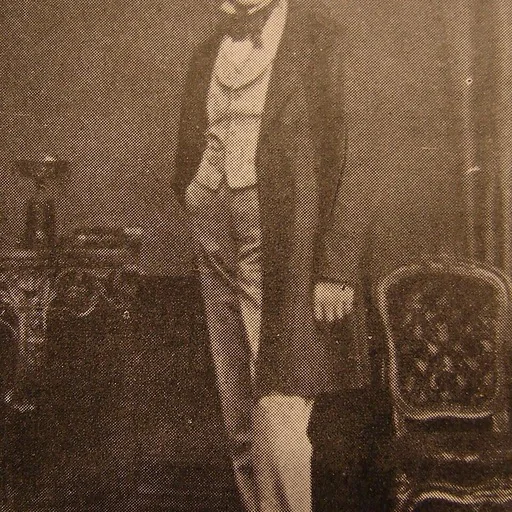
Artist
Louis Haghe (17 March 1806 – 9 March 1885) was a lithographer and watercolourist from the Netherlands and then the United Kingdom.

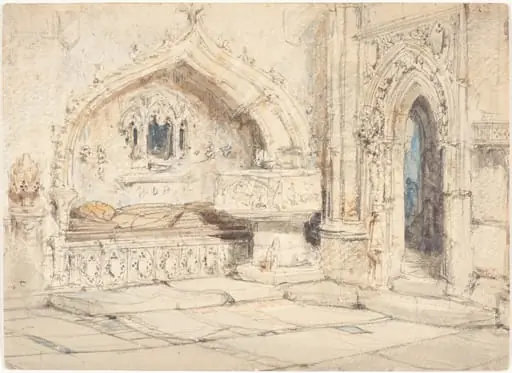 Interior of a Church with a Wall Tomb and Medieval Font
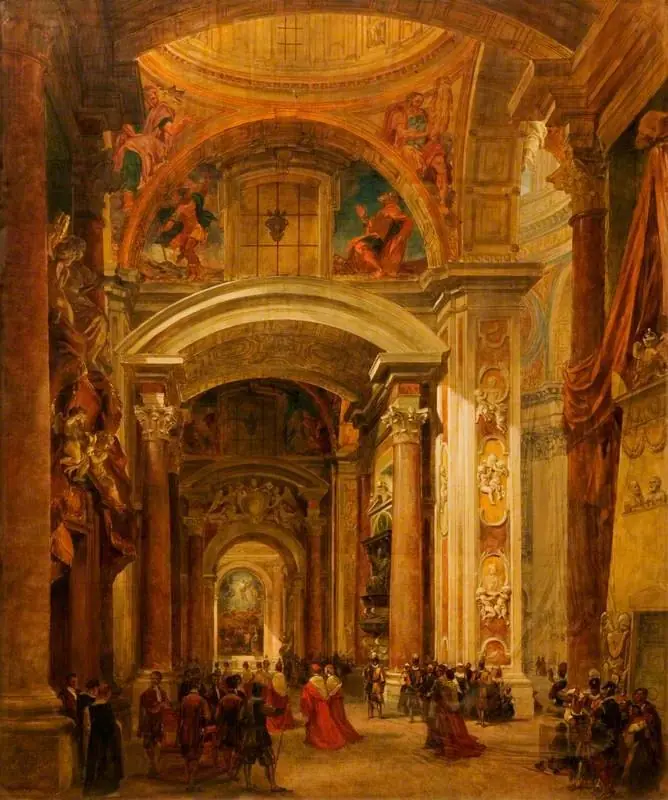 Interior of St Peter's, Rome
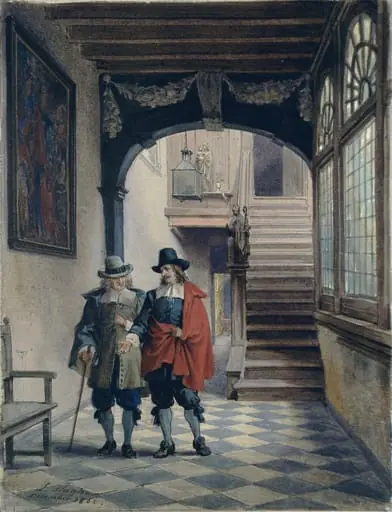 The Corridor, Brewer's Hall, Antwerp
 Monument of the Cardinald D'Amboise in Rouen Cathedral
 The Quay at Suez
 Egypt and Nubia, Volume II: Lateral View of the Temple called The Typhonoeum at Dendera
 Egypt and Nubia, Volume I: Thebes
 Egypt and Nubia, Volume I: Luxor