Artwork
Temple de Ipsamboul
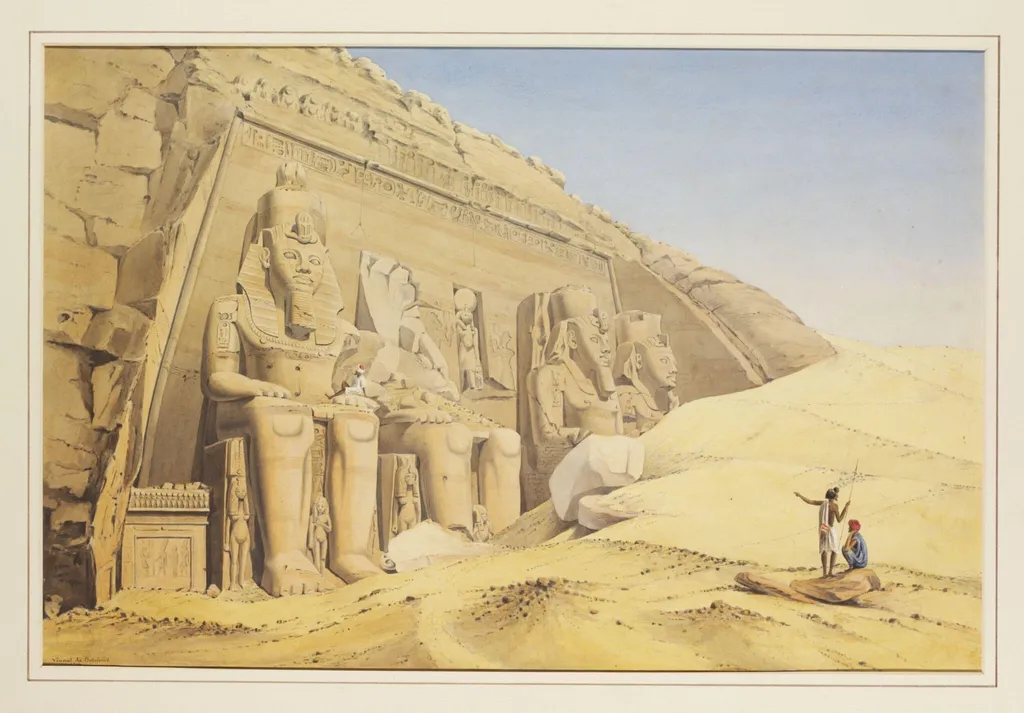
Temple de Ipsamboul is a watercolor work on paper by the Orientalist artist Louis Maurice Adolphe Linant de Bellefonds. It dates from 1846 and is held in the collection of the Victoria and Albert Museum.
About this work
Overview
Temple de Ipsamboul is a watercolour drawing by Louis Maurice Adolphe Linant de Bellefonds, created in 1846 during a journey to Upper Egypt.
Subject & Meaning
The drawing depicts the Temple of Ipsamboul, carved into a cliff, with four colossal figures at its entrance and intricate carvings on its walls. Two small figures stand before it, dwarfed by the monumental structure.
Technique & Style
Linant de Bellefonds employed chiaroscuro to create a dramatic effect, contrasting light and shadow to emphasize the temple's grandeur against the desert landscape, a characteristic technique of Romanticism.
History & Provenance
The watercolour was once part of the Duc de Montpensier's collection and was later sold at Sotheby's in June 1967 as part of a pair of drawings.
Artist & collection

Artist
Louis Maurice Adolphe Linant de Bellefonds
Louis Maurice Adolphe Linant de Bellefonds better known as Linant Pasha was an explorer of Egypt and, as the chief engineer of Egypt's public works, 1831–1869, an influential engineer of the Suez Canal.

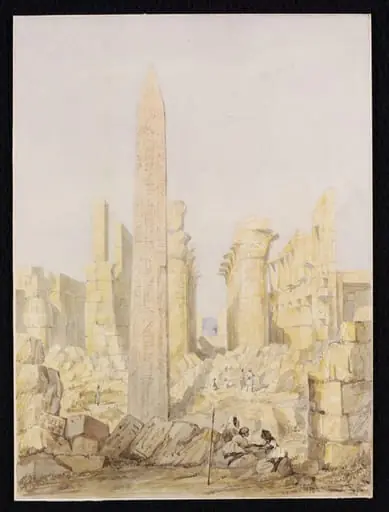 Great Temple. Karnac. Thebes
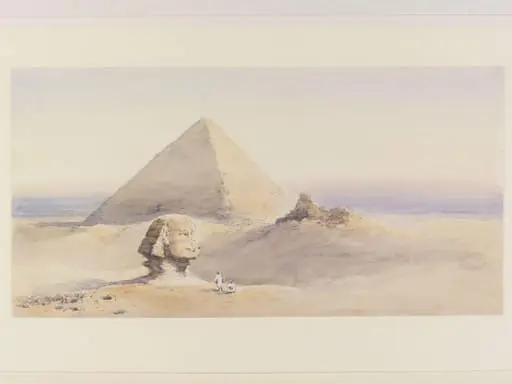 Sphinx & Great Pyramid
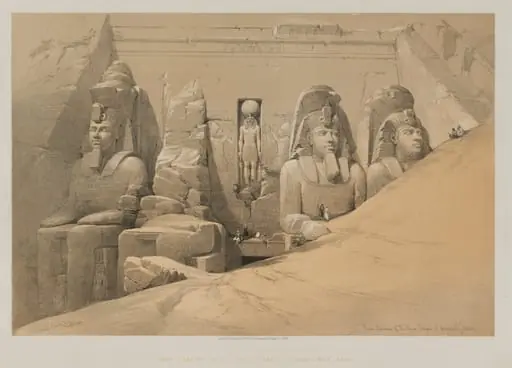 Egypt and Nubia, Volume II: Front Elevation of the Great Temple of Aboo Simbel, Nubia
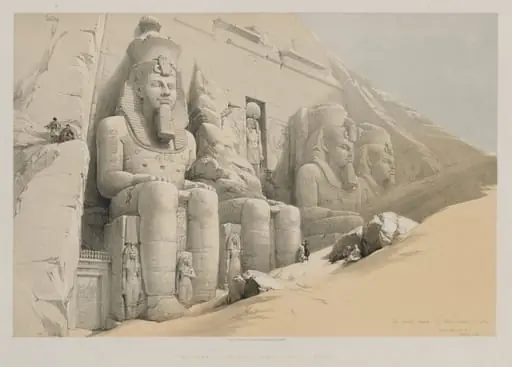 Egypt and Nubia, Volume I: The Great Temple of Aboo-Simble, Nubia
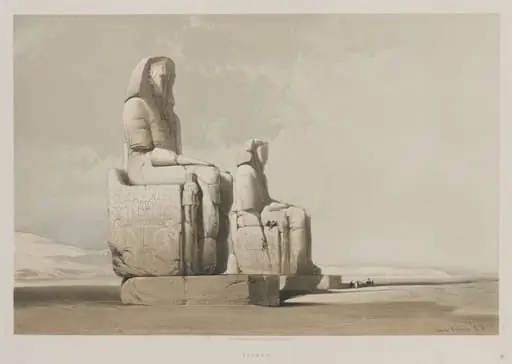 Egypt and Nubia, Volume I: Thebes
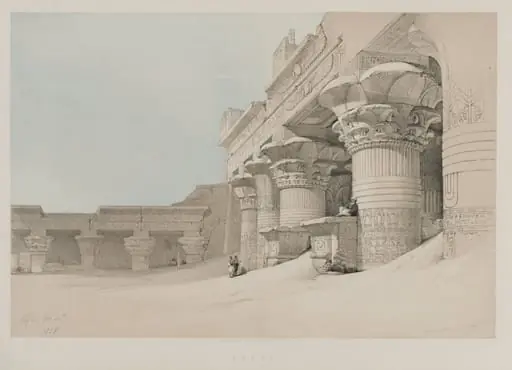 Egypt and Nubia, Volume II: Edfou
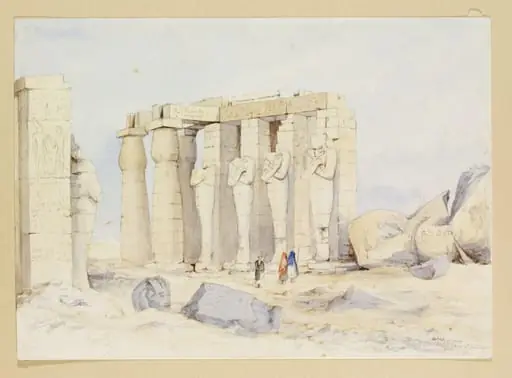 Osiride columns broken statue of Rameses II Memnonium Thebes
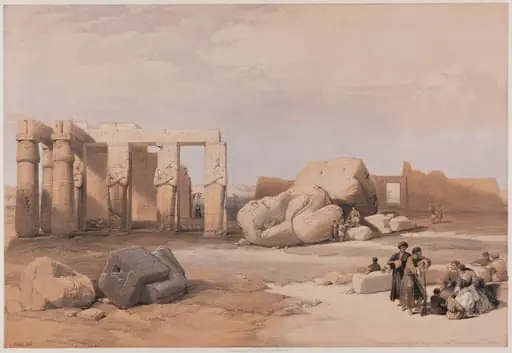 Egypt and Nubia, Volume II: Fragments of the Great Colossi at the Memnonium, Thebes
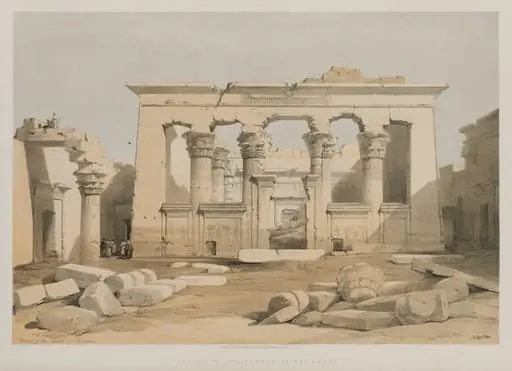 Egypt and Nubia, Volume I: Portico of the Temple of Kalabshe
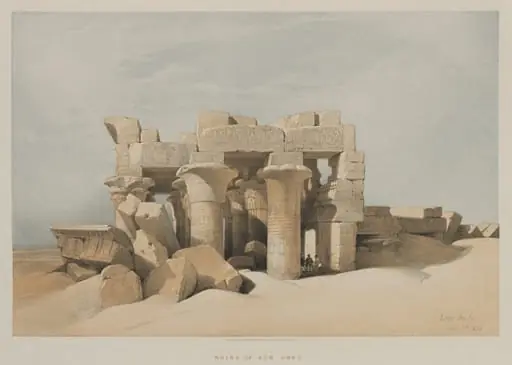 Egypt and Nubia, Volume I: Kom-Ombo
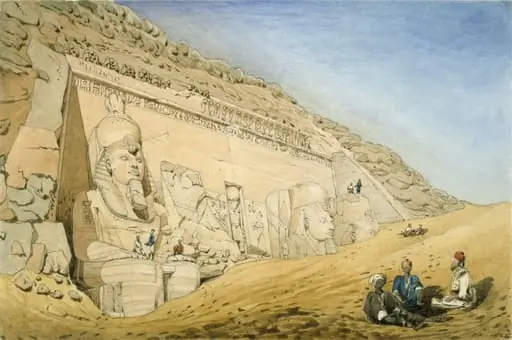 Great Temple at Abousimbal