Artwork
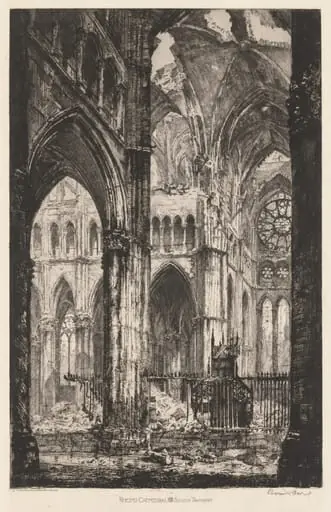
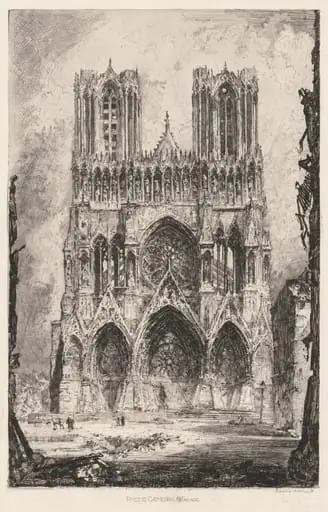
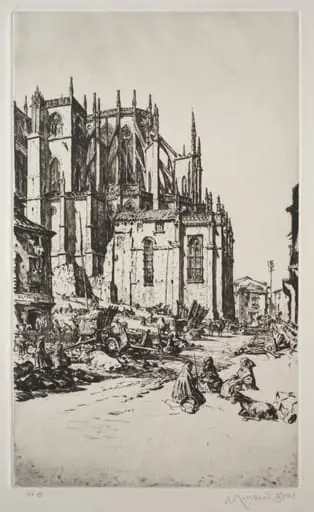
Rheims Cathedral and Ruins of Archbishop's Palace
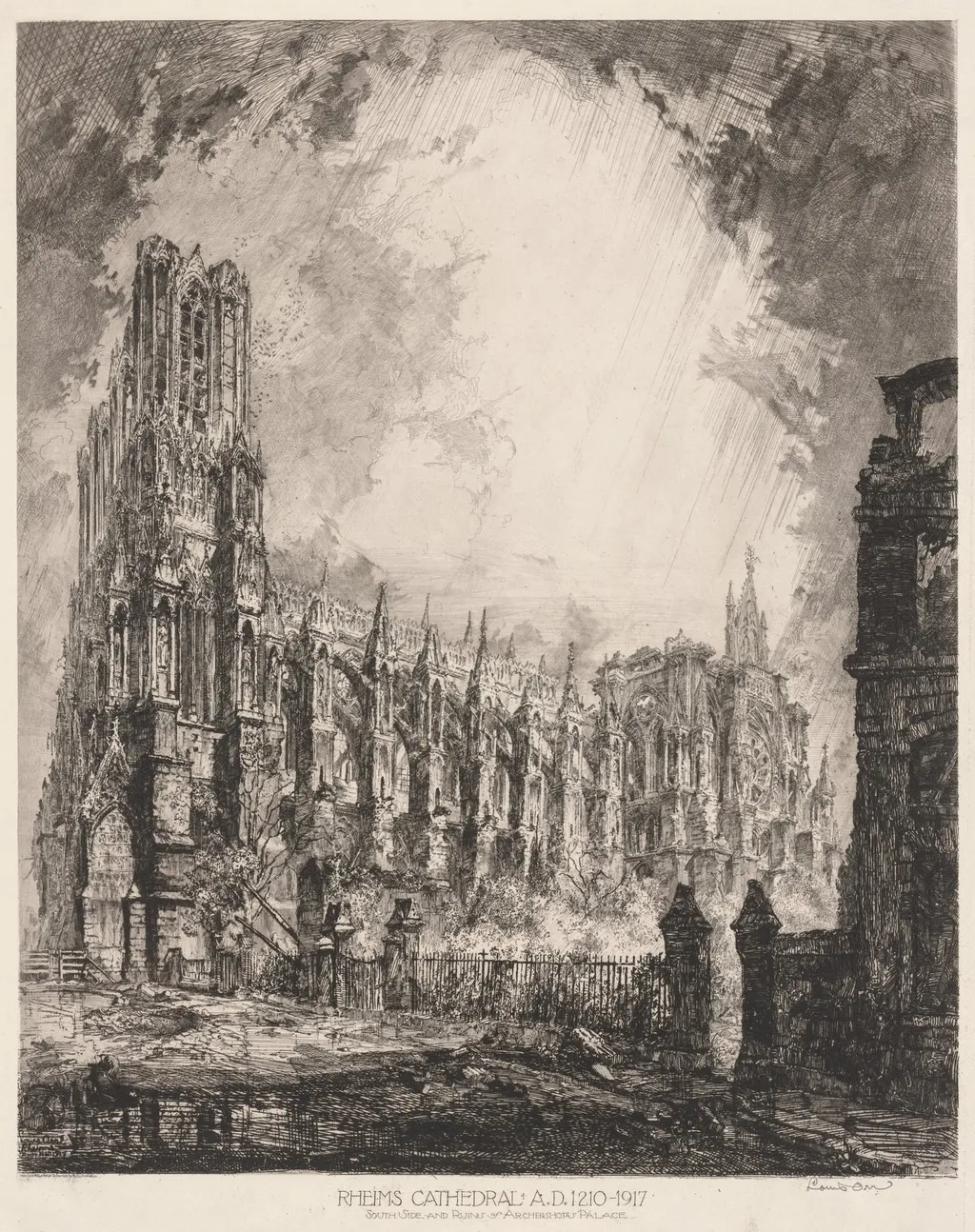
Rheims Cathedral and Ruins of Archbishop's Palace is a print by Louis Orr. It dates from 1920 and is held in the collection of the Cleveland Museum of Art.
About this work
Overview
Created in 1920 by Louis Orr, this print depicts Rheims Cathedral and the adjacent ruins of the Archbishop's Palace following the destruction of World War I.
Created in 1920 by Louis Orr, this print depicts Rheims Cathedral and the adjacent ruins of the Archbishop's Palace following the destruction of World War I. Rendered in a somber, atmospheric style, the work captures the lingering physical and emotional aftermath of conflict. The piece is part of the collection at The Cleveland Museum of Art, where it serves as a quiet testament to architectural loss.
Subject & Meaning
The print portrays the cathedral’s fractured spires and collapsed masonry alongside the skeletal remains of the Archbishop’s Palace. These ruins symbolize not only military damage but the erosion of institutional and spiritual authority. The inclusion of a low fence in the foreground suggests a boundary between the living and the memorialized, reinforcing themes of absence and remembrance.
Technique & Style
Orr employed expressive linework to convey the weathered texture of stone and the agitation of the elements. Delicate, irregular strokes suggest wind-driven rain, blurring edges and intensifying the sense of decay. The absence of color heightens the monochrome gravity of the scene, focusing attention on form, fracture, and the passage of time.
History & Provenance
The print was made shortly after the end of World War I, during a period when many artists documented the war’s destruction in France. Orr, likely influenced by firsthand observation or photographic records, rendered Rheims Cathedral—a site of immense cultural significance—amid its ruins. The work entered The Cleveland Museum of Art’s collection in the decades following its creation.
Context
Rheims Cathedral had been heavily shelled during the war, its stained glass and vaults damaged beyond immediate repair. As a coronation site for French kings, its destruction carried symbolic weight. Orr’s print aligns with a broader postwar artistic movement that prioritized documentation over idealization, reflecting a collective need to confront the scale of loss.
Legacy
Though not widely exhibited, the print remains a restrained yet potent record of wartime damage to cultural heritage. It contributes to a visual archive of European architecture in transition, offering a meditative counterpoint to more dramatic war imagery. Its endurance in museum collections underscores its role as a historical witness.
Artist & collection