Artwork
Study for Leon Apse
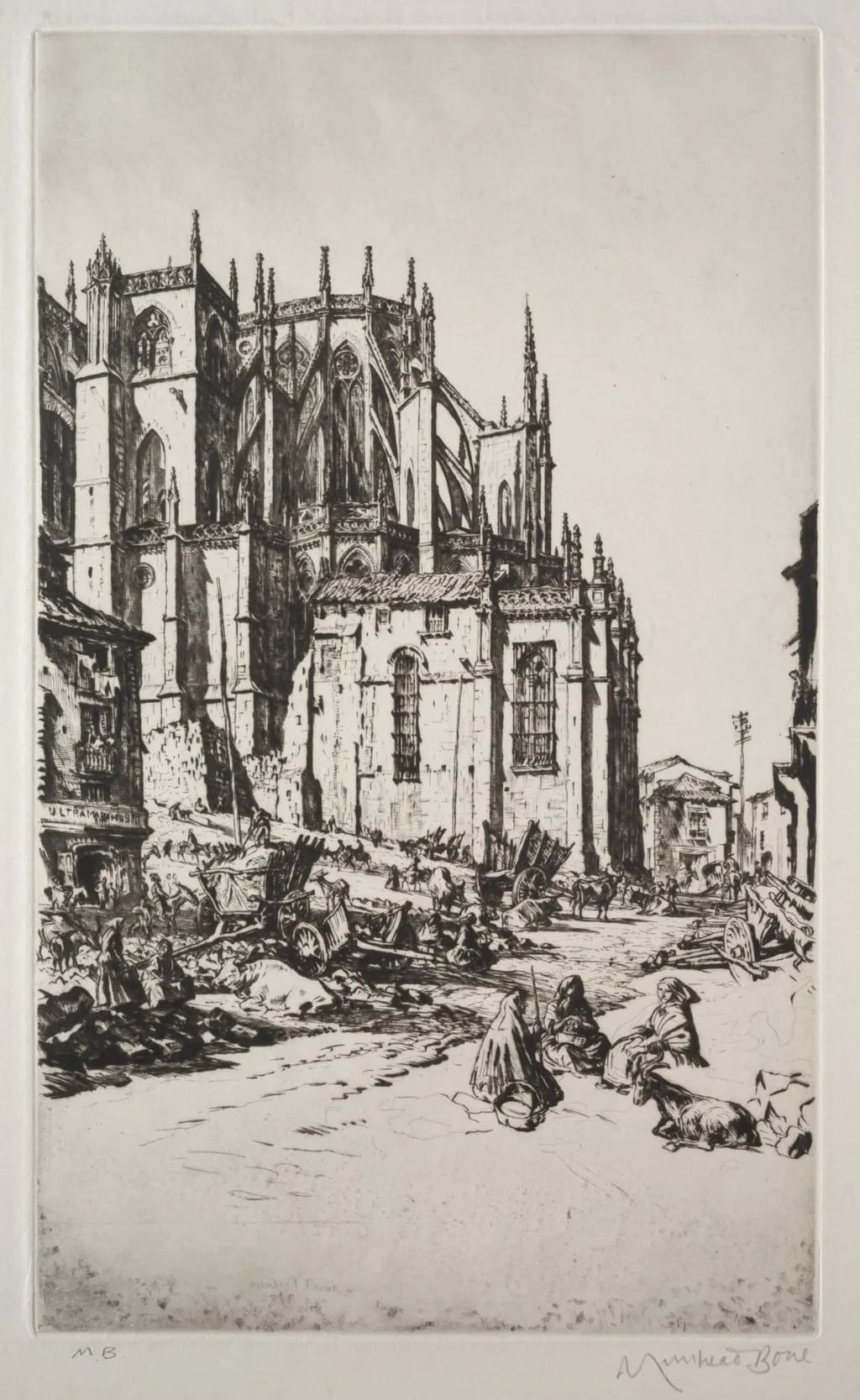
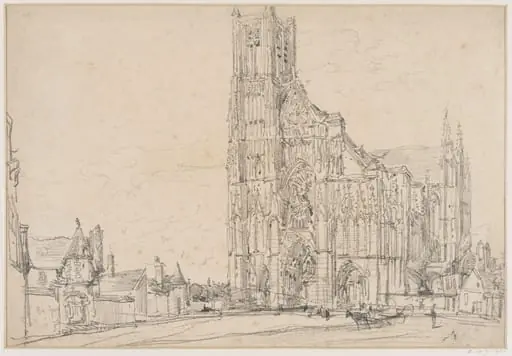
Study for Leon Apse is a print by Muirhead Bone. It dates from 1924 and is held in the collection of the Cleveland Museum of Art.
About this work
Overview
Executed during the waning years of the Etching Revival, the work exemplifies Bone’s dedication to capturing structural detail and spatial atmosphere.
Created around 1924, *Study for Leon Apse* is a print by Scottish artist Muirhead Bone, known for his precise architectural drawings. Executed during the waning years of the Etching Revival, the work exemplifies Bone’s dedication to capturing structural detail and spatial atmosphere. Though labeled a study, it functions as a complete composition, reflecting his transition from preparatory sketches to finished prints with strong narrative presence.
Subject & Meaning
The print depicts the apse of a medieval church surrounded by a quiet, rural congregation. Figures are scattered in the foreground—some seated, others moving—grounding the sacred architecture in everyday life. The scene suggests a contemplative relationship between community and place, without overt religious symbolism. The emphasis on the building’s form and its human context implies a quiet reverence for heritage and continuity rather than doctrinal expression.
Technique & Style
Bone employed fine-line etching to render the church’s stonework with meticulous clarity, using cross-hatching and varying line weights to suggest texture and depth. Light and shadow are carefully modulated to model the apse’s contours and cast long, soft shadows across the ground, enhancing the sense of stillness. The technique avoids dramatic contrast, favoring a restrained tonal range that reinforces the scene’s quiet dignity.
History & Provenance
The work emerged during a period when Bone’s architectural prints commanded significant market value, before the 1929 economic shift diminished demand for such detailed works. While the exact provenance of this specific print is not widely documented, it aligns with his broader practice of producing studies for larger commissions and exhibitions in the early 1920s, often based on实地 observations of historic sites.
Context
In the 1920s, British artists like Bone turned to architectural subjects as a response to industrialization and wartime destruction, seeking to preserve visual records of enduring structures. *Study for Leon Apse* reflects this cultural impulse, positioning the church as both a physical monument and a symbol of resilience. Its rural setting contrasts with Bone’s more frequent urban scenes, suggesting a deliberate exploration of quieter, less documented heritage.
Legacy
Bone’s work, including this study, contributed to the preservation of architectural memory through printmaking. Though later overshadowed by modernist movements, his commitment to observational accuracy influenced subsequent generations of topographical artists. *Study for Leon Apse* remains a quiet testament to the value of detailed, patient looking—offering a record of place that endures beyond stylistic trends.
Artist & collection
Artist
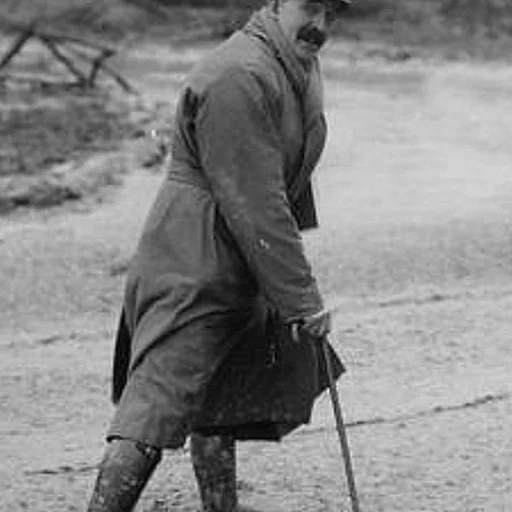
Sir Muirhead Bone (23 March 1876 – 21 October 1953) was a Scottish etcher and watercolourist who became known for his depiction of industrial and architectural subjects and his work as a war artist in both the First and Second World Wars.

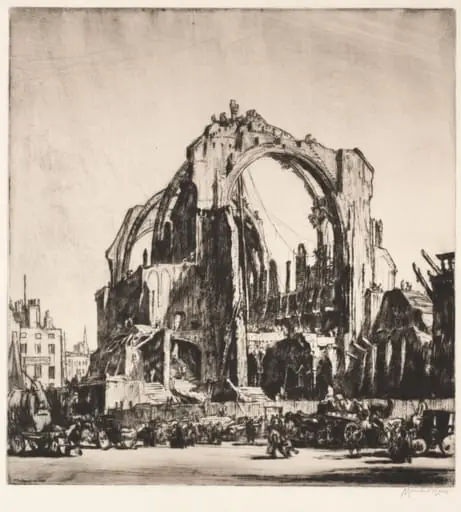 Demolition of St. James Hall, Exterior
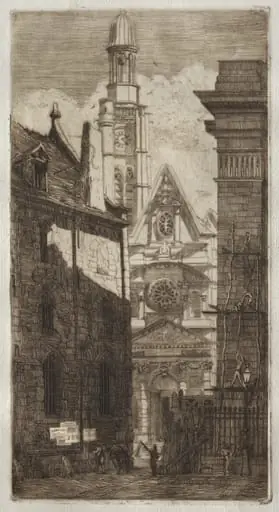 Saint-Etienne-du-Mont
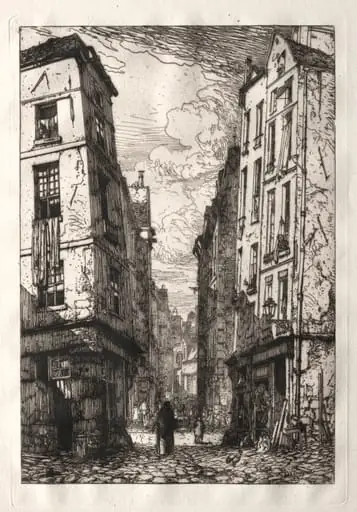 Rue des Marmousets (Old Paris)
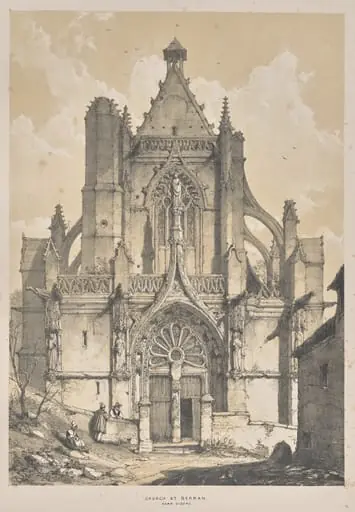 Architecture of the Middle Ages: Church at Serran, near Gisore
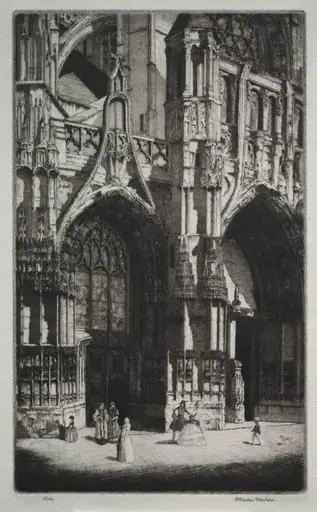 Nôtre Dame de Caudebec, France
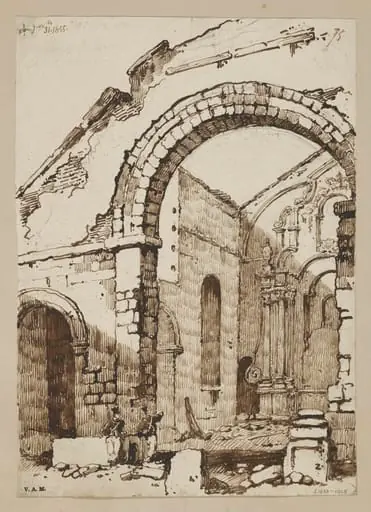 The ruins of St Paul's church, Macau, after the fire of 26 January 1835
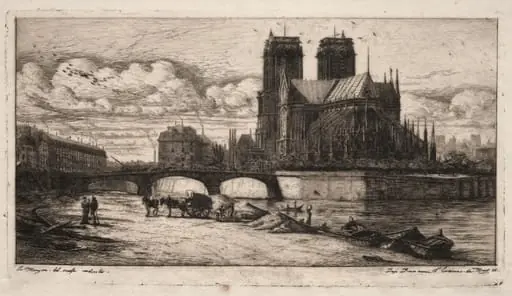 Etchings of Paris: The Apse of the Cathedral of Notre Dame
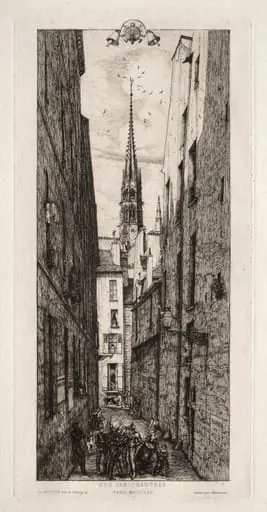 Chantrey Street, Paris
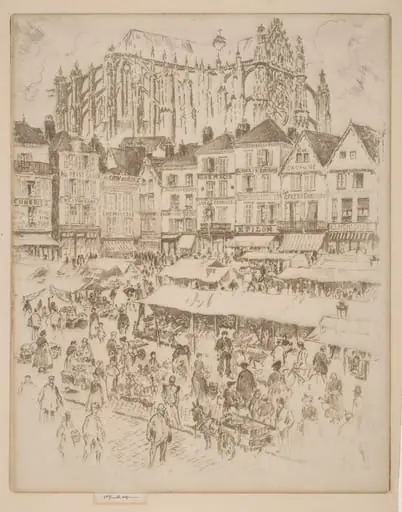 La Place, Beauvais
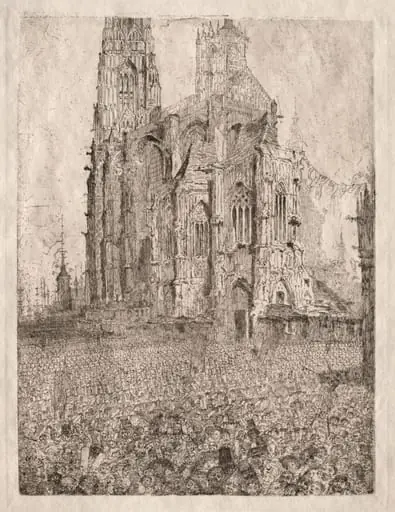 The Cathedral
 Exterior view of a church in France
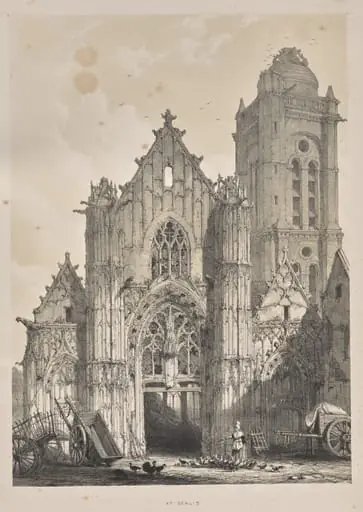 Architecture of the Middle Ages: At Senlis