Artwork
The fish eater
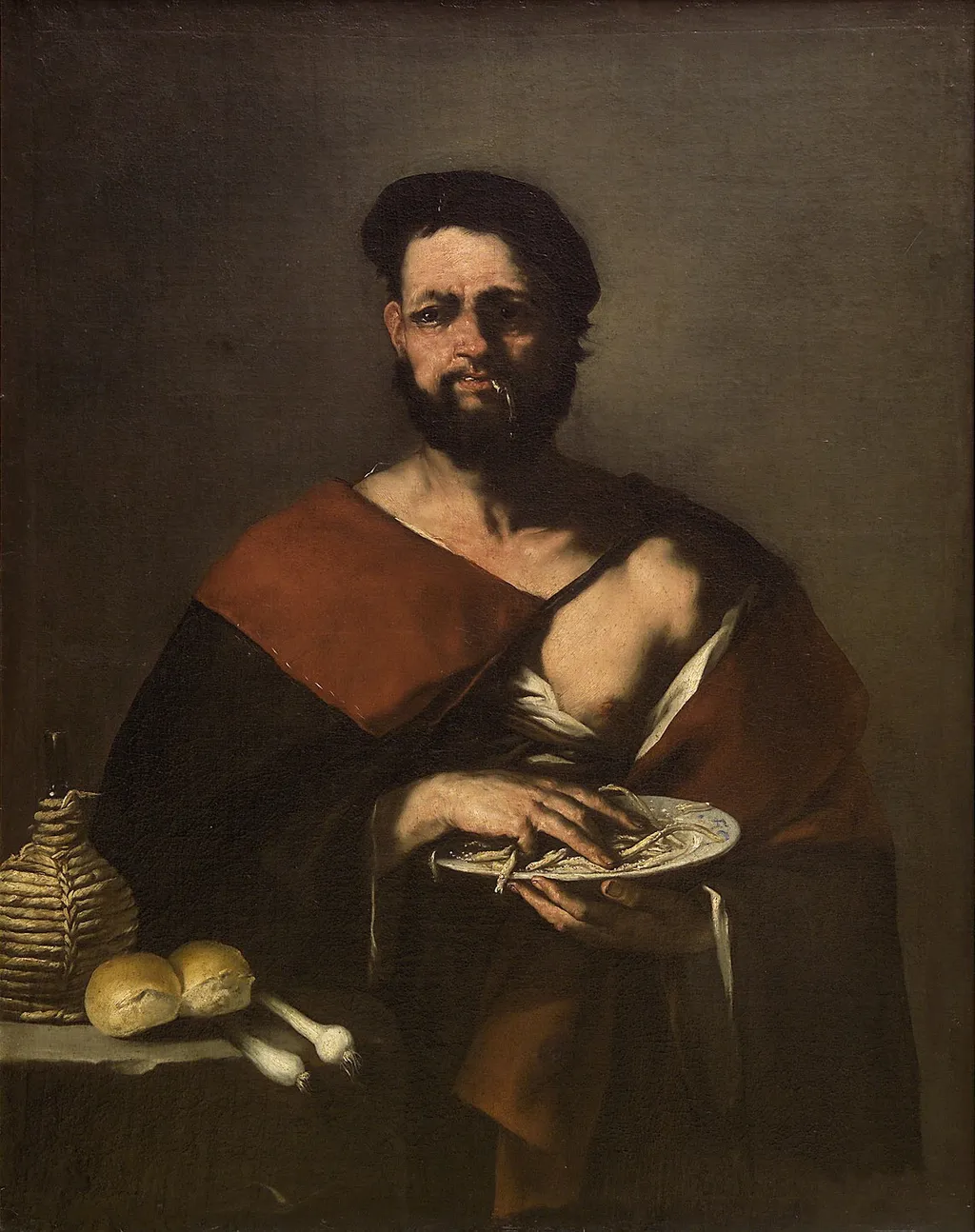
The fish eater is an unspecified painting by Luca Giordano. It dates from 1660 and is held in the collection of the Kunsthistorisches Museum.
About this work
Overview
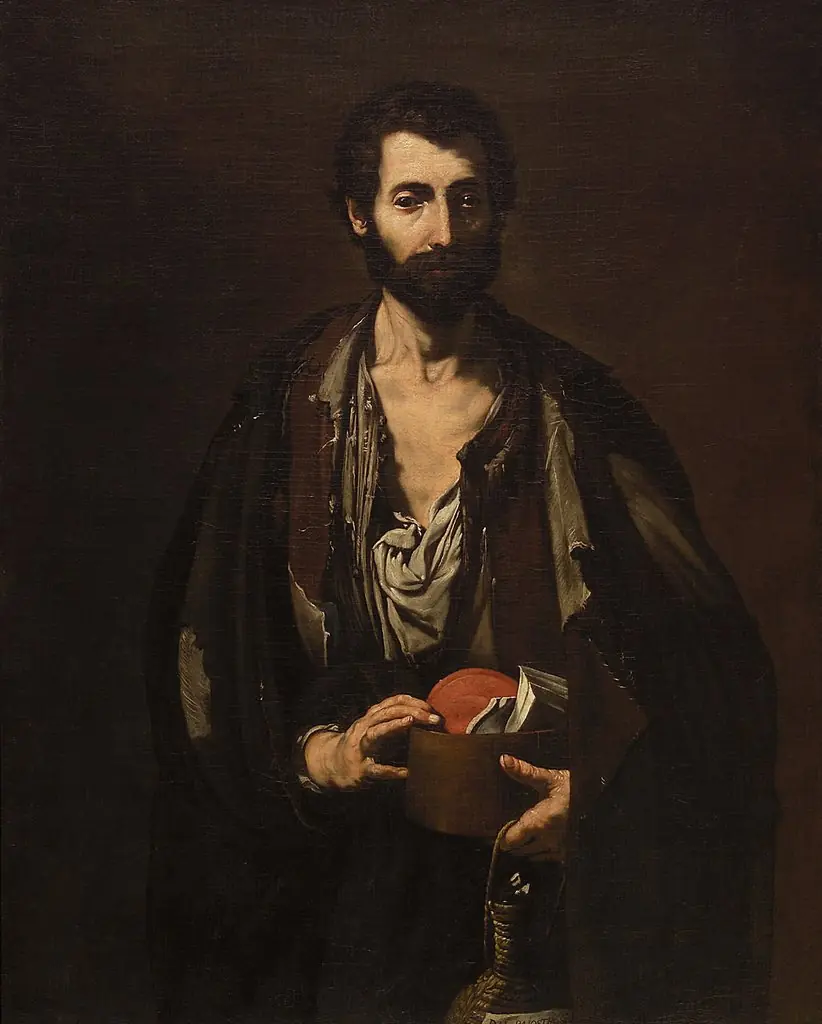
The subject, dressed in a dark red and black robe with a broad-brimmed hat, holds a plate of fish in one hand and a fillet near his mouth with the other.
Painted around 1660 by Luca Giordano, this work portrays a solitary figure in a dim interior, engaged in the act of eating. The subject, dressed in a dark red and black robe with a broad-brimmed hat, holds a plate of fish in one hand and a fillet near his mouth with the other. The composition is tightly focused, eliminating extraneous detail to emphasize the immediacy of the gesture. The painting resides in the Kunsthistorisches Museum in Vienna.
Subject & Meaning
The figure appears to be a laborer or lower-class individual, captured in a private, unidealized moment. His attire and the humble meal suggest a life of modest means. The act of eating, rendered without ceremony, conveys a quiet dignity rather than spectacle. There is no overt narrative or symbolic reference; the power of the image lies in its unadorned realism, inviting contemplation of everyday human behavior.
Technique & Style
Giordano employs strong chiaroscuro to model the figure against a near-black background, enhancing the three-dimensionality of the form and directing focus to the hands and plate. The brushwork is loose yet deliberate, particularly in the rendering of fabric and the glistening surfaces of the fish. The palette is restrained—dominated by deep reds, blacks, and muted tones—reinforcing the somber mood and grounding the scene in tactile reality.
History & Provenance
The painting entered the collection of the Kunsthistorisches Museum in Vienna in the 19th century, likely as part of the Habsburgs' broader acquisition of Italian Baroque works. Its attribution to Giordano has been consistently supported by stylistic analysis, though its original commission and early ownership remain undocumented. It has been exhibited periodically since its acquisition, always noted for its psychological immediacy.
Context
Created during Giordano’s early career in Naples, the work reflects the influence of Caravaggio’s naturalism and the regional tradition of depicting common life with emotional gravity. While many contemporaries favored grand religious or mythological themes, Giordano occasionally turned to intimate, secular subjects—this painting exemplifies that tendency, aligning with broader 17th-century interest in the dignity of ordinary existence.
Legacy
Though not widely reproduced, the painting is recognized in scholarly circles for its restrained power and technical precision. It stands as an example of how Baroque artists could convey psychological depth through minimal means. Its enduring presence in a major European collection underscores its value as a quiet but compelling study of human routine, unembellished and unromanticized.
Artist & collection

Artist
Luca Giordano was an Italian late-Baroque painter and printmaker in etching. Giordano was one of the most celebrated artists of the Neapolitan Baroque, whose vast output included altarpieces, mythological paintings and…