Artwork
The Crucifixion
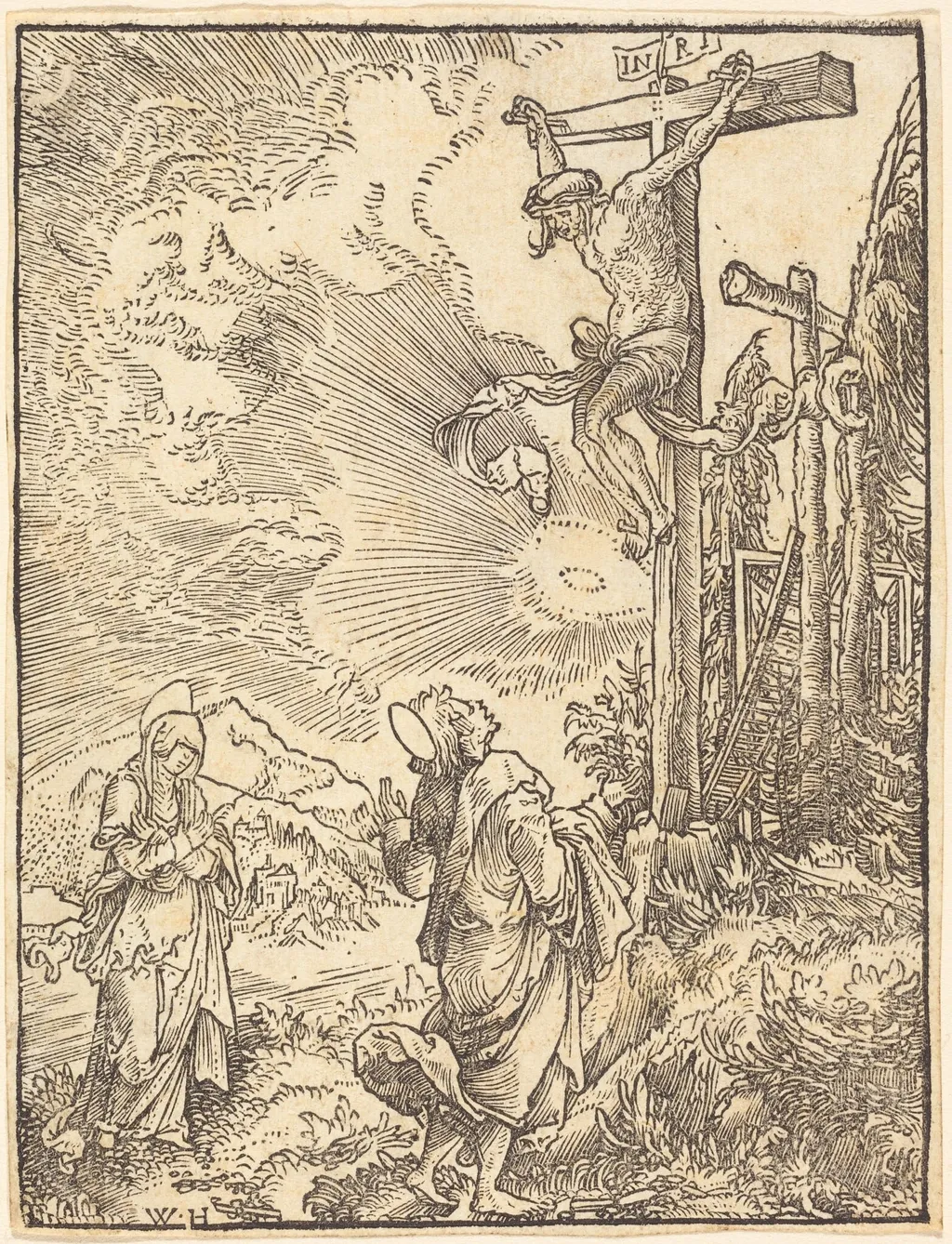
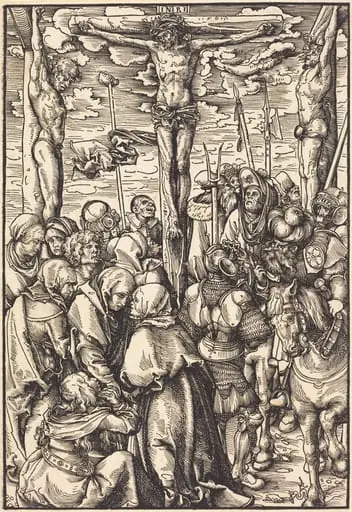
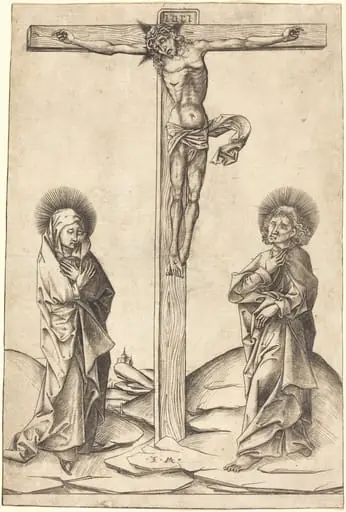
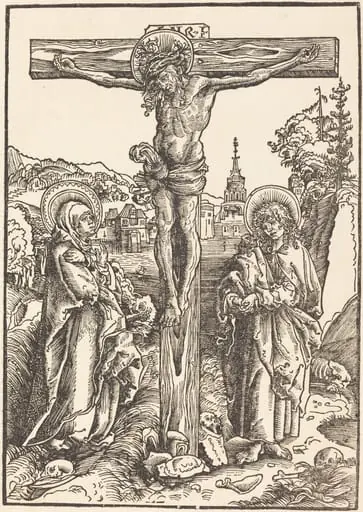
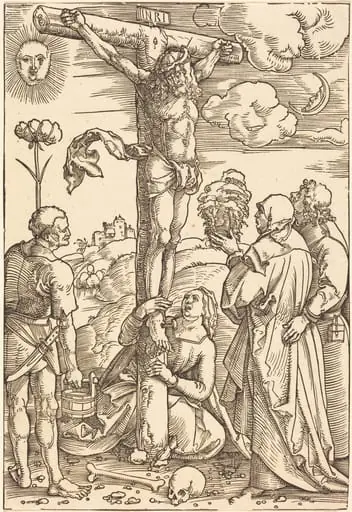
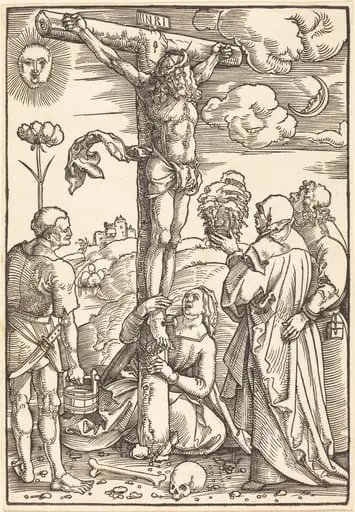
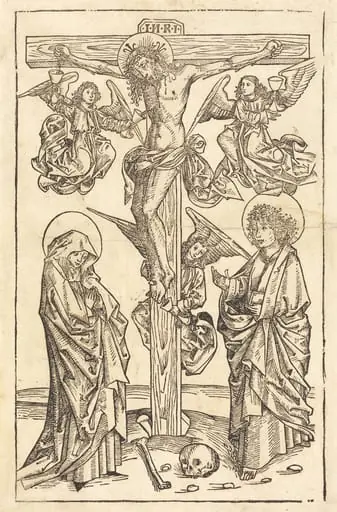
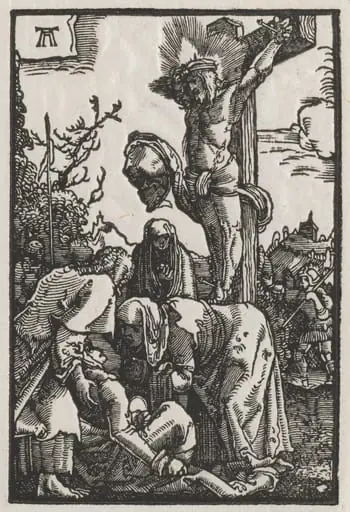
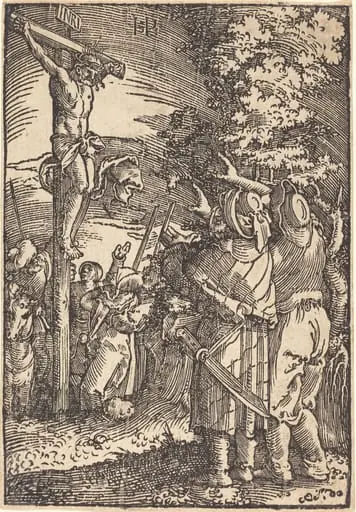
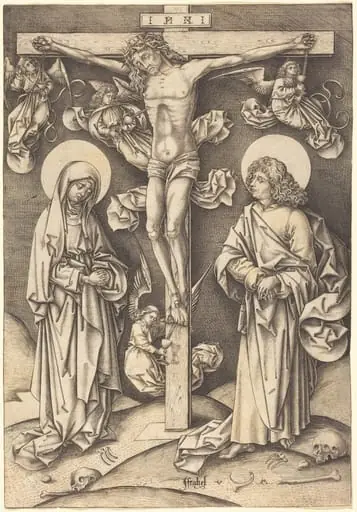
The Crucifixion is an ink print by the Renaissance artist Wolf Huber. It dates from 1519 and is held in the collection of the National Gallery of Art.
About this work
Overview
The Crucifixion is a 1519 woodcut by Wolf Huber, an Austrian-German artist of the Danube school, created during his active period in Passau, Germany.
Subject & Meaning
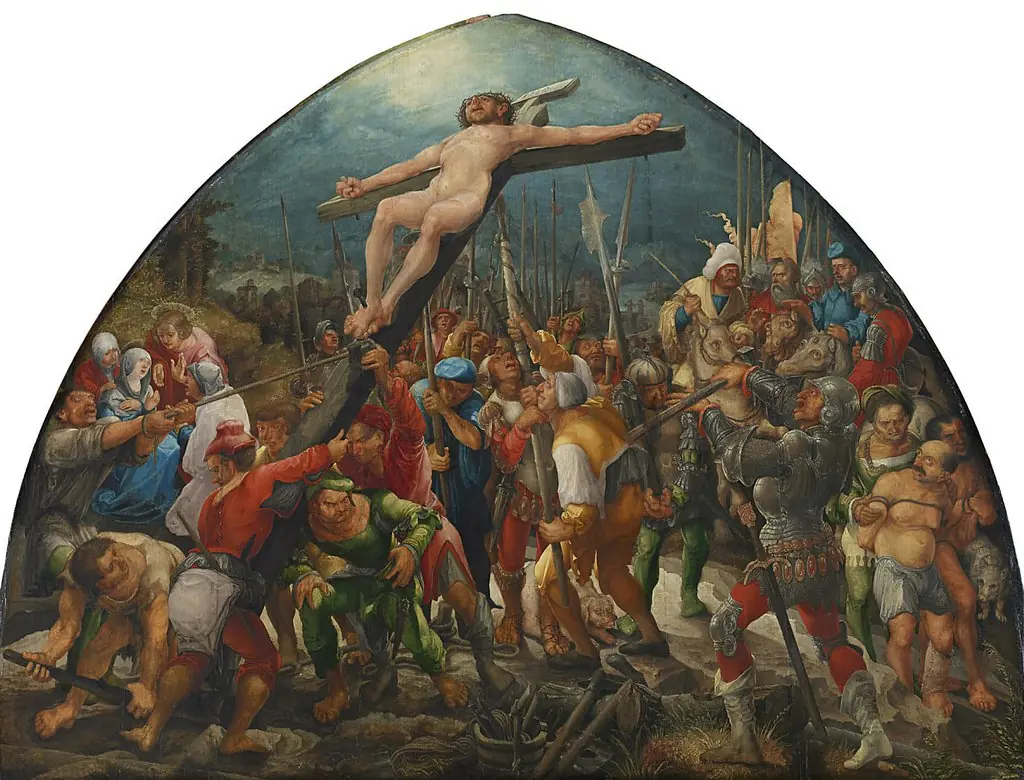
The woodcut depicts a dramatic Crucifixion scene, centralizing a figure on a cross amidst a group of emotionally reacting onlookers, set against a chaotic, rocky backdrop.
Technique & Style
Executed in black and white, the work utilizes simple, bold lines and shading to convey strong emotions, movement, and depth, characteristic of Huber's woodcut technique.
History & Provenance
Created in 1519, the work reflects Huber's prominence in early 16th-century regional art circles, though specific provenance details are not provided.
Context
As part of the Danube school, the piece aligns with the region's artistic tendencies, emphasizing expressive and emotionally charged religious themes.
Artist & collection
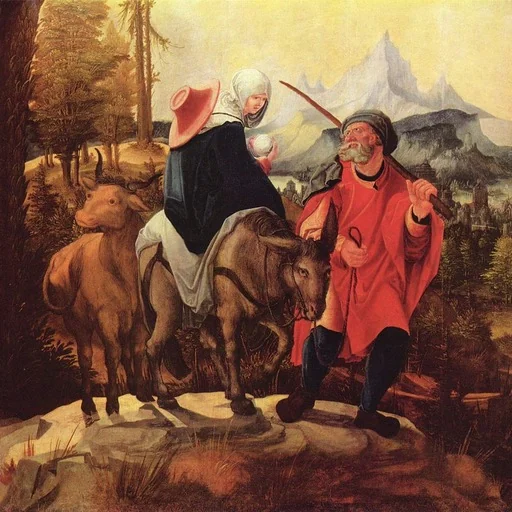
Artist
Wolf Huber (c. 1485 – 3 June 1553) was an Austrian- German painter, printmaker, and architect, who worked in Passau, Germany for most of his life as a leading member of the Danube school.