Artwork
Andrew from Christ, the Apostles, and Saint Paul
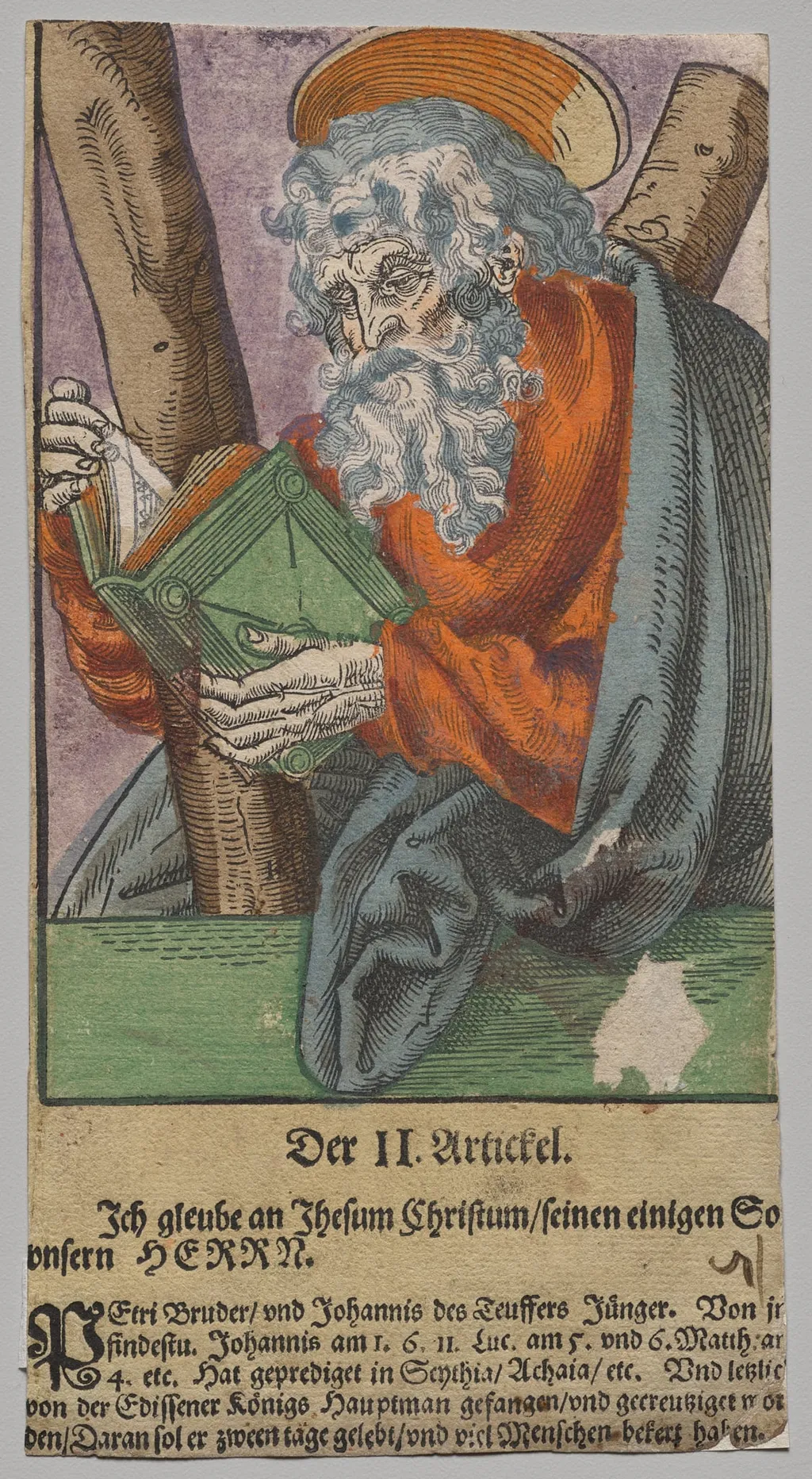
Andrew from Christ, the Apostles, and Saint Paul is a print by the Renaissance artist After Lucas Cranach the Elder. It is held in the collection of the Cleveland Museum of Art.
About this work
Overview
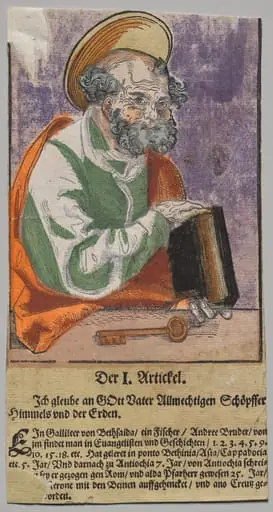
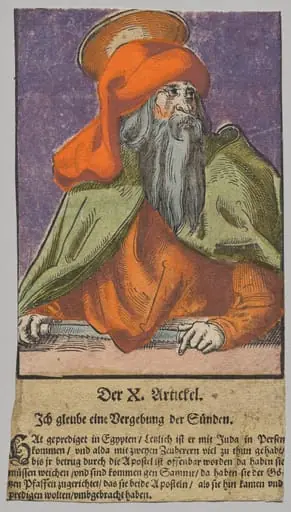
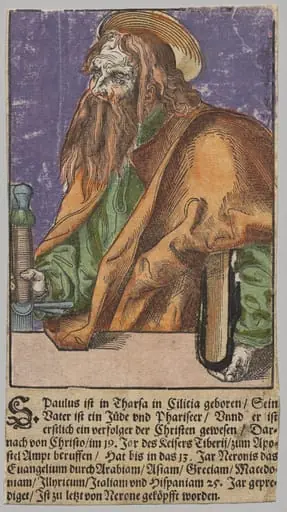
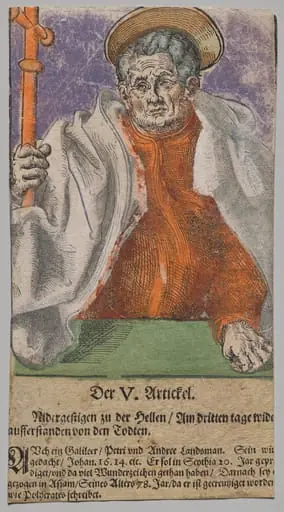
Andrew from Christ, the Apostles, and Saint Paul is a 1564 print attributed to the workshop of Lucas Cranach the Elder. The work is part of the Cleveland Museum of Art’s collection and exemplifies the Northern Renaissance’s engagement with religious iconography. It portrays a solitary figure in a contemplative pose, rendered in a limited palette of orange, green, and muted purple.
Subject & Meaning
The central figure, an elderly man with a long white beard and hair, is traditionally identified as Saint Andrew. He is shown holding a green book, a common attribute for saints linked to teaching or the Gospel. His inward gaze and clasped hands suggest meditation on divine truth, aligning with the devotional purpose of the print.
Technique & Style
Executed as a woodcut or engraving, the image relies on strong line work to define the figure’s robes, hat, and delicate fingers. The contrast between the vibrant orange garment and the subdued purple background creates visual focus on the saint’s face and the illuminated text he carries, reflecting Cranach’s characteristic blend of detail and symbolic color.
History & Provenance
The print was produced shortly after Cranach’s death, indicating it may have been issued by his workshop or followers. It entered the Cleveland Museum of Art’s holdings through acquisition in the mid‑20th century, where it remains catalogued as a representative example of post‑Renaissance religious prints.
Context
During the mid‑16th century, Protestant reforms influenced the production of devotional images, and Cranach’s workshop was a key supplier of such works. This print’s emphasis on a single saint’s piety reflects the era’s shift toward personal contemplation rather than grand narrative scenes, aligning with contemporary theological trends.
Artist & collection
Artist
Lucas Cranach the Elder, After (1472–1553) was a German artist.

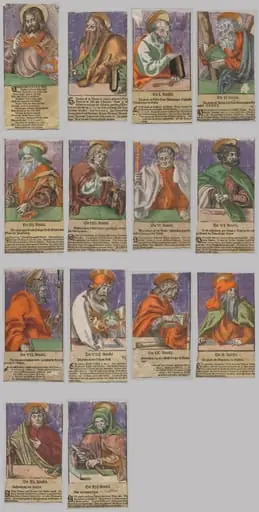 Christ, the Twelve Apostles, and Saint Paul
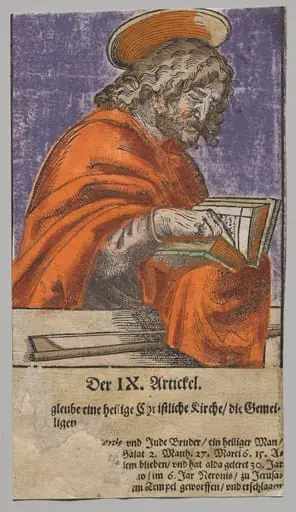 James the Less from Christ, the Apostles, and Saint Paul
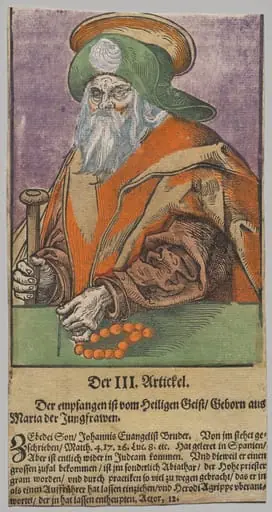 James the Greater from Christ, the Apostles, and Saint Paul
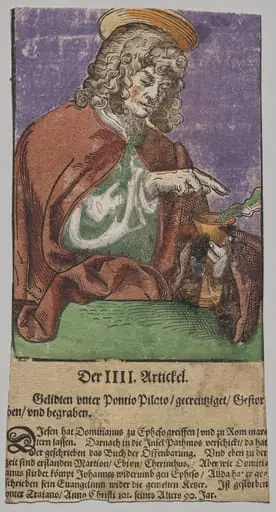 John from Christ, the Apostles, and Saint Paul
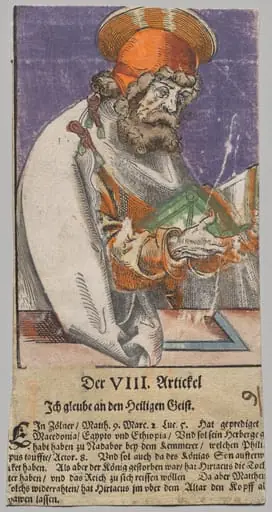 Matthew from Christ, the Apostles, and Saint Paul
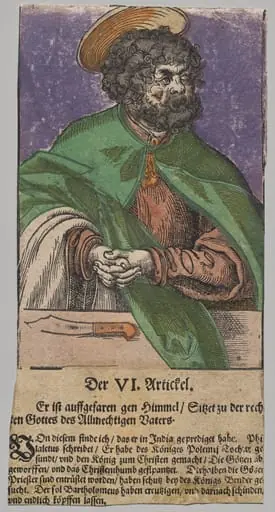 Bartholomew from Christ, the Apostles, and Saint Paul
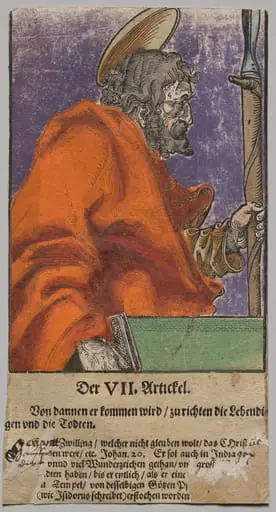 Thomas from Christ, the Apostles, and Saint Paul
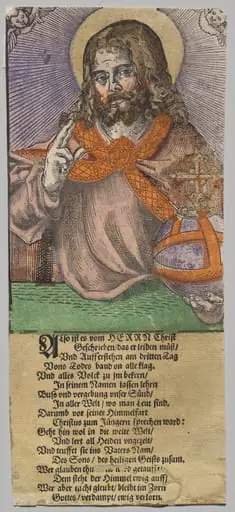 Christ from Christ, the Apostles, and Saint Paul