Artwork
John from Christ, the Apostles, and Saint Paul
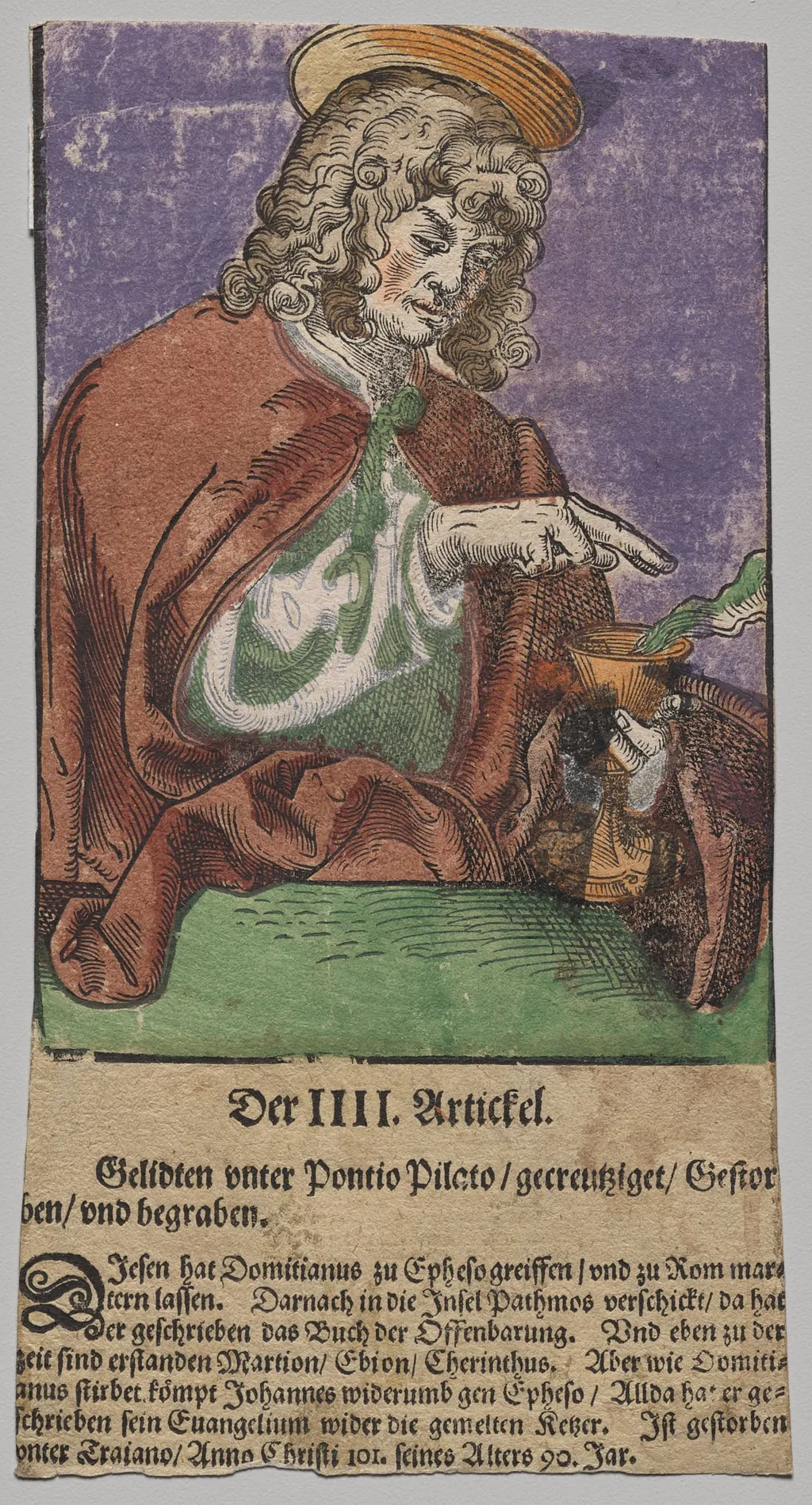
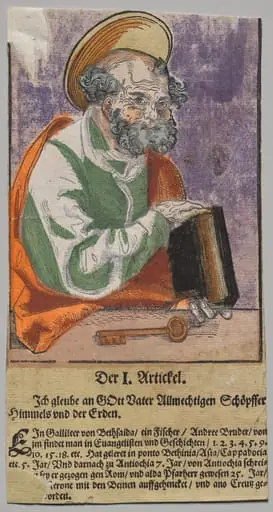
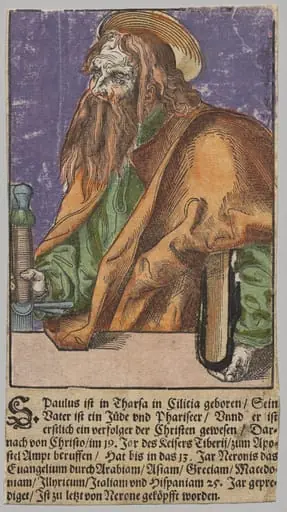
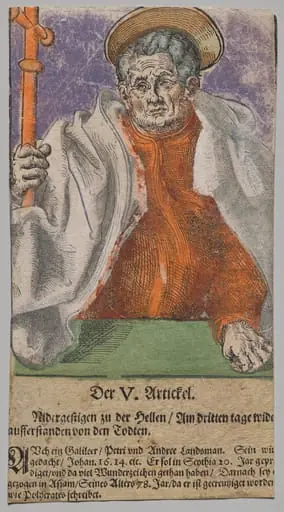
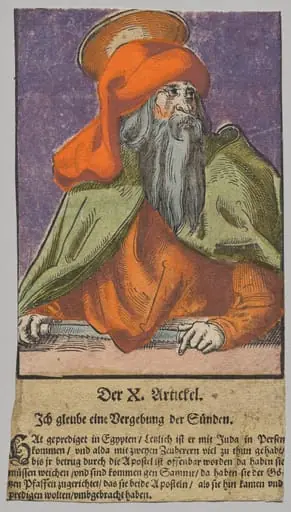
John from Christ, the Apostles, and Saint Paul is a print by the Renaissance artist After Lucas Cranach the Elder. It is held in the collection of the Cleveland Museum of Art.
About this work
Overview
This print, dated 1564, is attributed to Lucas Cranach the Elder’s workshop, likely produced after his death under the supervision of his son.
This print, dated 1564, is attributed to Lucas Cranach the Elder’s workshop, likely produced after his death under the supervision of his son. It depicts a solitary male figure, traditionally identified as the Apostle John, rendered in a restrained palette with subtle tonal contrasts. The composition emphasizes stillness and introspection, characteristic of late Reformation-era devotional imagery produced in Wittenberg.
Subject & Meaning
The figure is understood to represent John the Apostle, one of Christ’s closest disciples. His downward gaze and contemplative posture suggest inner reflection, possibly on divine revelation or the burden of witness. The cup he holds may allude to the Last Supper or the chalice of suffering referenced in the Gospels. His left hand gestures beyond the frame, implying a spiritual presence or message beyond the visible world.
Technique & Style
The image employs chiaroscuro to model the figure against a muted purple background, creating a sense of volume without overt naturalism. Facial features and drapery are rendered with precise, linear clarity, typical of Cranach’s workshop style. The red robe and green tunic are rendered in flat, symbolic hues rather than realistic shading, reflecting the tradition of devotional prints meant for private meditation rather than theatrical display.
History & Provenance
Produced in the Cranach workshop in Wittenberg during the mid-16th century, this print emerged from a center of Protestant reform where religious imagery was redefined. It entered the Cleveland Museum of Art’s collection in the 20th century, likely through acquisitions of Northern Renaissance works. Its survival reflects the continued demand for devotional prints among Lutheran households after the Reformation.
Context
In the decades following Luther’s reforms, images of apostles were repurposed to emphasize personal faith and scriptural authority over saintly intercession. John, as the beloved disciple and author of the Gospel bearing his name, became a symbol of spiritual insight. This print aligns with a broader trend of simplified, psychologically grounded figures intended to inspire quiet devotion rather than veneration.
Legacy
As part of a prolific output of religious prints from Cranach’s studio, this work exemplifies how Reformation ideals shaped visual culture. Its restrained aesthetic influenced later Protestant iconography, favoring introspection over spectacle. Though not widely known today, it remains a quiet testament to the shift in religious imagery during the 16th century, where the individual’s inner life became the focus of sacred representation.
Artist & collection
Artist
Lucas Cranach the Elder, After (1472–1553) was a German artist.

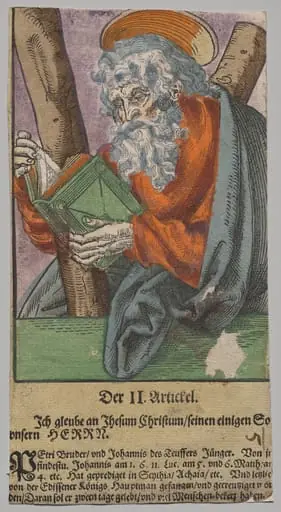 Andrew from Christ, the Apostles, and Saint Paul
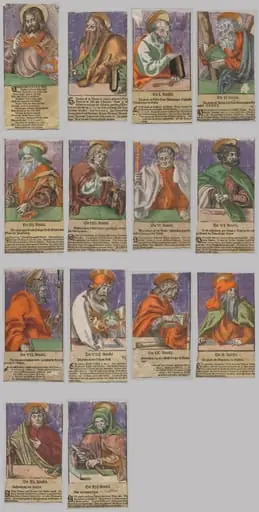 Christ, the Twelve Apostles, and Saint Paul
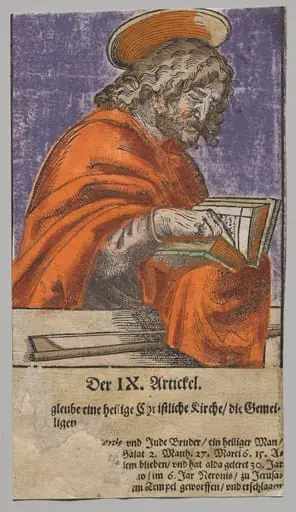 James the Less from Christ, the Apostles, and Saint Paul
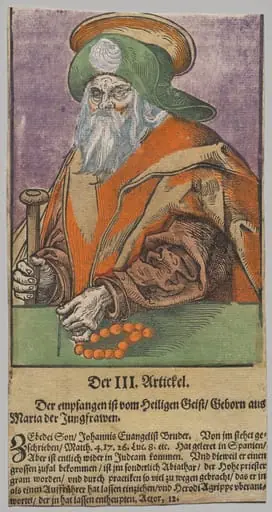 James the Greater from Christ, the Apostles, and Saint Paul
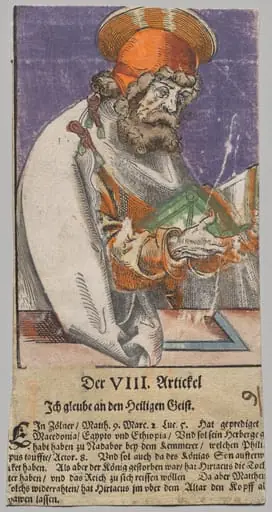 Matthew from Christ, the Apostles, and Saint Paul
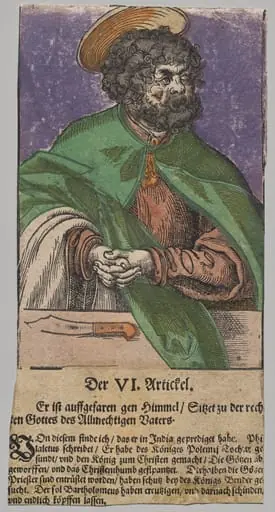 Bartholomew from Christ, the Apostles, and Saint Paul
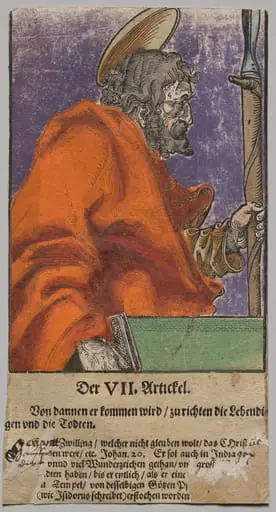 Thomas from Christ, the Apostles, and Saint Paul
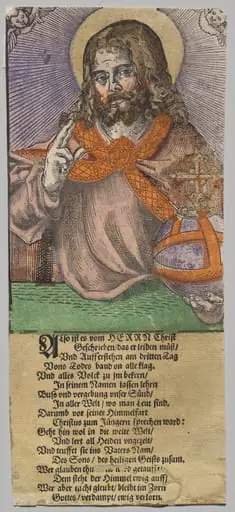 Christ from Christ, the Apostles, and Saint Paul