Artwork
Matthias from Christ, the Apostles, and Saint Paul
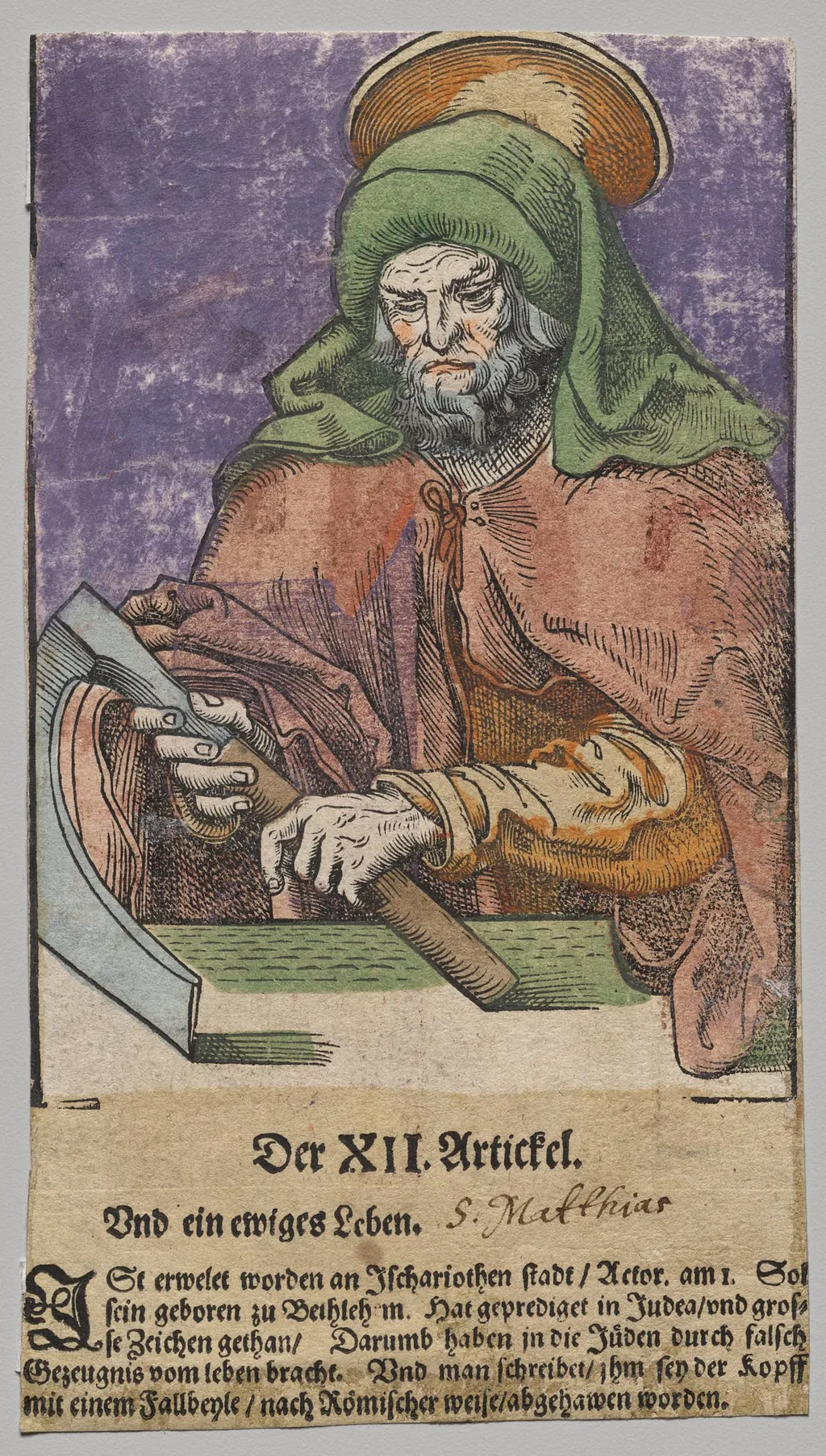
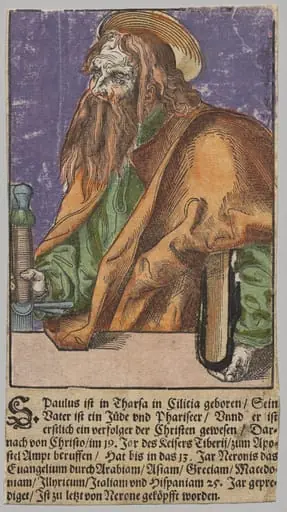
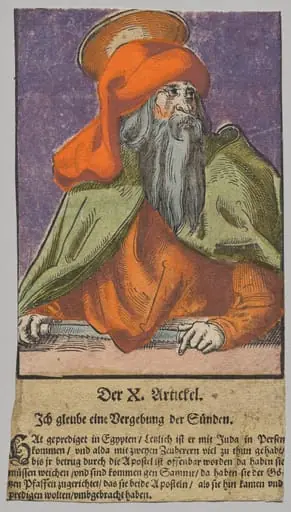
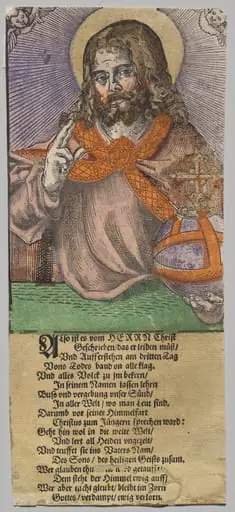
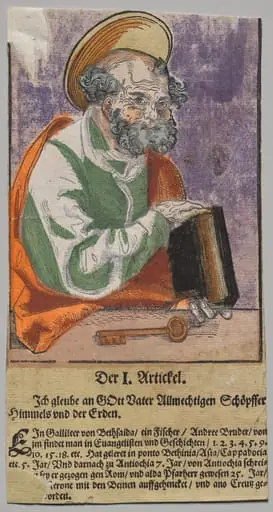
Matthias from Christ, the Apostles, and Saint Paul is a print by the Renaissance artist After Lucas Cranach the Elder. It is held in the collection of the Cleveland Museum of Art. This print, dated 1564, is attributed to Lucas Cranach the Elder’s workshop, produced after his death.
About this work
Overview
This print, dated 1564, is attributed to Lucas Cranach the Elder’s workshop, produced after his death. It depicts the selection of Matthias as an apostle, as described in the Acts of the Apostles. The work was made for devotional use and reflects the Protestant emphasis on scriptural clarity during the Reformation. It is now part of the collection at The Cleveland Museum of Art.
Subject & Meaning
The central figure, an elderly man in a hooded robe, represents Matthias, holding a child symbolizing innocence or divine selection.
The scene illustrates the choosing of Matthias to replace Judas Iscariot among the Twelve Apostles. The central figure, an elderly man in a hooded robe, represents Matthias, holding a child symbolizing innocence or divine selection. A shadowy figure behind him, reaching toward the child, may allude to divine intervention or the casting of lots. The inscription 'Der XII. Artickel' connects the image to the twelfth article of faith in Lutheran doctrine.
Technique & Style
Rendered in a woodcut or engraving style, the image employs bold outlines and simplified forms typical of Cranach’s later workshop productions. The palette is restrained, dominated by earth tones and a deep purple background that enhances the somber mood. Facial details are rendered with subtle wrinkles, and the figures appear slightly flattened against the dark backdrop, emphasizing symbolic weight over naturalism.
History & Provenance
Created after Lucas Cranach the Elder’s death in 1553, the print was likely produced by his sons or assistants using his established designs. It circulated in Protestant regions as part of religious instruction materials. The work entered The Cleveland Museum of Art’s collection in the 20th century, where it is preserved as an example of Reformation-era printmaking.
Context
Produced during the height of the Protestant Reformation, this image served to visually reinforce doctrinal teachings. The selection of Matthias was used to affirm apostolic continuity without papal authority. Cranach’s workshop frequently produced such prints for lay audiences, translating theological concepts into accessible imagery aligned with Lutheran priorities.
Legacy
This print exemplifies how Cranach’s workshop sustained his visual language after his death, adapting it for ongoing religious education. While not widely known today, such works played a key role in shaping Protestant visual culture. They remain valuable for understanding how scriptural narratives were communicated through print in early modern Europe.
Artist & collection
Artist
Lucas Cranach the Elder, After (1472–1553) was a German artist.

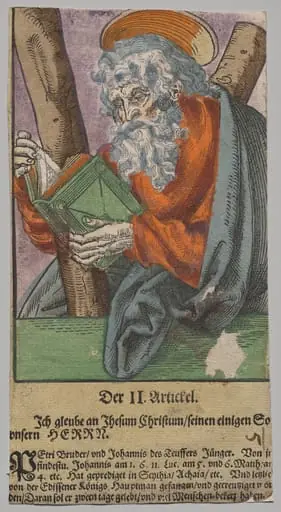 Andrew from Christ, the Apostles, and Saint Paul
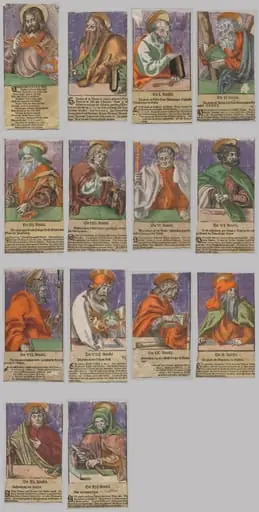 Christ, the Twelve Apostles, and Saint Paul
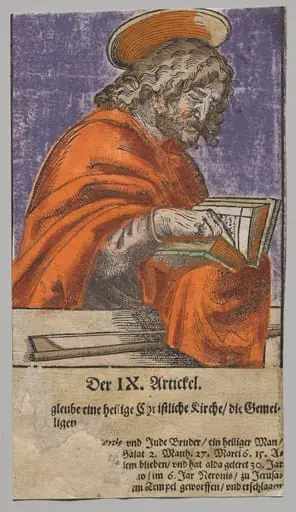 James the Less from Christ, the Apostles, and Saint Paul
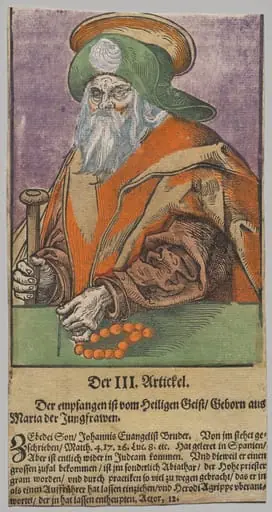 James the Greater from Christ, the Apostles, and Saint Paul
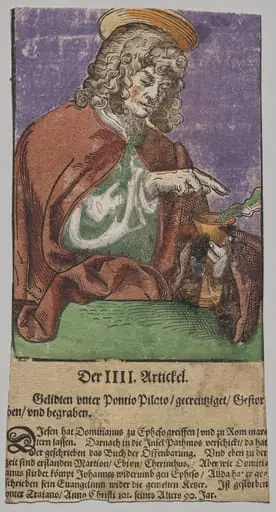 John from Christ, the Apostles, and Saint Paul
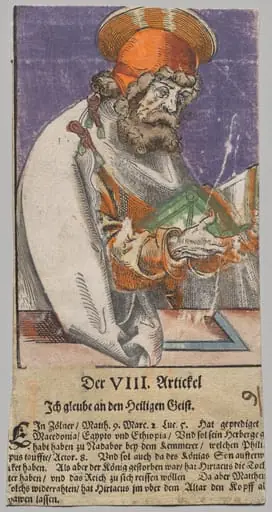 Matthew from Christ, the Apostles, and Saint Paul
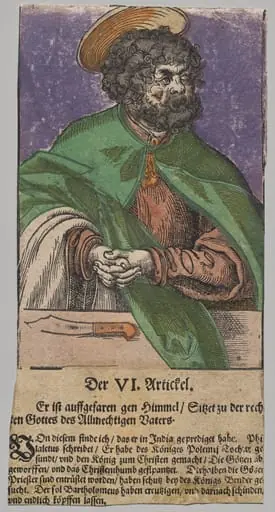 Bartholomew from Christ, the Apostles, and Saint Paul
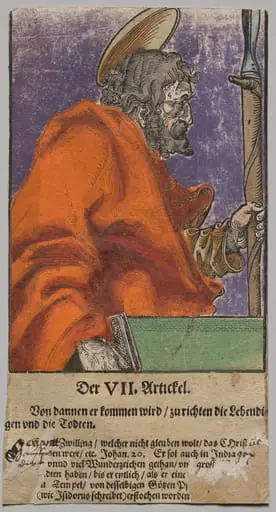 Thomas from Christ, the Apostles, and Saint Paul