Artwork
Simon from Christ, the Apostles, and Saint Paul
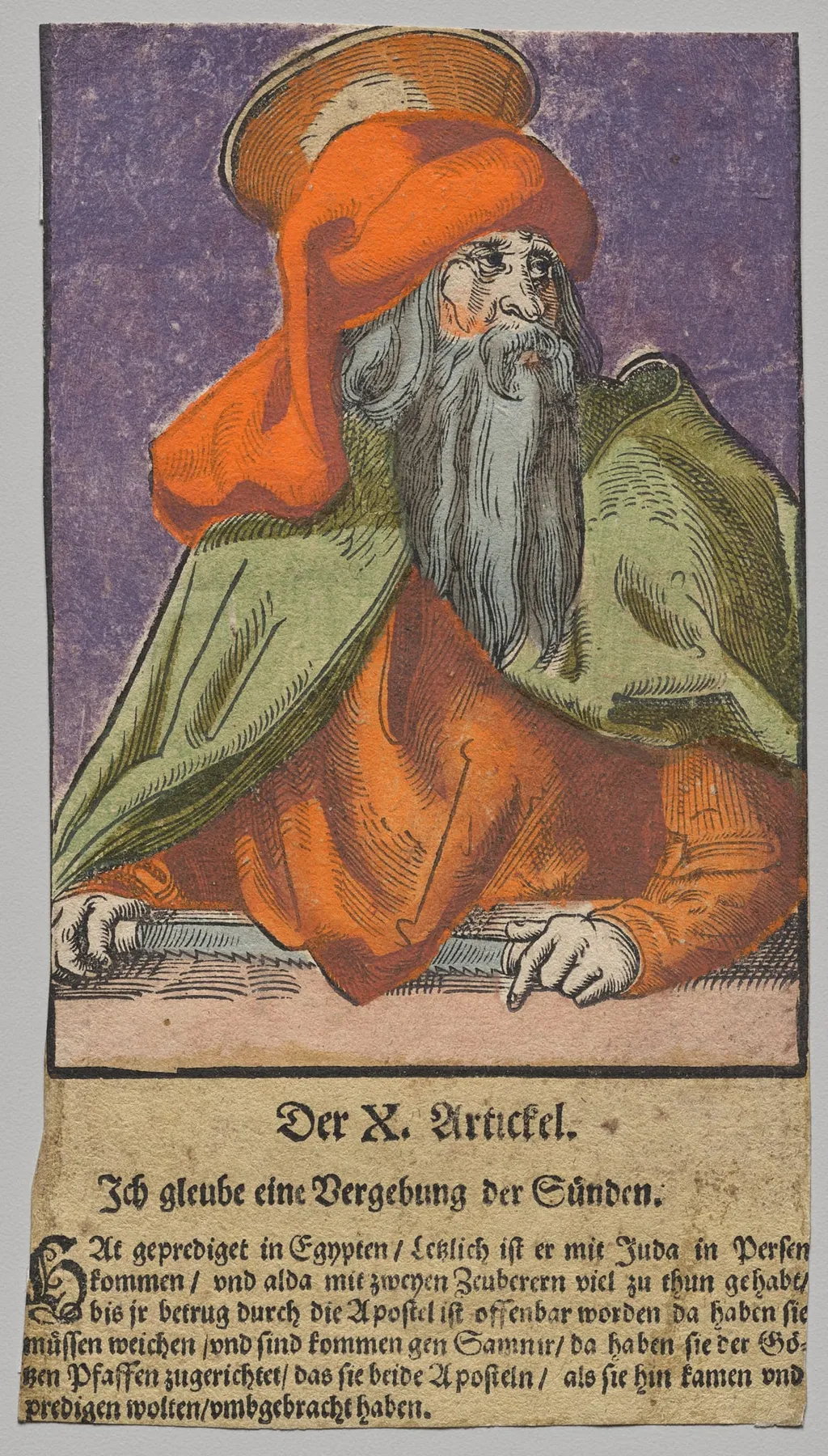
Simon from Christ, the Apostles, and Saint Paul is a print by the Renaissance artist After Lucas Cranach the Elder. It is held in the collection of the Cleveland Museum of Art.
About this work
Overview
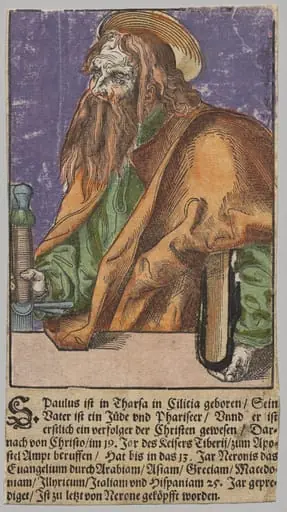
The work, titled "Simon from Christ, the Apostles, and Saint Paul," is a print executed after a design by Lucas Cranach the Elder in 1564. It is part of the collection of the Cleveland Museum of Art, where it is displayed as an example of mid‑sixteenth‑century religious imagery.
Subject & Meaning
The image portrays a solitary, bearded figure with striking orange hair, seated on a rock and supporting his head with one hand. His posture and expression convey fatigue or melancholy, suggesting a moment of contemplation or sorrow within a biblical narrative, likely referencing the apostle Simon Peter.
Technique & Style
Rendered in bold, saturated hues, the print emphasizes the figure’s orange hair and red garment against a dark purple background. A greenish drapery falls over his shoulders, adding contrast. The strong coloration and clear outlines are characteristic of Northern Renaissance printmaking, where line work and tonal contrast were used to highlight emotional content.
History & Provenance
Created as a posthumous copy after Cranach’s original composition, the print entered the Cleveland Museum of Art’s holdings through acquisition in the twentieth century. Its provenance traces back to German workshops that continued Cranach’s workshop traditions after his death.
Context
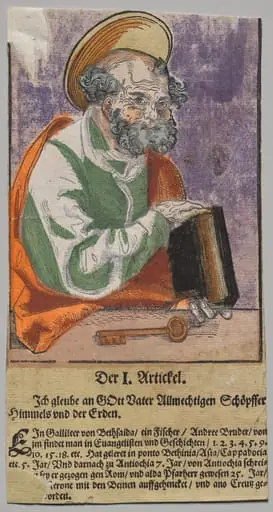
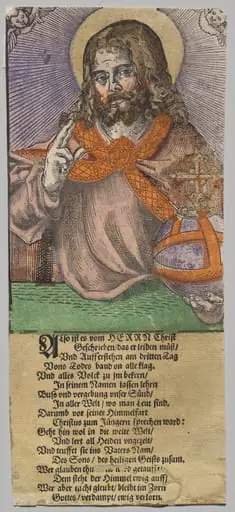
The piece belongs to a broader series of devotional images that circulated in the German lands during the Reformation, intended for private contemplation. Its German caption, written in early modern script, functions as a brief sermon or narrative accompanying the visual scene.
Artist & collection
Artist
Lucas Cranach the Elder, After (1472–1553) was a German artist.

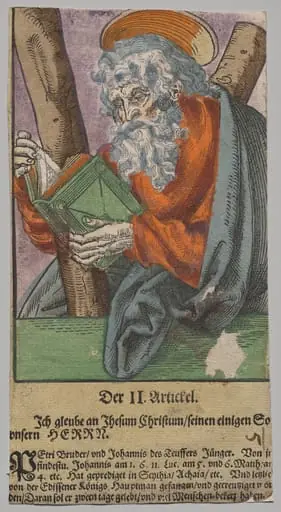 Andrew from Christ, the Apostles, and Saint Paul
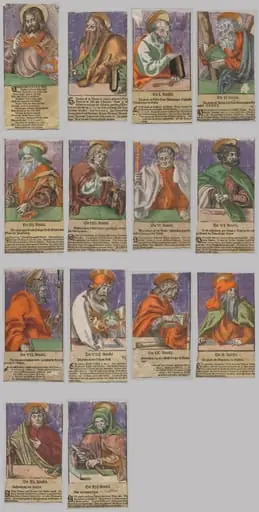 Christ, the Twelve Apostles, and Saint Paul
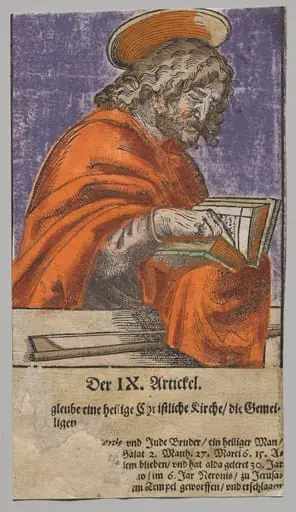 James the Less from Christ, the Apostles, and Saint Paul
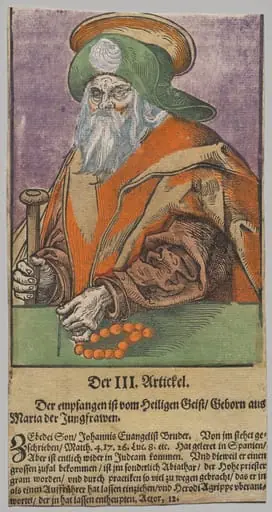 James the Greater from Christ, the Apostles, and Saint Paul
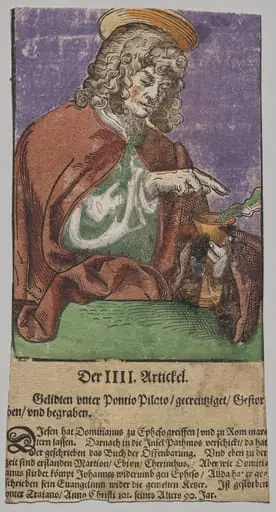 John from Christ, the Apostles, and Saint Paul
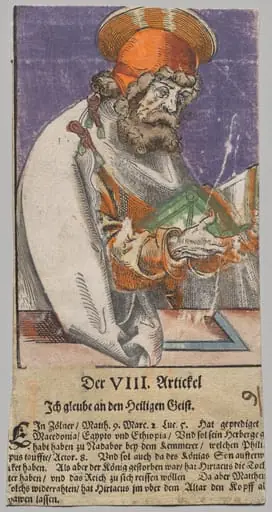 Matthew from Christ, the Apostles, and Saint Paul
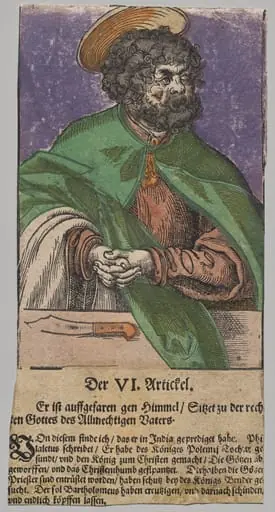 Bartholomew from Christ, the Apostles, and Saint Paul
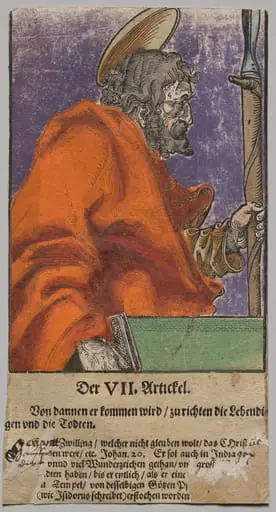 Thomas from Christ, the Apostles, and Saint Paul