Artwork
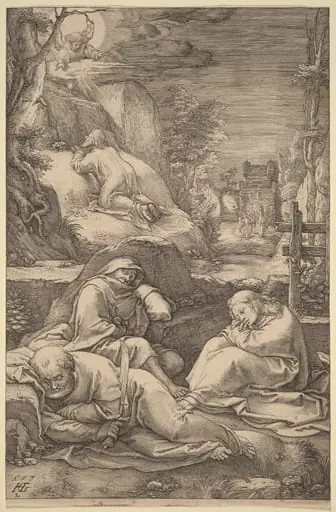
Christ at the Mount of Olives
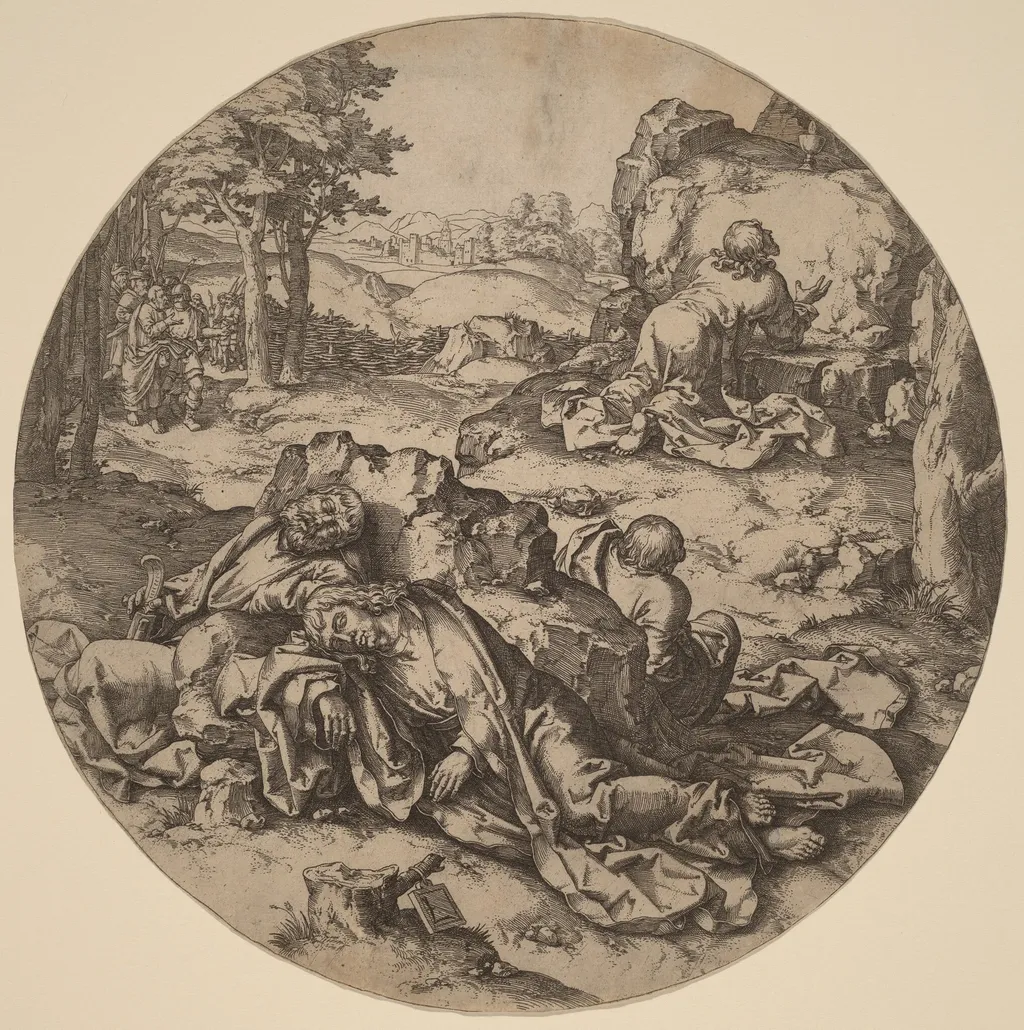
Christ at the Mount of Olives is an ink print by the Renaissance artist Netherlandish 16th Century. It dates from 1509 and is held in the collection of the National Gallery of Art.
About this work
Overview
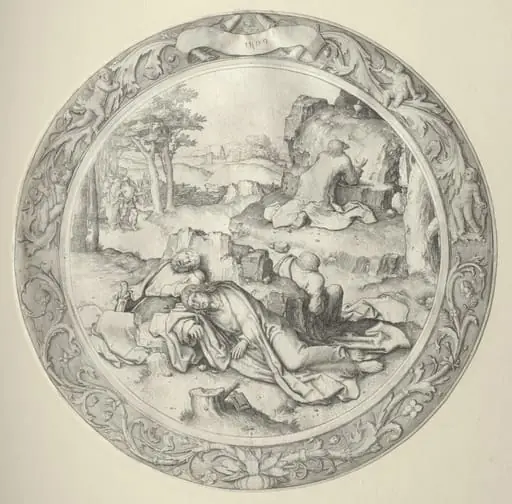
The work is an engraving titled “Christ at the Mount of Olives.” Executed as a black‑and‑white print, it depicts a rocky slope populated by a group of figures gathered around a central, anguished figure. Some individuals lie down, others kneel or stand, all oriented toward the same focal point, while a distant village and solitary tree appear on a far hill.
Subject & Meaning
The central figure is identified as Christ, positioned on the Mount of Olives, a biblical setting associated with prayer and impending sacrifice. The surrounding crowd, in various postures of distress and supplication, reflects the emotional intensity of the moment, emphasizing themes of contemplation, sorrow, and collective witness to the event.
Technique & Style
The engraving relies on fine, intersecting lines to render texture and shadow, especially across the craggy rocks and the folds of clothing. Through cross‑hatching, the artist builds tonal depth without color, creating a sense of three‑dimensional space and atmospheric perspective that guides the viewer’s eye toward the central figure.
Context
As a print medium, the engraving would have allowed broader dissemination of the religious scene than a singular painted work. Its composition aligns with traditional devotional imagery, situating a biblical narrative within a landscape that balances natural detail with symbolic focus on the figure of Christ.
Artist & collection

Artist
This artist carved scenes with fine lines, mostly religious and mythological ones.

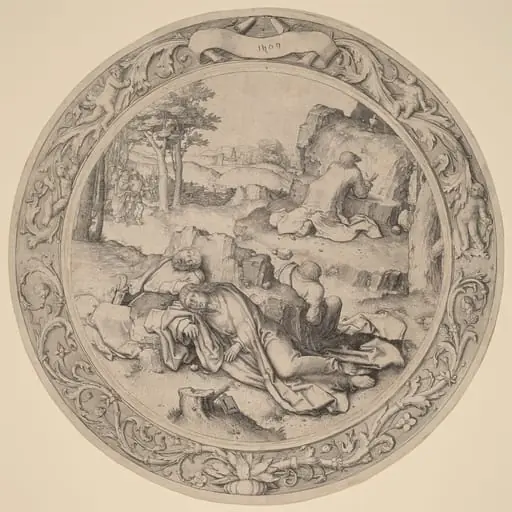 Christ in Gethsemane (Agony in the Garden)
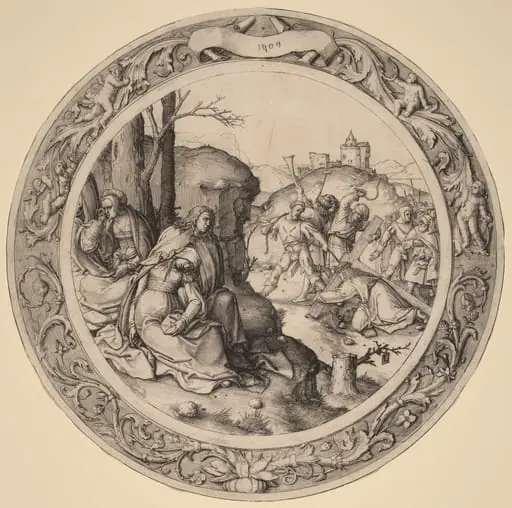 Christ Carrying the Cross
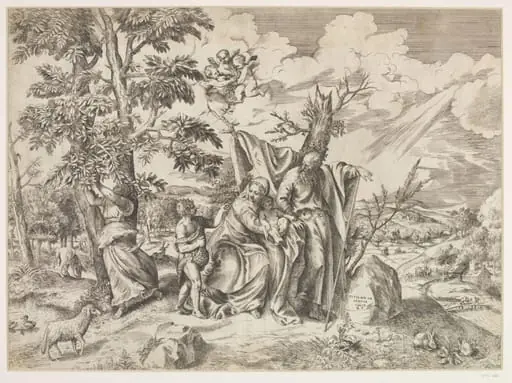 Holy Family
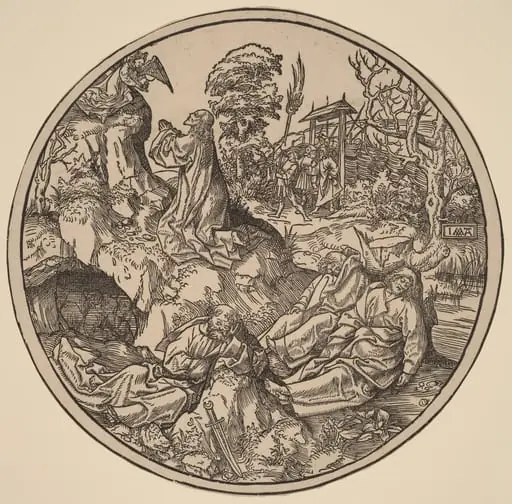 The Agony in the Garden
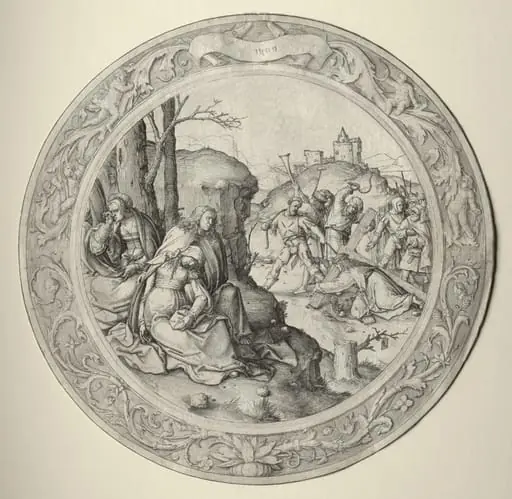 The Round Passion: Christ Carrying the Cross
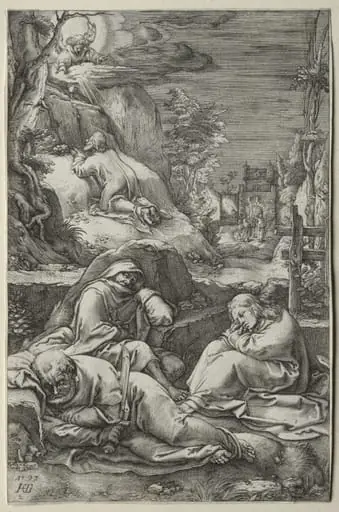 The Passion: The Agony in the Garden
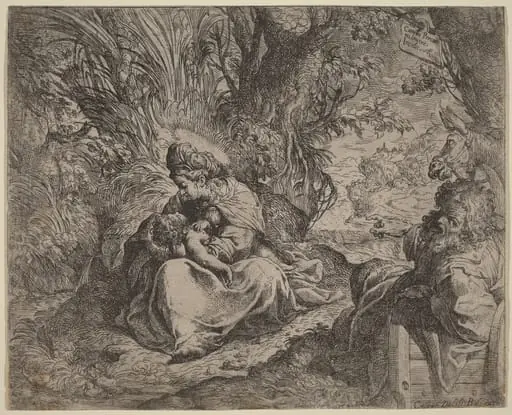 The Rest on the Flight into Egypt
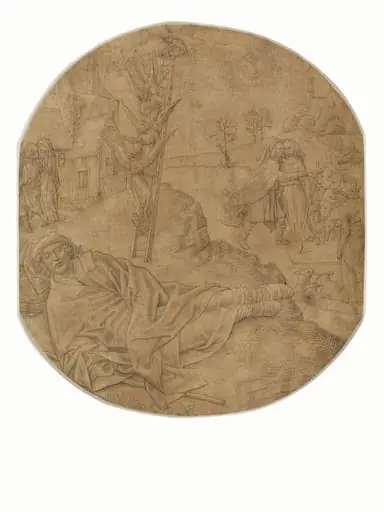 Jacob's Dream
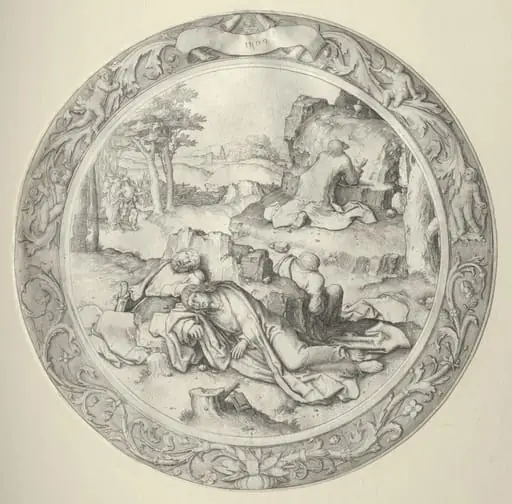 The Round Passion: Christ in Gethsemane (Agony in the Garden)
 The Round Passion
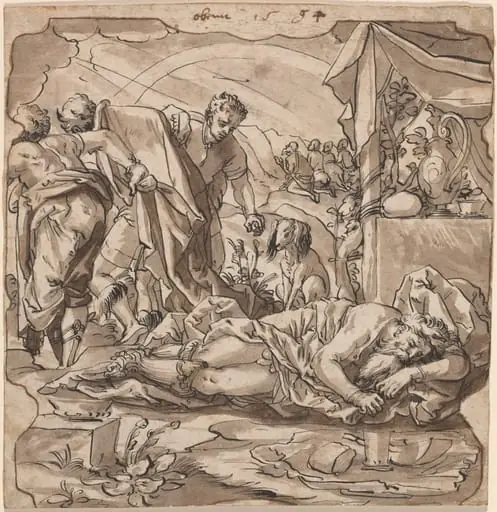 The Drunkenness of Noah
 Christ on the Mount of Olives