Artwork
The Fall of Man
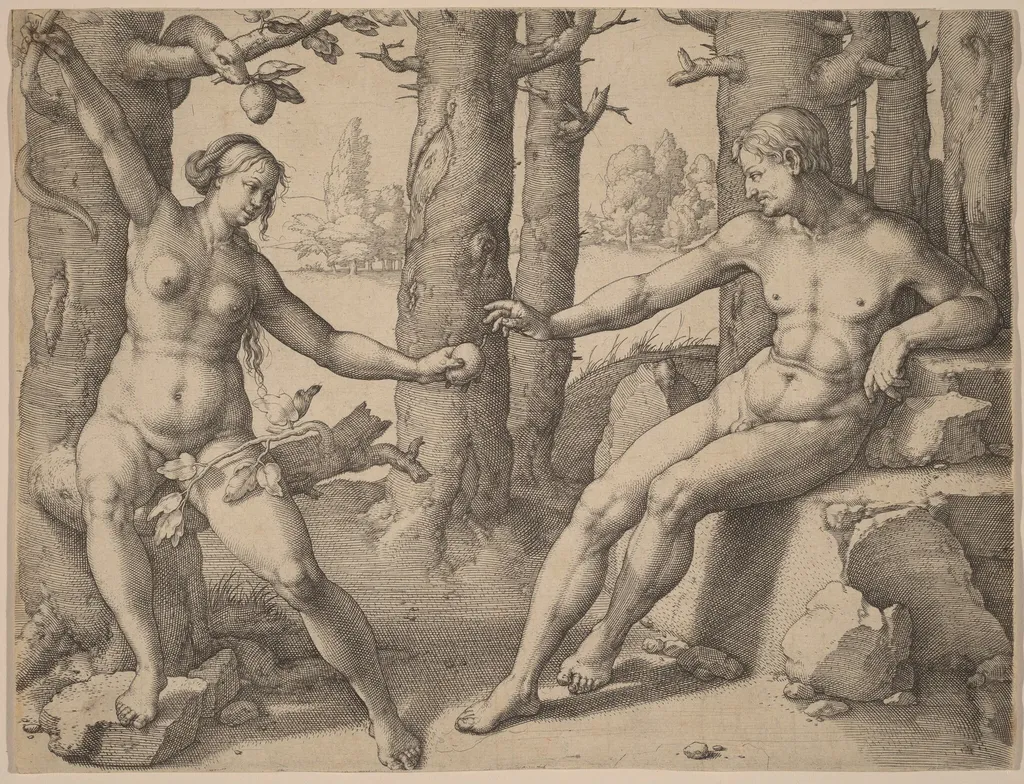
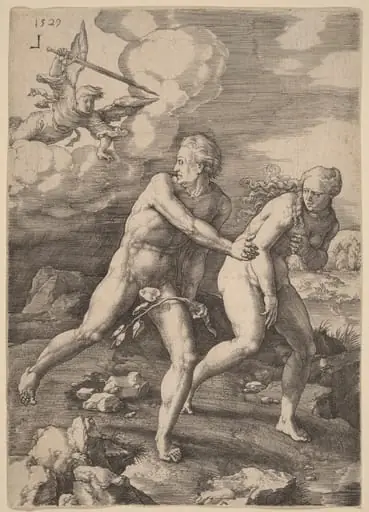
The Fall of Man is an ink print by the Renaissance artist Lucas van Leyden. It dates from 1530 and is held in the collection of the National Gallery of Art.
About this work
Overview
The work exemplifies his technical command and deep engagement with religious themes common in Northern Renaissance art.
Created around 1530, Lucas van Leyden’s engraving *The Fall of Man* is a finely detailed print that captures the biblical moment of humanity’s expulsion from Eden. As one of the Netherlands’ most skilled early printmakers, van Leyden used the precision of engraving to translate complex narratives into intimate, highly finished compositions. The work exemplifies his technical command and deep engagement with religious themes common in Northern Renaissance art.
Subject & Meaning
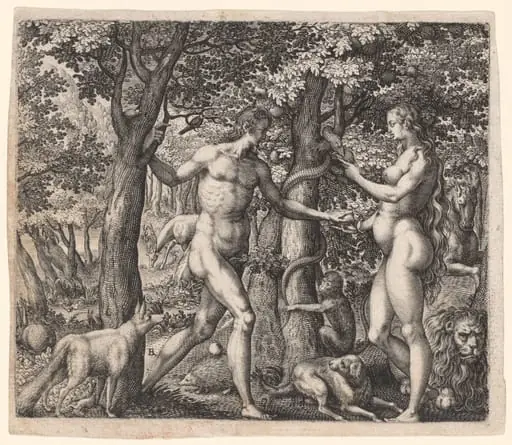
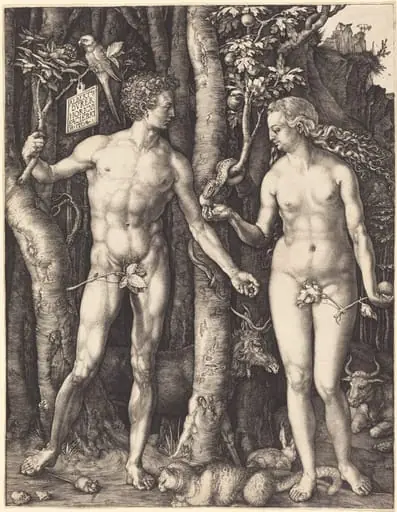
The scene illustrates Adam and Eve’s acquisition of forbidden knowledge, depicted not as a moment of triumph but of hesitation. Eve reaches for the fruit as the serpent coils around the Tree of Knowledge, while Adam, though uncertain, follows. Surrounding figures—wild animals and birds—observe silently, suggesting a world already altered by the act. The composition implies moral consequence, not just narrative, embedding theological weight within naturalistic detail.
Technique & Style
Van Leyden employed fine, controlled lines and layered cross-hatching to model form and texture with remarkable subtlety. Variations in line weight create depth in foliage, fur, and skin, while delicate stippling suggests light and shadow. The engraving’s miniature scale belies its complexity: every leaf, feather, and animal is rendered with precision, reflecting the artist’s dedication to the medium’s potential for narrative richness and tactile realism.
History & Provenance
Produced during the height of van Leyden’s career in Leiden, the engraving circulated widely among collectors and religious patrons in the Low Countries. Its survival in multiple impressions indicates demand for his work, particularly among those interested in moral allegory and devotional imagery. No single original impression is known to be uniquely owned, but examples reside in major European print collections.
Context
In early 16th-century Northern Europe, religious subjects remained central to artistic production, even as humanist thought gained ground. Van Leyden’s work bridges devotional tradition and emerging interest in natural observation. His inclusion of diverse fauna and botanical detail aligns with contemporary scholarly curiosity about creation, reflecting a worldview where spiritual and empirical inquiry coexisted.
Legacy
Van Leyden’s engraving influenced later Northern printmakers through its fusion of narrative clarity and technical refinement. His ability to convey psychological nuance and environmental complexity within a small format set a standard for the medium. Though overshadowed in later centuries by painters, his prints remain studied for their precision and the quiet intensity with which they convey sacred stories.
Own this work as a print
Artist & collection

Artist
Lucas van Leyden (1494 – 8 August 1533), was a Dutch painter and printmaker in engraving and woodcut. Lucas van Leyden was among the first Dutch exponents of genre painting and was a very accomplished engraver.

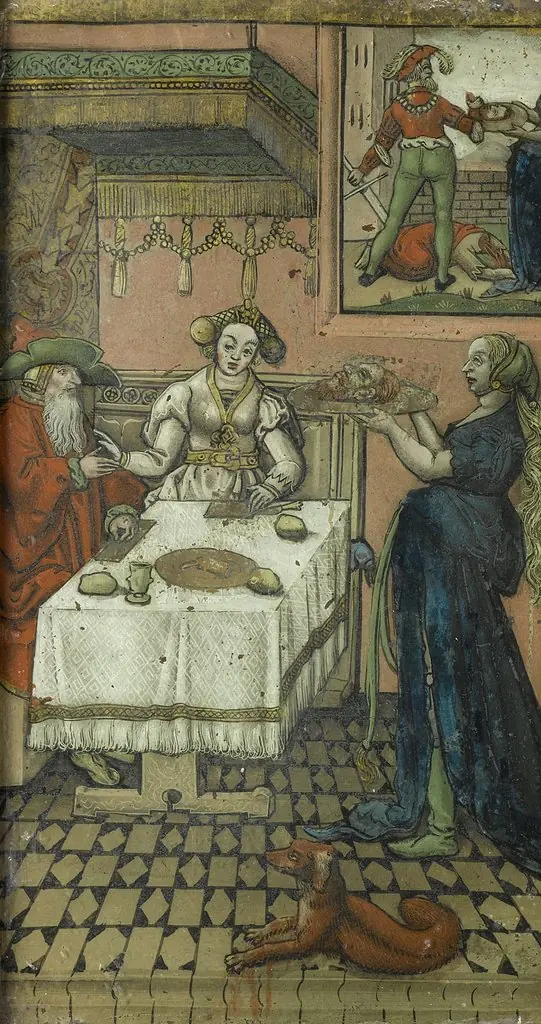 Salome with the head of St John the Baptist
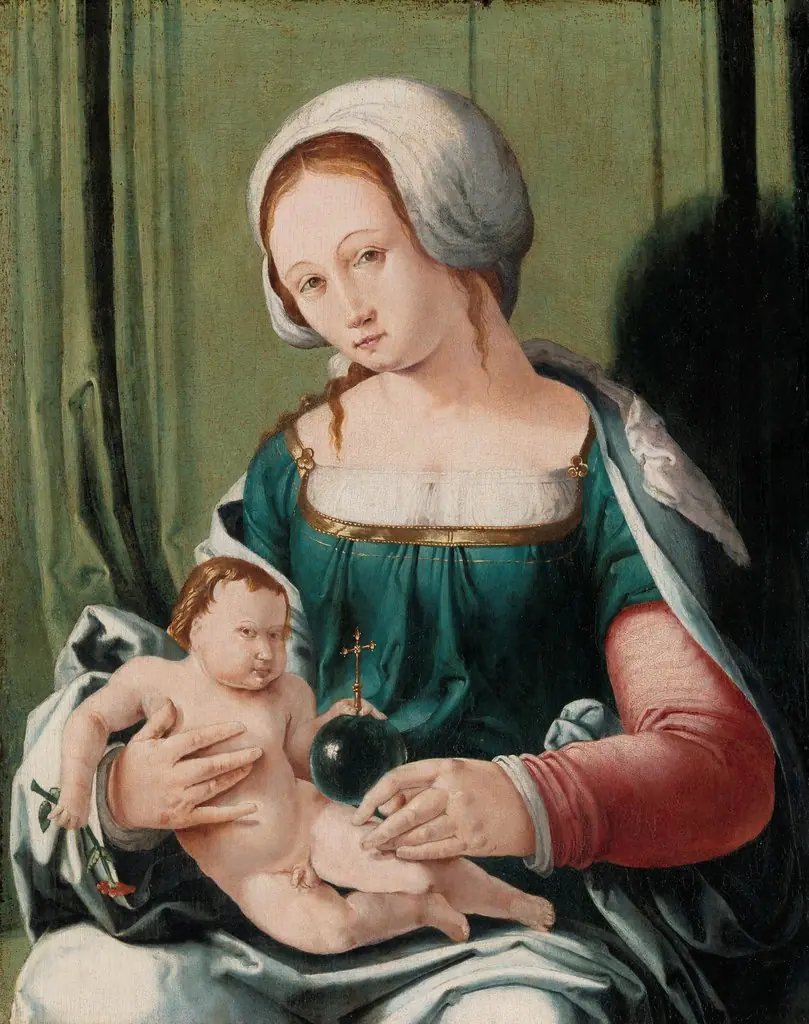 The Virgin and Child
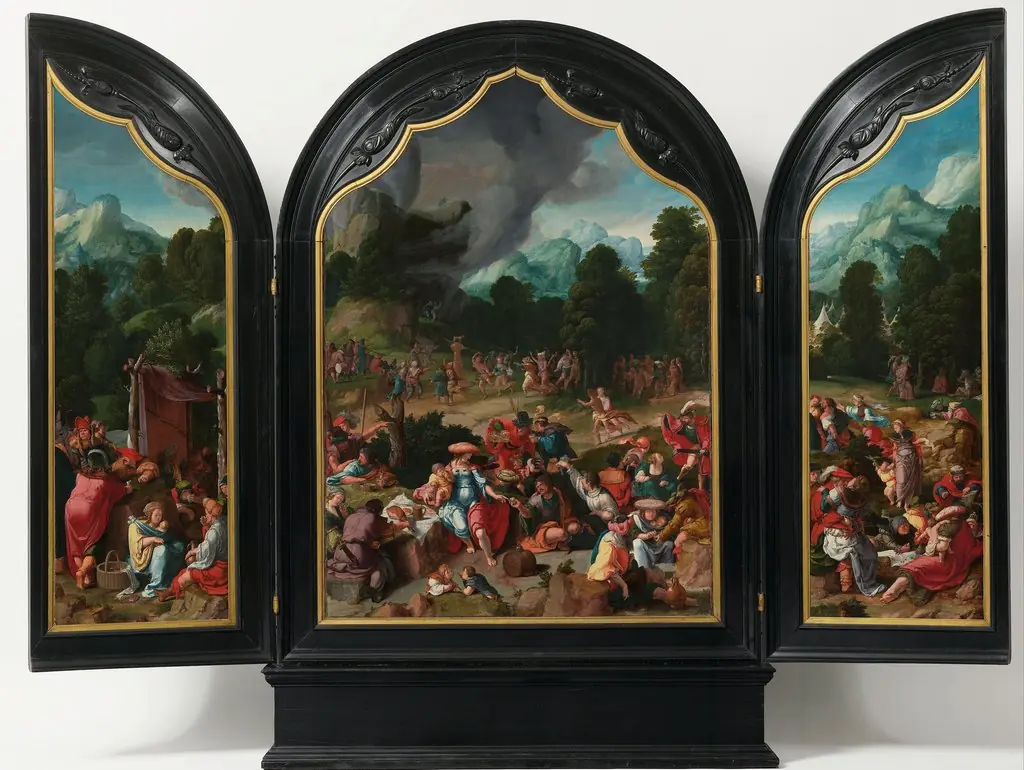 Worship of the Golden Calf
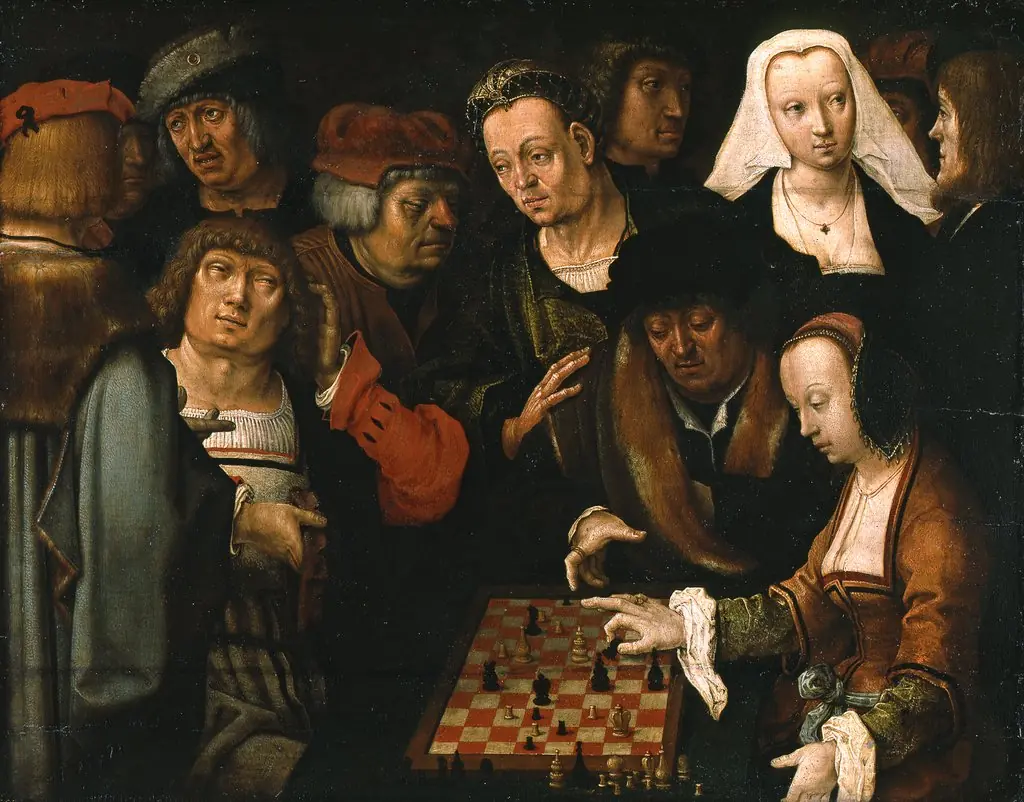 A Game of Chess
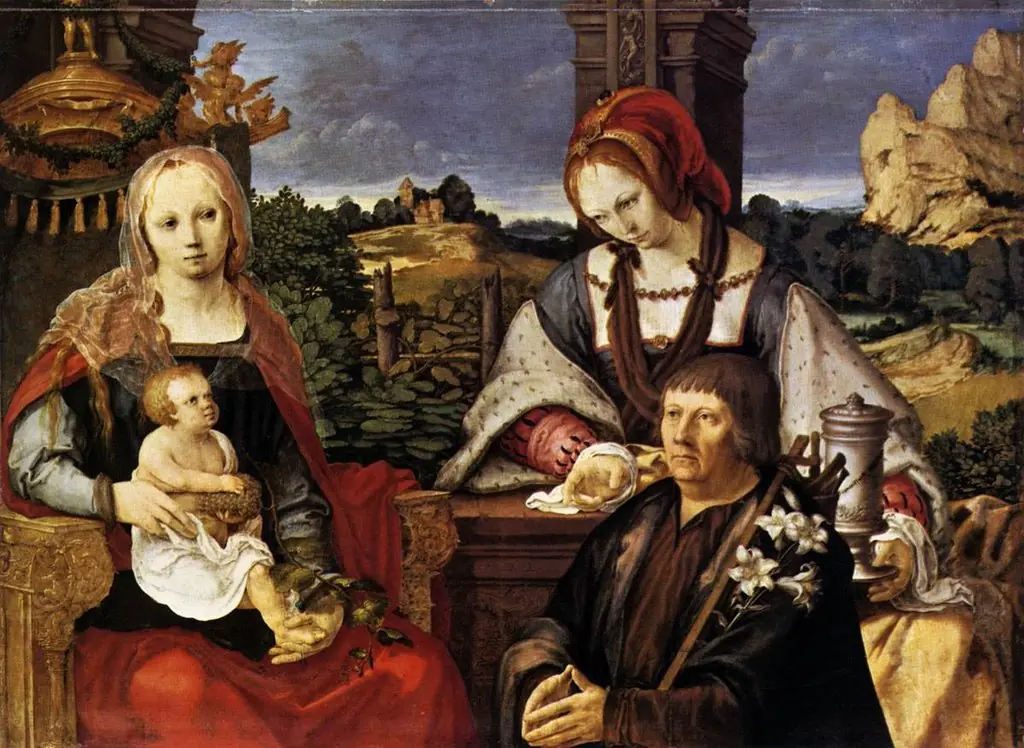 Mary with Child, St. Maria Magdalena and founder (separate outside, Inv. No. 7713)
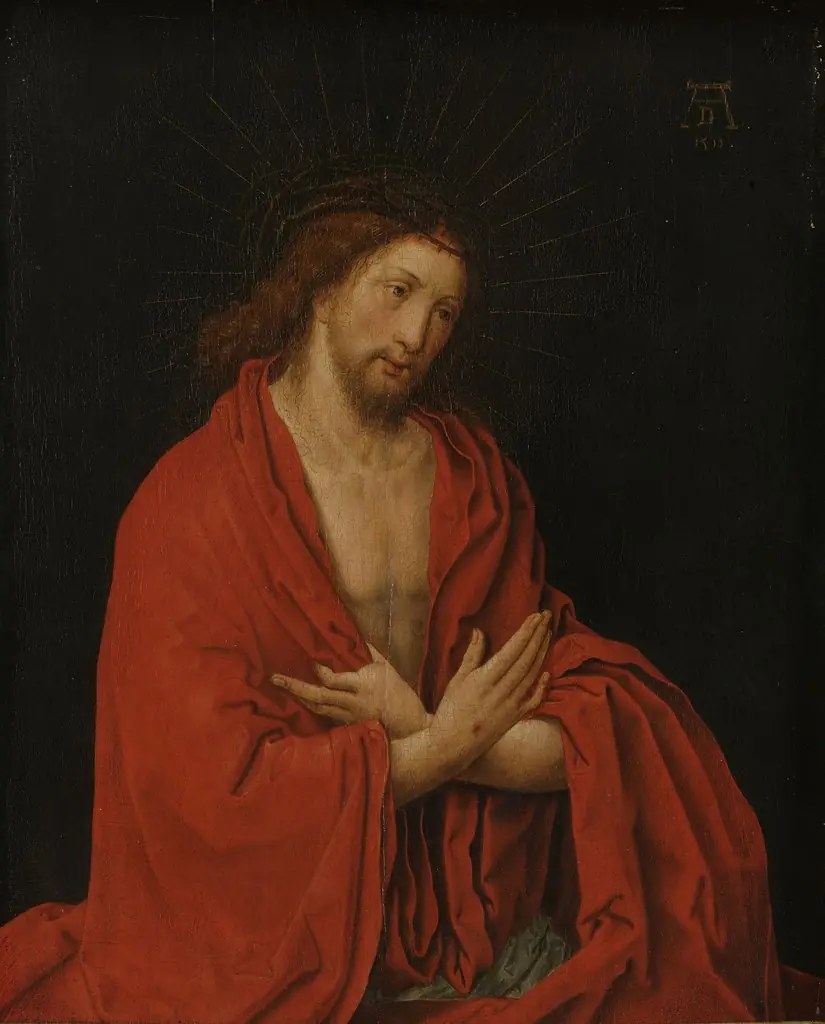 Inner left wing of a diptych with Christ as the Man of Sorrows
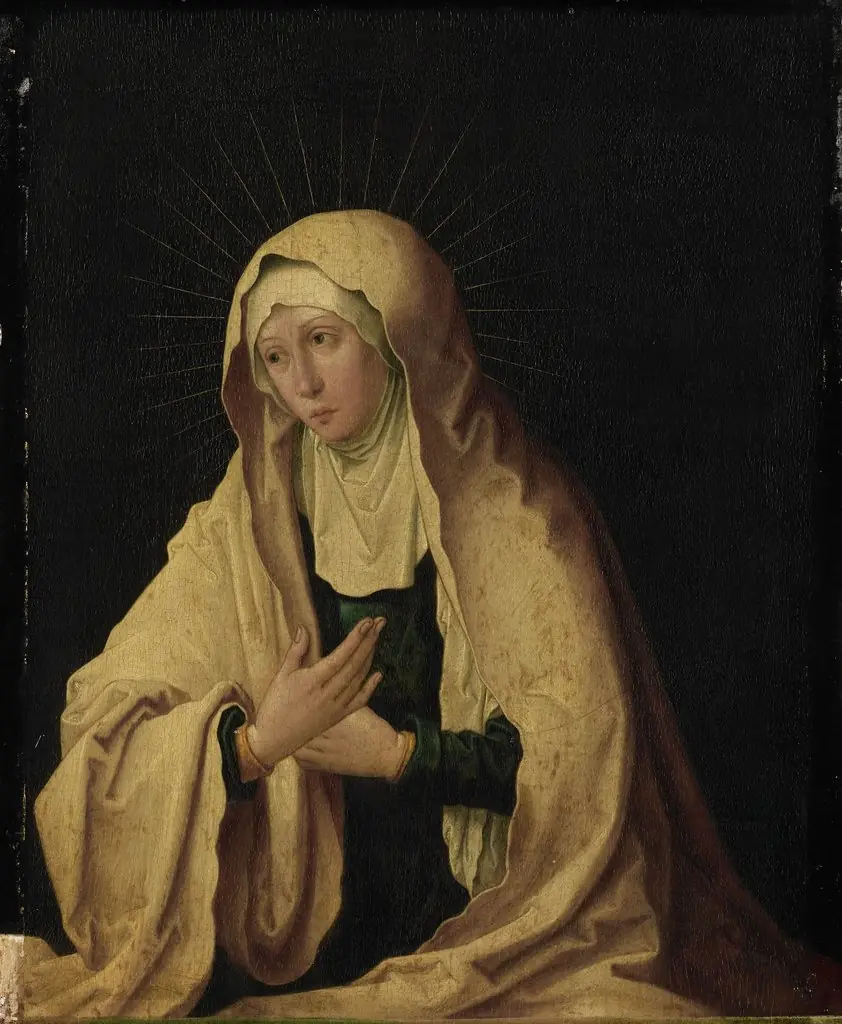 Inner right wing of a diptych with the Virgin as Mater Dolorosa
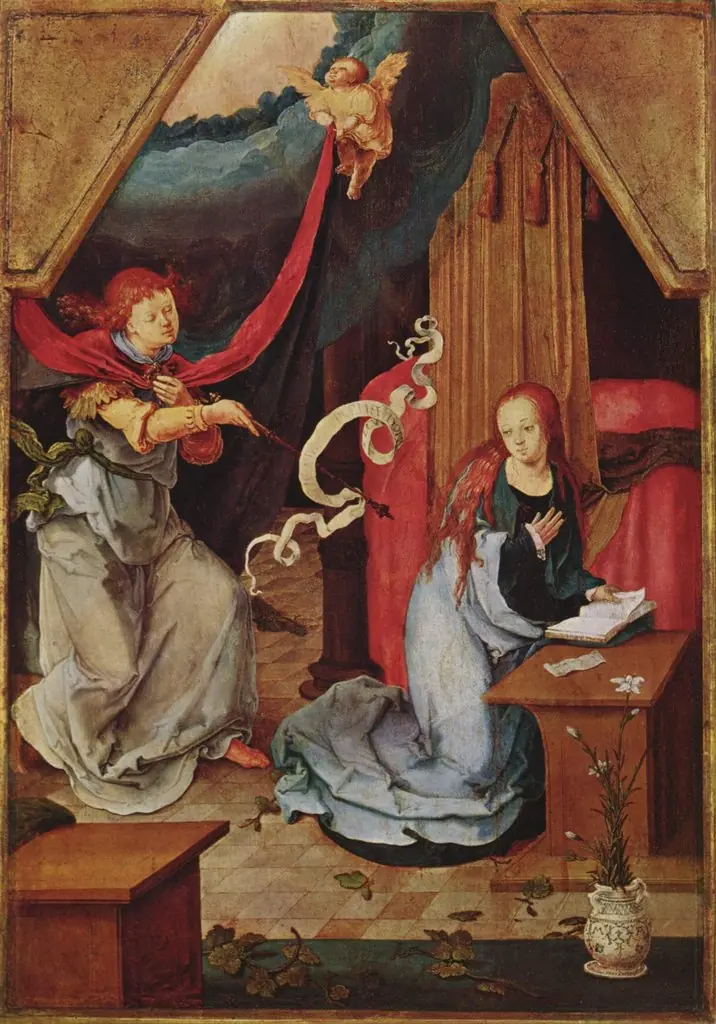 Annunciation