Artwork
Mars, Venus, and Eros
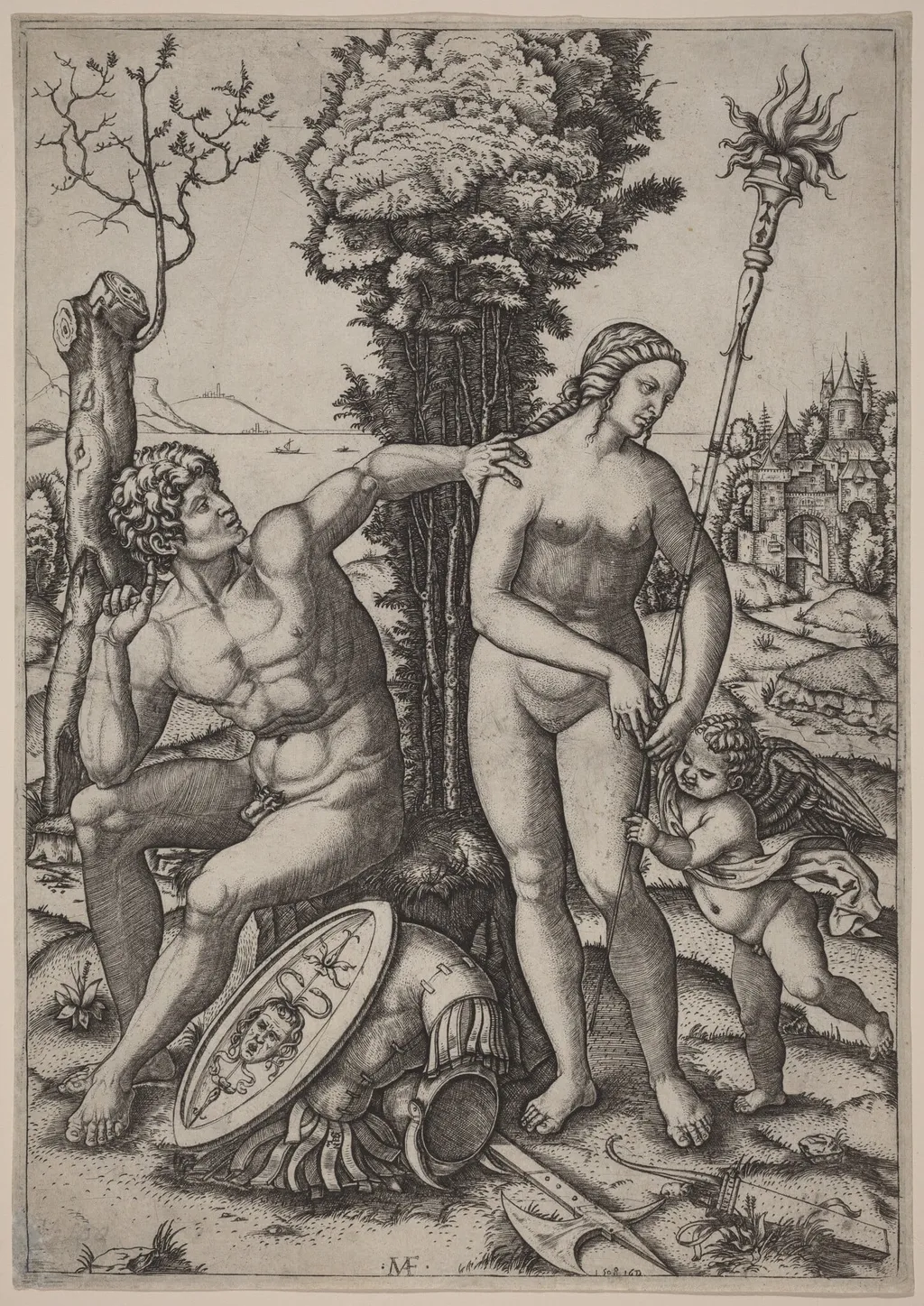
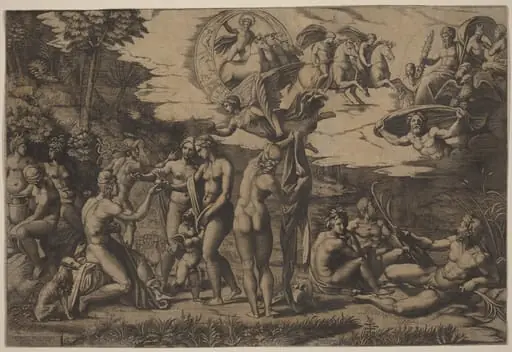
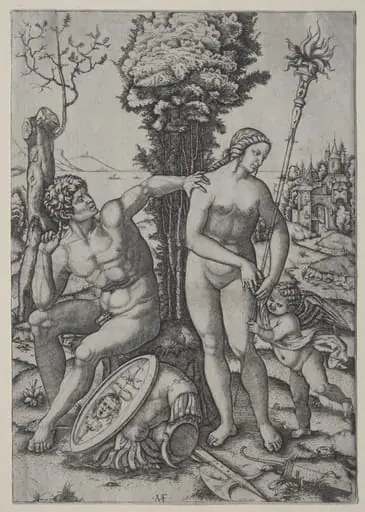
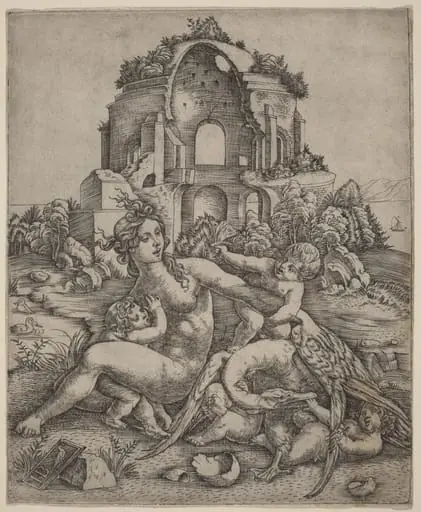
Mars, Venus, and Eros is an ink print by the Renaissance artist Marcantonio Raimondi. It dates from 1508 and is held in the collection of the National Gallery of Art.
About this work
Overview
Mars, Venus, and Eros is a 1508 engraving by Marcantonio Raimondi, a pivotal Italian engraver of the late 15th and early 16th centuries. This work exemplifies Raimondi's role in popularizing High Renaissance aesthetics through his innovative engraving techniques.
Subject & Meaning
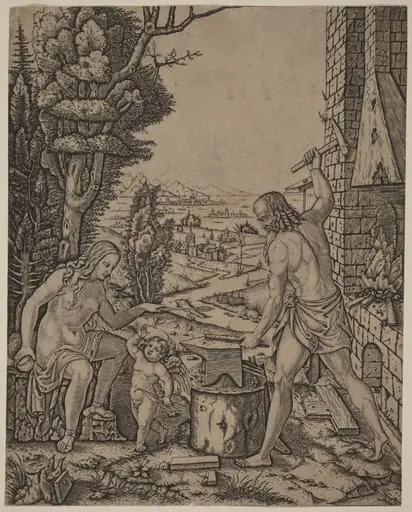
The engraving portrays a mythological scene with the Roman deities Mars, Venus, and their son Eros. Mars, identified by his shield, leans against a tree, while Venus, barefoot and holding a spear, interacts with him. Eros clings to her leg, set against a backdrop of a torch and a castle, symbolizing their mythological narrative.
Technique & Style
Raimondi employed fine, detailed line work to achieve three-dimensional depth and texture, characteristic of both his technical approach and the broader Renaissance print aesthetic. This method allowed for the subtle rendering of shadows, enhancing the figures' volume.
History & Provenance
Created in 1508, Mars, Venus, and Eros reflects Raimondi's close collaboration with Raphael, facilitating the dissemination of High Renaissance styles across Europe through his reproductive prints.
Context
This engraving was produced during the High Renaissance, a period of artistic innovation. Raimondi's use of engraving, a technique allowing for mass production of images, helped spread Renaissance art beyond Italy.
Artist & collection

Artist
Marcantonio Raimondi, often called simply Marcantonio (c. 1470/82 – c. 1534), was an Italian engraver, known for being the first important printmaker whose body of work consists largely of prints copying paintings. He…