Artwork
The Virgin and Child on the Crescent
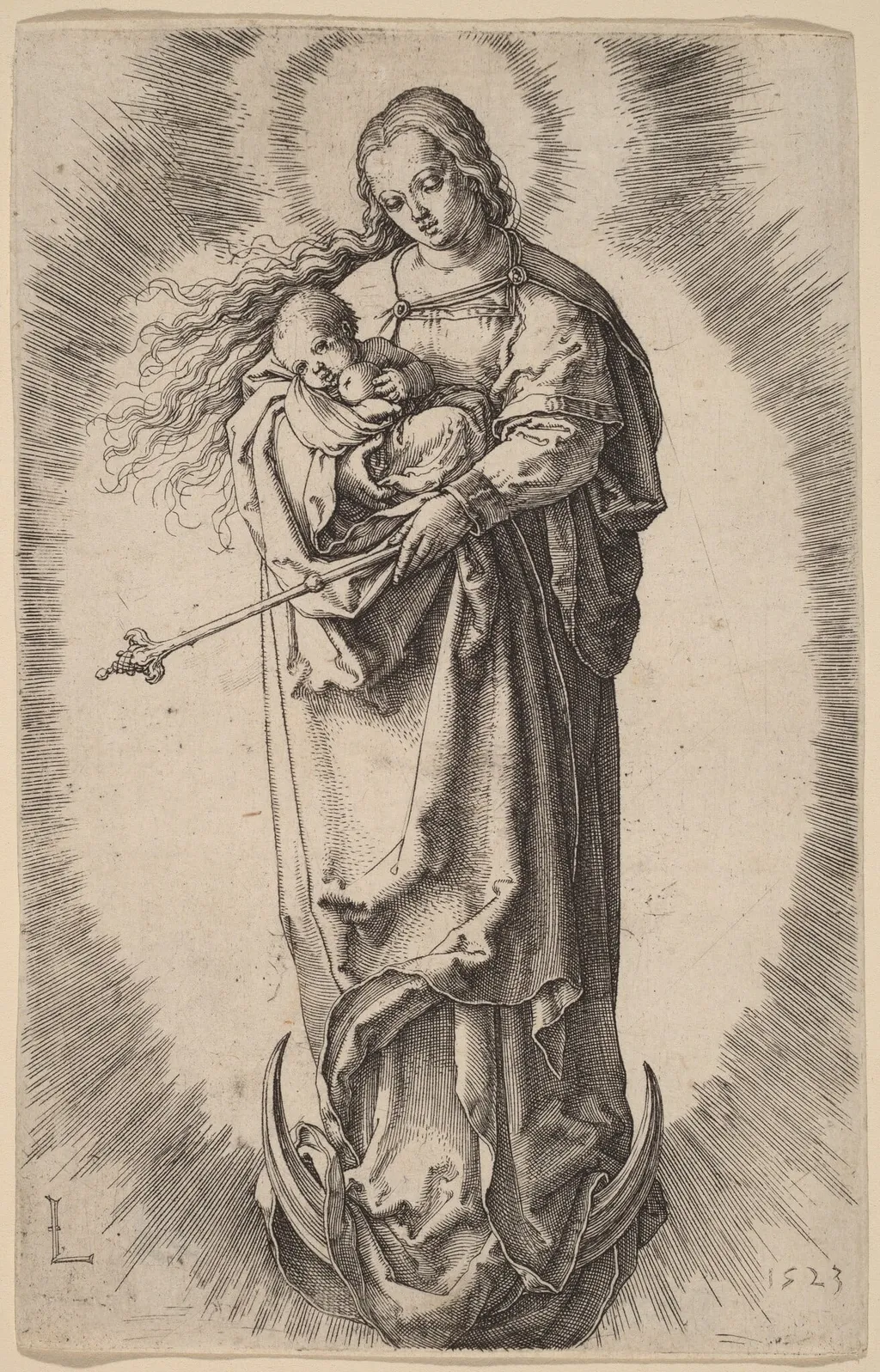
The Virgin and Child on the Crescent is an ink print by the Renaissance artist Lucas van Leyden. It dates from 1523 and is held in the collection of the National Gallery of Art.
About this work
Overview
Created in 1523 by Lucas van Leyden, this engraving is one of several religious prints produced during the early 16th century in the Netherlands.
Created in 1523 by Lucas van Leyden, this engraving is one of several religious prints produced during the early 16th century in the Netherlands. Van Leyden, recognized for his precision in line work, used engraving to translate devotional imagery into intimate, detailed compositions. The piece reflects his dual focus on sacred themes and technical innovation, distinguishing him among his contemporaries in printmaking.
Subject & Meaning
The Virgin Mary is depicted seated upon a crescent moon, a symbol drawn from Revelation 12:1, associating her with celestial purity and triumph over earthly forces. The Christ Child reaches toward her face, suggesting tenderness and divine connection. A staff bearing grapes, likely referencing the Eucharist, rests beside her, reinforcing themes of sacrifice and spiritual nourishment within the scene.
Technique & Style
Van Leyden employed fine, layered cross-hatching to model form and depth, transforming flat ink lines into volumetric figures. The folds of Mary’s robe, the texture of her hair, and the radiating light are rendered with meticulous control. The background’s subtle gradations and the crispness of the crescent moon demonstrate his mastery in manipulating engraving tools to achieve atmospheric and spatial effects without color.
History & Provenance
The print was produced during the height of van Leyden’s career, when his engravings circulated widely across Europe. Though no specific early ownership records are documented, its survival in multiple museum collections suggests it was valued by collectors and religious institutions. Its technical quality ensured its replication and preservation through subsequent centuries.
Context
In early 16th-century Northern Europe, religious imagery remained central to print culture despite growing Reformation tensions. Van Leyden’s work bridged traditional Catholic iconography with emerging humanist sensibilities. His ability to convey spiritual gravity through intricate line work made his prints accessible and influential beyond the confines of any single denomination.
Legacy
Van Leyden’s engraving technique influenced generations of Northern European printmakers. His use of cross-hatching to suggest light and volume became a standard in the medium. While later artists shifted toward broader stylistic trends, this work endures as a refined example of how technical precision could serve devotional expression without overt theatricality.
Artist & collection

Artist
Lucas van Leyden (1494 – 8 August 1533), was a Dutch painter and printmaker in engraving and woodcut. Lucas van Leyden was among the first Dutch exponents of genre painting and was a very accomplished engraver.

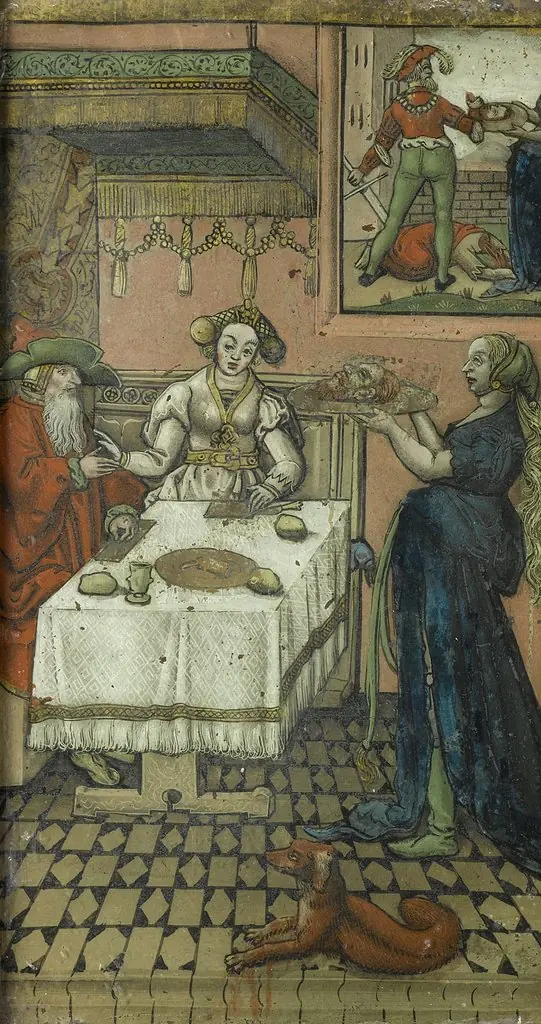 Salome with the head of St John the Baptist
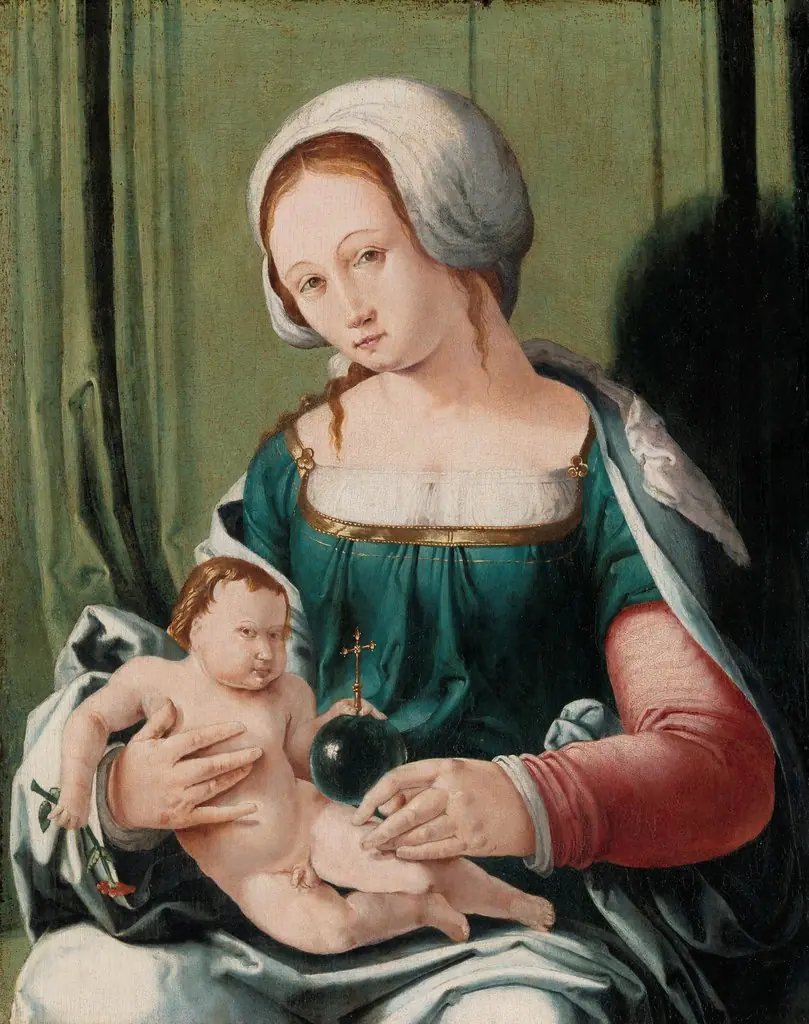 The Virgin and Child
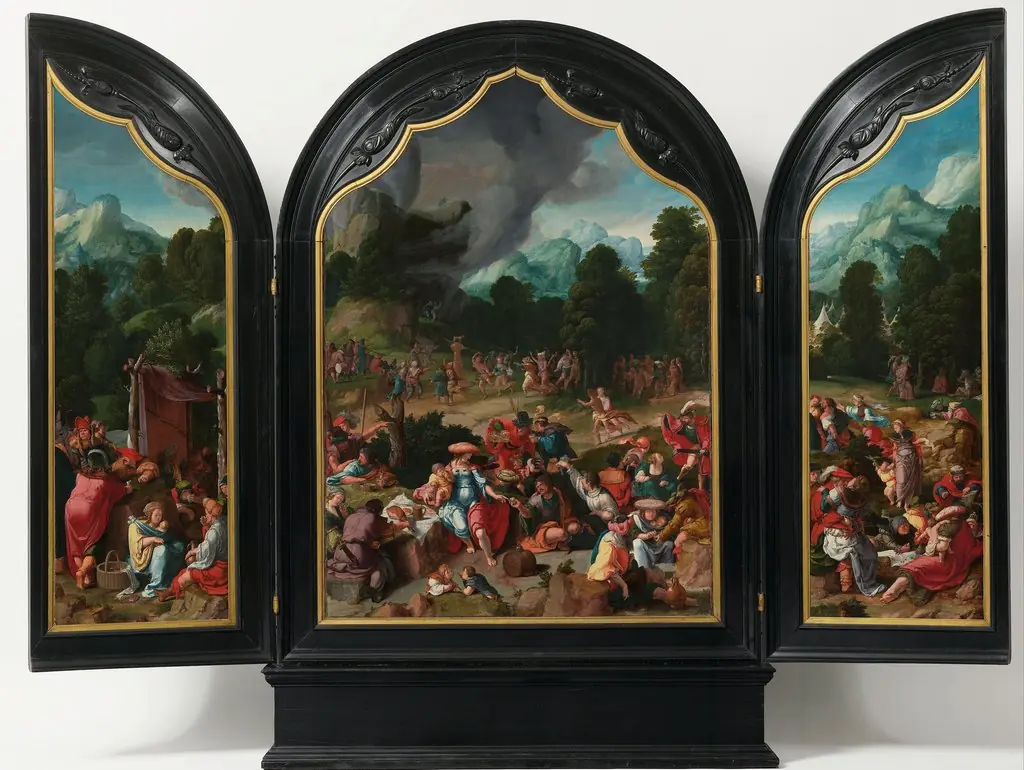 Worship of the Golden Calf
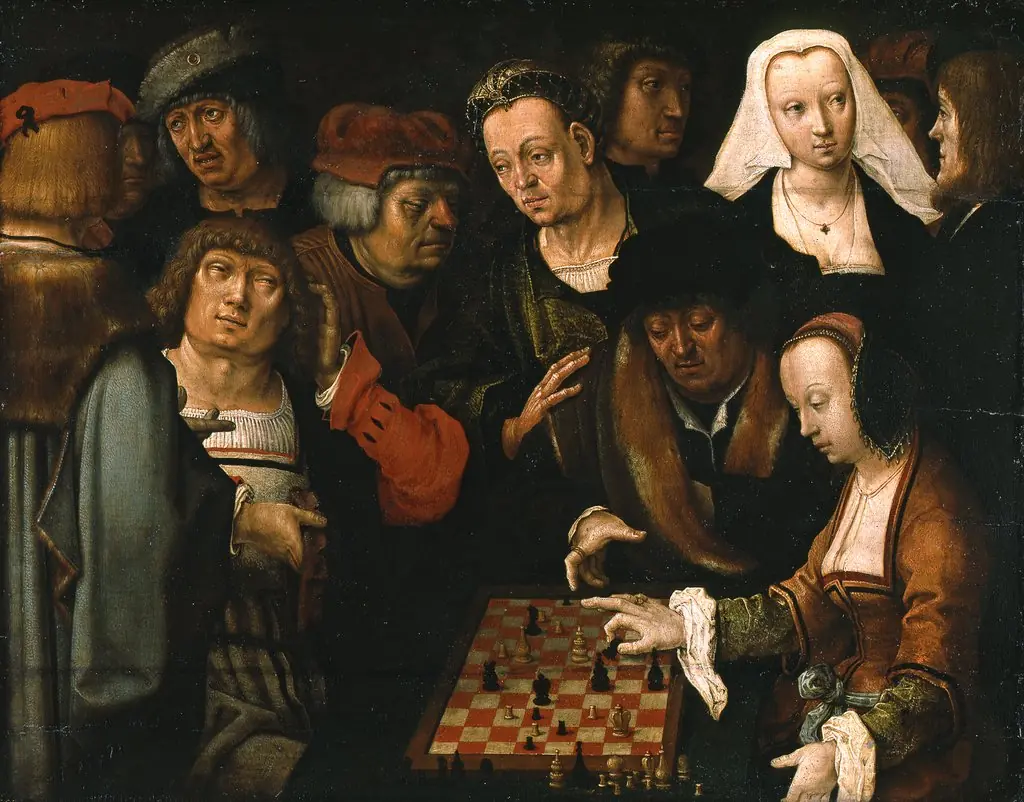 A Game of Chess
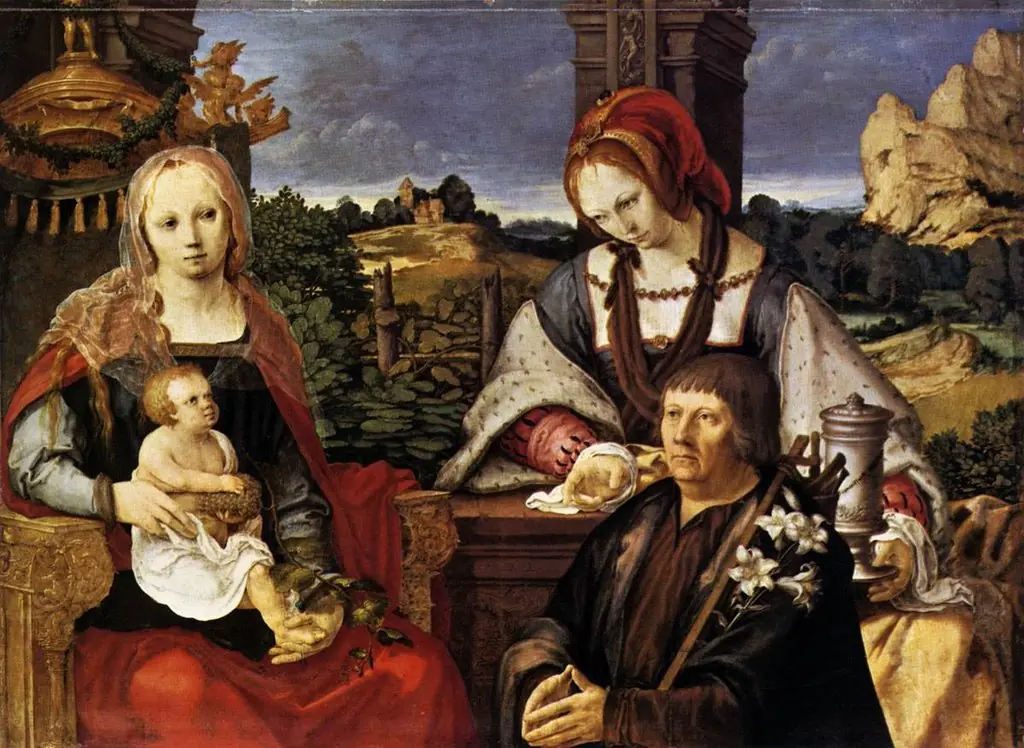 Mary with Child, St. Maria Magdalena and founder (separate outside, Inv. No. 7713)
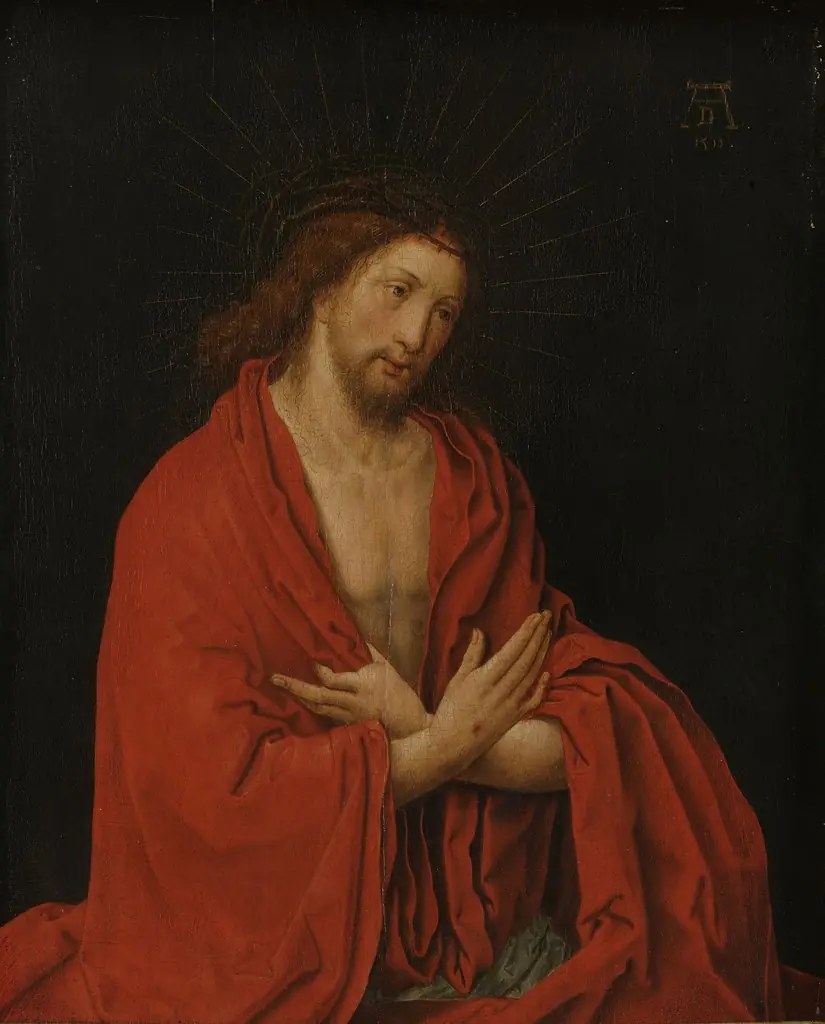 Inner left wing of a diptych with Christ as the Man of Sorrows
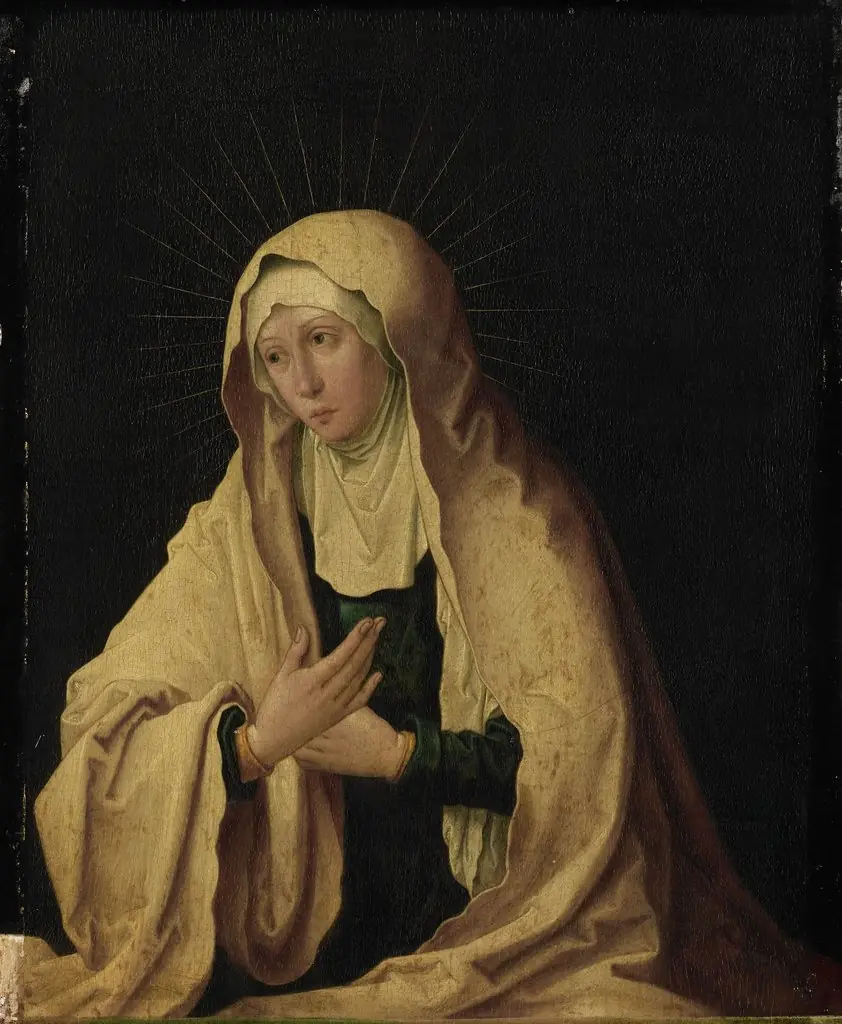 Inner right wing of a diptych with the Virgin as Mater Dolorosa
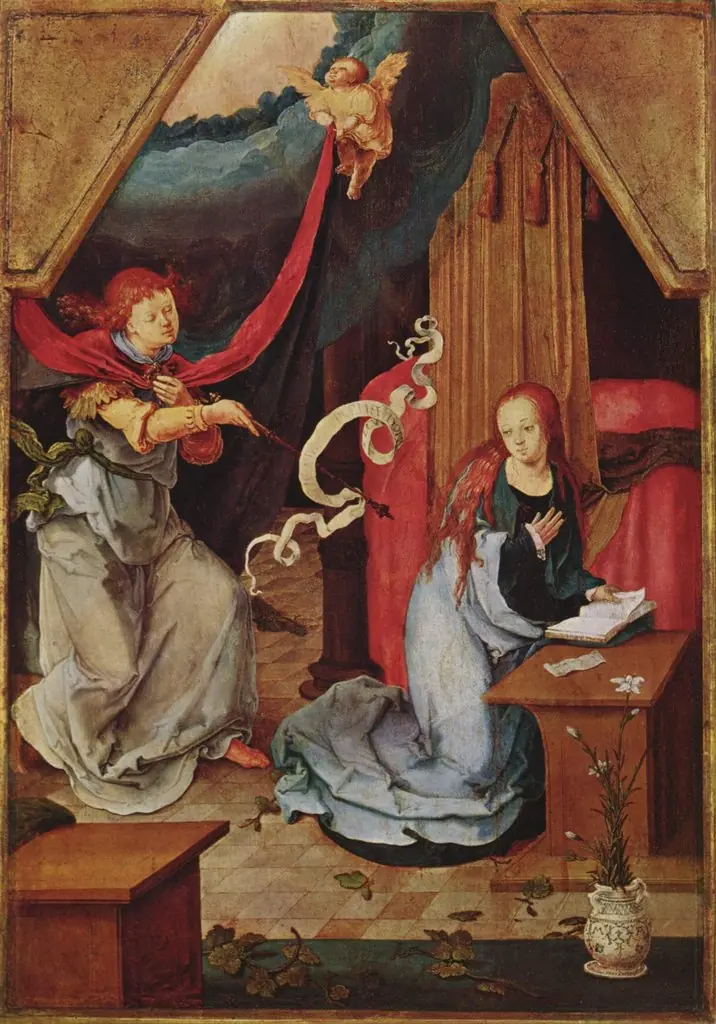 Annunciation
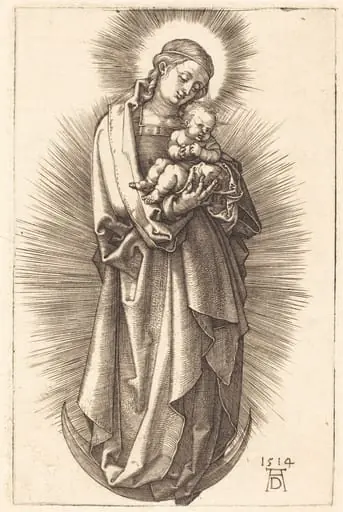 The Virgin and Child on a Crescent with a Diadem
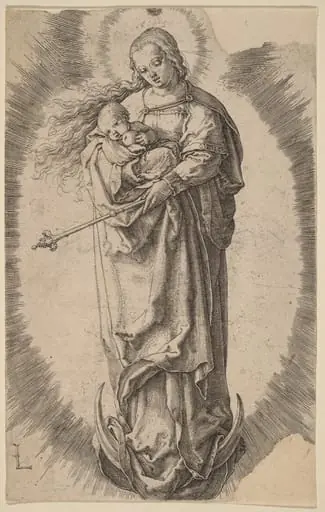 The Virgin and Child on the Crescent
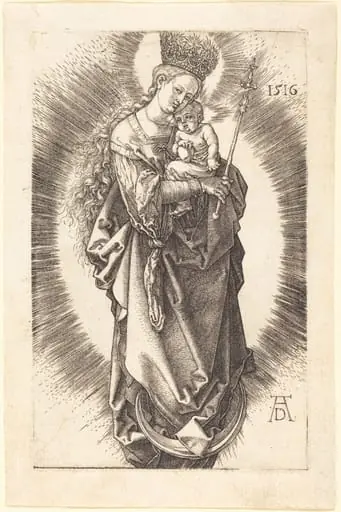 The Virgin and Child on a Crescent with a Sceptre and a Starry Crown
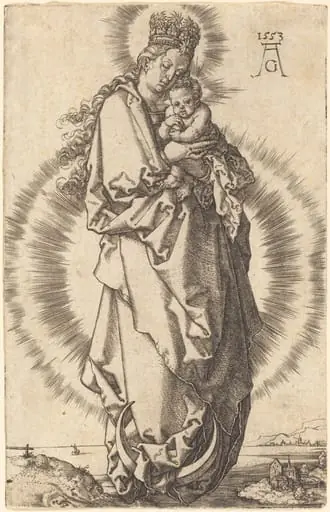 The Virgin with the Child on the Crescent
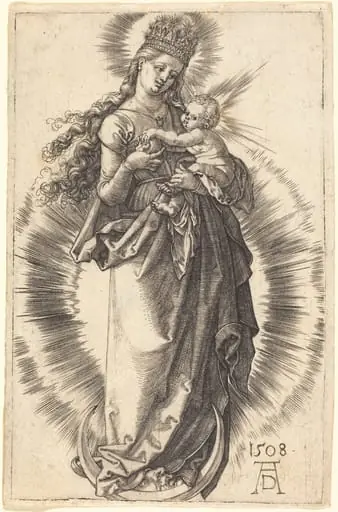 The Virgin and Child on a Crescent with a Starry Crown
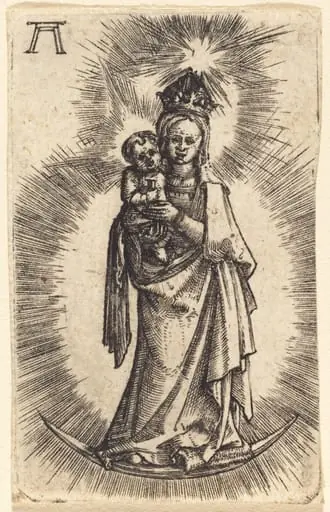 The Virgin on the Crescent
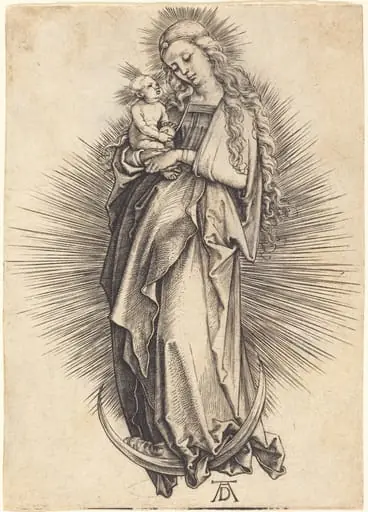 The Virgin on the Crescent
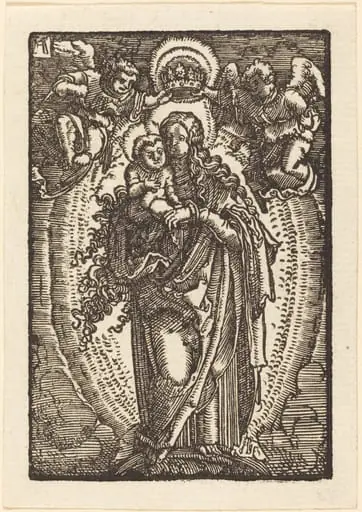 The Virgin and Child on a Crescent
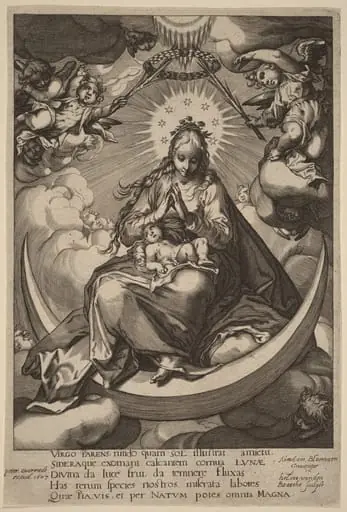 The Virgin and Child on the Crescent