Artwork
The Virgin on the Crescent
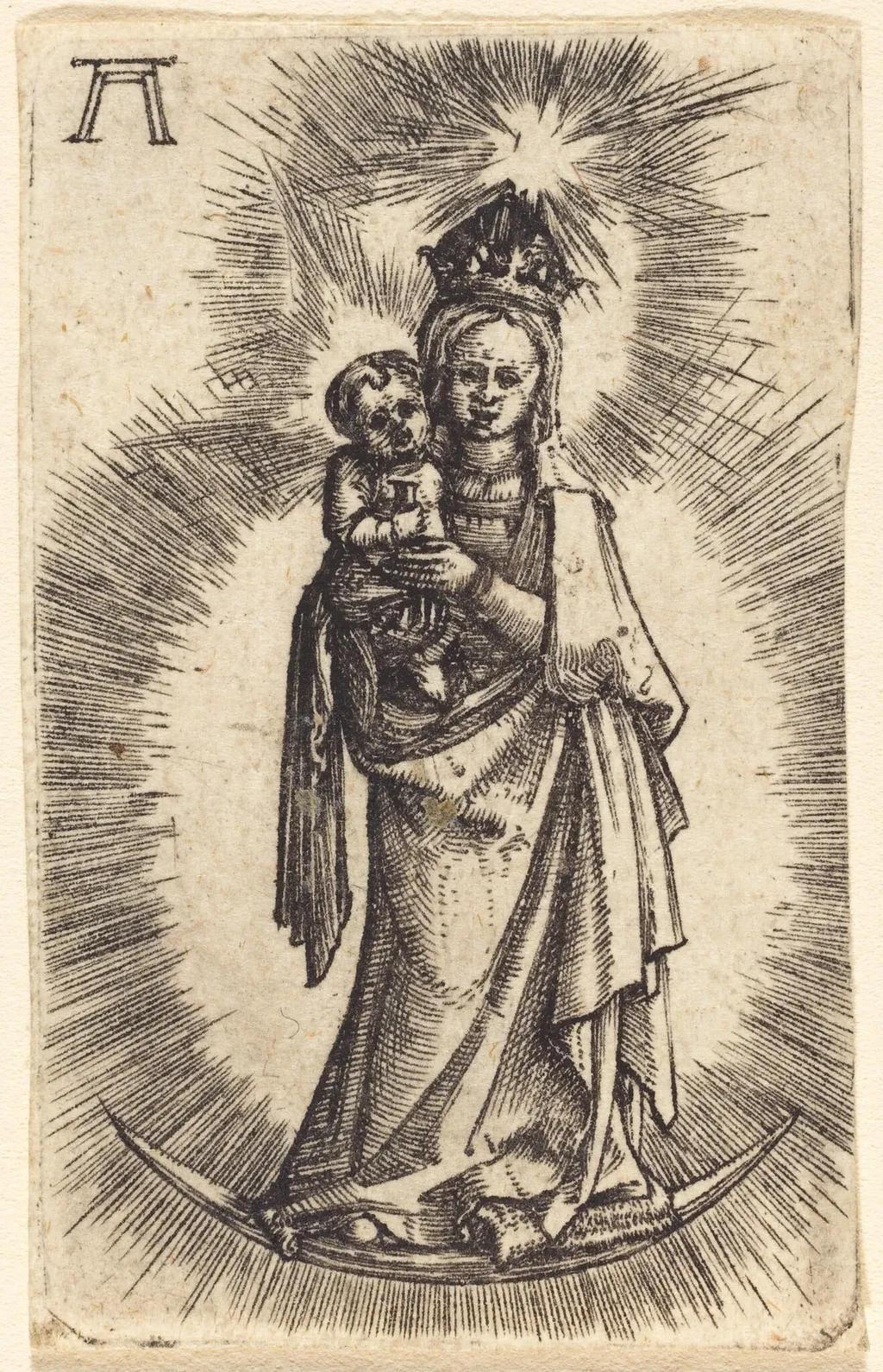
The Virgin on the Crescent is an ink print by the Renaissance artist Albrecht Altdorfer. It dates from 1516 and is held in the collection of the National Gallery of Art.
About this work
Overview
The work exemplifies his mastery of printmaking and his interest in merging spiritual themes with richly rendered environments.
Created around 1516 by Albrecht Altdorfer, this engraving on laid paper depicts the Virgin Mary standing atop a crescent moon, a symbolic reference to the Woman of the Apocalypse. As a key figure in the Danube School, Altdorfer combined religious iconography with detailed natural elements, using fine linear engraving to achieve both precision and atmospheric depth. The work exemplifies his mastery of printmaking and his interest in merging spiritual themes with richly rendered environments.
Subject & Meaning
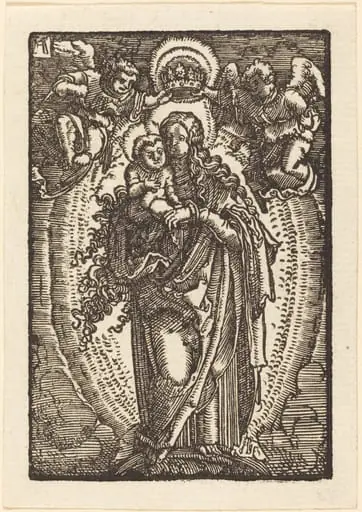
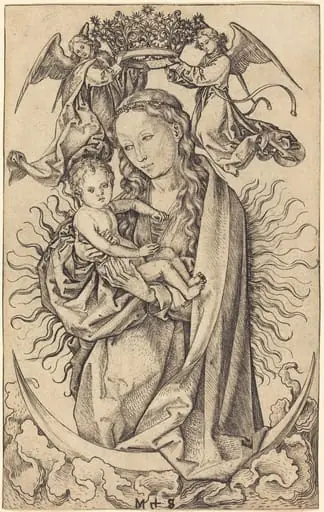
The image portrays the Virgin Mary as the celestial woman from Revelation 12, crowned and standing on the crescent moon, a traditional emblem of her purity and divine role. She cradles the Christ Child, who gazes upward with quiet solemnity. Radiating lines behind her head suggest a halo, reinforcing her sacred status. The composition draws on medieval and early Renaissance Marian symbolism, presenting her not merely as a mother but as a cosmic figure of grace and protection.
Technique & Style
Altdorfer employed fine, controlled engraving lines to model form and texture, characteristic of the Nuremberg Little Masters. The background features intricate, radiating strokes that evoke divine light without using gold or color, relying instead on tonal contrast. His attention to detail in the folds of the robe and the delicate rendering of the child’s features demonstrates a meticulous approach to line, balancing clarity with emotional subtlety in a small-scale format.
History & Provenance
The print was produced in Regensburg, where Altdorfer lived and worked as a painter, architect, and printmaker. Though specific early ownership records are sparse, the work aligns with his broader output of religious prints circulated among educated patrons in southern Germany. Its survival in multiple institutional collections suggests it was valued within early 16th-century artistic and devotional circles.
Context
In the early 1500s, religious imagery remained central to German art, even as humanist thought and Reformation debates reshaped spiritual expression. Altdorfer’s depiction of Mary as a cosmic figure reflects lingering medieval iconography, yet his landscape-like treatment of the background anticipates a growing interest in nature as a carrier of meaning. His prints reached audiences beyond altarpieces, contributing to the spread of devotional imagery through the print medium.
Legacy
Altdorfer’s *The Virgin on the Crescent* stands as an example of how printmaking could convey complex theological ideas with intimate detail. While not widely replicated, it influenced later Northern European engravers who sought to merge spiritual symbolism with naturalistic technique. His approach to combining sacred subject matter with expressive line work helped shape the evolution of religious printmaking in the decades following the Reformation.
Artist & collection
Artist
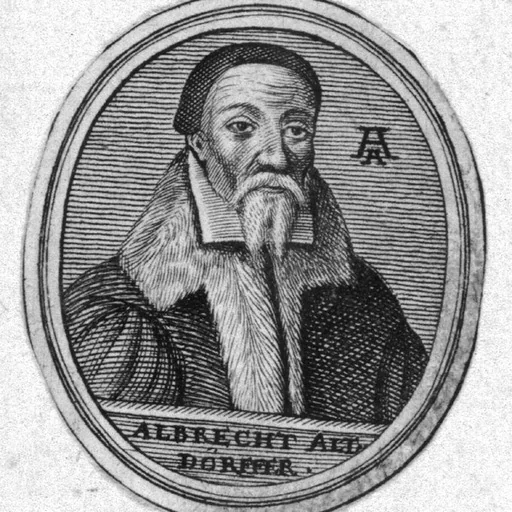
Albrecht Altdorfer (c. 1480 – 12 February 1538) was a German painter, engraver and architect of the Renaissance working in Regensburg. Along with Lucas Cranach the Elder and Wolf Huber he is regarded to be the main…

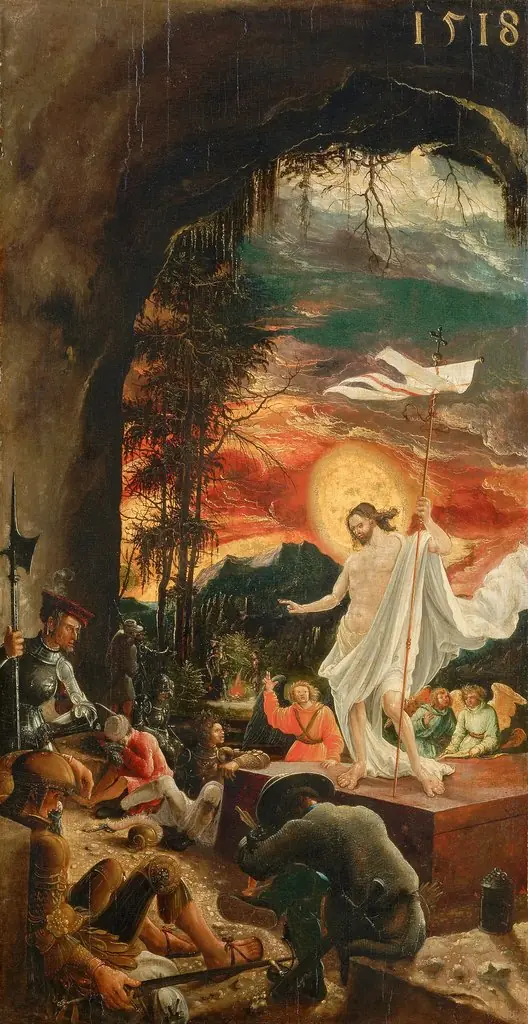
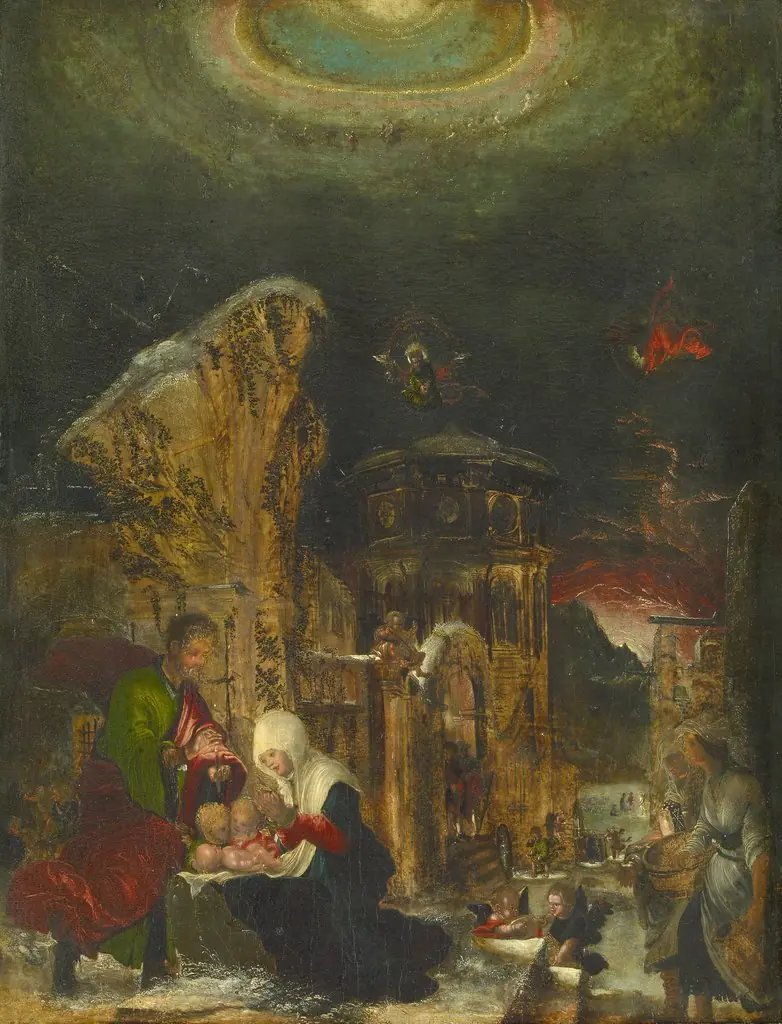
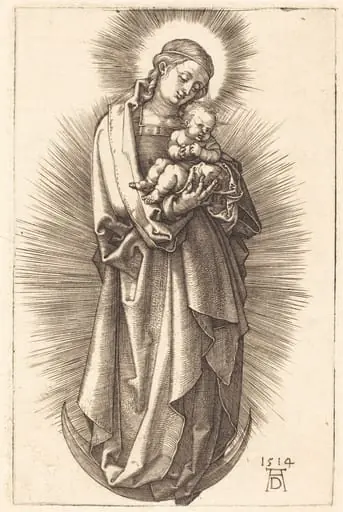 The Virgin and Child on a Crescent with a Diadem
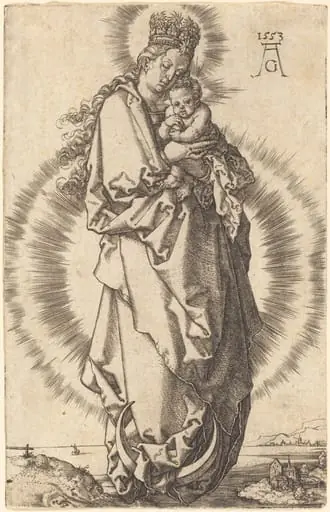 The Virgin with the Child on the Crescent
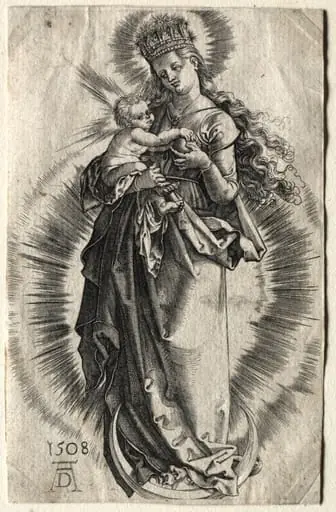 Virgin on a Crescent with a Starry Crown
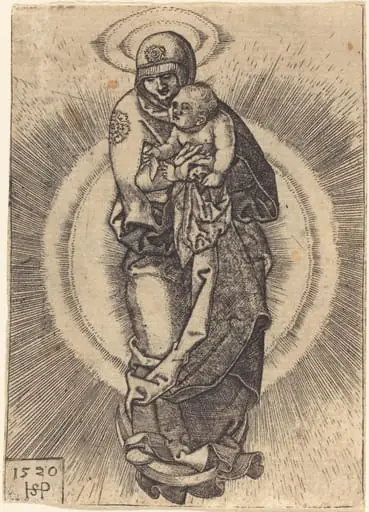 The Virgin and Child on the Crescent
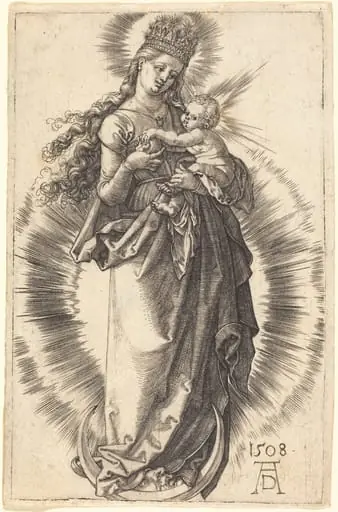 The Virgin and Child on a Crescent with a Starry Crown
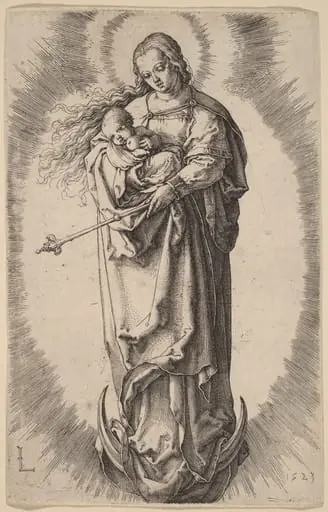 The Virgin and Child on the Crescent
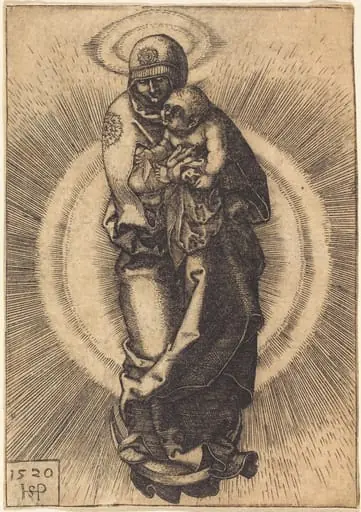 The Virgin and Child on the Crescent
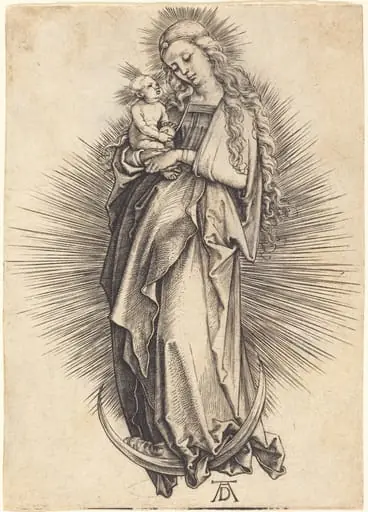 The Virgin on the Crescent
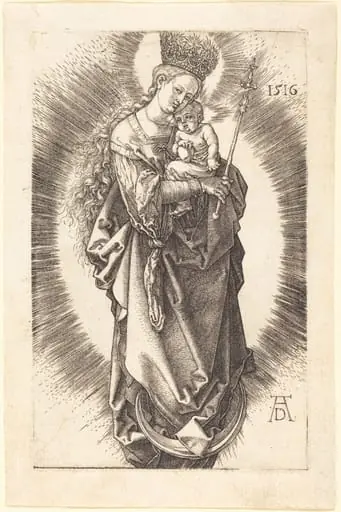 The Virgin and Child on a Crescent with a Sceptre and a Starry Crown
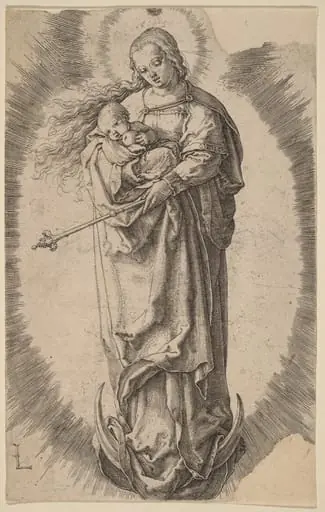 The Virgin and Child on the Crescent
 The Virgin and Child on a Crescent
 Madonna on the Crescent