Artwork
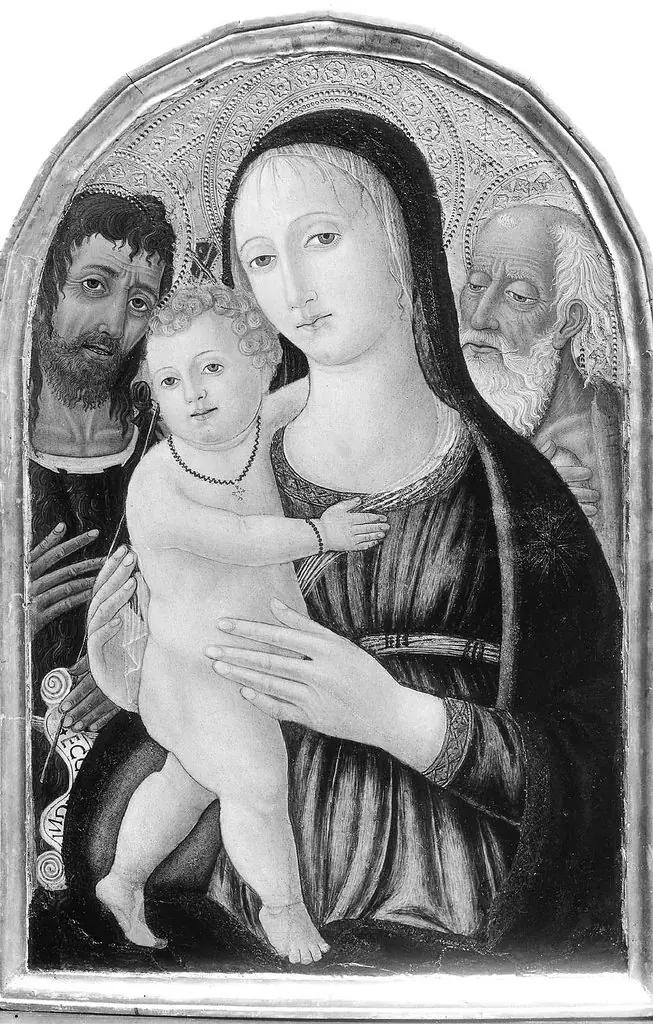
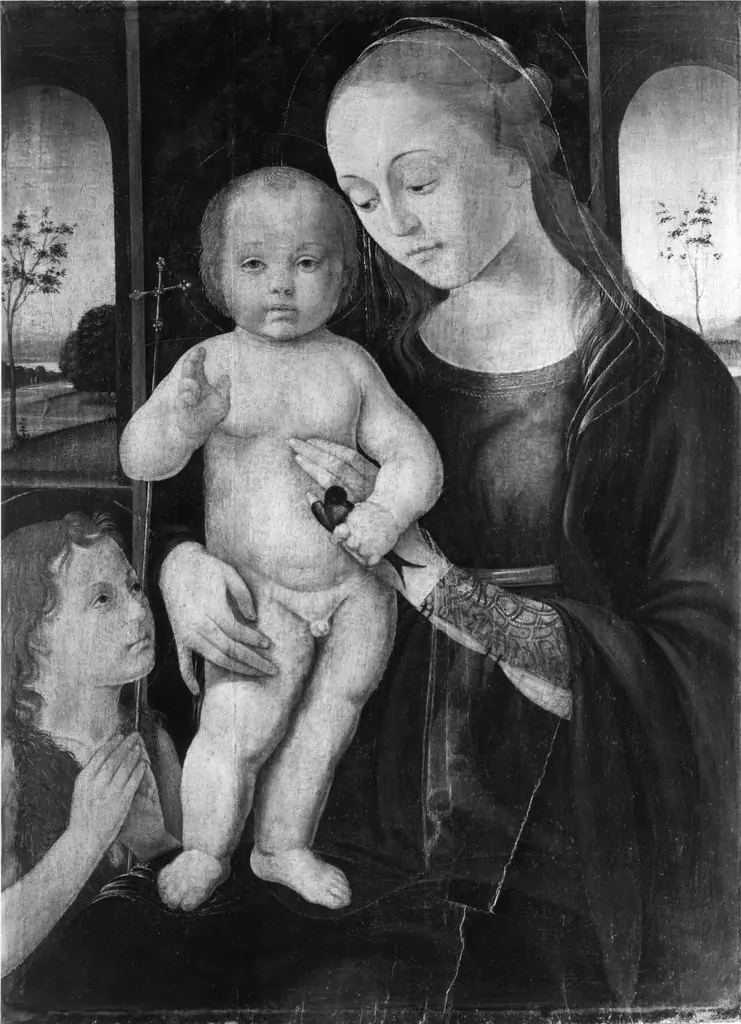
The Virgin with Child and two Saints
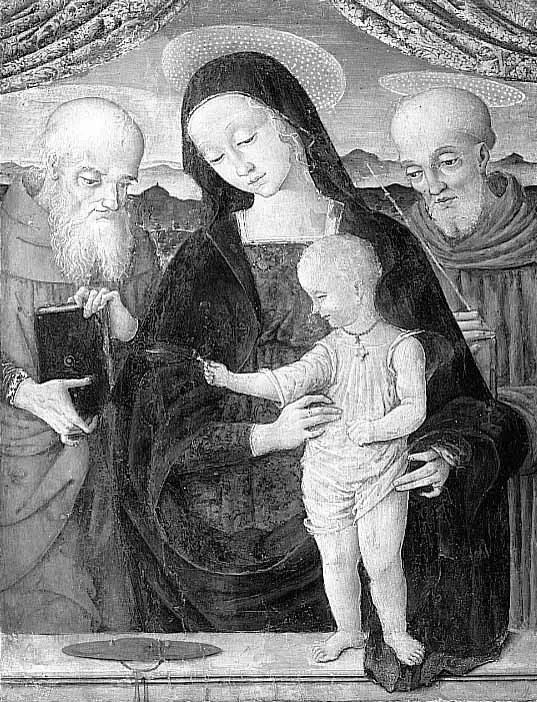
The Virgin with Child and two Saints is a paint painting by the Early Renaissance artist Ludovico di Angelo Mattioli. It dates from 1493 and is held in the collection of the Gemäldegalerie Berlin.
About this work
Overview
Ludovico di Angelo Mattioli’s 1493 oil painting, titled *The Virgin with Child and Two Saints*, presents a central female figure holding an infant, flanked by two elder male saints. The composition is rendered on canvas and is part of the collection of the Gemäldegalerie in Berlin.
Subject & Meaning
The central woman is identified as the Virgin Mary, cradling the infant Christ, who appears barefoot in a modest tunic. On either side stand two bearded saints; one bears a book, suggesting scholarly or prophetic authority, while the other rests a hand on the child’s shoulder, indicating protective guardianship.
Technique & Style
Mattioli employs a clear chiaroscuro scheme, allowing light to illuminate the faces and drapery while casting deeper shadows on the background wall. This contrast separates the figures spatially, creating a sense of three‑dimensional depth and emphasizing the spiritual hierarchy within the scene.
History & Provenance
Created in the late 15th century, the work has remained in European collections, eventually entering the Gemäldegalerie’s holdings in Berlin. Documentation traces its acquisition to the museum’s early 20th‑century expansion of Renaissance holdings, though earlier ownership records are limited.
Context
The painting reflects the devotional trends of the Italian Renaissance, where intimate portrayals of the Virgin and Child were paired with saintly intercessors. Its restrained setting—a simple wall and muted sky—focuses attention on the holy figures, aligning with contemporary theological emphasis on personal piety.
Artist & collection
Artist
This Italian painter worked in the late 1400s and early 1500s, blending religious scenes with quiet, detailed figures.

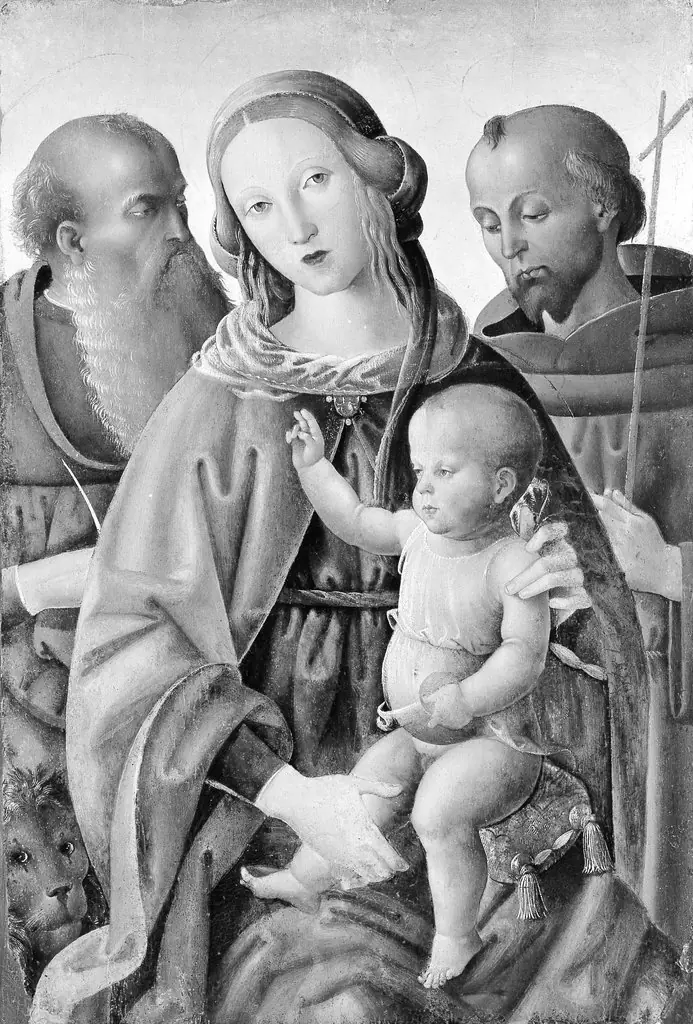 Madonna and Child with Saints Jerome and Francis
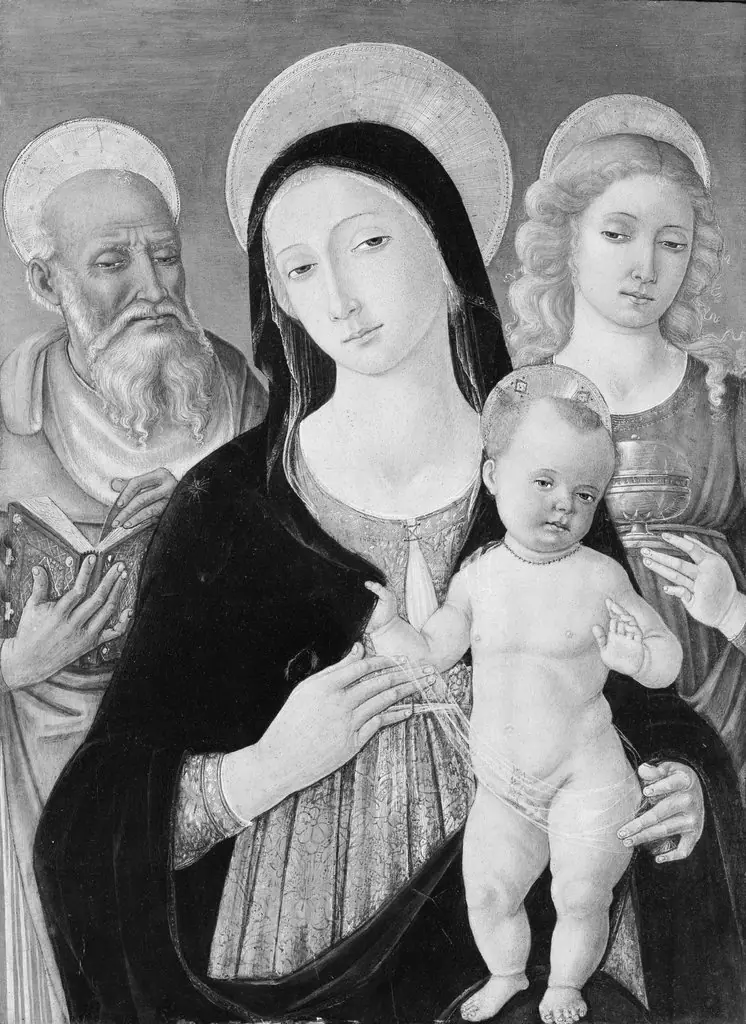 Madonna and Child with Saints Jerome and Mary Magdalen
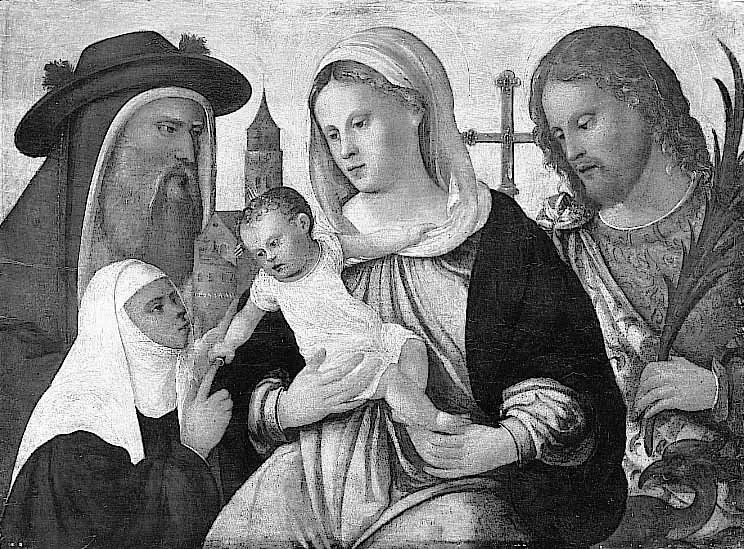 The Marriage of St. Catherine of Siena with the Christ Child
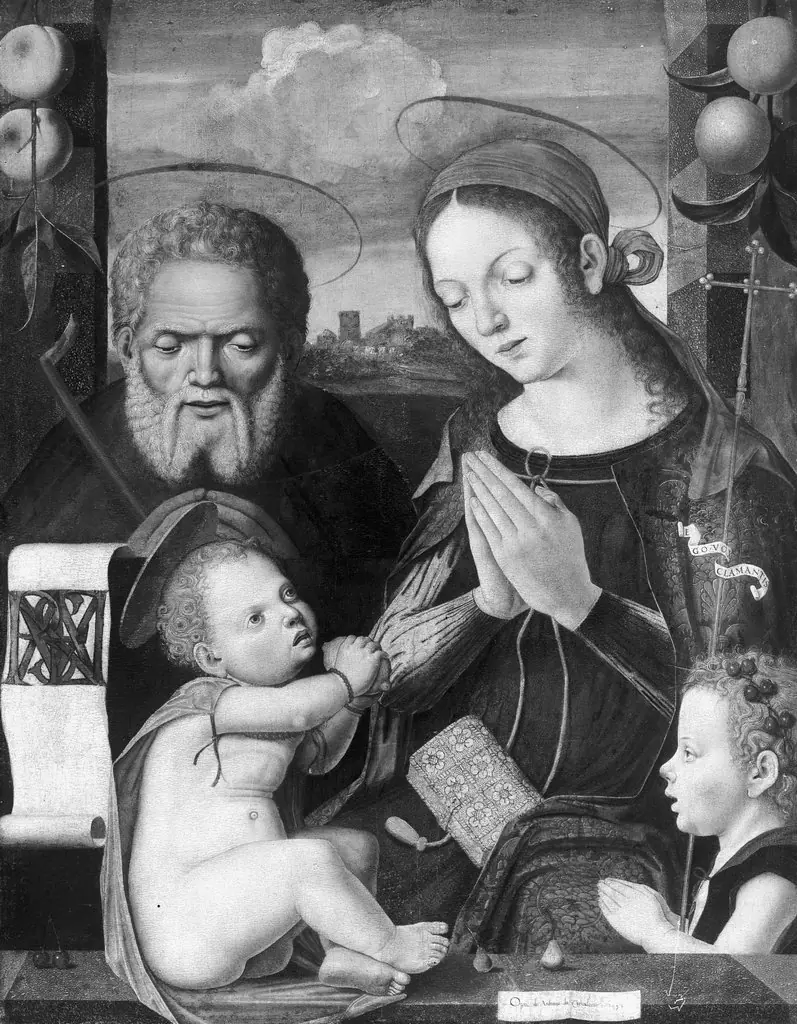 The Holy Family with little John
 The Virgin and Child
 Virgin and Child with Saints Jerome and John the Baptist
 Mary with the child and saints
 The Virgin and Child with a Donor
 Madonna and Child with the Young St. John the Baptist