Artwork
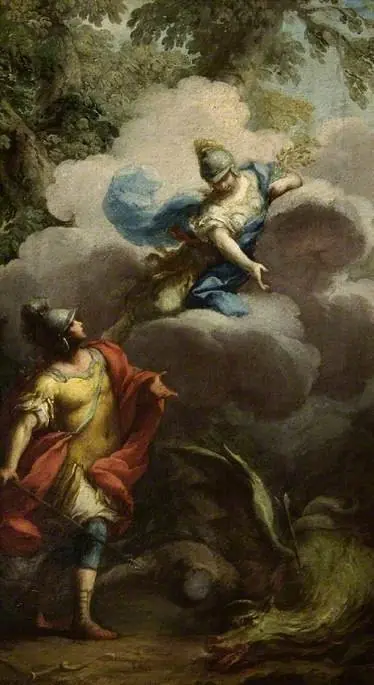
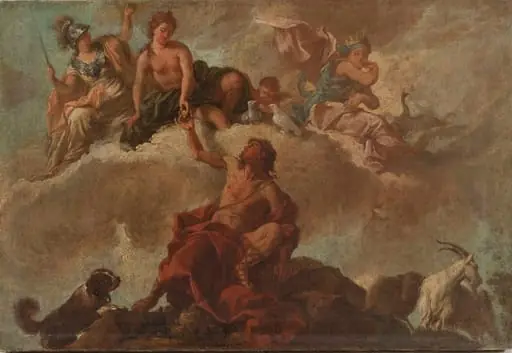
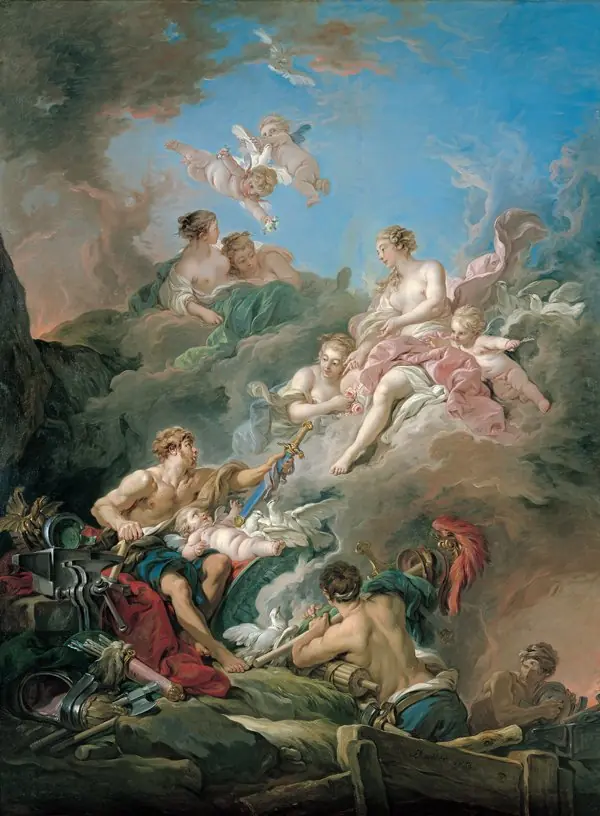
Venus giving arms to Aeneas
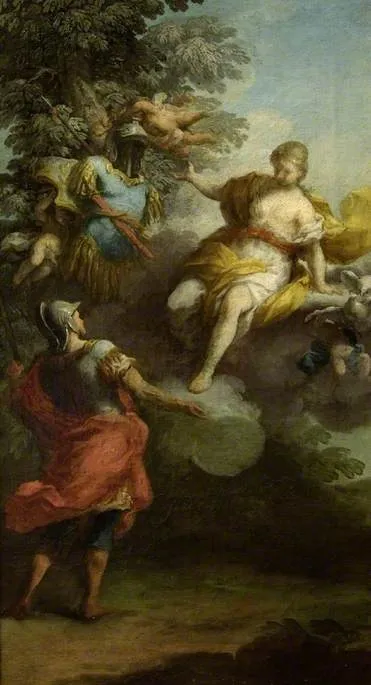
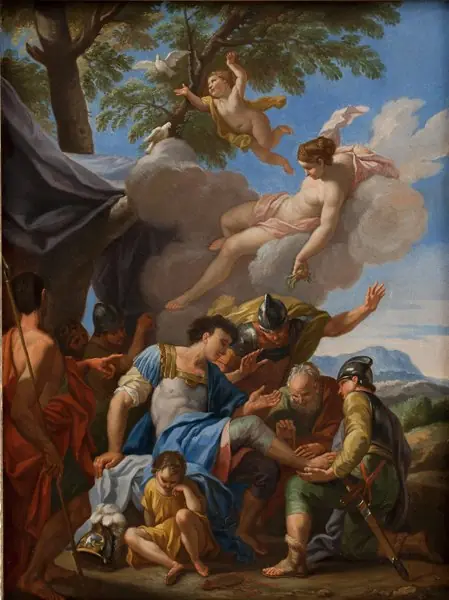
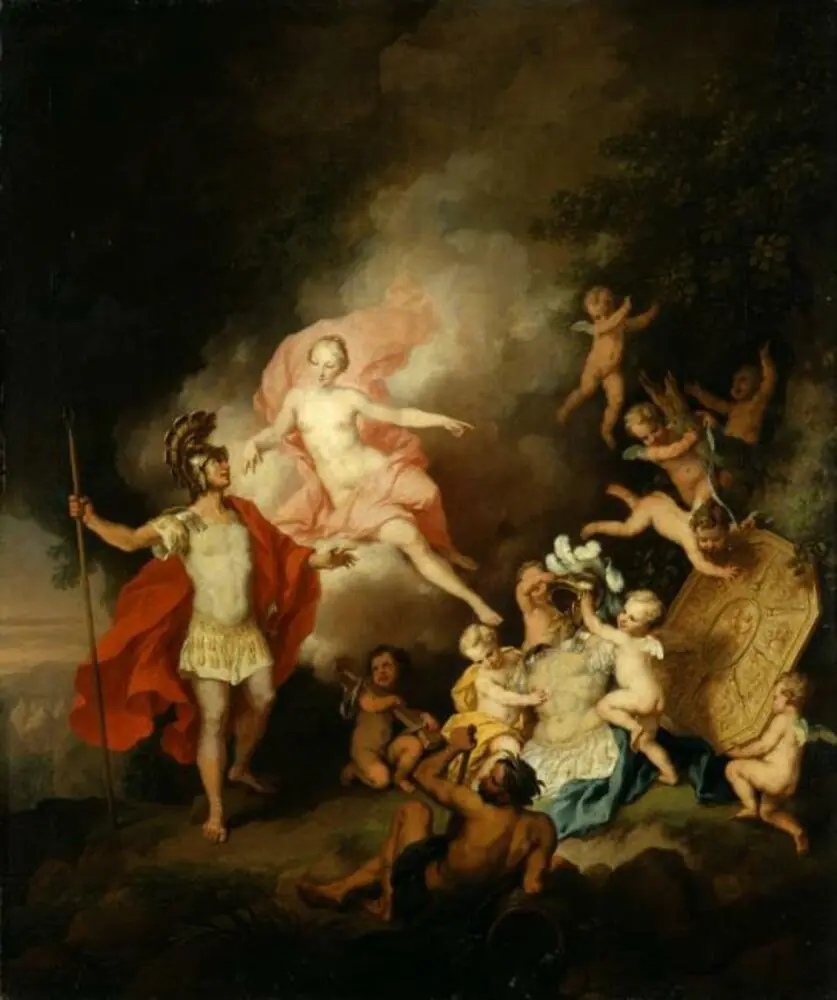
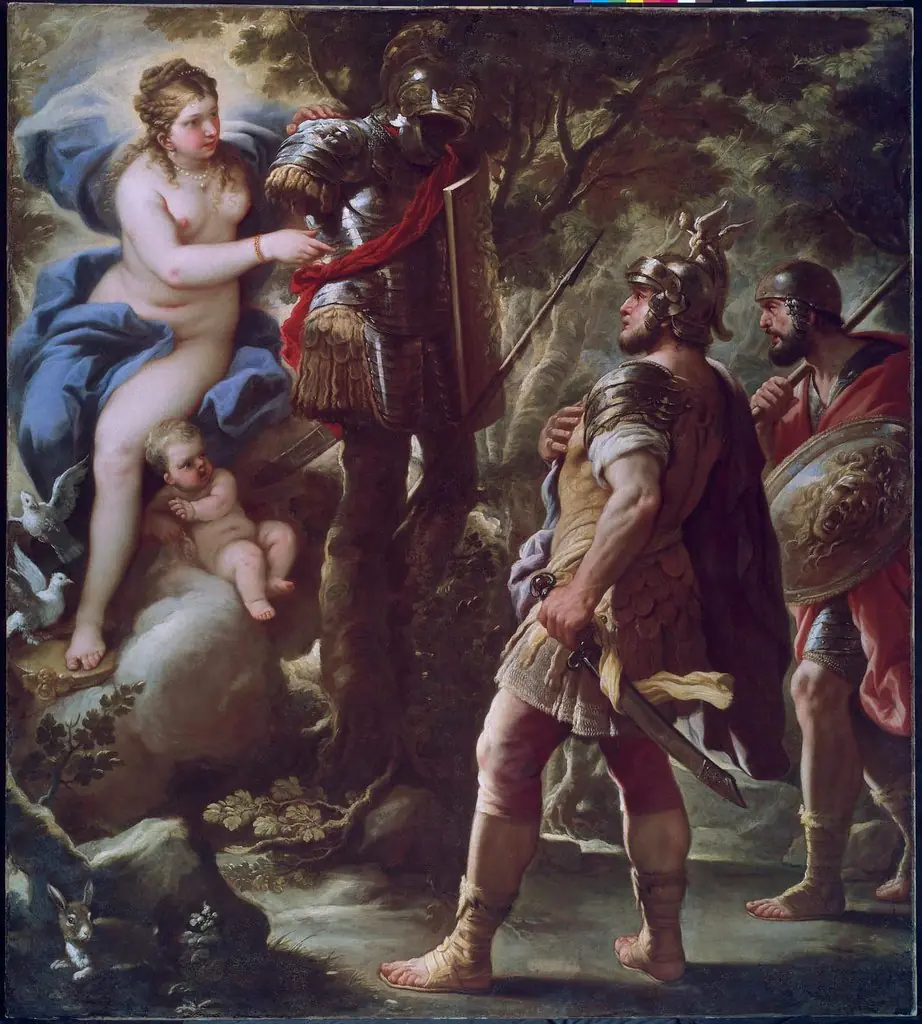
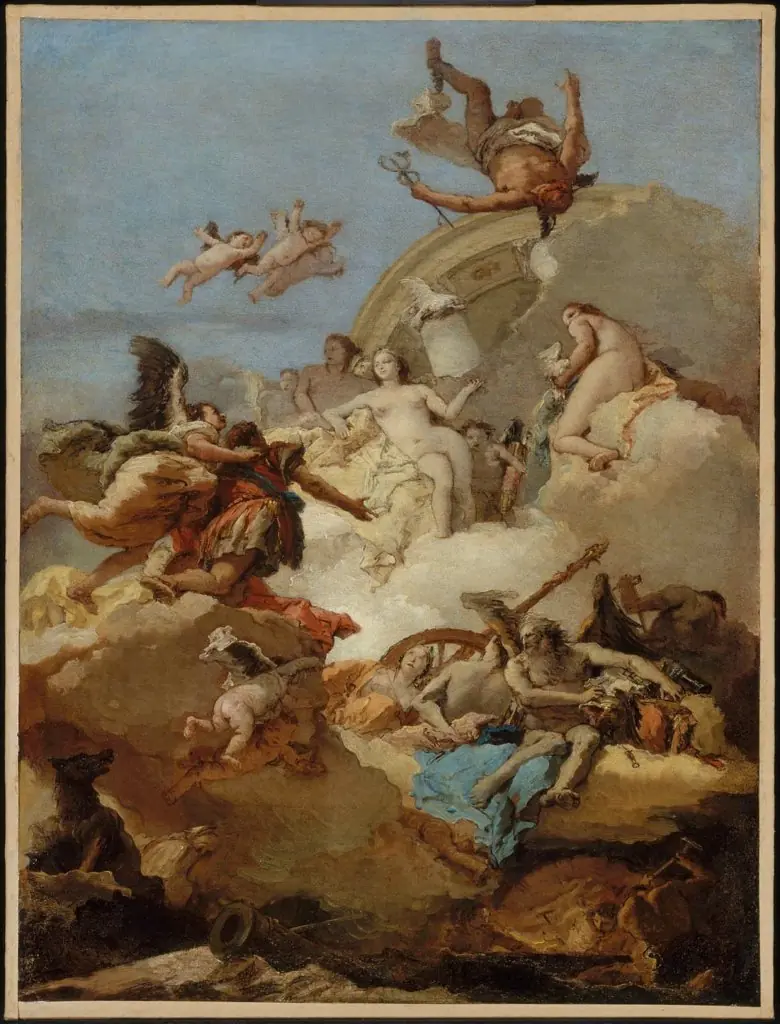
Venus giving arms to Aeneas is an oil painting by Luigi Agricola. It dates from 1795 and is held in the collection of the Fitzwilliam Museum.
About this work
Overview
Luigi Agricola, an Italian painter active in late‑18th‑century Rome, produced the oil painting *Venus Giving Arms to Aeneas* circa 1795. The work illustrates a moment from classical mythology in which the goddess Venus presents weaponry to her son, the Trojan hero Aeneas. Today the canvas belongs to the Fitzwilliam Museum’s collection.
Subject & Meaning
The composition captures the mythic episode in which Venus, identified by her flowing white robe and golden mantle, extends a hand toward a kneeling Aeneus clad in a red cloak. The gesture suggests both maternal support and divine sanction for the hero’s future role in founding Rome, linking love and destiny in a single visual moment.
Technique & Style
Agricola employs a clear, luminous palette: the luminous white of Venus’s garment contrasts with the muted greens and blues of the surrounding landscape, while Aeneas’s scarlet cloak provides a focal accent. Soft, cloud‑filled skies and delicate foliage frame the figures, and the handling of light creates a subtle three‑dimensionality typical of late Baroque academic painting.
History & Provenance
Created during Agricola’s tenure as a professor at Rome’s Academy of St Luke, the painting reflects his academic training and his broader output, which included religious altarpieces and decorative designs. After remaining in private hands for much of the 19th century, the canvas entered the Fitzwilliam Museum’s holdings, where it is displayed as part of the museum’s European painting collection.
Artist & collection
Artist
Luigi Agricola (c. 1750 – 1821 or after) was an Italian painter active in Rome which for most of his life was part of the Papal States. He also worked with jewelry. He painted a St. Michael the Archangel for the Academy…