Artwork
Copy after Giambattista Tiepolo’s fresco of the ‘Meeting of Antony and Cleopatra’ in the Ballroom Palazzo Labia, Venice (1746-1747), 1883.
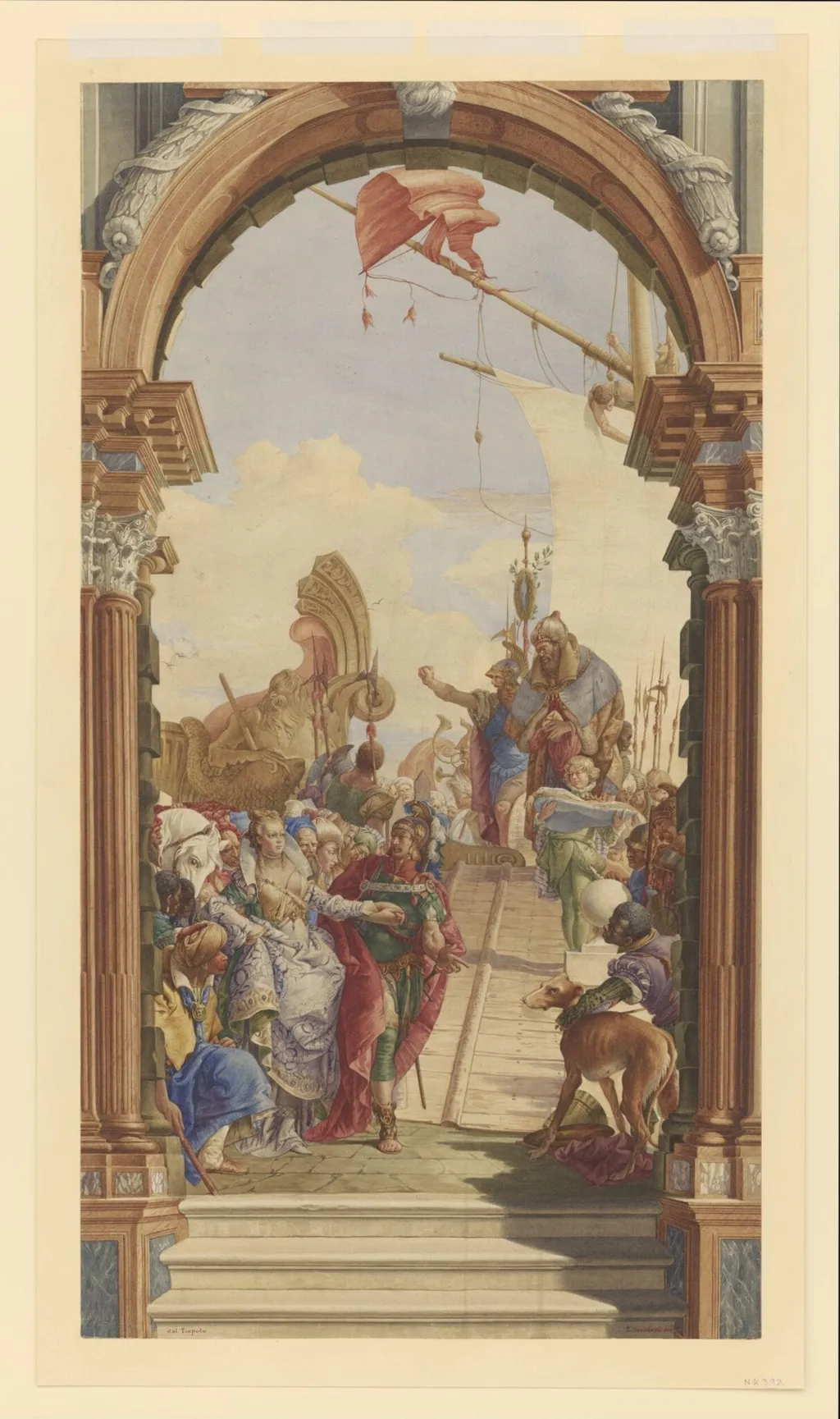
Copy after Giambattista Tiepolo’s fresco of the ‘Meeting of Antony and Cleopatra’ in the Ballroom Palazzo Labia, Venice (1746-1747), 1883. is a watercolor work on paper by the Impressionist artist Luigi Desideri. It dates from 1883 and is held in the collection of the Victoria and Albert Museum. This watercolor, executed in 1883, reproduces Giambattista Tiepolo’s fresco that once adorned the ballroom of Venice’s Palazzo Labia.
About this work
Overview
This watercolor, executed in 1883, reproduces Giambattista Tiepolo’s fresco that once adorned the ballroom of Venice’s Palazzo Labia. The original fresco, completed in 1746‑47, dramatized the legendary encounter between the Roman general Mark Antony and the Egyptian queen Cleopatra, a narrative that has long fascinated artists and audiences.
Subject & Meaning
The scene captures the moment when Antony meets Cleopatra, a pivotal episode in the love story that epitomizes the clash of Roman and Egyptian cultures. By portraying the two historic figures, the composition underscores themes of political alliance, personal passion, and the tragic consequences that followed their union.
Technique & Style
The 1883 copy is a watercolor rendering, translating Tiepolo’s grand fresco technique into a more intimate medium. The artist employed transparent washes to suggest the original’s luminous color palette and dynamic composition, preserving the sense of movement and theatricality characteristic of Tiepolo’s late Baroque style.
History & Provenance
Luigi Desideri was engaged by the Arundel Society in 1883 to reproduce Venetian masterpieces; his watercolor of the Palazzo Labia scene was never issued as a chromolithograph. When the Society dissolved in 1897, the work entered the National Gallery’s collection, and in 1993 it was transferred to the Victoria and Albert Museum, where it remains.
Context
The original fresco was commissioned by Maria Labia in the 1740s as part of an extensive decorative program for the palace’s ballroom. Tiepolo, then at the height of his career, filled the space with a series of episodes from Antony and Cleopatra’s affair, integrating mythic romance with the opulent interior architecture of the Venetian aristocracy.
Artist & collection
Artist

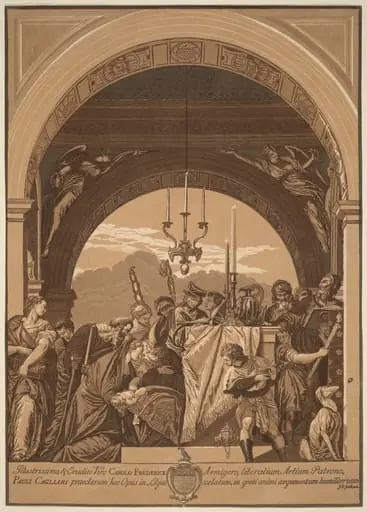 The Presentation in the Temple
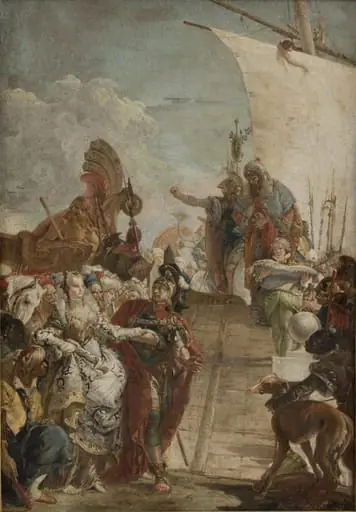 Anthony Leading Cleopatra on board
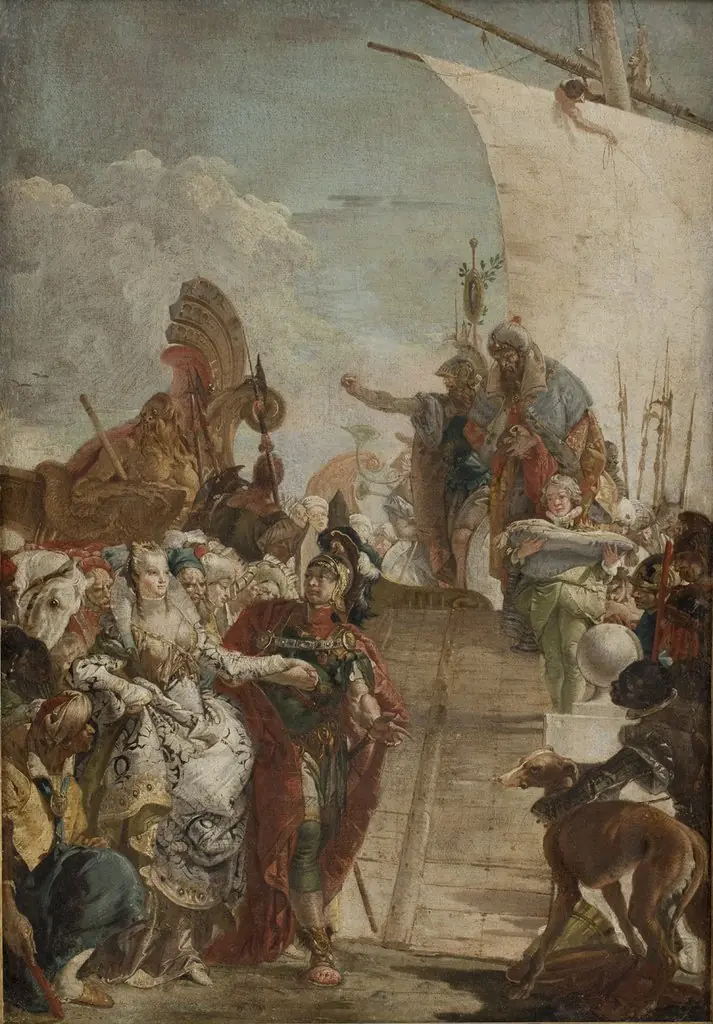 Anthony Leading Cleopatra on board
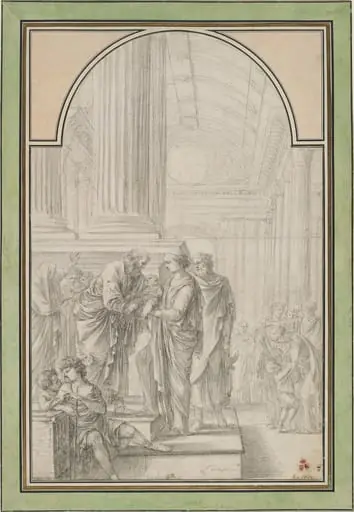 The Presentation in the Temple
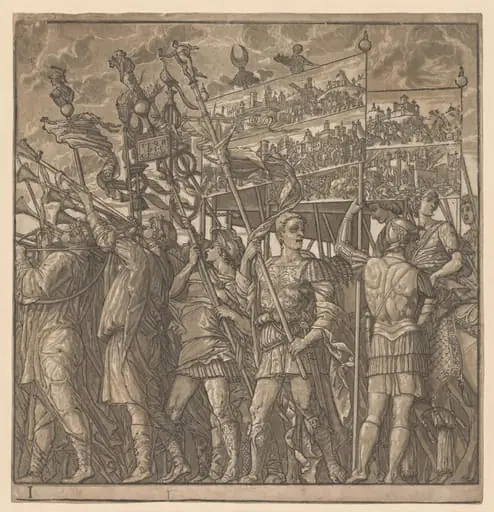 The Triumph of Julius Caesar: Soldiers Carrying the Pictures of War
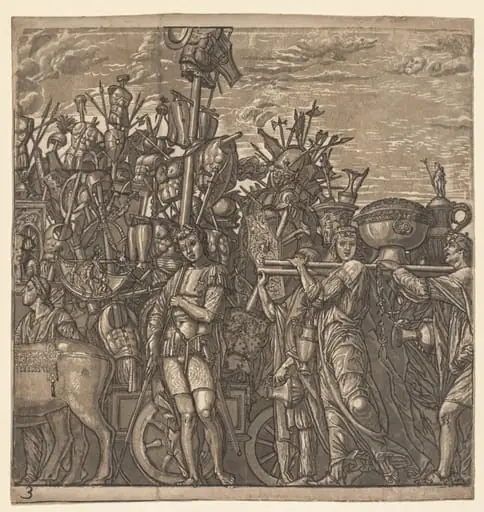 The Triumph of Julius Caesar: Soldiers Marching with Trophies of War
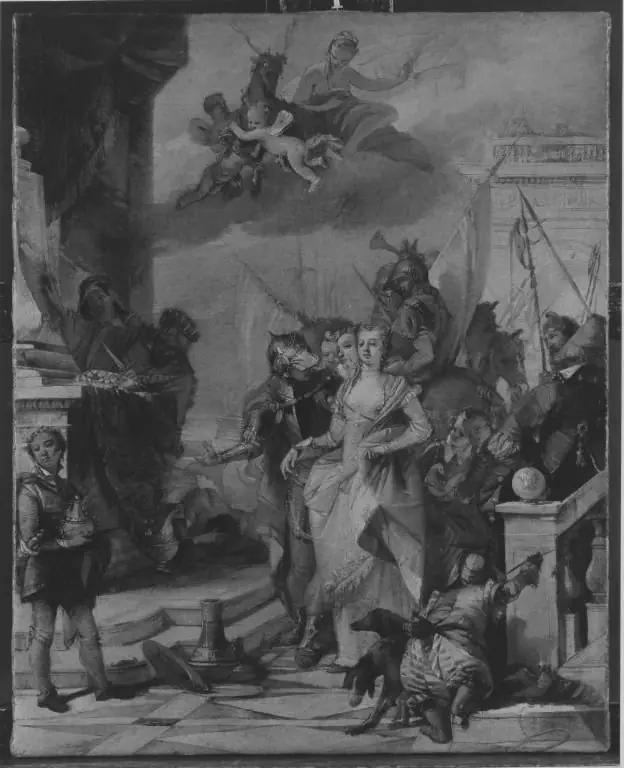 Iphigenie wird zum Tempel geführt
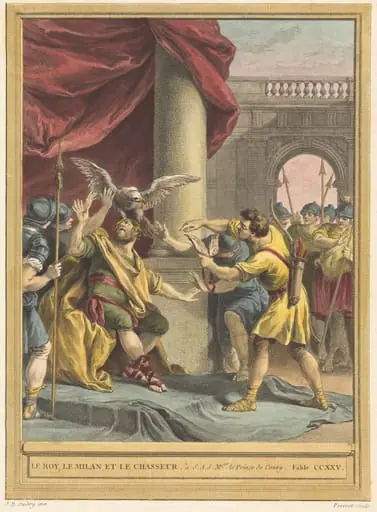 Le roi, le milan, et le chasseur (The King, the Kite, and the Hunter)
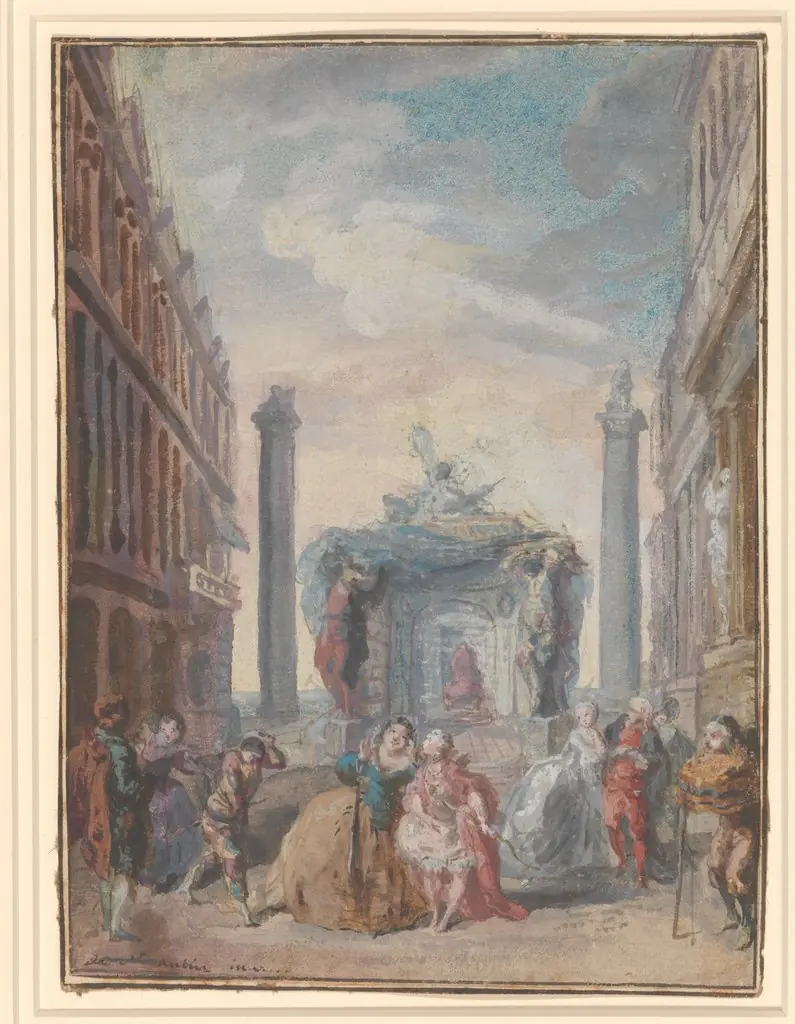 Les fêtes vénitiennes
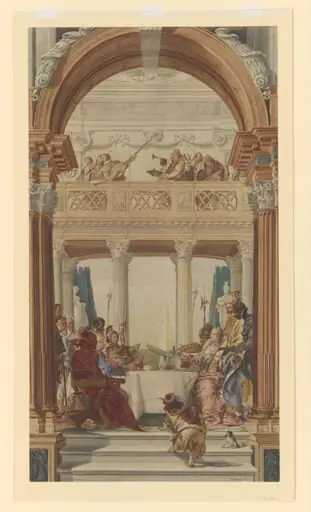 Copy after Giambattista Tiepolo’s fresco of the ‘Banquet of Antony and Cleopatra’ in the Ballroom Palazzo Labia, Venice (1746-1747), 1883.
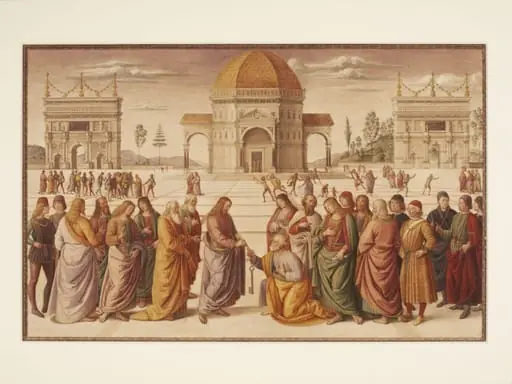 The Delivery of Keys to St Peter
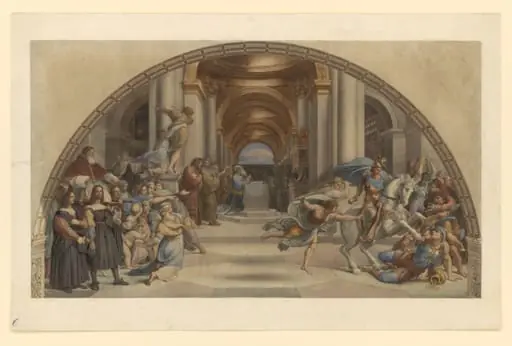 Copy after Raphael’s fresco representing the ‘Expulsion of Heliodorus from the Temple’ in the Stanza di Eliodoro (Vatican Palace, Rome, 1512-14), 1866.