Artwork
Vigilance and Love's Oblivion
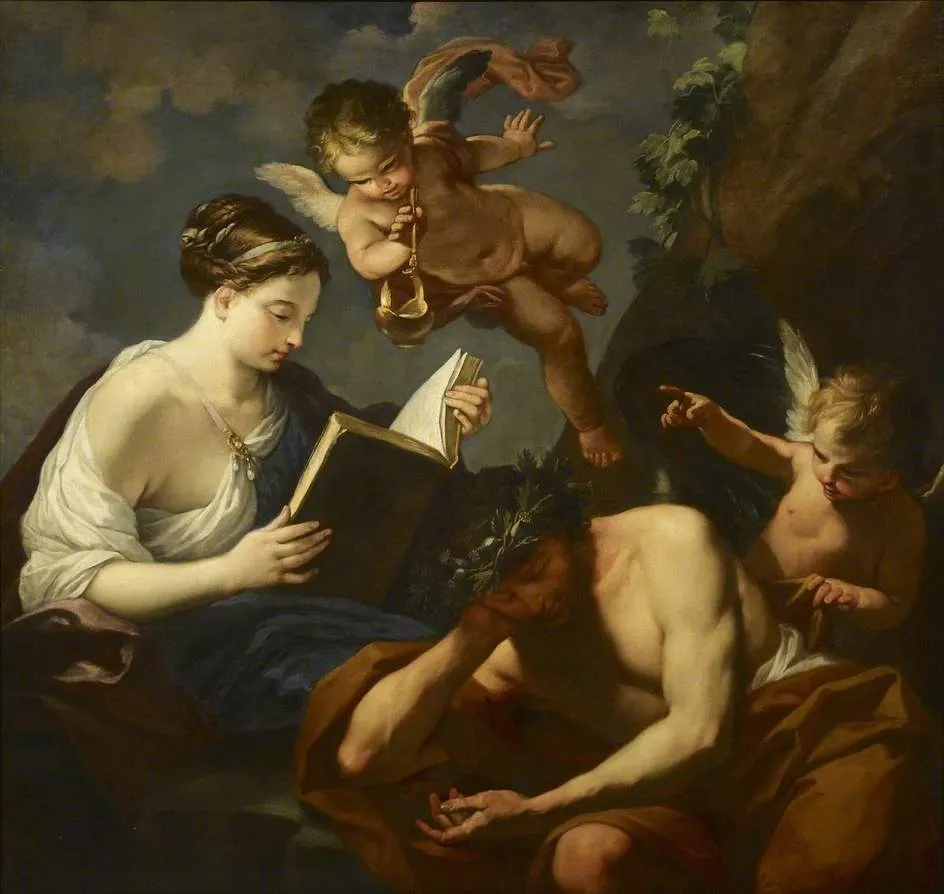
Vigilance and Love's Oblivion is an oil painting by Luigi Garzi. It dates from 1688 and is held in the collection of the Ashmolean Museum.
About this work
Overview
Luigi Garzi, an Italian painter of the late Baroque period, completed the oil painting *Vigilance and Love’s Oblivion* around 1688. The work is part of the Ashmolean Museum’s collection and presents a tranquil scene populated by allegorical figures set against a softly modeled sky and landscape.
Subject & Meaning
The composition features a woman in a flowing white dress, holding a book and gazing at a reclining, shirtless man crowned with a wreath. Above them, a cherubic figure with delicate wings blows a horn. The woman embodies vigilance, while the male figure represents the oblivion of love, creating a dialogue between watchfulness and emotional surrender.
Technique & Style
Garzi’s handling of oil paint shows a refined, graceful approach reminiscent of the Bolognese school, particularly the influence of Guido Reni. The figures are rendered with smooth modeling, subtle chiaroscuro, and a calm palette that emphasizes the serene atmosphere of the scene.
History & Provenance
Created near the end of Garzi’s career, the painting entered the Ashmolean Museum’s holdings at an unspecified date, where it remains on display as part of the museum’s Baroque collection.
Artist & collection
Artist
Luigi Garzi (1638–1721) was an Italian painter of the Baroque period whose style was strongly influenced by the work of the Bolognese painter Guido Reni.

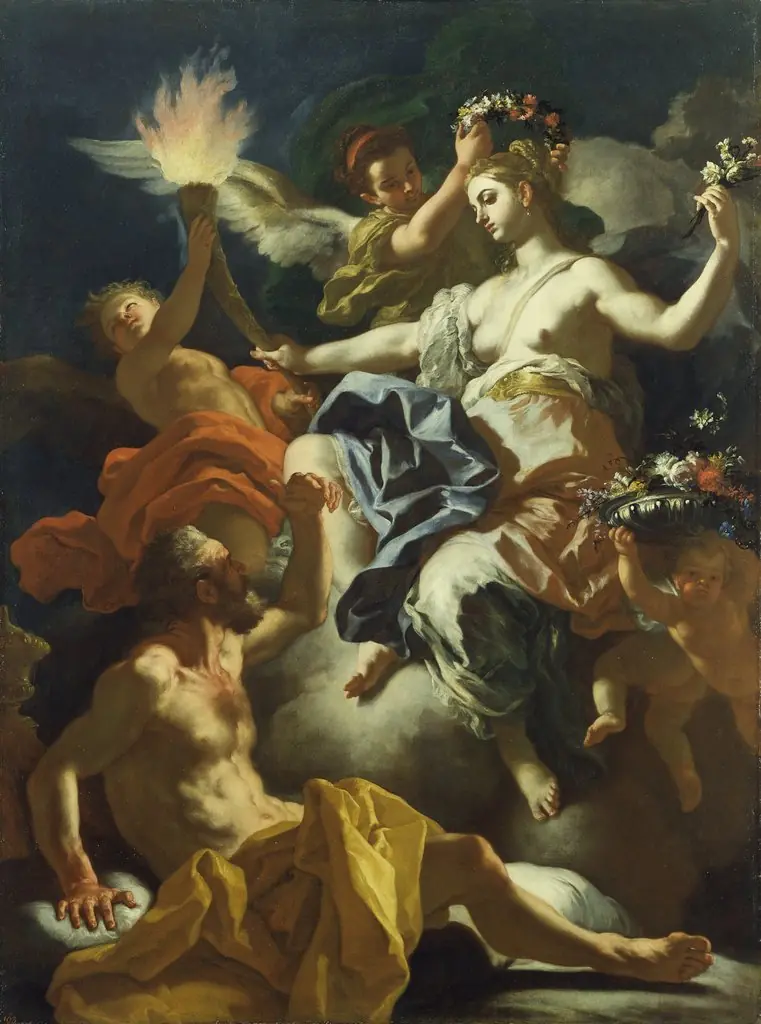 Aurora Taking Leave of Tithonus
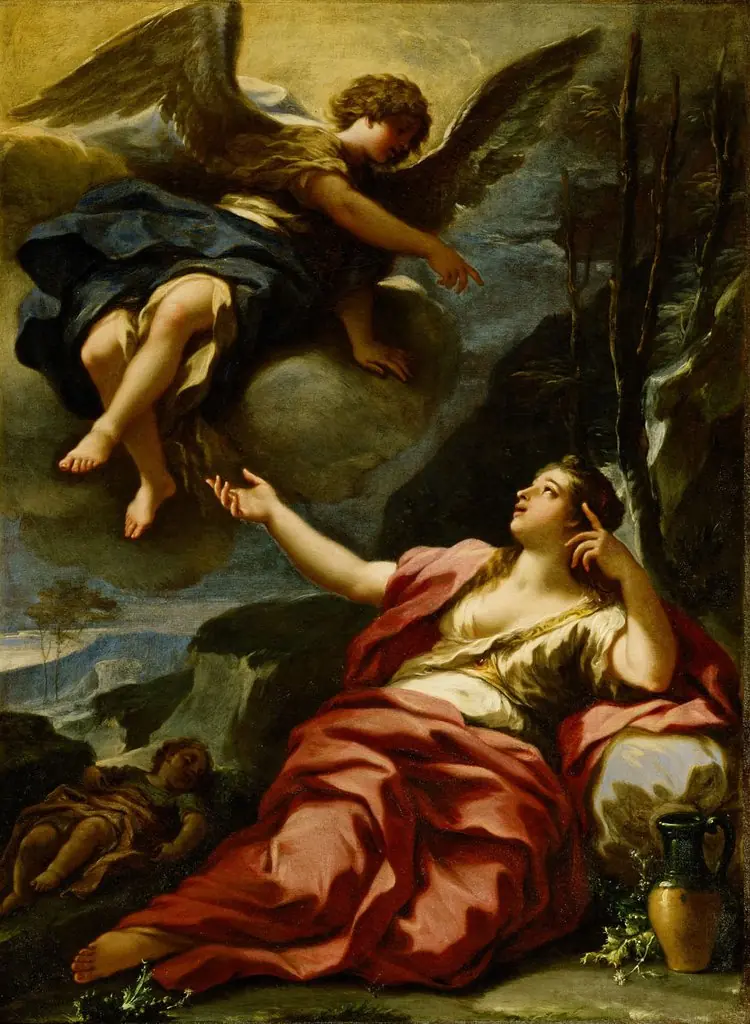 The angel appears to Hagar in the desert
 Lot und seine Töchter (Fragment)
 Old Testament Figures in Paradise
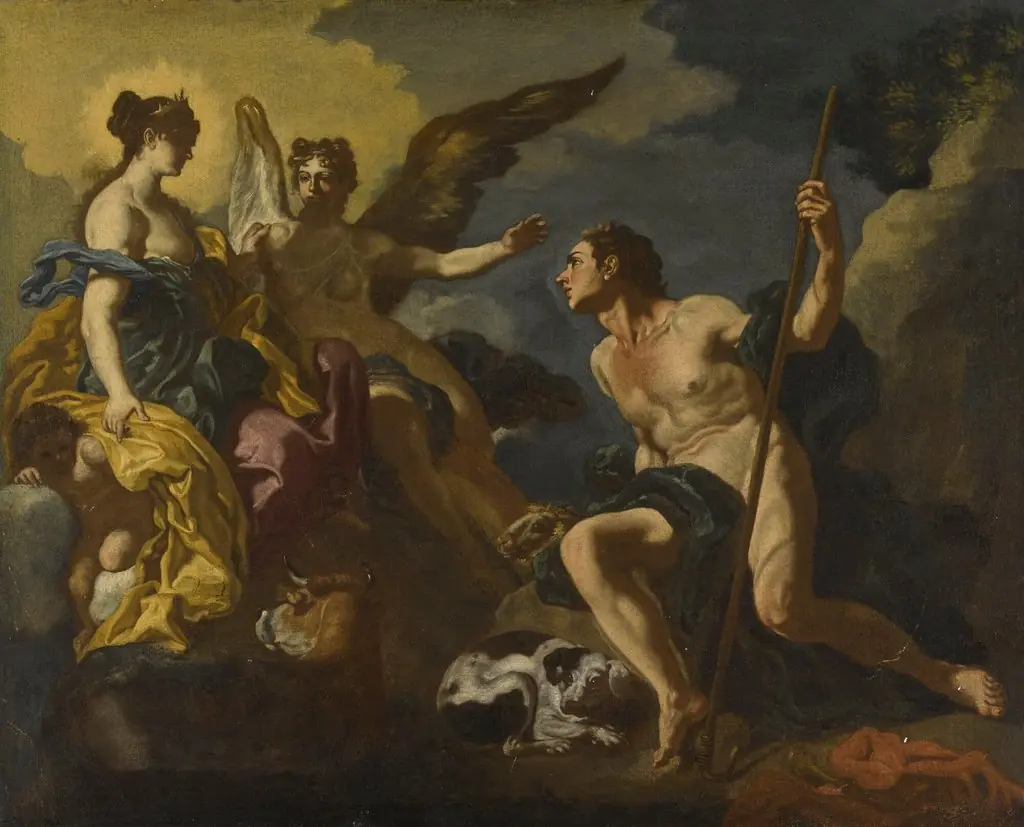 Juno, Io and Argus
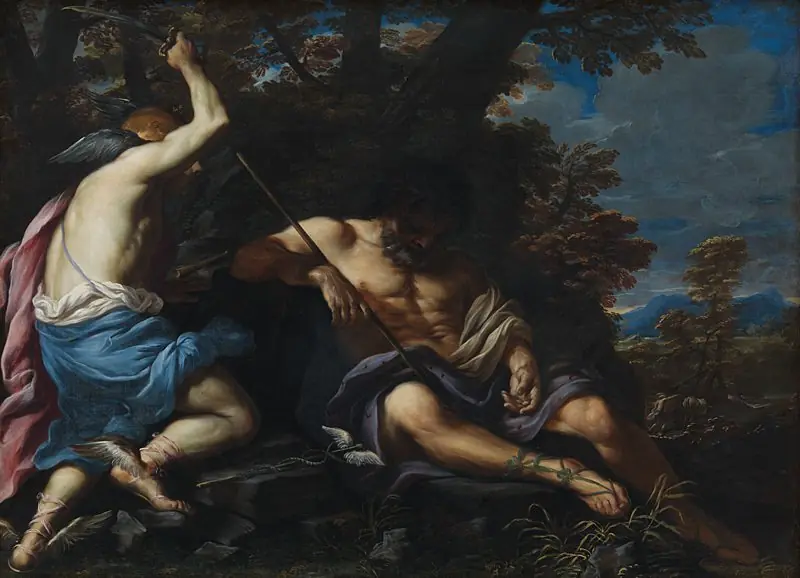 Mercury Killing Argus
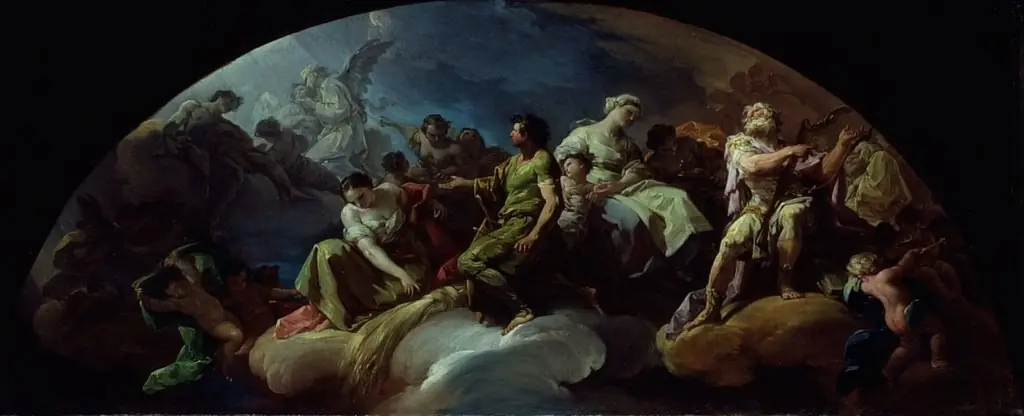 Old Testament Figures in Paradise
 Mercury Killing Argus
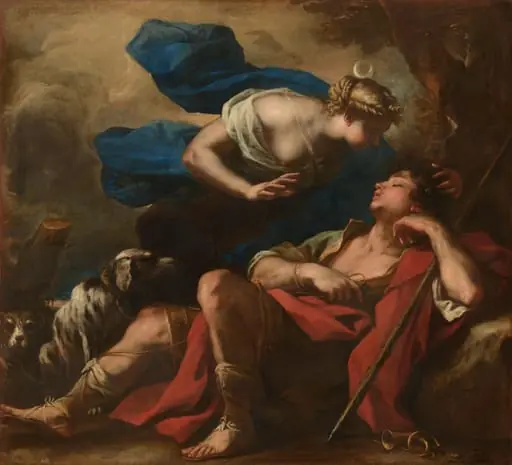 Diana and Endymion
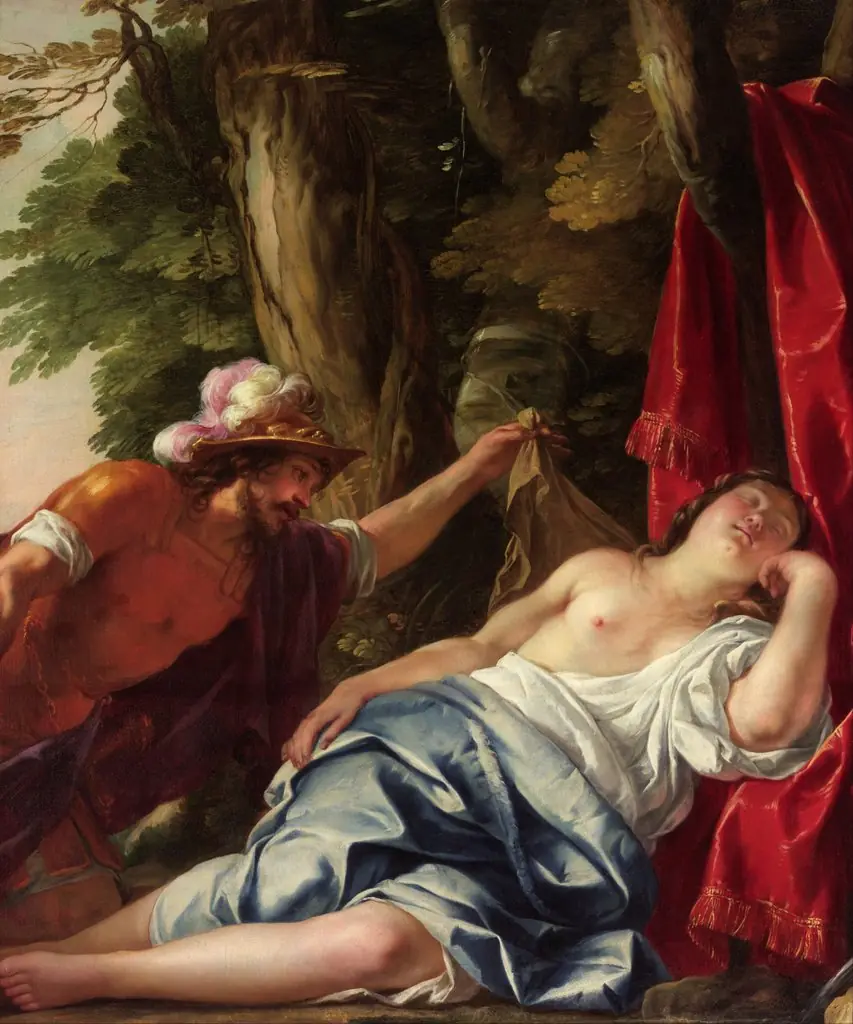 Mars and the vestal virgin
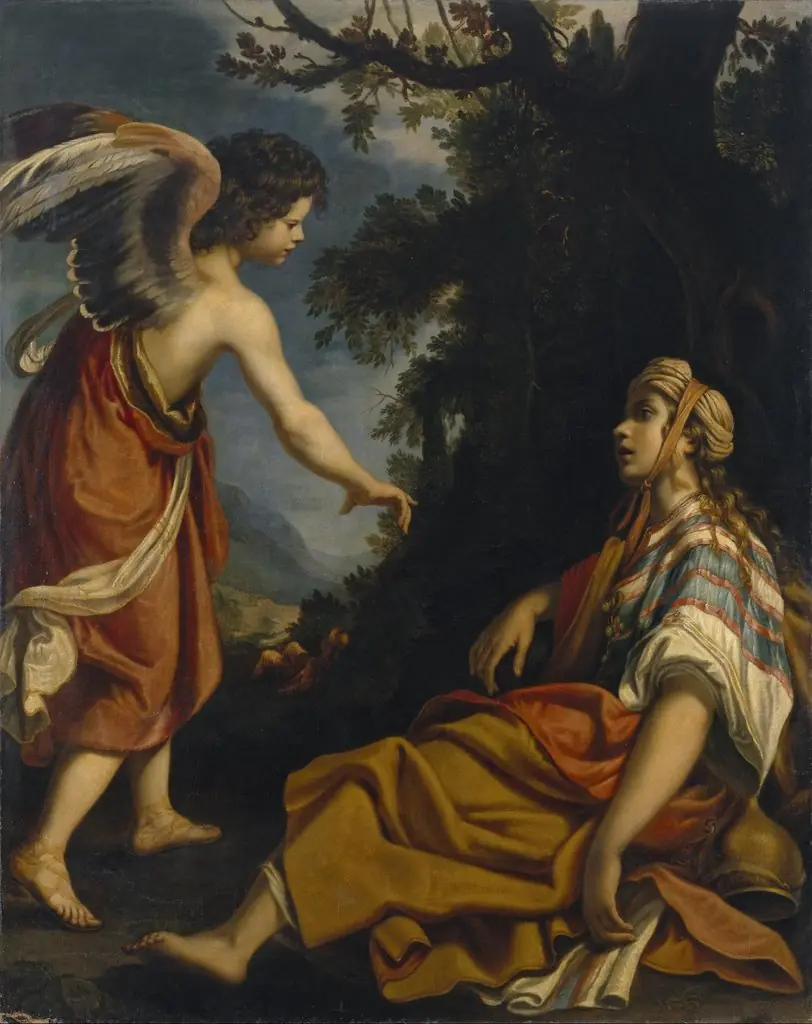 Hagar in the Desert
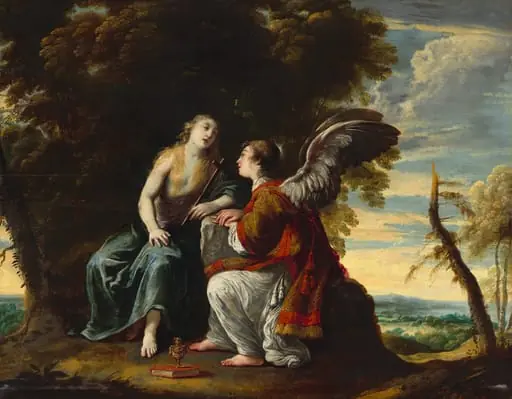 Mary Magdalene Comforted by an Angel