Artwork
Still Life with Oranges Melon and Boxes of Sweets
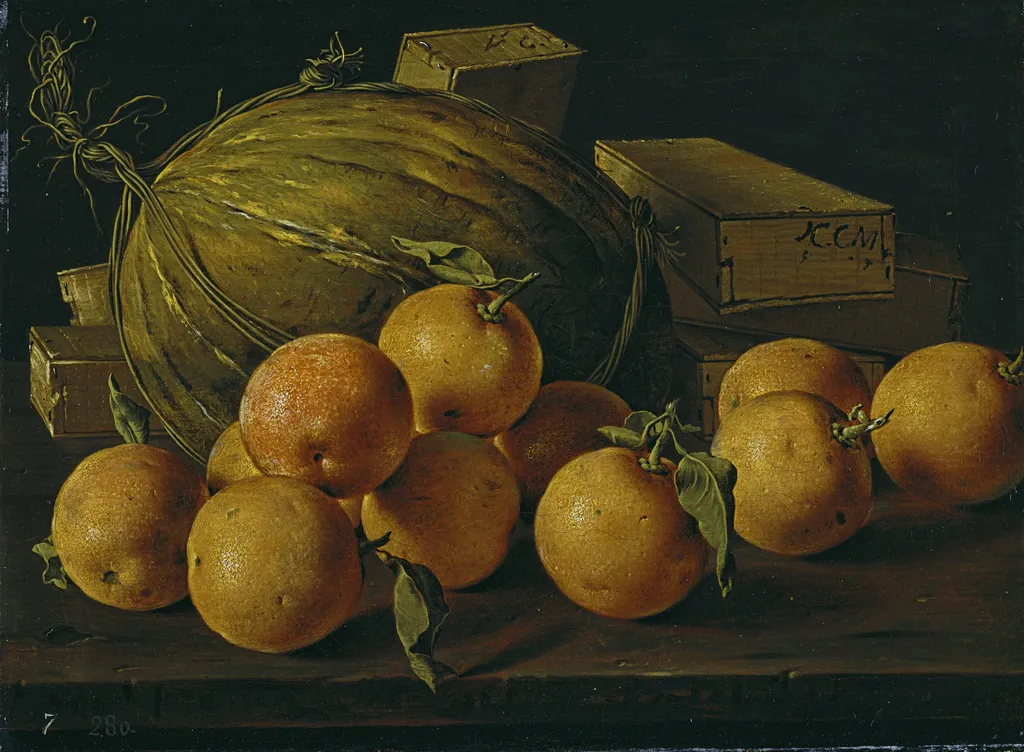
Still Life with Oranges Melon and Boxes of Sweets is an oil painting by the Rococo painting artist Luis Egidio Meléndez. It dates from 1751 and is held in the collection of the Museo del Prado.
About this work
Overview
Though his contributions remained largely unacknowledged during his lifetime, the work exemplifies the artist’s meticulous approach to still-life painting.
Luis Egidio Meléndez executed *Still Life with Oranges, Melon and Boxes of Sweets* in 1751, employing oil on canvas. Though his contributions remained largely unacknowledged during his lifetime, the work exemplifies the artist’s meticulous approach to still-life painting. Part of the Rococo period, the composition transforms ordinary objects—fruit and confections—into a structured visual arrangement, distinguished by controlled lighting and precise detail.
Subject & Meaning
The painting presents a restrained yet vivid assemblage of everyday provisions: a cluster of oranges, a melon nestled in its woven basket, and two wooden boxes, one inscribed with lettering. The selection of objects suggests abundance while avoiding excess, reflecting a deliberate balance between realism and aesthetic order. The emphasis on texture and surface quality invites contemplation of the transient nature of perishable goods.
Technique & Style
Meléndez’s technique is characterized by a rigorous attention to form and illumination, particularly in the rendering of the oranges’ glossy skins and the melon’s fibrous texture. A stark, nearly black background heightens the contrast, directing focus toward the objects’ volumetric presence. This use of chiaroscuro, combined with a restrained palette, aligns with the Rococo emphasis on clarity and refinement, while also anticipating later developments in still-life painting.
History & Provenance
Created in 1751, the painting entered the collection of Madrid’s Museo del Prado, where it remains. Meléndez’s career was marked by financial instability, and his reputation as a leading Spanish still-life painter of the eighteenth century developed posthumously. The work’s survival within a major institutional collection has ensured its preservation and study as a key example of the genre during this period.
Context
During the eighteenth century, Spanish still-life painting often reflected both domestic abundance and the influence of European artistic trends, particularly the Rococo. Meléndez’s work emerges from this tradition, though his focus on humble, unadorned subjects distinguishes his approach. The painting’s composition and lighting demonstrate an engagement with broader European conventions while maintaining a distinctly Spanish sensibility in its simplicity and directness.
Own this work as a print
Artist & collection
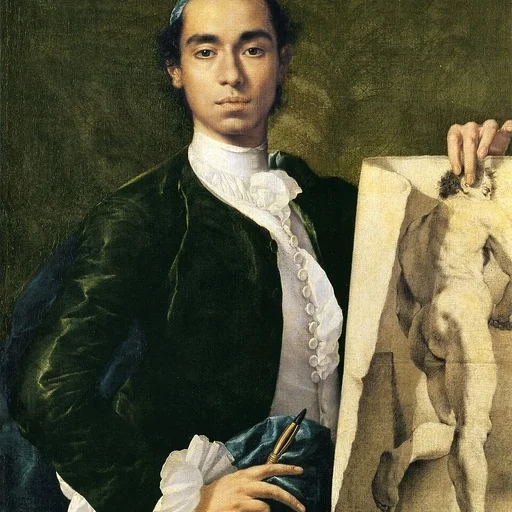
Artist
Luis Egidio Meléndez (1716–1780) was a Spanish painter. Though he received little acclaim during his lifetime and died in poverty, Meléndez is recognized as one of the greatest Spanish still-life painters of the 18th…

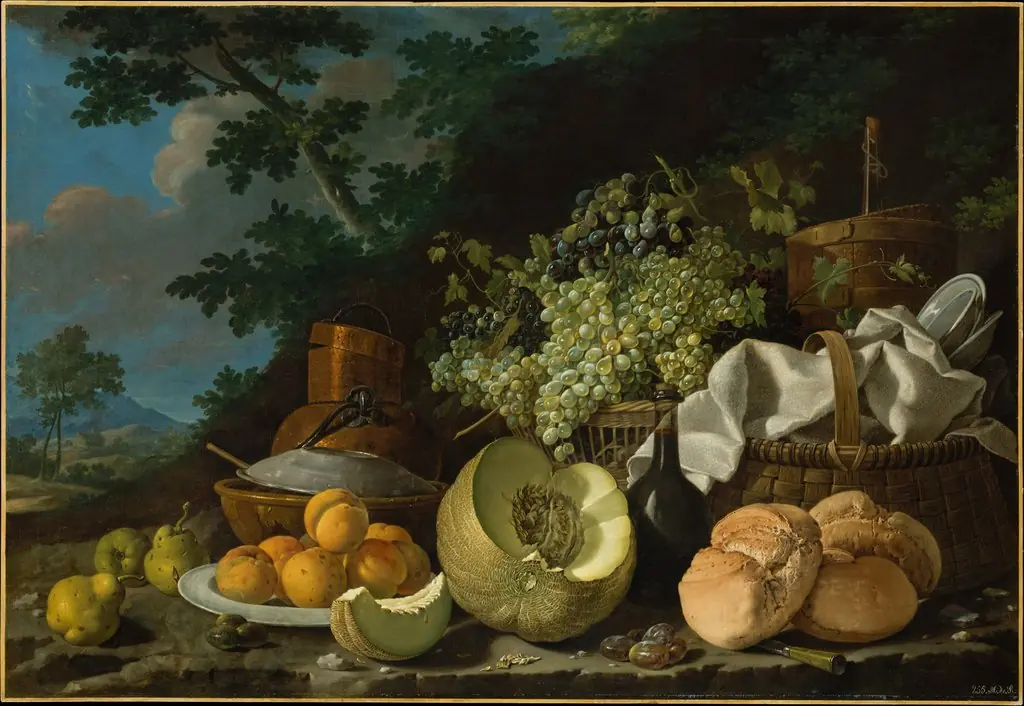 The Afternoon Meal (La Merienda)
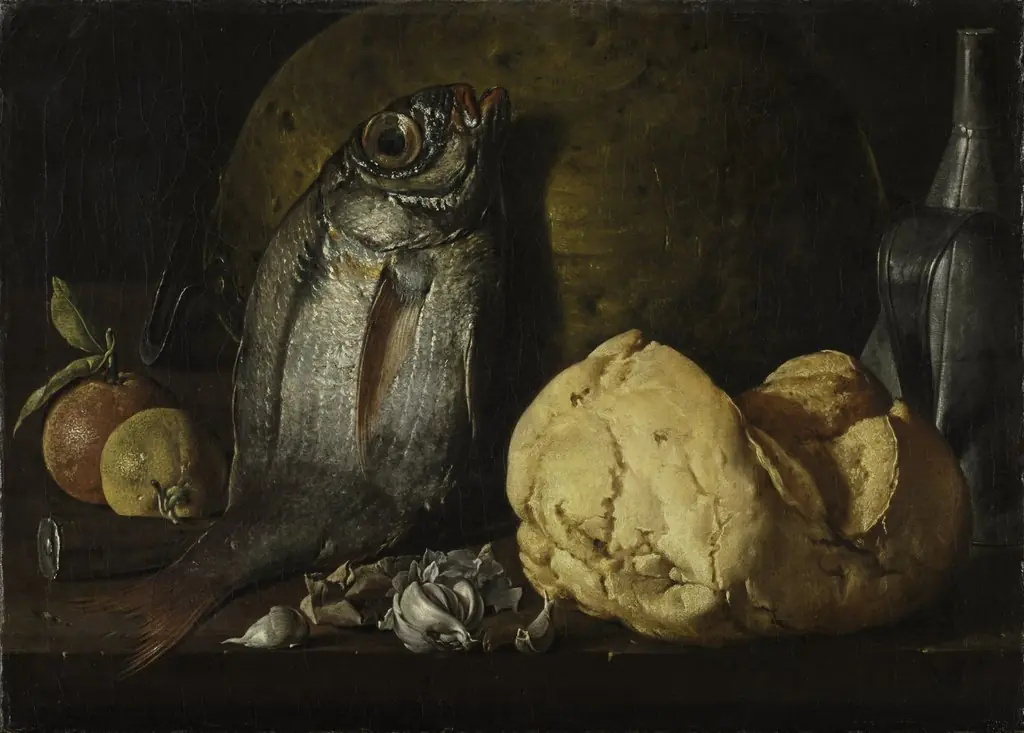 Still Life with Fish, Bread, and Kettle
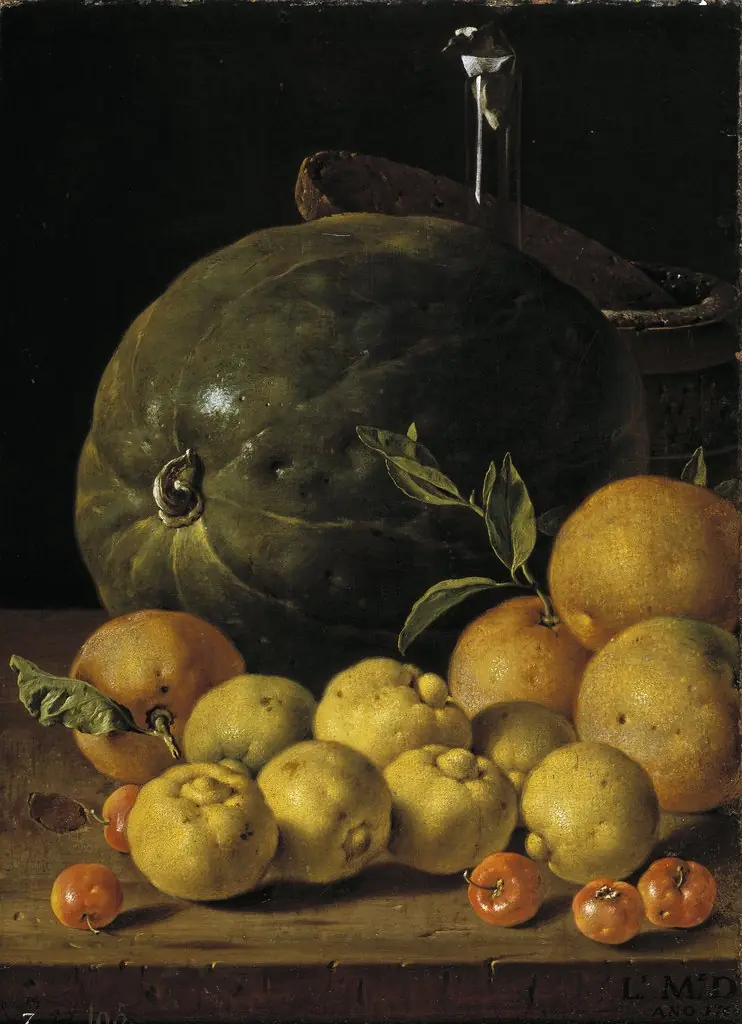 Still Life with Limes Oranges Haw Berries and Watermelon
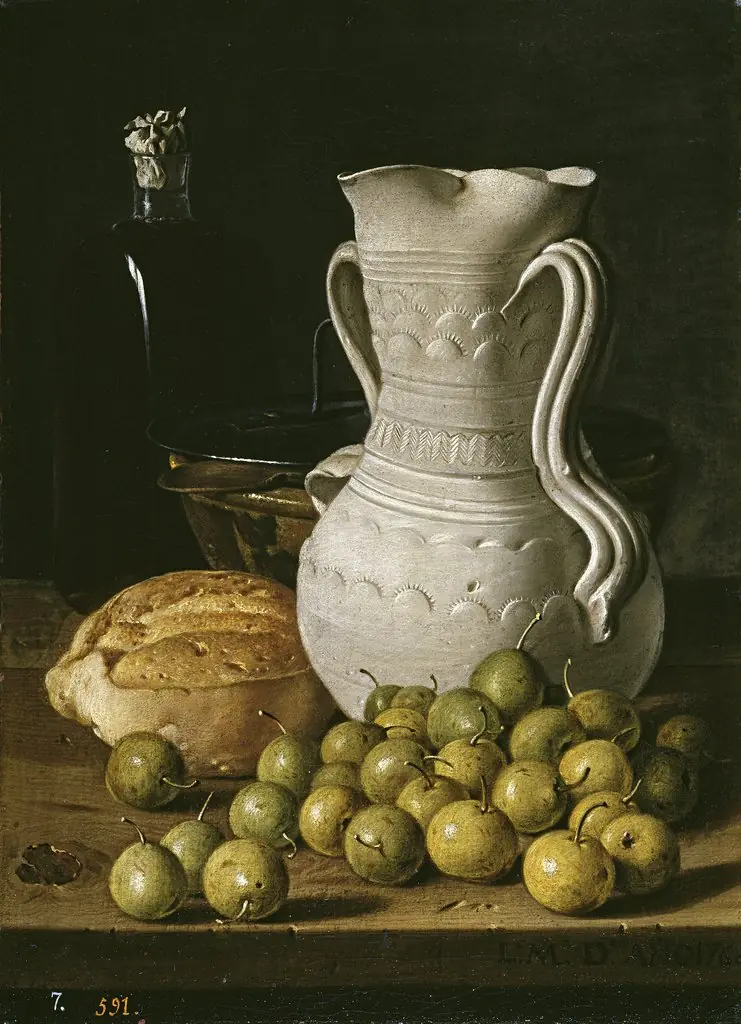 Still Life with Small Pears Bread Flask Bowl and Dry Leaves
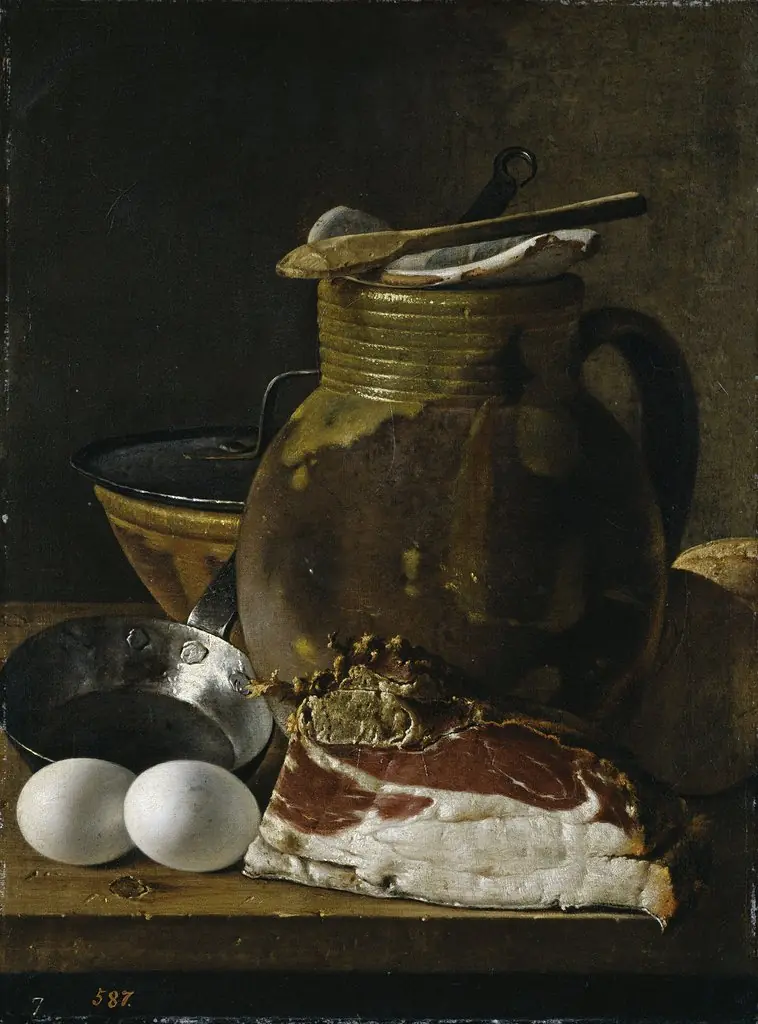 Still Life with Ham Eggs and Vessels
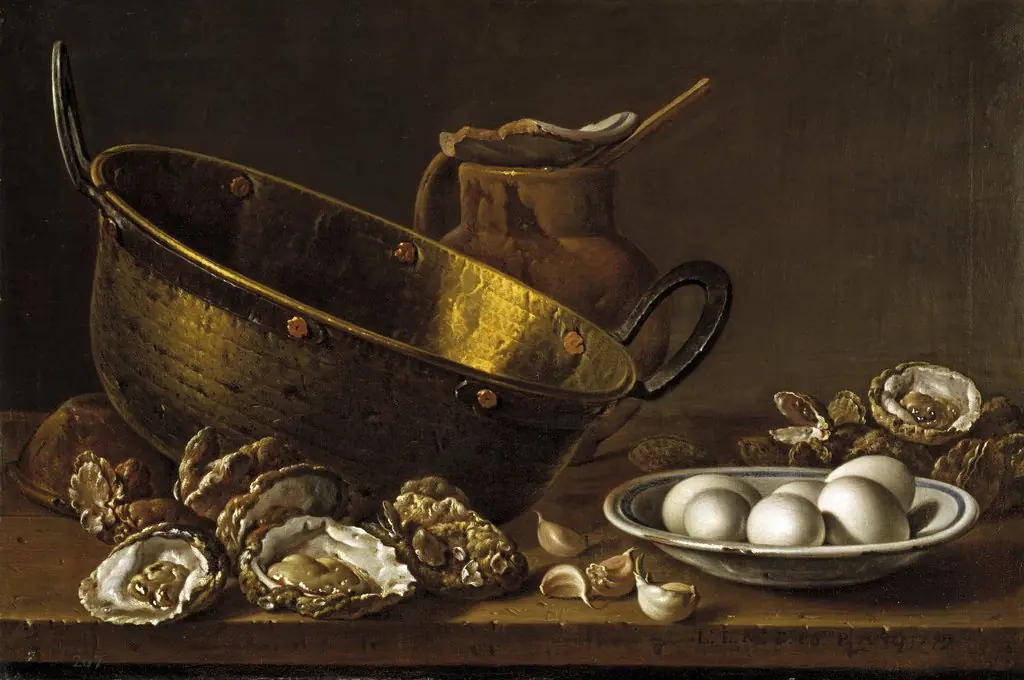 Still Life with Oysters Garlic Eggs Pot and Pan
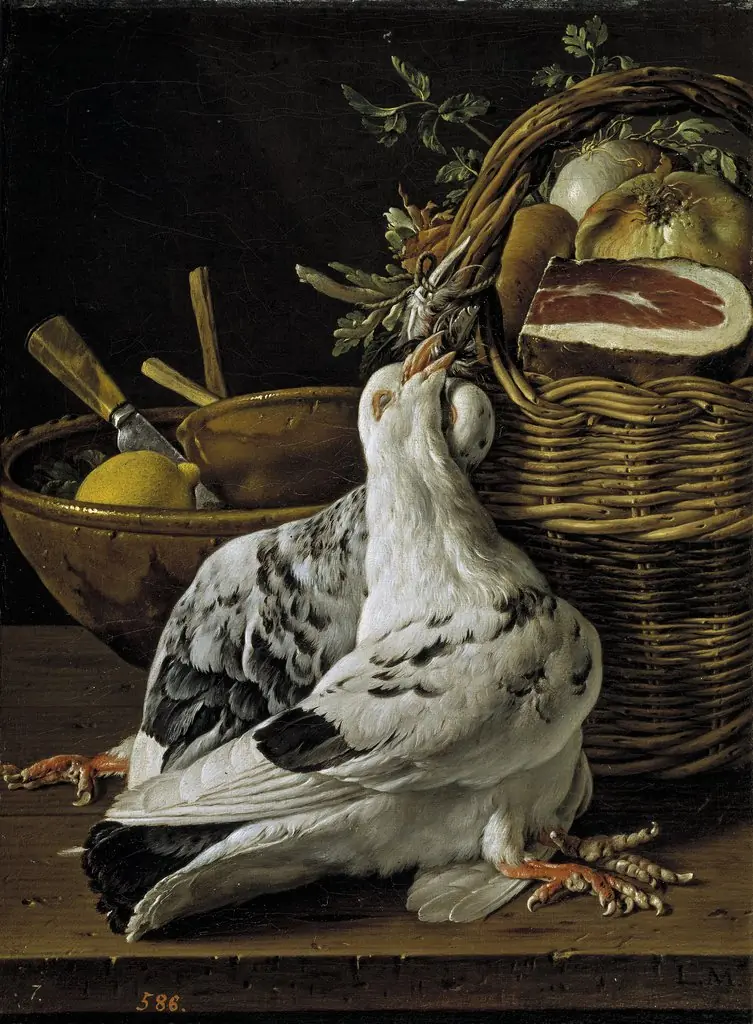 Bodegón con pichones cesta de comida y cuencos
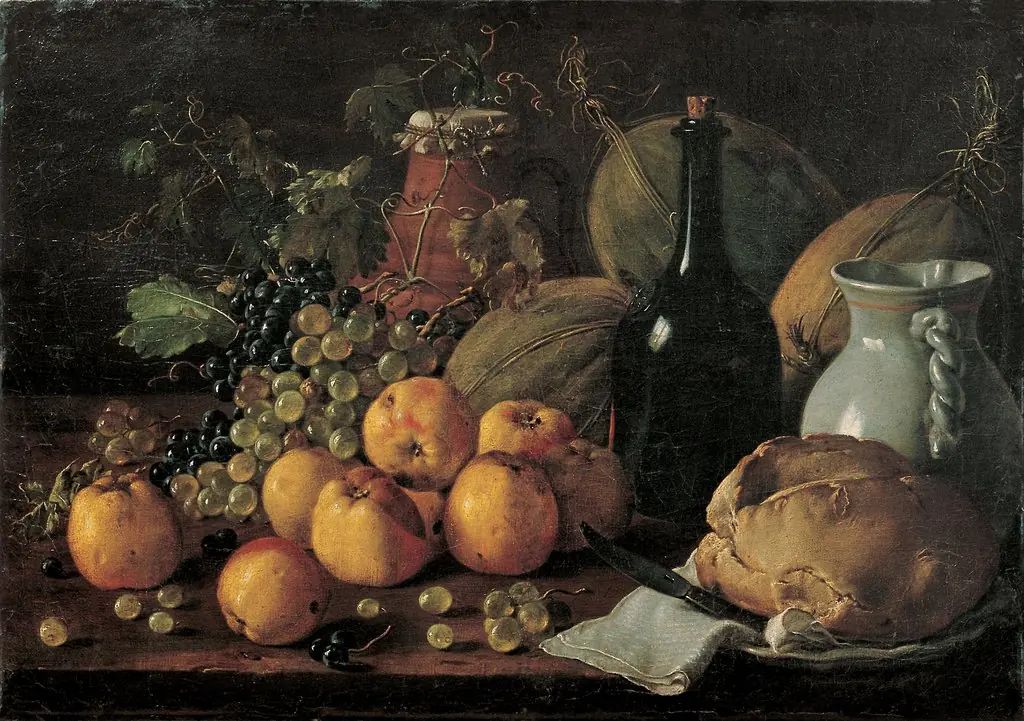 Still Life with Apples, Grapes, Melons, Bread, Jug and Bottle
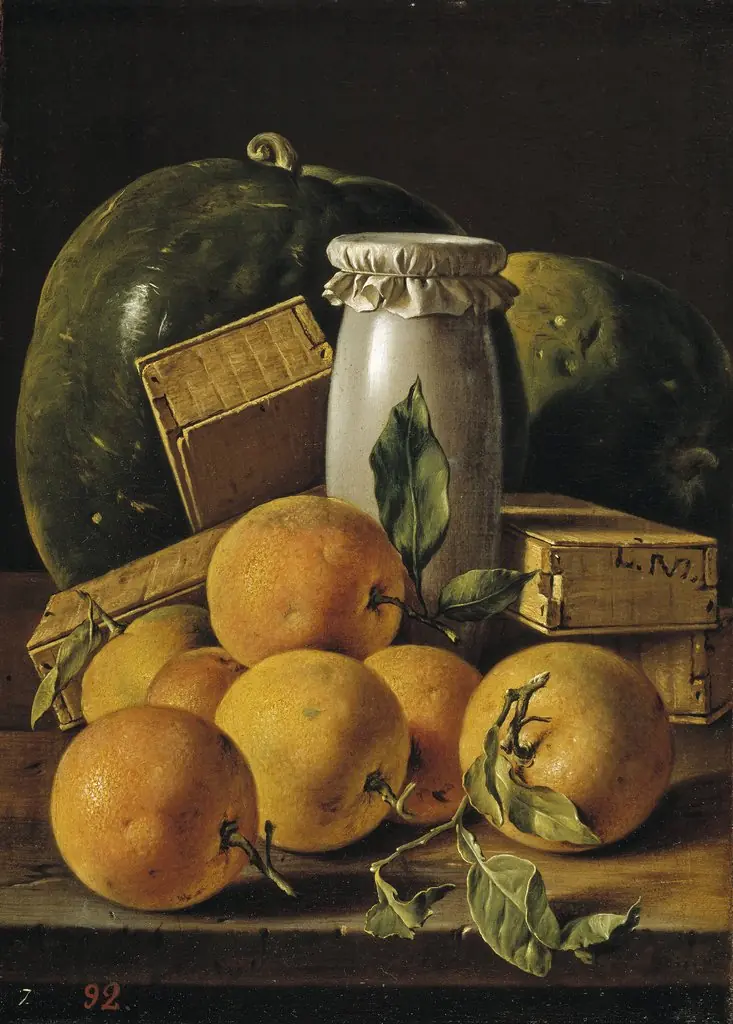 Still Life with Oranges Honey-Jar Boxes of Sweetmeats and Watermelons
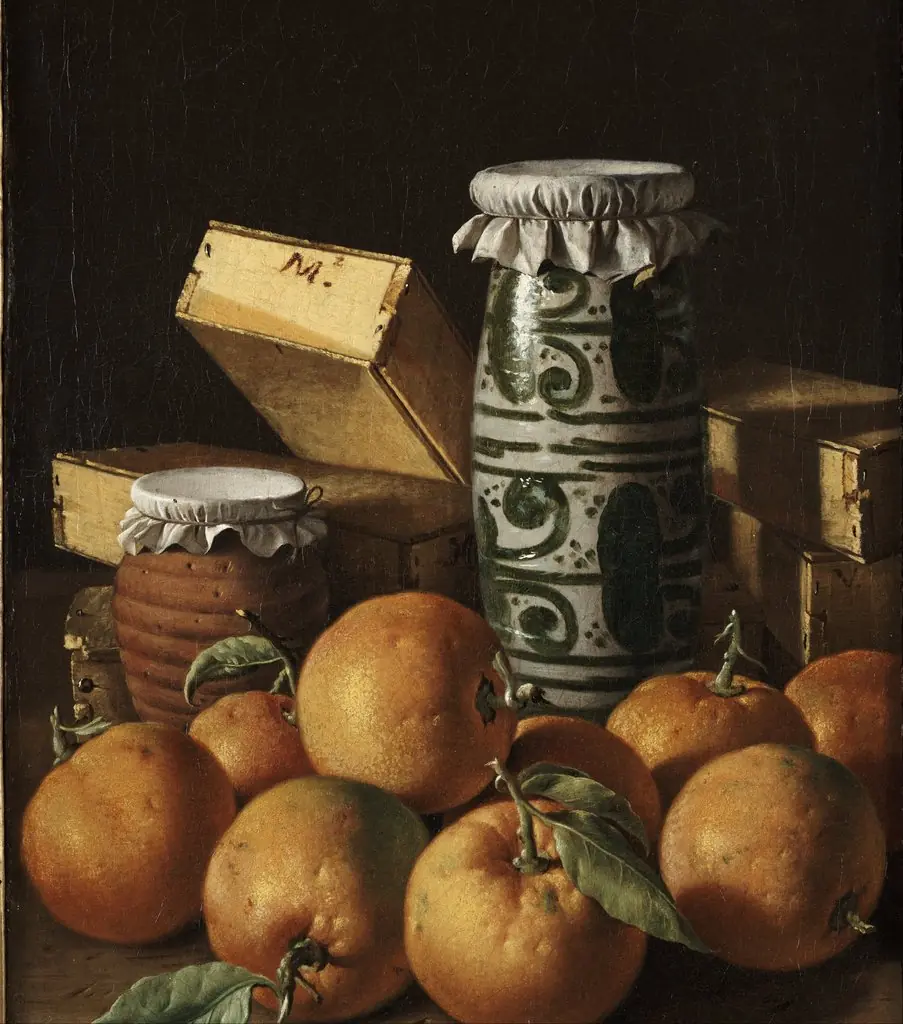 Still Life with Oranges, Jars, and Boxes of Sweets
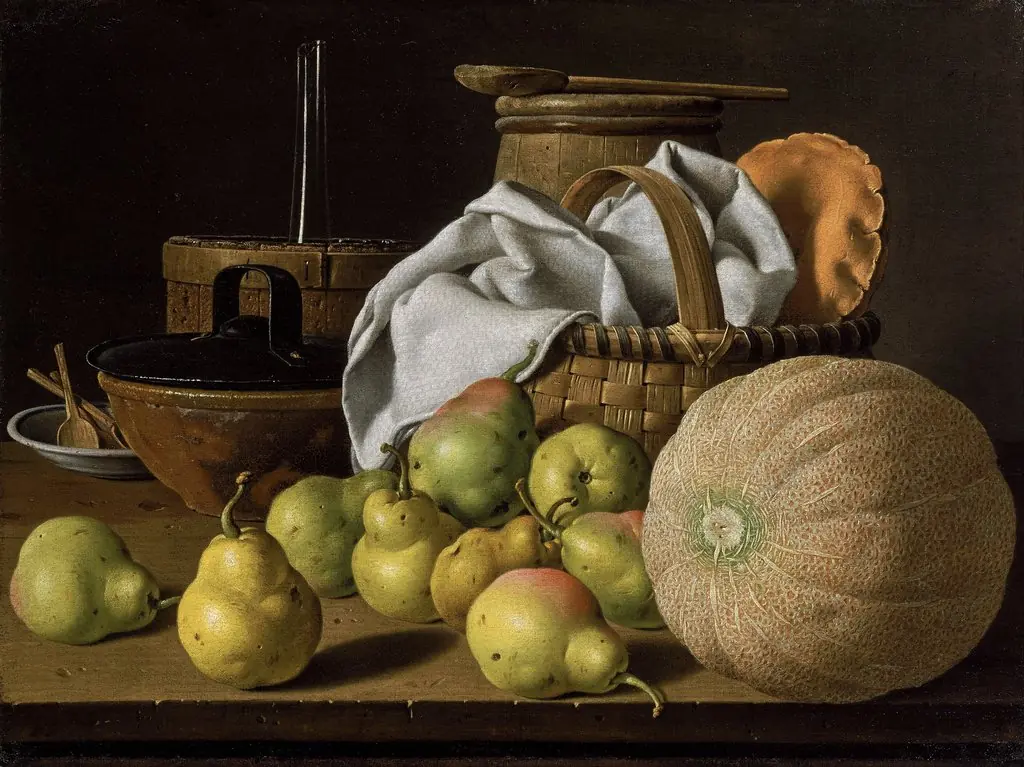 Still Life with Melon and Pears
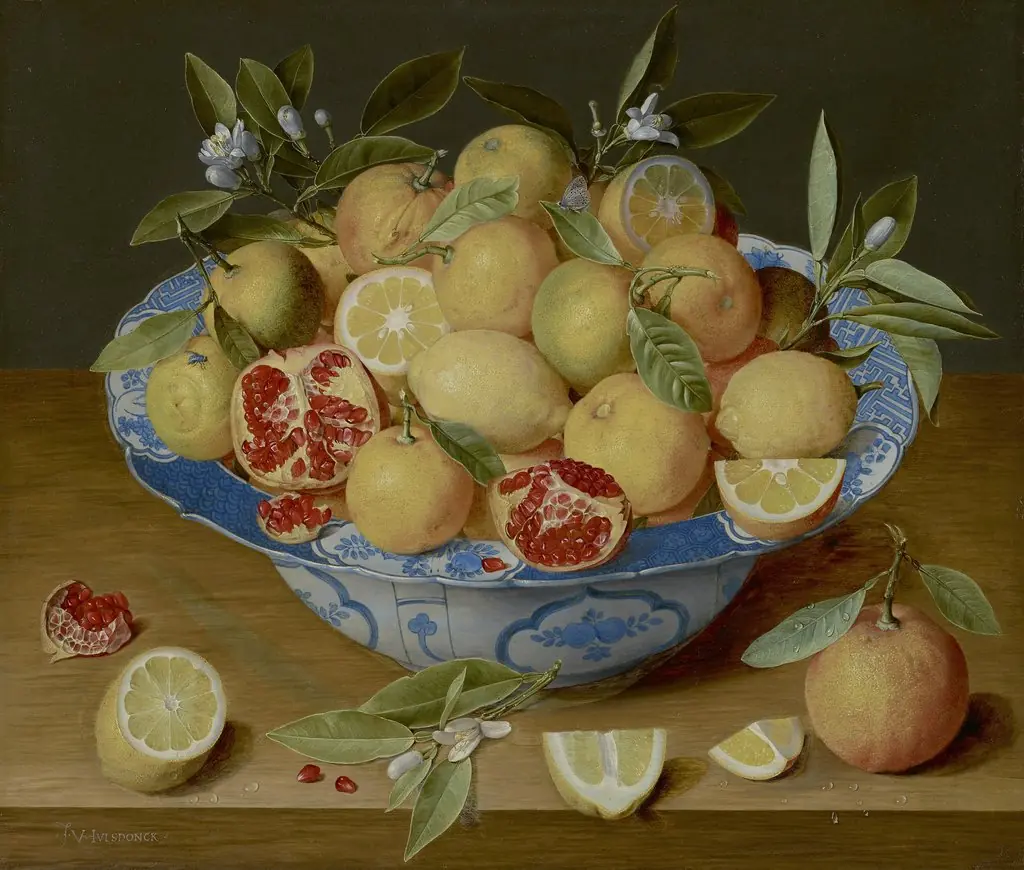 Still Life with Lemons, Oranges and a Pomegranate
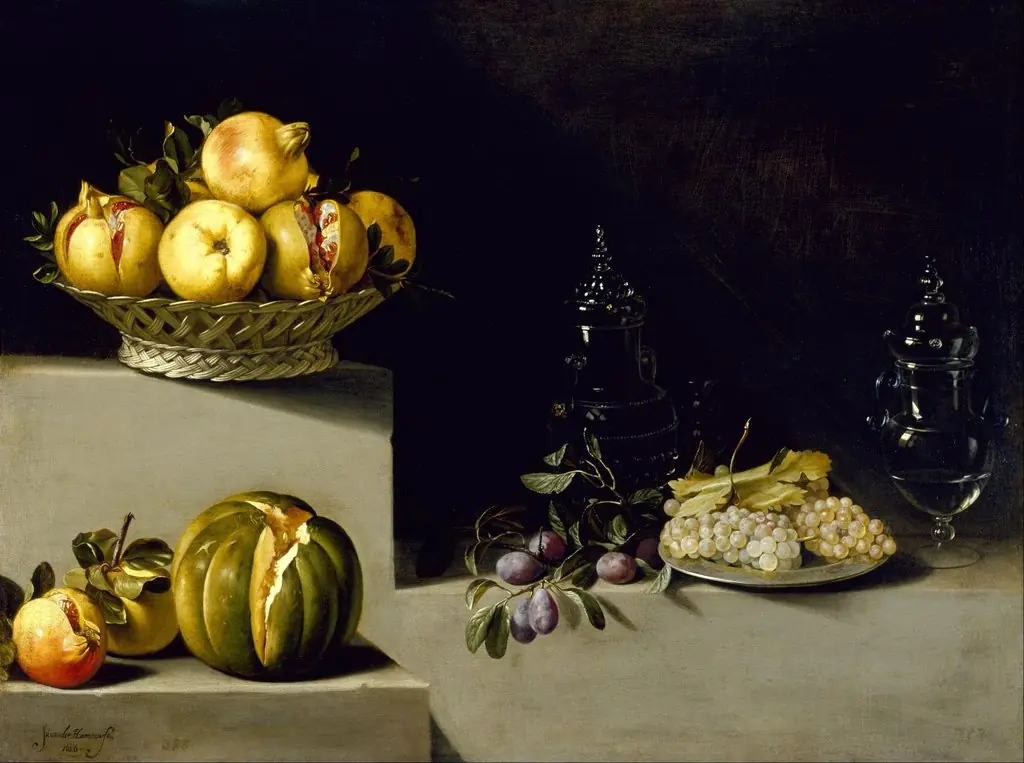 Still Life with Fruit and Glassware
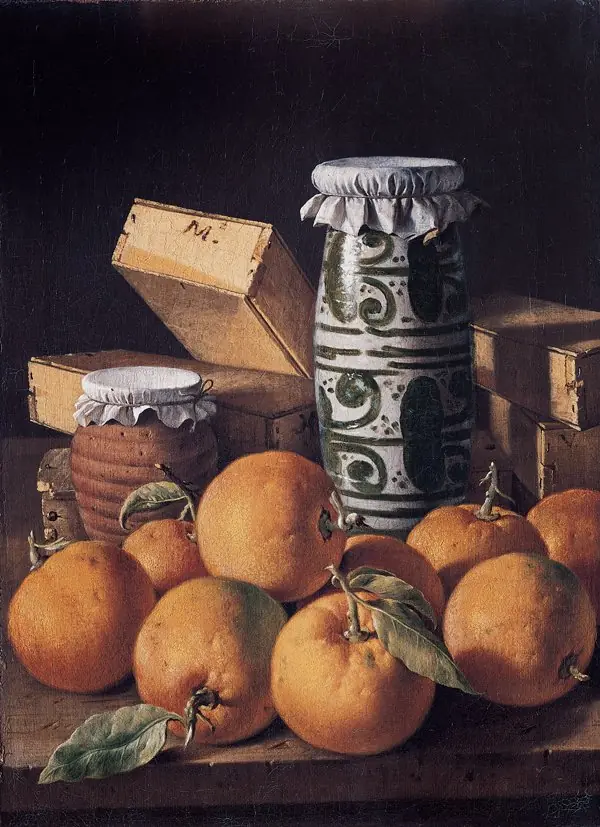 Still Life with Oranges, Manises vase, honey pottery jar and Boxes of Sweets