Artwork
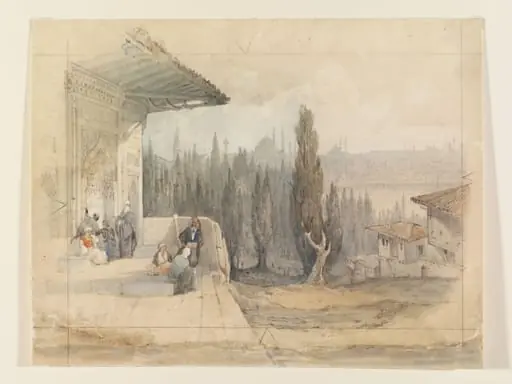
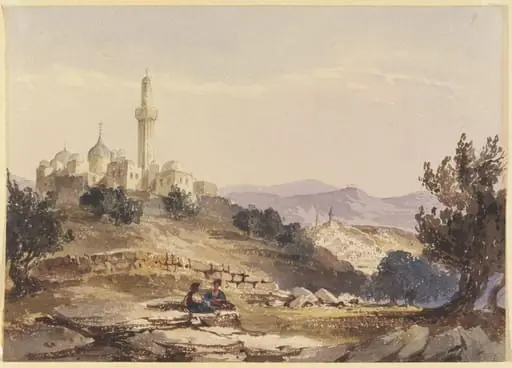
Entrance to the Cannon Gate (Top Kapisi) in Constantinople
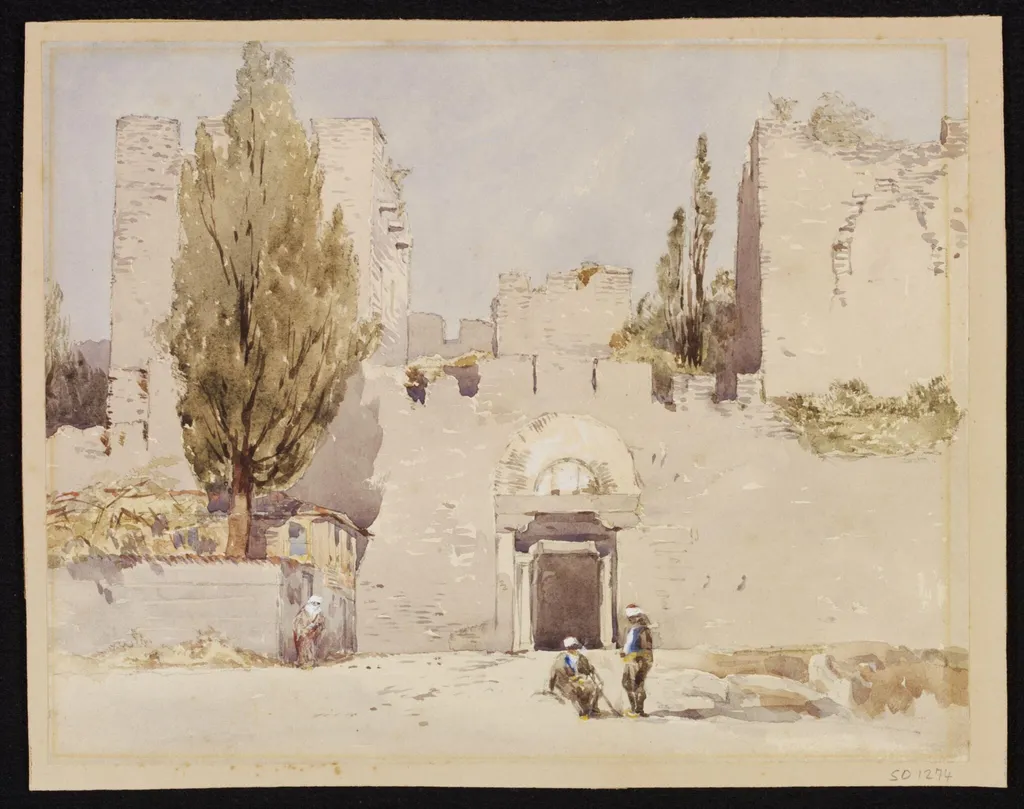
Entrance to the Cannon Gate (Top Kapisi) in Constantinople is a watercolor work on paper by the Romanticist artist Unknown. It dates from 1850 and is held in the collection of the Victoria and Albert Museum. The work is a watercolor executed in 1850 that depicts the entrance to the Cannon Gate, known locally as Top Kapisi, in Constantinople.
About this work
Overview
The work is a watercolor executed in 1850 that depicts the entrance to the Cannon Gate, known locally as Top Kapisi, in Constantinople. The composition captures a sun‑lit, dusty thoroughfare framed by ancient stone walls, with two figures positioned near a large arched doorway. The scene is rendered in muted tones of beige, brown and a hint of green, conveying a quiet urban moment.
Subject & Meaning
The drawing records a specific architectural feature of the Ottoman capital, the Cannon Gate, which served both defensive and ceremonial functions. By placing a bent figure and a casually posed companion within the arch, the artist suggests everyday activity amid the city's historic fabric, emphasizing the gate’s role as a lived, rather than purely monumental, space.
Technique & Style
Executed with swift, loose brushwork, the watercolor relies on subtle variations of light and shadow to model depth, particularly in the recessed doorway and the slender trees lining the street. The limited palette of earth tones and restrained greens reflects mid‑nineteenth‑century British watercolor conventions, where atmospheric effects were often achieved through transparent washes.
History & Provenance
Originally attributed tentatively to the British artist D. H. McKewan, the piece entered the museum’s collection after being bought from dealer James Mackinnon in May 1971 for £16, as recorded by curator Rodney Searight. The modest purchase price and the uncertain attribution highlight the work’s relatively low profile within the broader market for travel sketches of the period.
Context
Created during a time when Western travelers frequently documented Ottoman architecture, the watercolor aligns with a tradition of topographical sketches intended for travel journals and exhibitions. Its focus on light, atmospheric perspective, and everyday figures mirrors the interests of British artists who sought to convey the exotic yet familiar qualities of foreign cities to a domestic audience.
Artist & collection

 Domestic Scene
 Giacomo and Cardinal Marco, investing Andrea, Abbot of San Zeno, with his Benefice
 The Nymph of Fontainebleau
 Portrait of a Woman
 Madonna and Child with Saints in the Enclosed Garden
 Venus and Minerva
 Family Group of Four on Sofa
 Wall painting from Room H of the Villa of P. Fannius Synistor at Boscoreale
 Remains of the Ancient Temple of Jerusalem
 View of the Old City of Jerusalem
 Gate of Justice Alhambra Granada
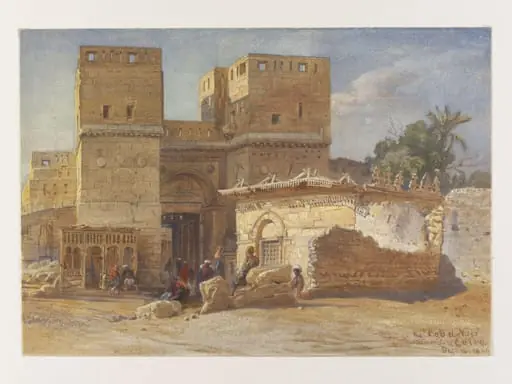 The Bab el Nasr. Cairo
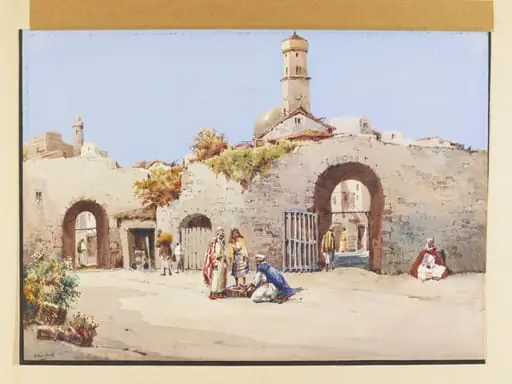 The City Walls, Jaffa, Palestine
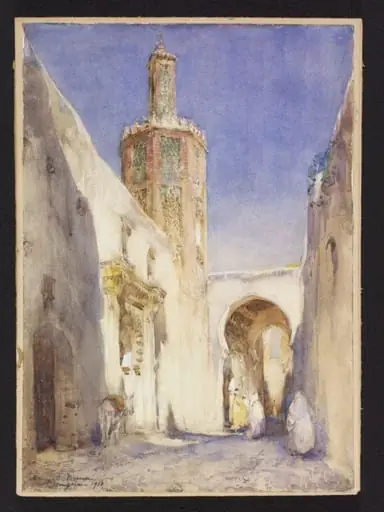 A Street in Tangier
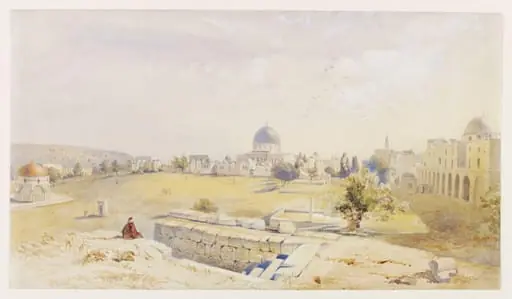 Jerusalem. Mount Moriah The Site Of The Temple now occupied by the Mosque of Omar
 Pera
Pera Jerusalem
 Bethlehem
 Το Τζαμί του Τζισδαράκη στο Μοναστηράκι
 Mosque of the Ascension on the Mount of Olives