Artwork
Assumption of the Virgin
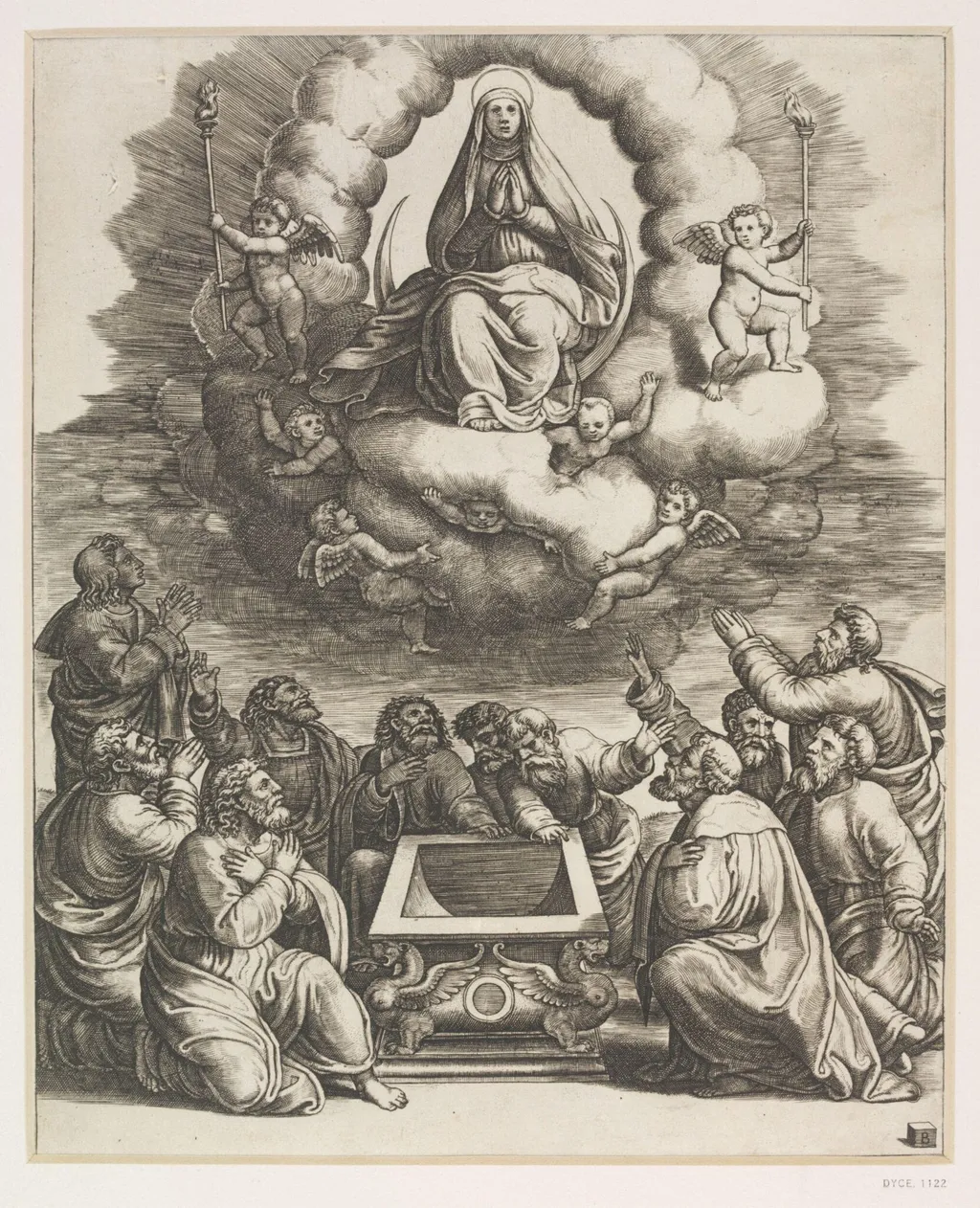
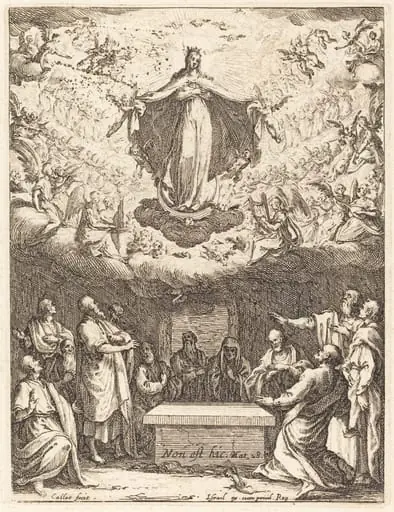
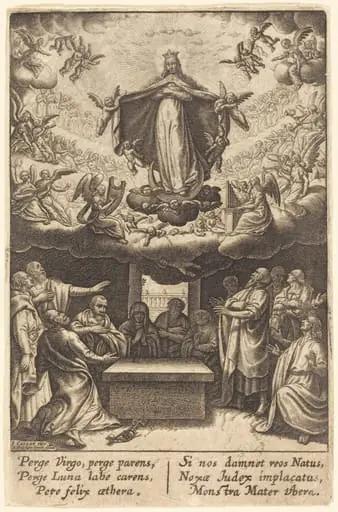
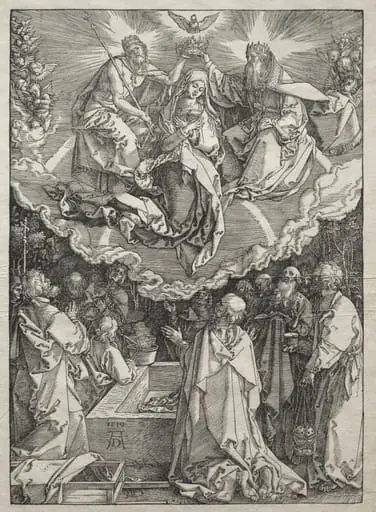
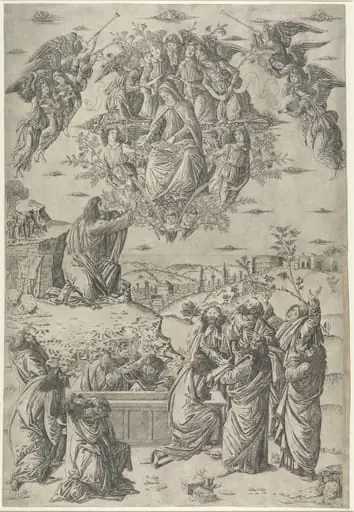
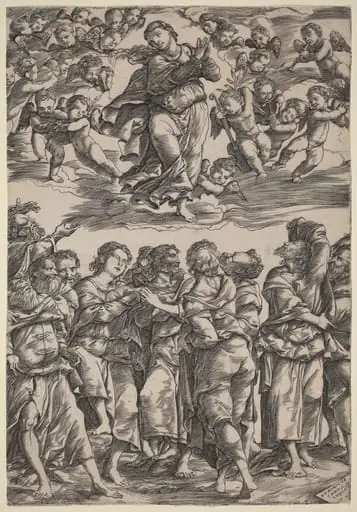
Assumption of the Virgin is a print by the Renaissance artist Master of the Die. It dates from 1534 and is held in the collection of the Victoria and Albert Museum. Created in 1534, this paper print presents the biblical episode of the Virgin Mary's ascent to heaven.
About this work
Overview
Created in 1534, this paper print presents the biblical episode of the Virgin Mary's ascent to heaven. Executed by the workshop known as Maître au Dé, the image follows a composition originally drawn by Raphael. The central figure hovers above a gathering of onlookers, surrounded by clouds and attendant angels, conveying the moment of her assumption.
Subject & Meaning
The composition illustrates the Virgin elevated amid celestial beings, her hands clasped in prayerful repose. Below, a group of bearded men—interpreted as apostles or witnesses—kneel or stand, their gazes directed upward, reflecting a range of reactions from reverent awe to solemn contemplation. The arrangement underscores the theological significance of Mary's bodily ascent to the divine realm.
Technique & Style
The print employs pronounced chiaroscuro, using deep shadows and stark light to model the figures and heighten spatial depth. Contrasting tonal values isolate the central female form and the surrounding angels, while the lower crowd emerges from a darker ground plane. This dramatic use of light and shade enhances the narrative tension of the scene.
History & Provenance
Attributed to the Maître au Dé workshop, the work is a reproductive print based on Raphael's original design, a common practice for disseminating high Renaissance compositions. Dated to 1534, it reflects the spread of Raphael's iconography across Northern Europe through printmaking, though specific ownership records prior to modern collection remain limited.
Artist & collection

Artist
Master of the Die (fl. 1525–1560) was an Italian engraver and printmaker. His year of birth and death are unknown. The identity of the Master of the Die is uncertain. He was given this name because he signed his prints…