Artwork
Saint Roch
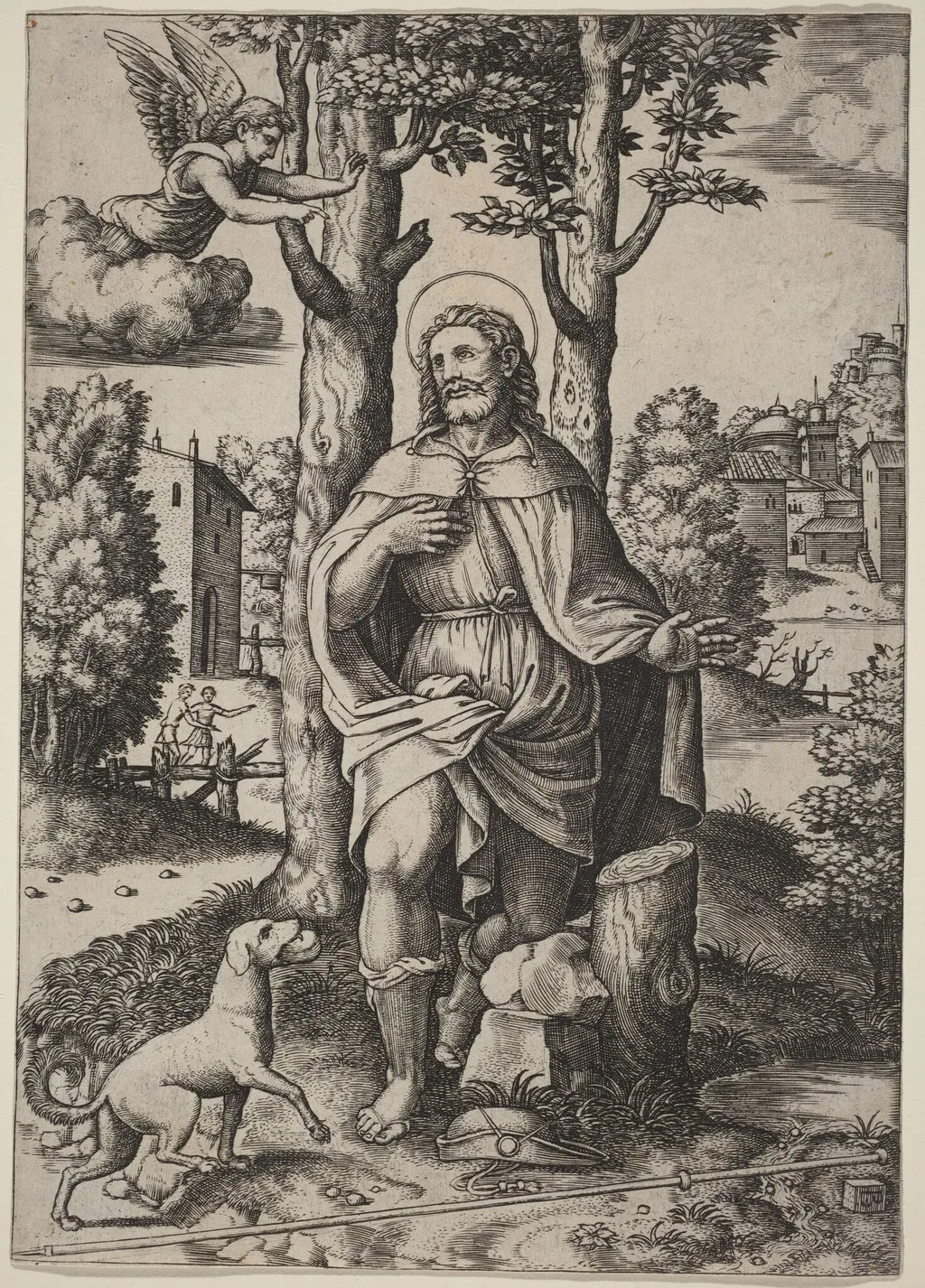
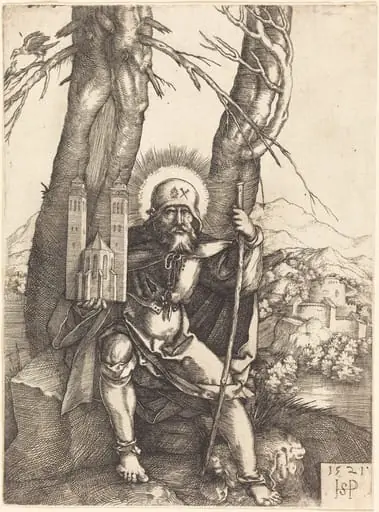
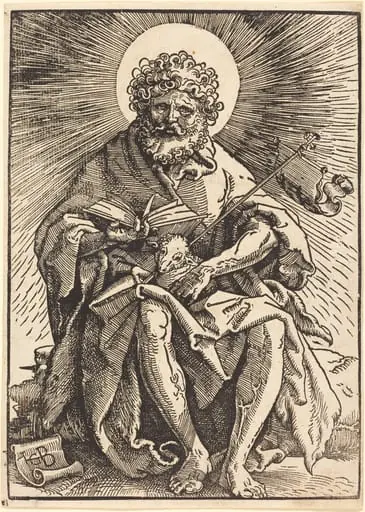
Saint Roch is an ink print by the Renaissance artist Master of the Die. It dates from 1522 and is held in the collection of the National Gallery of Art.
About this work
Overview
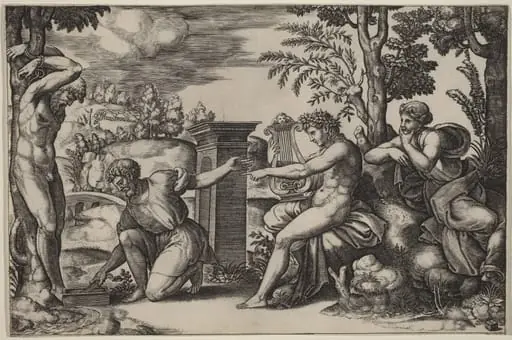
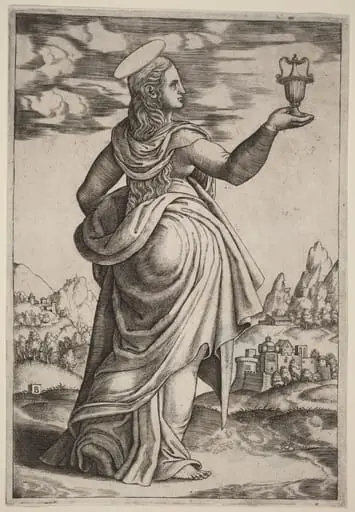
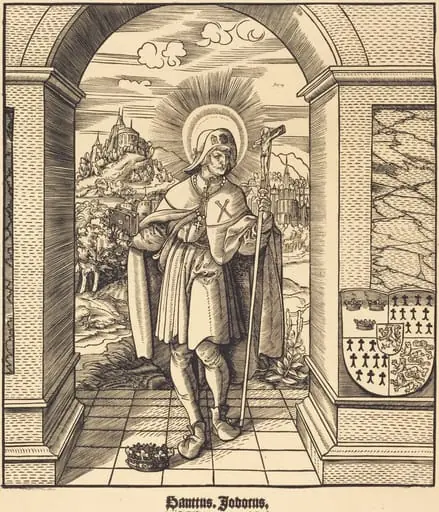
Saint Roch is a black‑and‑white copperplate engraving dated 1522. The composition presents a bearded saint in a loose robe beneath a leafy tree, his head illuminated by a halo. He holds an open book in one hand, while a faithful dog rests at his feet. A winged figure reaches toward the tree’s branches, and a distant village with crosses is visible beyond.
Subject & Meaning
The central figure is Saint Roch, traditionally invoked for protection against plague. The halo identifies him as holy, and the dog, a common attribute, symbolizes loyalty and his legend of nursing the saint’s wounds. The accompanying angelic figure and the distant settlement suggest intercession and the spread of his healing influence to the surrounding community.
Technique & Style
Executed as an engraving, the artist incised fine lines into a metal plate, producing a range of tonal values through hatching and cross‑hatching. The work reflects the graceful composition and idealized forms associated with Raphael’s circle, a result of the engraver’s training under Marcantonio Raimondi, who popularized such classical motifs in printmaking.
History & Provenance
The piece is attributed to the anonymous “Master of the Die,” an Italian printmaker active from the mid‑1520s to the 1560s. He signed his prints with a small die symbol, a practice that aids identification. The engraving was likely produced for devotional use, circulating among patrons seeking Saint Roch’s protection during recurring epidemics.
Artist & collection

Artist
Master of the Die (fl. 1525–1560) was an Italian engraver and printmaker. His year of birth and death are unknown. The identity of the Master of the Die is uncertain. He was given this name because he signed his prints…