Artwork
Apollo and Marsyas
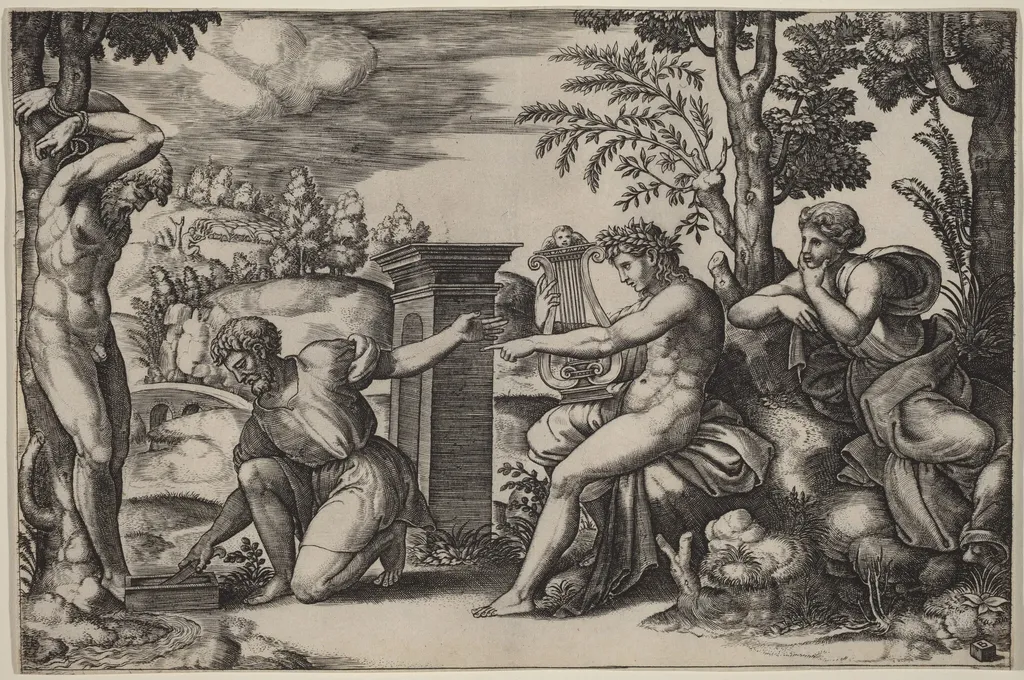
Apollo and Marsyas is an ink print by the Renaissance artist Master of the Die. It dates from 1534 and is held in the collection of the National Gallery of Art.
About this work
Overview
The print titled *Apollo and Marsyas* is an engraving created circa 1534 by the anonymous Italian artist known as the Master of the Die. Active in the mid‑sixteenth century, he signed his works with a small die symbol, a habit that has preserved his moniker while his personal identity remains unknown.
Subject & Meaning
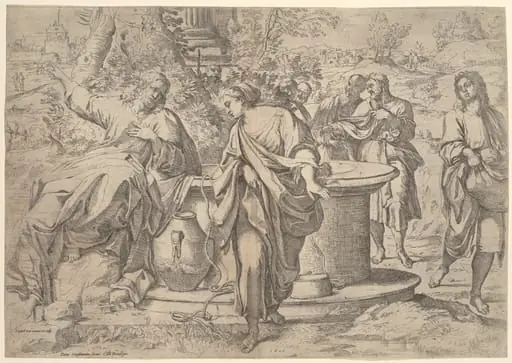
The image portrays a scene from Greek mythology in which Apollo, seated on a stone bench, plays a lyre while the satyr Marsyas leans forward to listen. A third figure, kneeling with a bag, adds narrative detail. The setting—a garden framed by trees and a modest building—places the mythic encounter in a tranquil, cultivated environment.
Technique & Style
Executed in fine line engraving, the artist employs dense cross‑hatching to model shadows and give volume to the figures. The linear precision and compositional balance reflect the influence of Raphael’s workshop, while the delicate handling of light and texture demonstrates the Master of the Die’s command of the medium.
History & Provenance
The Master of the Die, a pupil of Marcantonio Raimondi, worked between roughly 1525 and 1560, producing prints that circulated widely in Italy. This particular engraving, like many of his works, was likely distributed through the print market of the period, though specific ownership records for surviving copies are scarce.
Context
The depiction aligns with a Renaissance fascination for classical subjects, especially the rivalry between Apollo and Marsyas that symbolized the triumph of refined art over rustic talent. Such mythological themes were common in print series intended for educated collectors and served both decorative and didactic purposes.
Artist & collection

Artist
Master of the Die (fl. 1525–1560) was an Italian engraver and printmaker. His year of birth and death are unknown. The identity of the Master of the Die is uncertain. He was given this name because he signed his prints…

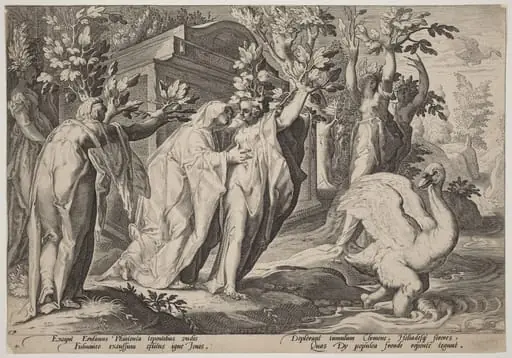 Phaeton's Sisters Changed into Poplars, and Cygnus into a Swan
![Temporalis Aeternitas [Second Version], by Italian 17th Century](https://artifactworldgallery.com/img/italian-17th-century--temporalis-aeternitas-second-version--2b55857961773f67-w320.webp) Temporalis Aeternitas [Second Version]
Temporalis Aeternitas [Second Version]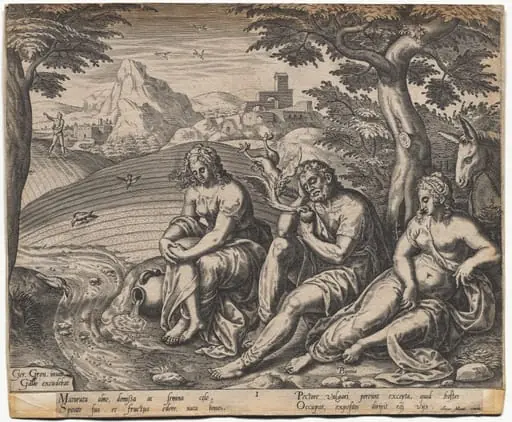 The Parable of the Sower and the Seed: The Seed Falling by the Way Side (after Gerard Van Groeningen, active Antwerp 1563-1573)
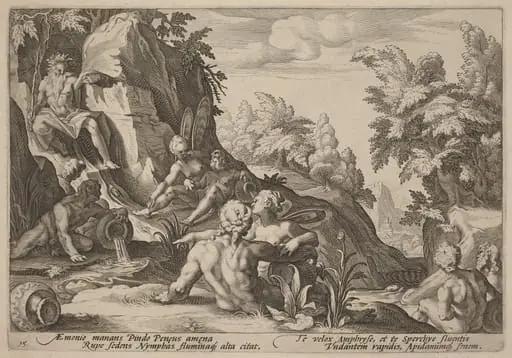 The River God Peneus Surrounded by Other Divinities
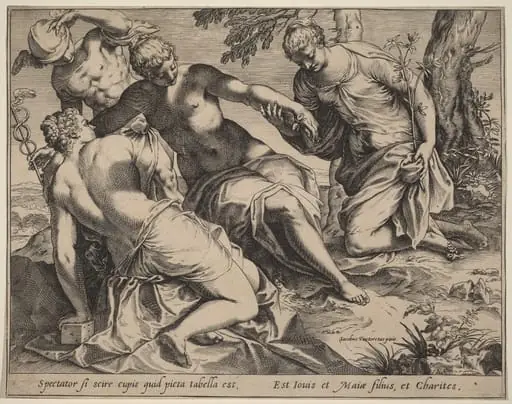 Mercury and the Three Graces
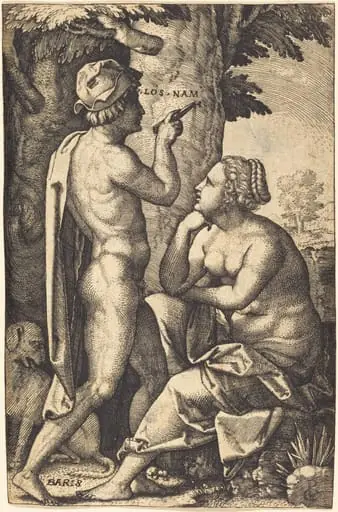 Paris Writing Words of Love to Oenone
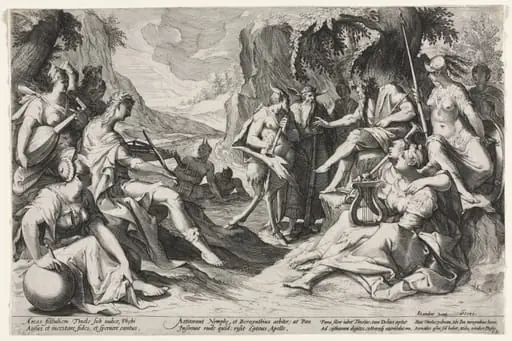 The Judgment of Midas
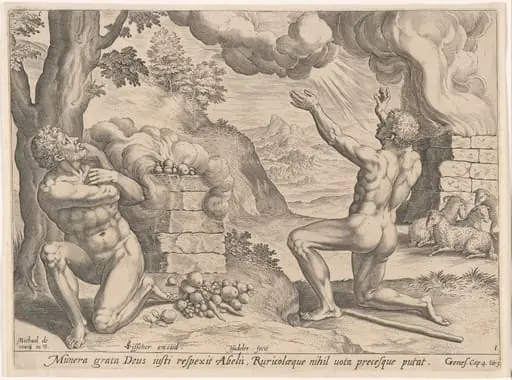 The Offering of Cain and Abel
 Christ and the Samaritan Woman