Artwork
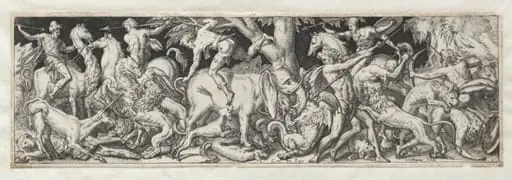
Five Men Fighting Beasts
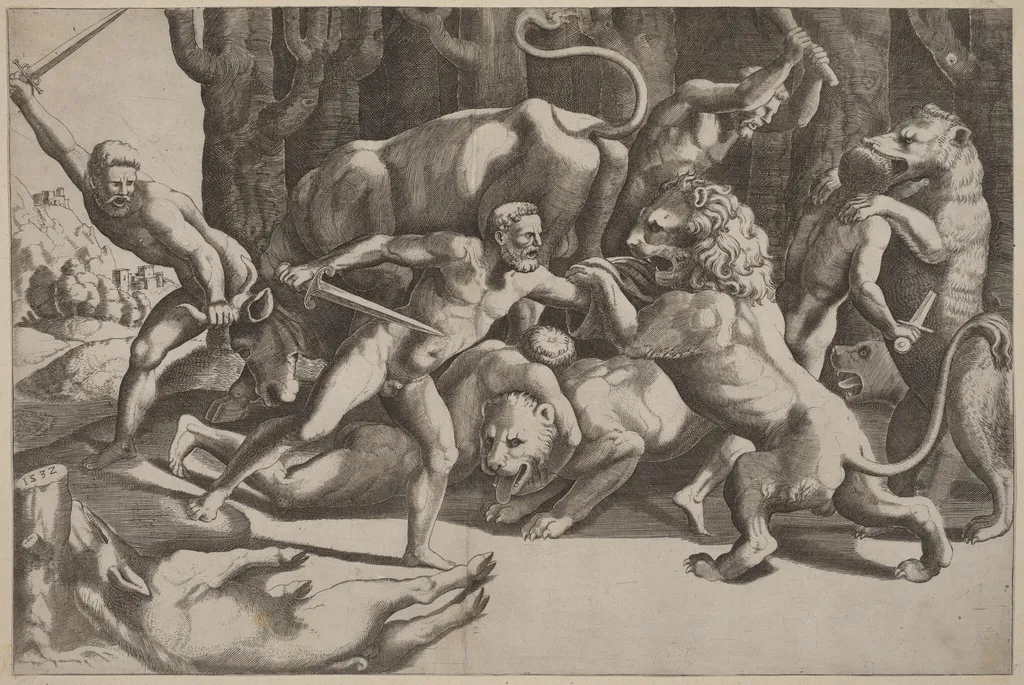
Five Men Fighting Beasts is an ink print by the Renaissance artist Master of the Die. It dates from 1532 and is held in the collection of the National Gallery of Art.
About this work
Overview
Created in 1532, Five Men Fighting Beasts is an engraving executed on laid paper. The work is attributed to the anonymous Italian printmaker known as the Master of the Die, who was active in the mid‑sixteenth century and identified by a tiny die symbol that appears on his prints.
Subject & Meaning
The composition presents five figures, dressed in plain tunics, locked in combat with two ferocious beasts—a lion and a bull. One of the men wields a club, while the others grapple with the animals, suggesting a narrative of human struggle against untamed nature.
Technique & Style
The image was produced by incising lines into a copper plate; ink was forced into the recessed grooves and then transferred to paper under pressure. The artist employs dense cross‑hatching to model forms and convey the tension of the scene, reflecting the influence of Raphael’s graceful figures and the technical precision of his teacher, Marcantonio Raimondi.
History & Provenance
The Master of the Die worked between roughly 1525 and 1560, a period during which he signed his prints with the distinctive die mark. Although the original owner of this particular impression is unknown, the print has been documented in several European collections since the seventeenth century, illustrating its circulation among connoisseurs of Italian engraving.
Context
Engraving in the early sixteenth century served both as a means of reproducing popular compositions and as a vehicle for disseminating the visual language of the High Renaissance. This work aligns with contemporary interests in heroic or allegorical confrontations between mankind and the animal world, a motif that appears in both literary and visual sources of the period.
Artist & collection

Artist
Master of the Die (fl. 1525–1560) was an Italian engraver and printmaker. His year of birth and death are unknown. The identity of the Master of the Die is uncertain. He was given this name because he signed his prints…

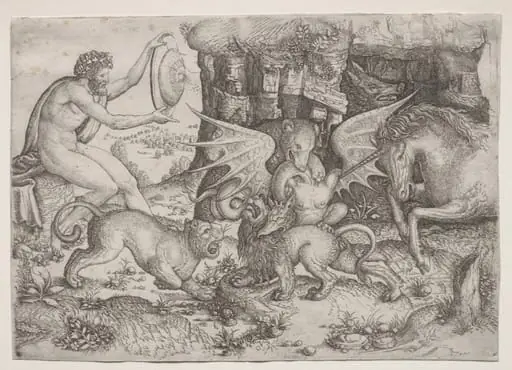 Allegorical Theme: Combat of Animals
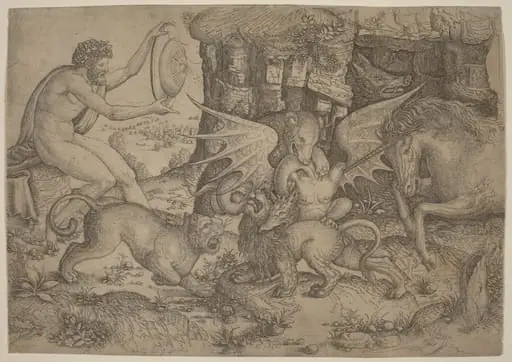 Allegorical Theme: Combat of Animals
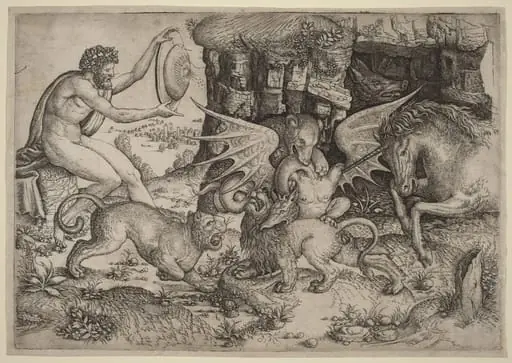 Allegorical Theme: Combat of Animals
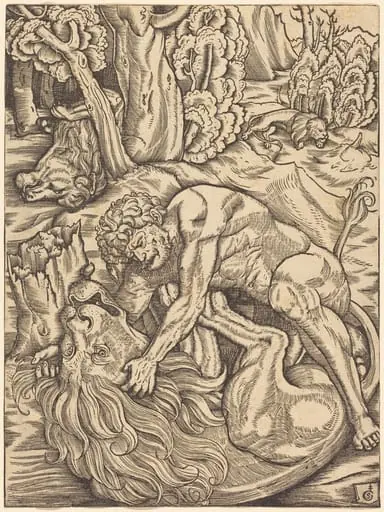 Hercules and the Nemean Lion
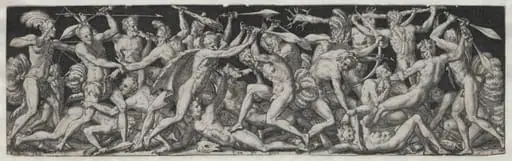 Combats and Triumphs No. 7
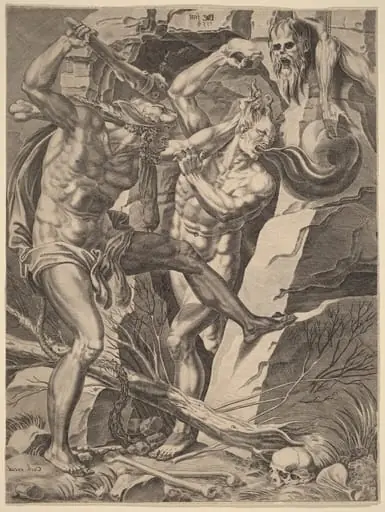 Hercules Killing Cacus
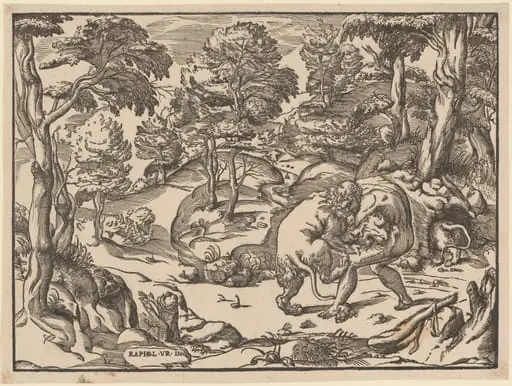 Hercules and the Nemean Lion
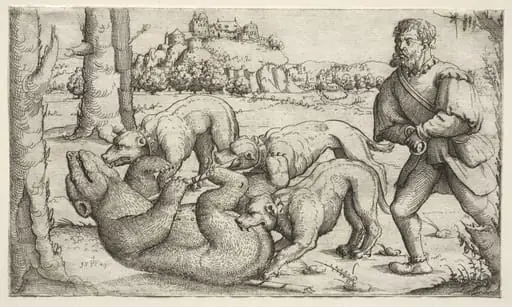 A Bear Hunt
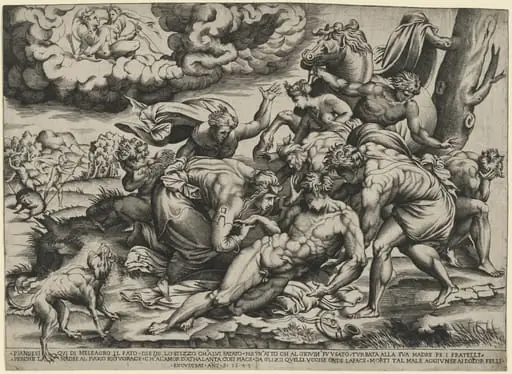 The Death of Meleager
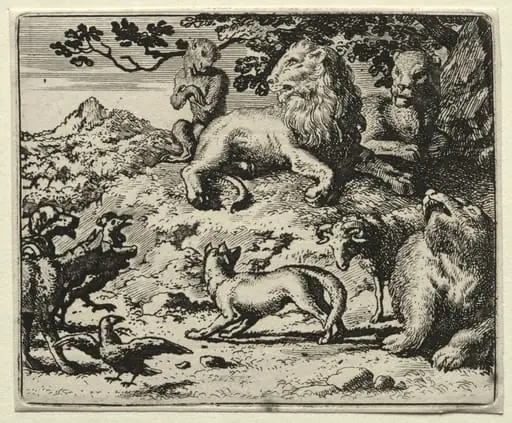 Reynard the Fox: The Animals Complain of Reynard's Pardon
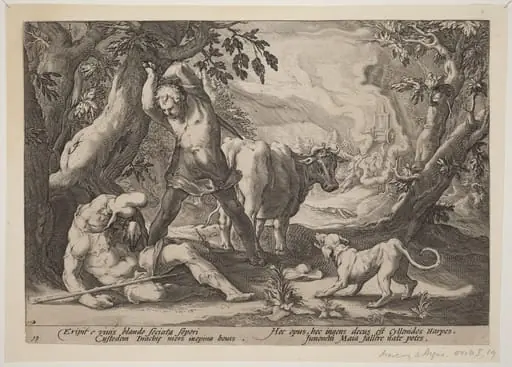 Landscape with Mercury Raising His Sword to Kill a Sleeping Argus
 Combats and Triumphs No. 6