Artwork
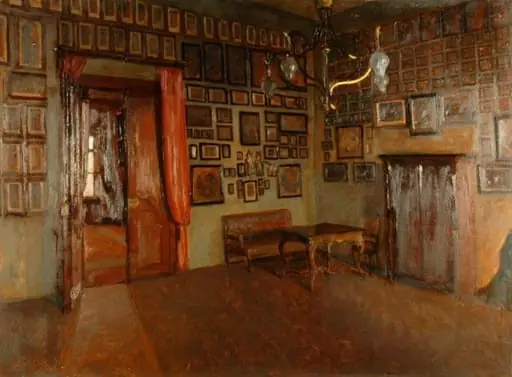
Sala gravurilor
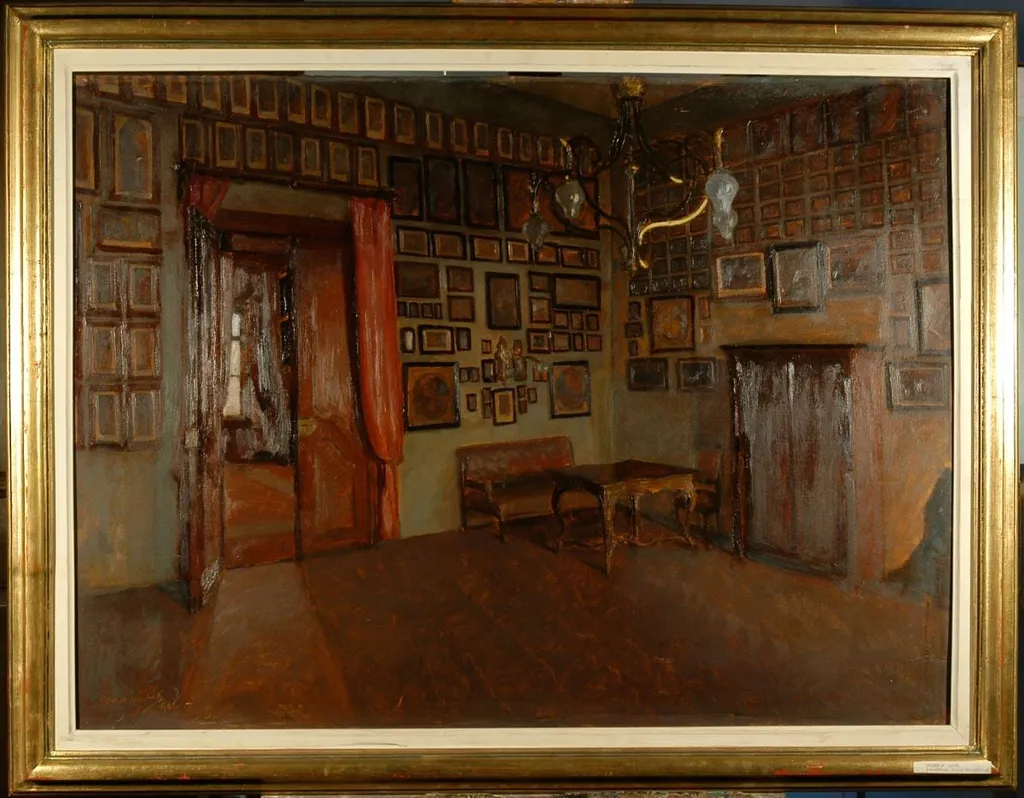
Sala gravurilor is an unspecified painting by Alfred Macalik. It dates from 1926 and is held in the collection of the Țării Crișurilor Museum.
About this work
Overview
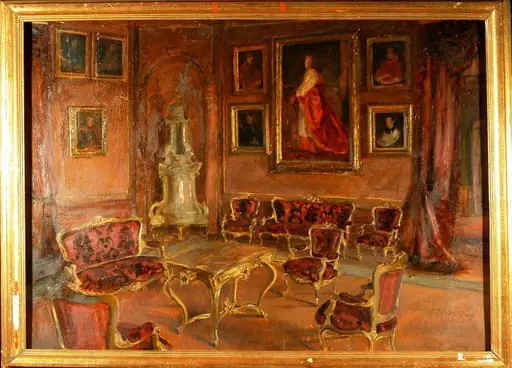
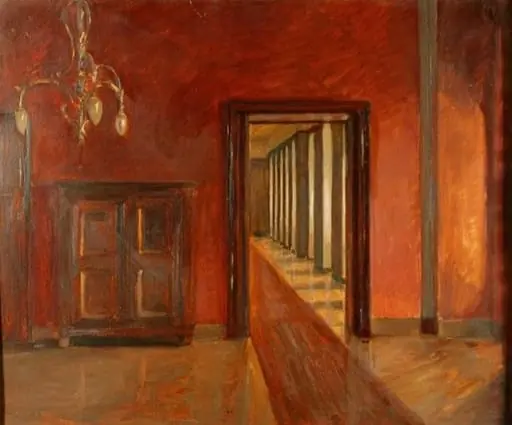
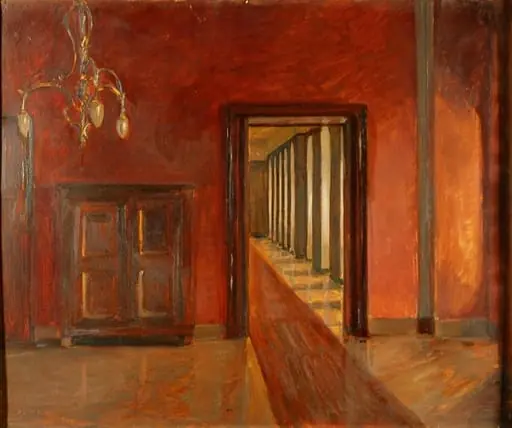
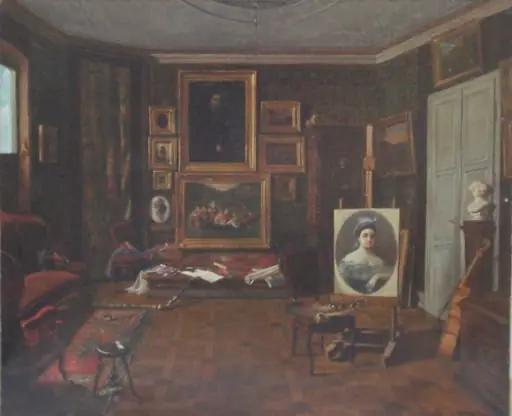
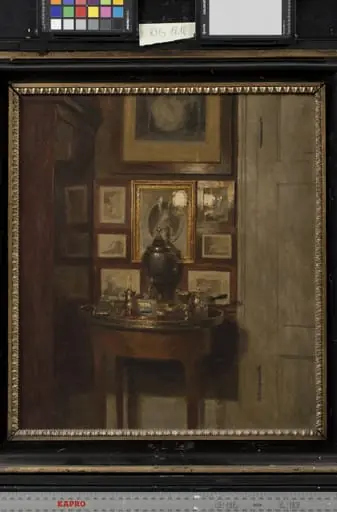
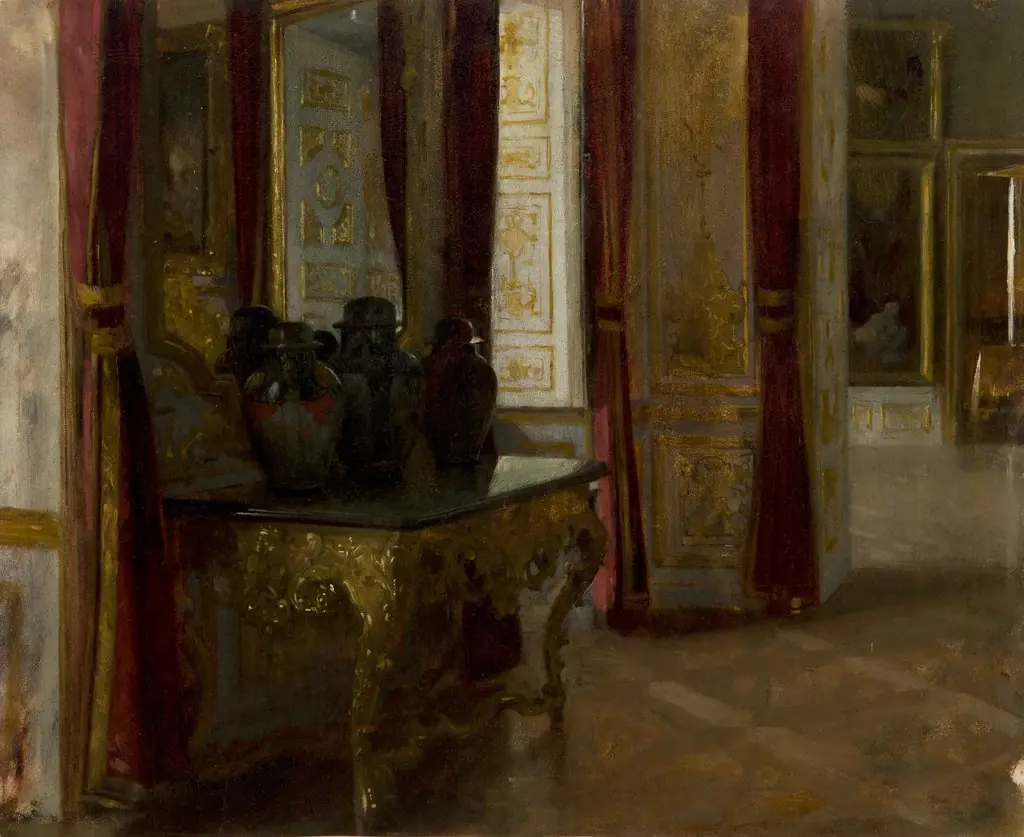
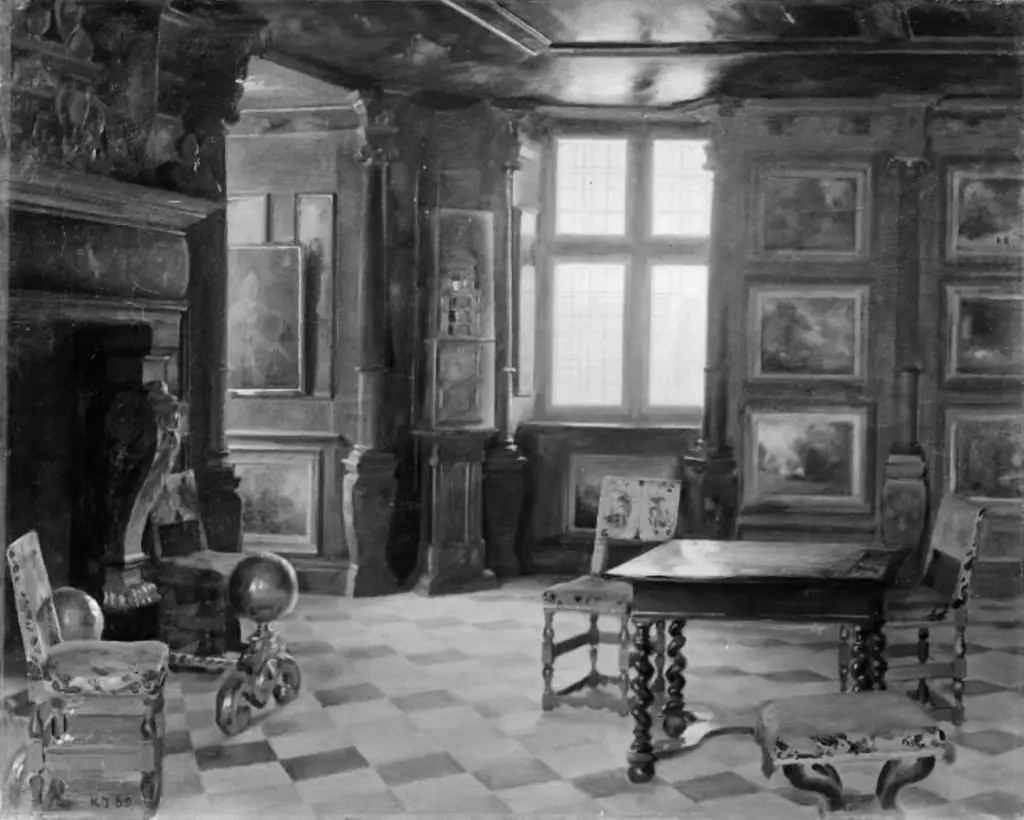
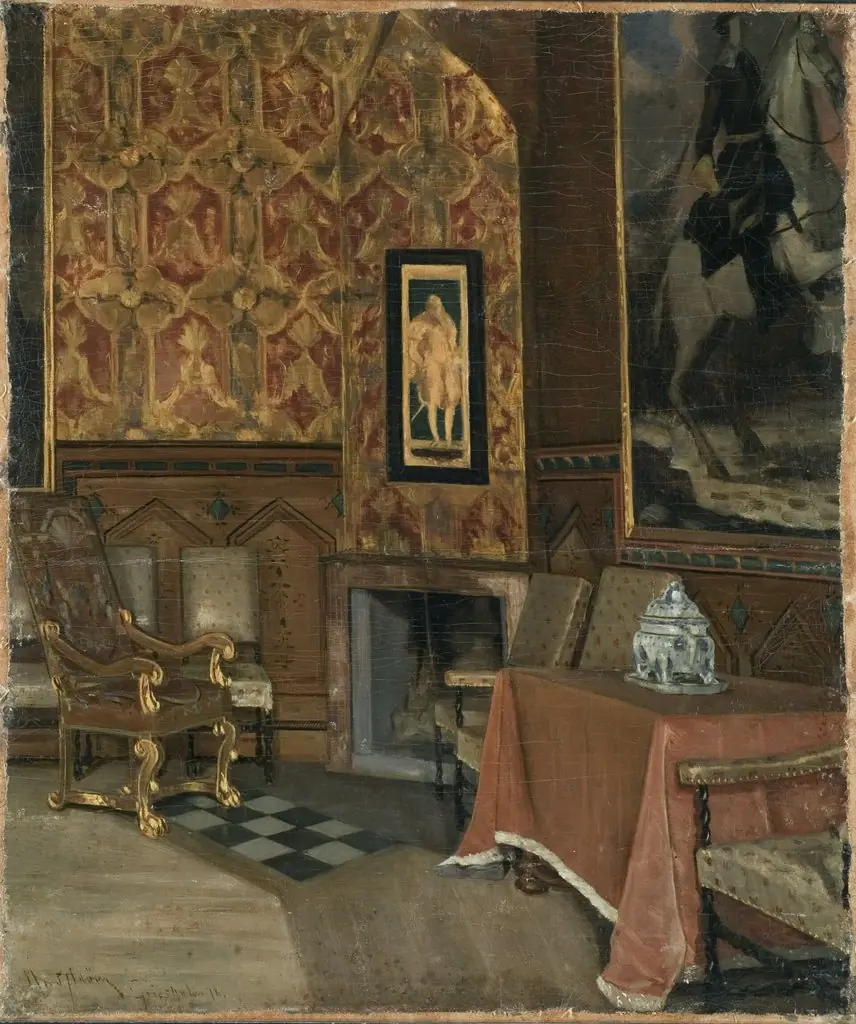
Alfred Macalik’s 1926 painting, Sala gravurilor, depicts an intimate interior that resembles a historic engraving room. Dark wooden walls and floors frame a collection of framed images arranged closely together, while a red curtain hangs beside an open doorway. A modest couch and a wooden table occupy the foreground, and a chandelier topped with a deer’s head supplies a warm, amber illumination.
Subject & Meaning
The composition invites viewers into a private, scholarly space, suggesting a reverence for the preservation of visual culture. The juxtaposition of numerous framed pictures hints at a curated archive, while the modest furnishings convey a sense of modesty and contemplation, emphasizing the value placed on the study and display of graphic works.
Technique & Style
Macalik employs a pronounced impasto technique, applying paint in thick, scraped layers that give the wood grain, fabric, and metal fixtures a tactile presence. This heavy handling of pigment enhances the texture of surfaces, allowing light to catch the raised strokes and creating a vivid, three‑dimensional effect within the two‑dimensional medium.
History & Provenance
Created in 1926, Sala gravurilor entered the collection of the Museum of Ethnography, where it remains on display. The museum’s acquisition reflects its interest in works that document cultural practices and material heritage, situating Macalik’s interior scene within a broader ethnographic narrative.
Context
The painting emerges from the interwar period, a time when artists often explored national identity and folk traditions through interior scenes. Macalik’s focus on an engraving room aligns with contemporary interests in documenting artistic processes and preserving visual archives, linking the work to broader trends in early twentieth‑century European art.
Artist & collection
Artist
Alfred Macalik painted quiet, warm rooms and soft evening scenes in the 1920s and 1940s.