Artwork
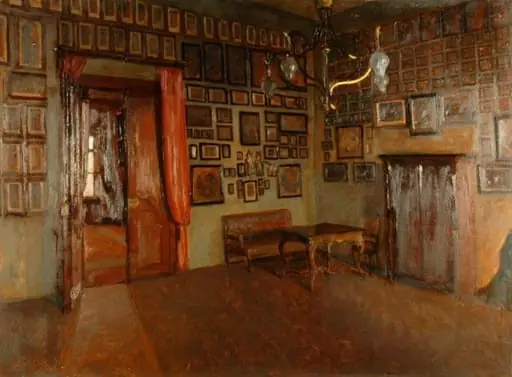
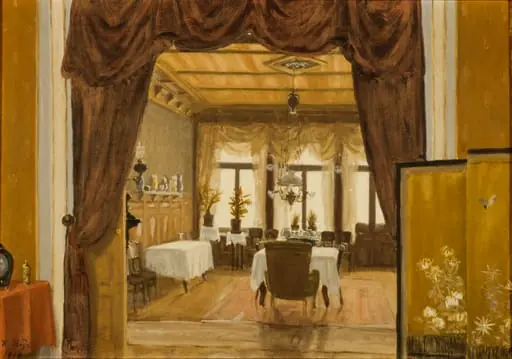
Salonul roșu cu candelabru
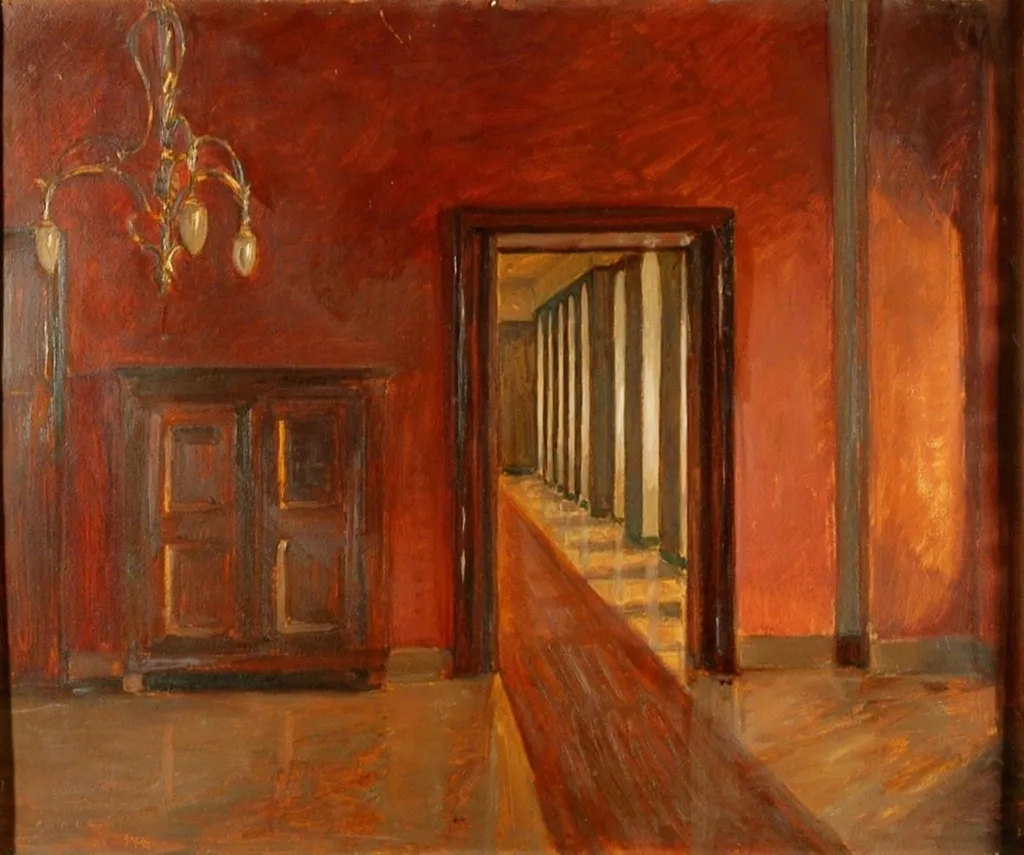
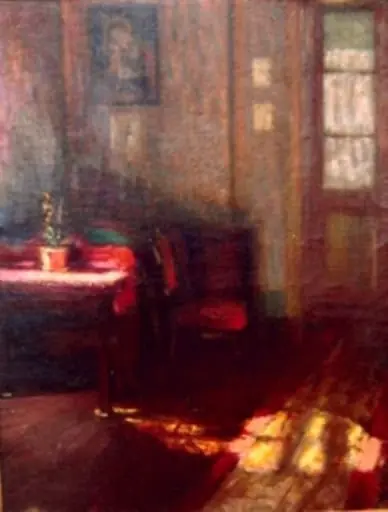
Salonul roșu cu candelabru is an unspecified painting by Alfred Macalik. It dates from 1942 and is held in the collection of the Țării Crișurilor Museum.
About this work
Overview
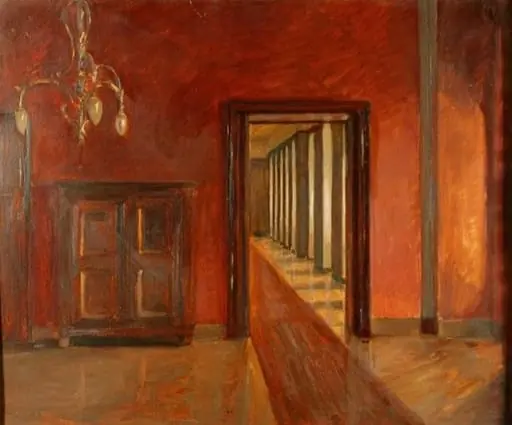
An open doorway reveals a recessed corridor lined with columns, allowing external light to filter into the room and accentuate the warm tones.
Alfred Macalik’s 1942 composition, titled Salonul roșu cu candelabru, depicts an interior space bathed in subdued illumination. The walls are painted a deep red, contrasting with a polished wooden floor, while a gilded chandelier hangs above a modest wooden cabinet. An open doorway reveals a recessed corridor lined with columns, allowing external light to filter into the room and accentuate the warm tones.
Subject & Meaning
The painting captures a quiet, domestic setting where architecture and light interact to create a contemplative atmosphere. The juxtaposition of the intimate salon against the distant, columned hallway suggests a transition between private and public spaces, inviting viewers to consider the interplay of interior comfort and the broader architectural context.
Technique & Style
Macalik employs vigorous, impasto brushwork that gives the walls and floor a tactile quality, emphasizing texture through thick layers of paint. A strong chiaroscuro effect is achieved by contrasting the warm glow of the chandelier and hallway light with deep shadows, lending the scene a three‑dimensional depth and a sense of atmospheric presence.
History & Provenance
Created during the early 1940s, the work entered the collection of the Museum of Ethnography, where it remains on display. Its acquisition reflects the museum’s interest in documenting Romanian interior design and decorative arts of the period, situating the piece within a broader ethnographic narrative.
Context
The painting emerges from a wartime era when Romanian artists often turned to domestic subjects, exploring national identity through everyday interiors. Macalik’s focus on color, light, and architectural detail aligns with contemporary trends that emphasized realism infused with expressive brushwork, bridging traditional representation and modernist sensibilities.
Artist & collection
Artist
Alfred Macalik painted quiet, warm rooms and soft evening scenes in the 1920s and 1940s.