Artwork
Salonul roșu cu candelabru
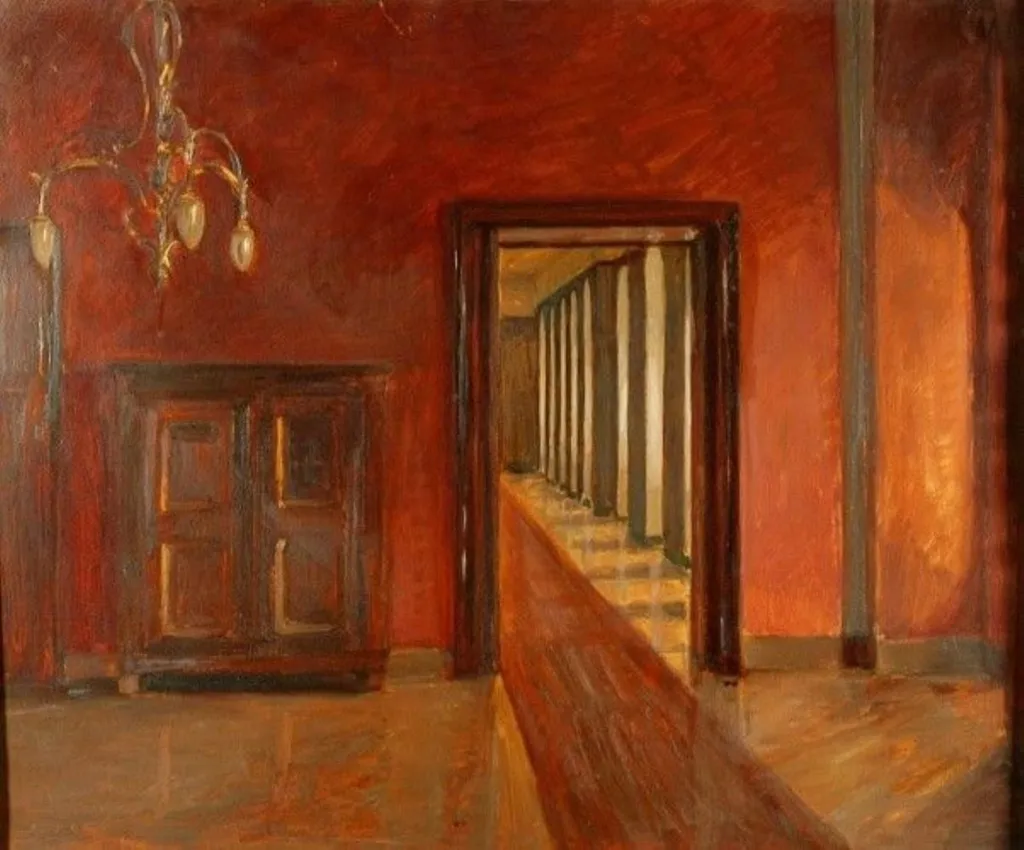
Salonul roșu cu candelabru is an unspecified painting by Alfred Macalik. It dates from 926 and is held in the collection of the Țării Crișurilor Museum.
About this work
Overview
Alfred Macalik’s painting titled Salonul roșu cu candelabru, dated 926, is part of the collection of the Museum of Ethnography.
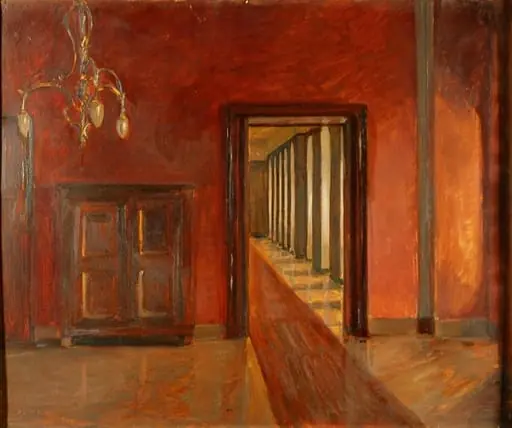
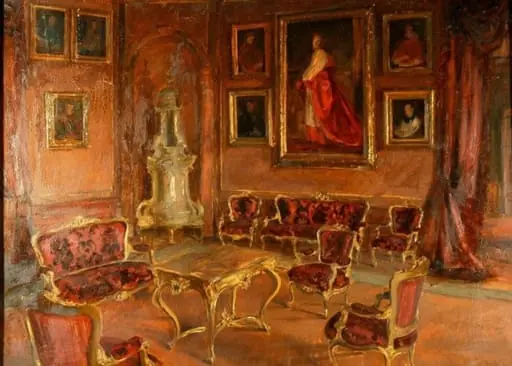
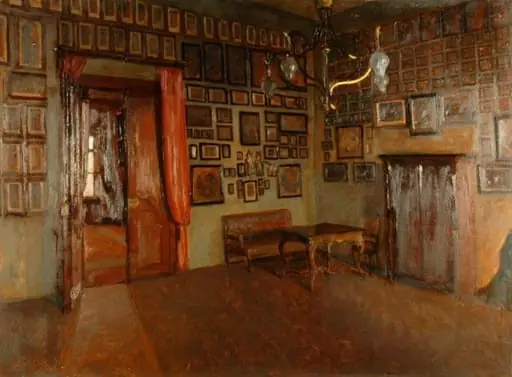
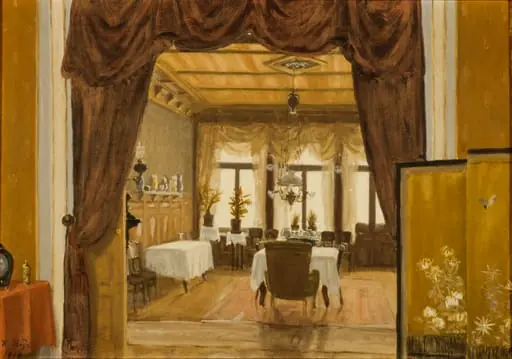
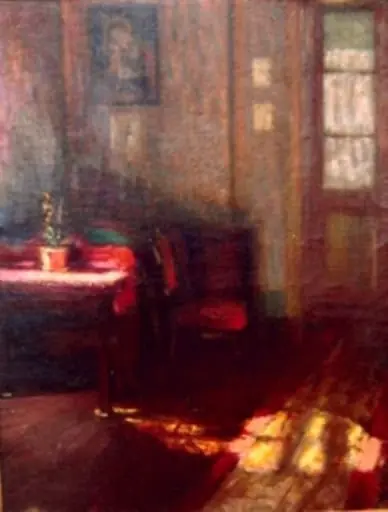
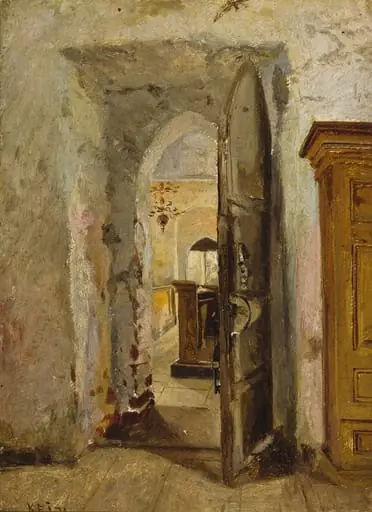
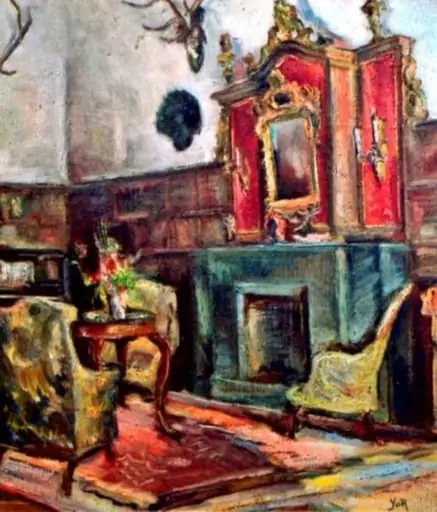
Alfred Macalik’s painting titled Salonul roșu cu candelabru, dated 926, is part of the collection of the Museum of Ethnography. The work depicts an interior space dominated by deep red walls, a wooden cabinet beneath a three‑light chandelier, and a doorway that opens onto a long corridor illuminated faintly through tall windows. The floor appears aged and polished, contributing to the overall ambience.
Subject & Meaning
The composition centers on a quiet, dimly lit salon where the saturated red walls generate a sense of warmth and stillness. The presence of the ornate chandelier and the carved cabinet suggests a domestic setting of some refinement, while the endless‑looking hallway beyond the doorway hints at a transition between private interior and the broader world outside.
Technique & Style
Macalik employs a chiaroscuro approach, balancing the limited illumination from the chandelier against the surrounding shadows to model forms and create depth. The brushwork on the walls and floor conveys texture, and the subtle gradations of light on the wooden cabinet emphasize its carved detailing. The overall palette remains restrained, focusing attention on the interplay of red and muted light.
History & Provenance
Created in the year 926, Salonul roșu cu candelabru entered the Museum of Ethnography’s holdings, where it remains on display. The museum’s acquisition records indicate the work has been part of its permanent collection since the early 20th century, though earlier ownership details are not documented in the available sources.
Context
The painting reflects a period when interior genre scenes were used to explore atmosphere and the psychological effects of space. By emphasizing the red walls and controlled lighting, Macalik aligns with broader European trends that examined domestic interiors as a means to convey mood, often drawing on the traditions of Dutch and French chiaroscuro painters.
Artist & collection
Artist
Alfred Macalik painted quiet, warm rooms and soft evening scenes in the 1920s and 1940s.