Artwork
Untitled
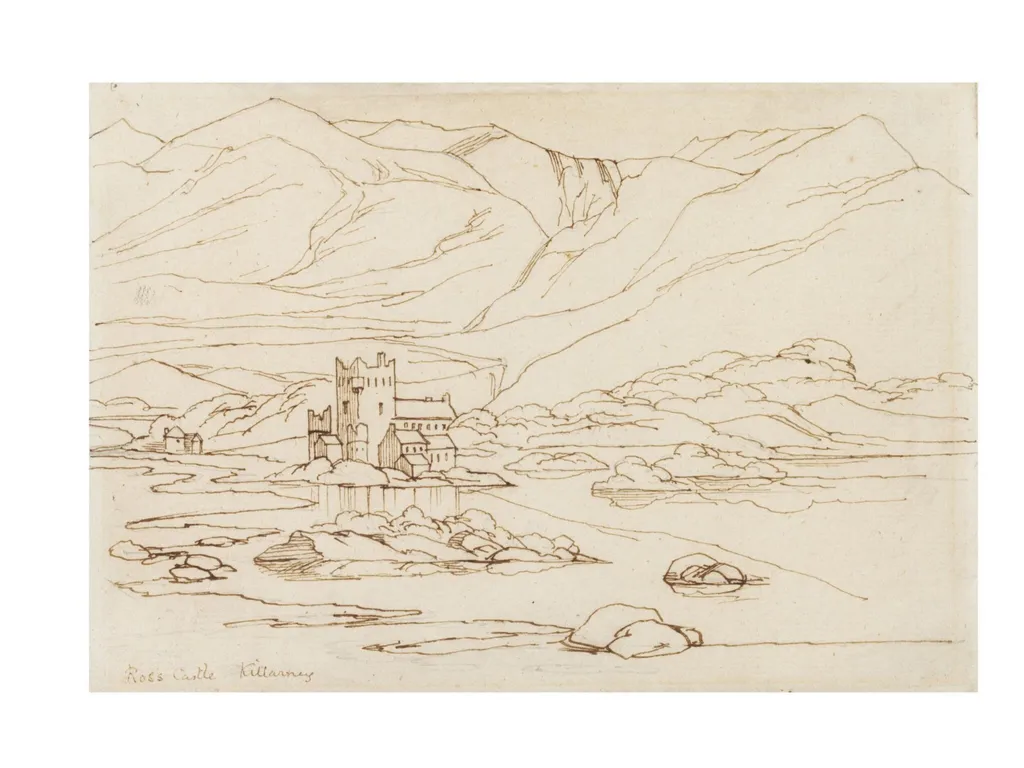
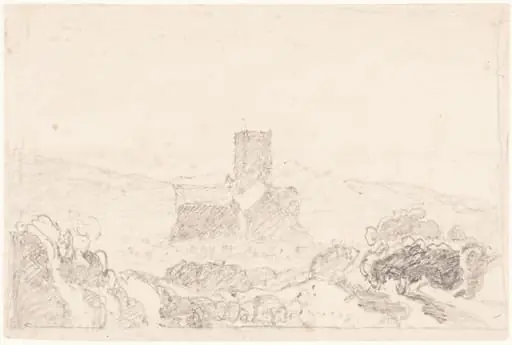
Untitled is a drawing by the Romanticist artist Daniel Maclise. It dates from 1825 and is held in the collection of the Victoria and Albert Museum.
About this work
Overview
Its placement within this anthology suggests a scholarly or personal interest in observational drawing as a foundational practice.
This pencil drawing by Daniel Maclise is one of 390 studies compiled in a thirty-frame pillar stand, a curated collection of sketches by multiple 19th-century artists. It belongs to a broader group that includes works by T.S. Cooper, Edwin Landseer, and Benjamin Disraeli. The drawing presents a quiet landscape, not a figure, distinguishing it from other portraits in the set. Its placement within this anthology suggests a scholarly or personal interest in observational drawing as a foundational practice.
Subject & Meaning
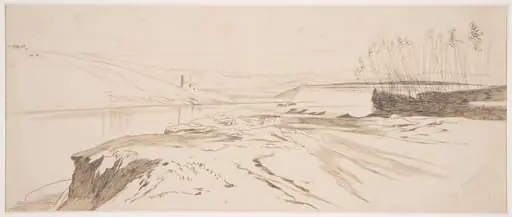
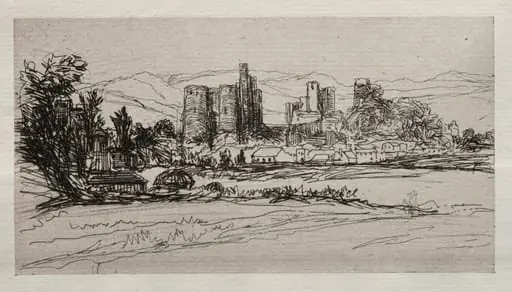
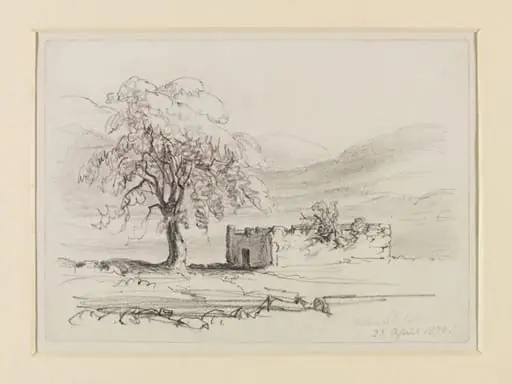
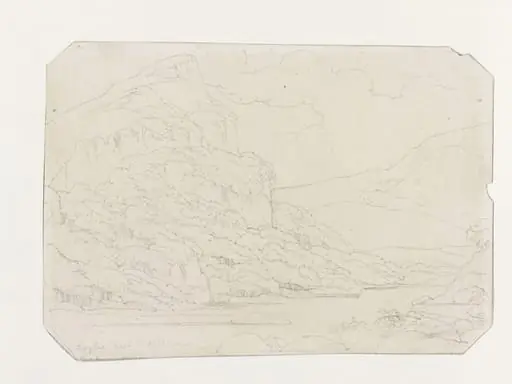
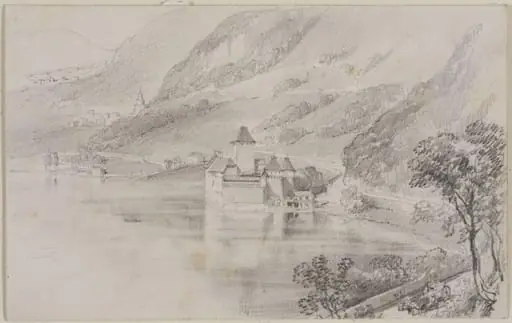
The scene depicts a distant castle nestled among mountains and reflective water, with rocky foreground elements grounding the composition. There is no human presence, and the absence of narrative suggests an emphasis on atmosphere over story. The tranquil setting reflects a Romantic sensibility, valuing solitude and the sublime in nature. The castle, though simplified, evokes historical resonance without literal reference, inviting contemplation rather than identification.
Technique & Style
Rendered in graded pencil tones, the drawing uses subtle shifts from light to dark to suggest spatial depth and atmospheric haze. The castle’s central tower and surrounding structures are outlined with precision but without heavy detail, allowing form to emerge through tone rather than line. The water and rocks in the foreground are lightly sketched, enhancing the sense of stillness. The technique prioritizes mood over finish, aligning with the observational ethos of Romantic-era sketching.
History & Provenance
The drawing is part of a larger collection assembled in the mid-19th century, likely for private study or institutional use. The inclusion of figures like Disraeli and Faraday indicates the collection’s connection to intellectual circles. While the exact origin of the pillar stand is undocumented, its structure implies a deliberate arrangement for comparative viewing. Maclise’s contribution reflects his broader engagement with landscape and figure studies during his career.
Context
Created during the height of Romanticism, the drawing aligns with contemporary artistic interests in nature’s emotional and spiritual dimensions. Unlike grand historical paintings, this sketch captures a moment of quiet observation, typical of artists who valued direct experience over idealized composition. The presence of scientific and literary figures in the same collection underscores a cultural moment where art, intellect, and natural philosophy intersected.
Legacy
As part of a preserved archive of academic sketches, this drawing contributes to understanding how 19th-century artists trained and documented their surroundings. Its inclusion alongside portraits of public figures highlights the blurred boundary between artistic study and cultural curation. Though not widely exhibited, such works remain valuable for tracing the development of observational drawing practices in British art education.
Own this work as a print
Artist & collection
Artist
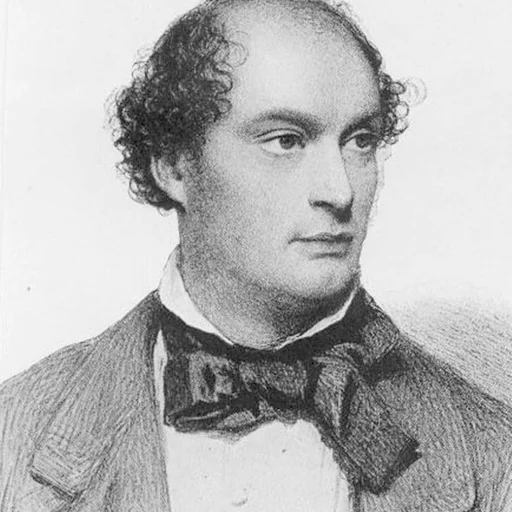
Daniel Maclise (25 January 1806 – 25 April 1870) was an Irish history painter, literary and portrait painter, and illustrator, who worked for most of his life in London, England.