Artwork
near Shiloh
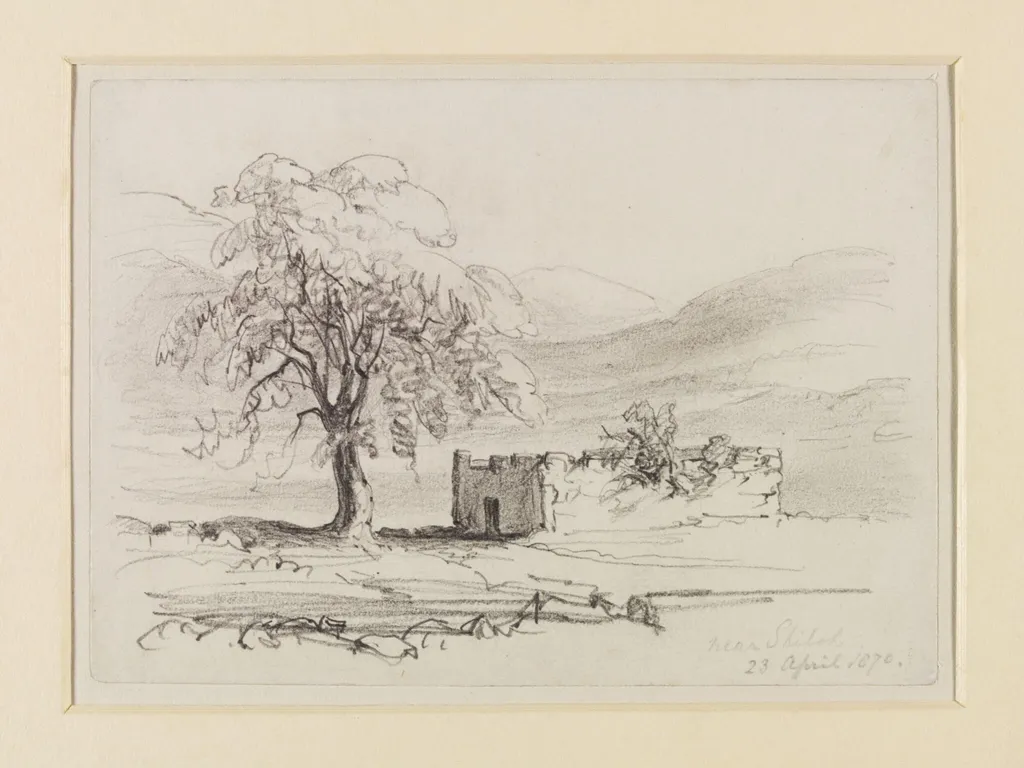
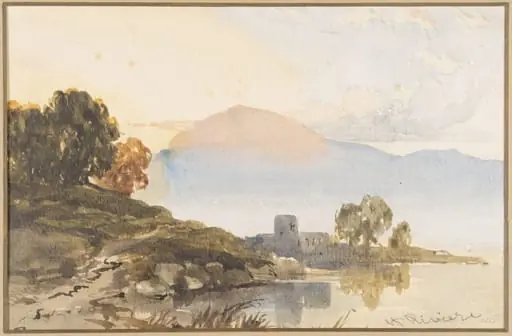
near Shiloh is a drawing by the Impressionist artist Unknown. It dates from 1870 and is held in the collection of the Victoria and Albert Museum.
About this work
Overview
The attribution was challenged due to inconsistencies in handwriting on the inscription and stylistic differences from Hunt’s known work.
Created in 1870, this ink drawing titled *Near Shiloh* was once thought to be by William Holman Hunt but is now considered anonymous. The attribution was challenged due to inconsistencies in handwriting on the inscription and stylistic differences from Hunt’s known work. His documented travels to Jerusalem that same month make his authorship implausible. The piece remains a compelling example of 19th-century travel sketching, capturing a quiet, desolate landscape with immediacy.
Subject & Meaning
The drawing portrays a solitary tree beside a weathered stone structure, partially collapsed and overgrown by earth. The scene suggests abandonment, possibly referencing the historical and religious significance of the Shiloh region. The absence of human figures and the muted tones evoke a sense of time’s passage and quiet ruin. It functions less as a topographical record and more as a contemplative observation of decay and endurance in the landscape.
Technique & Style
Executed in rapid, fluid ink lines, the drawing emphasizes gesture over detail. The tree’s gnarled trunk and sprawling branches are rendered with energetic strokes, while the building’s crumbling form is suggested through loose, overlapping contours. Light and shadow are implied through varying line density rather than shading. The sketch’s spontaneity reflects an on-site observation, prioritizing visual memory over polished finish.
History & Provenance
The drawing entered institutional collections under Hunt’s name, based on early assumptions. Later analysis of the inscription’s penmanship and stylistic divergence from his oeuvre prompted reevaluation. No definitive record of its creation or early ownership exists, and its journey from the field to museum storage remains undocumented. Its current attribution is listed as anonymous, with Hunt’s name removed from official records.
Context
In the late 19th century, European artists and travelers frequently sketched biblical landscapes as part of scholarly or devotional expeditions. Shiloh, a site of ancient Israelite worship, attracted attention for its archaeological and religious resonance. This drawing aligns with a broader practice of field sketching—quick, personal responses to landscape—rather than finished studio works intended for exhibition.
Legacy
Though unsigned and unattributed, the drawing contributes to the understanding of 19th-century visual documentation practices. Its raw, unpolished quality offers insight into how artists engaged with sacred sites outside formal commissions. It now stands as a representative example of anonymous travel sketches held in major collections, valued for their honesty and immediacy rather than authorship.
Artist & collection

 Domestic Scene
 Giacomo and Cardinal Marco, investing Andrea, Abbot of San Zeno, with his Benefice
 The Nymph of Fontainebleau
 Portrait of a Woman
 Madonna and Child with Saints in the Enclosed Garden
 Venus and Minerva
 Family Group of Four on Sofa
 Wall painting from Room H of the Villa of P. Fannius Synistor at Boscoreale
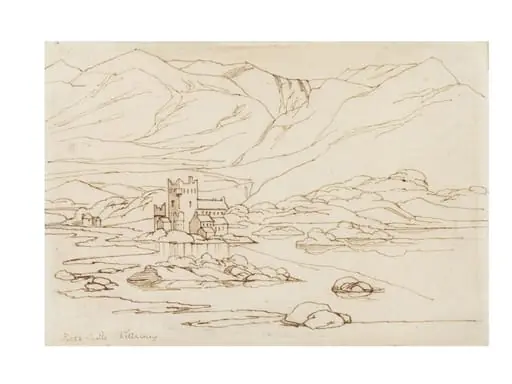 Untitled
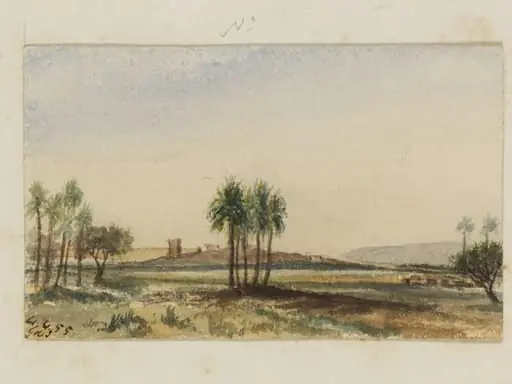 `Temple of Denderah. Distant view from bank of River. Upper Egypt'
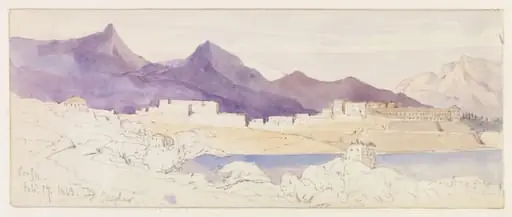 Corfu
Corfu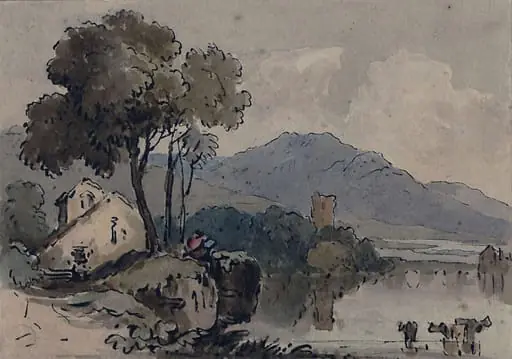 Watercolour landscape with cows in a lake
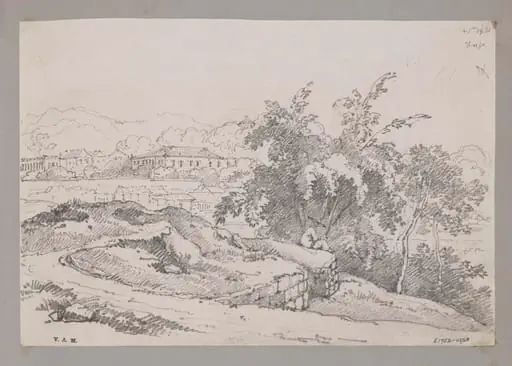 The Casa, Macao, in the gardens of which is Camoens' Cave (the residence of Lady Pereira), Macao
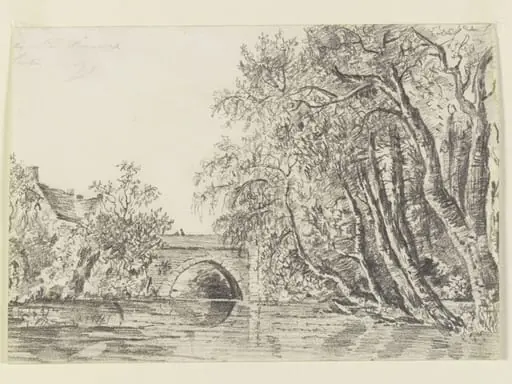 Fisherton Bridge, Salisbury
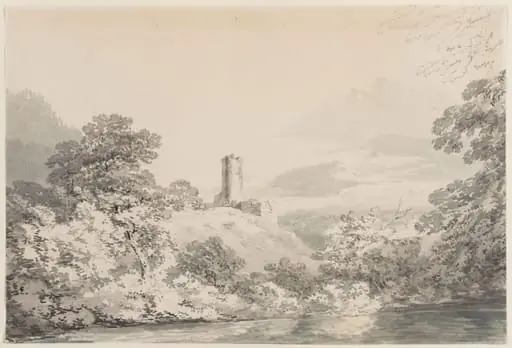 Landscape with tower on a rock
 Untitled
 Kidwelly Castle
 Ancient Jericho
 Man between Two Fir Trees
 Mountain: Sunrise