Artwork
The Entombment
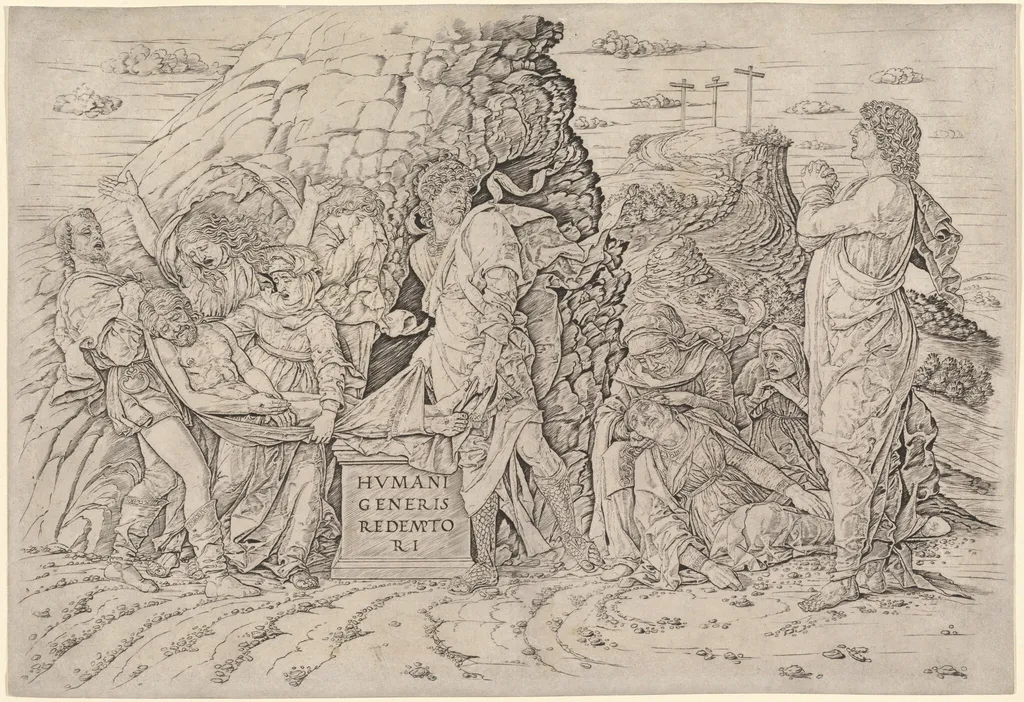
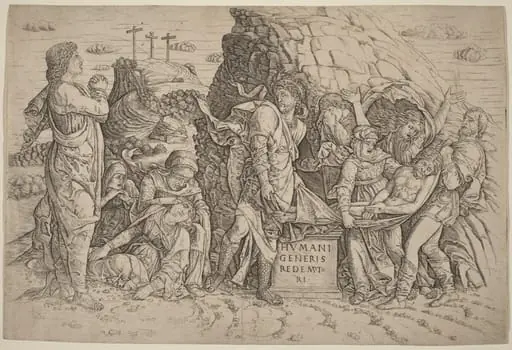
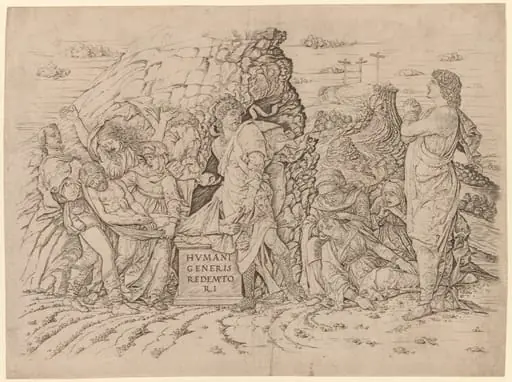
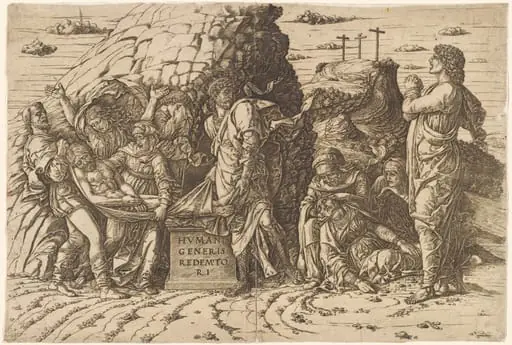
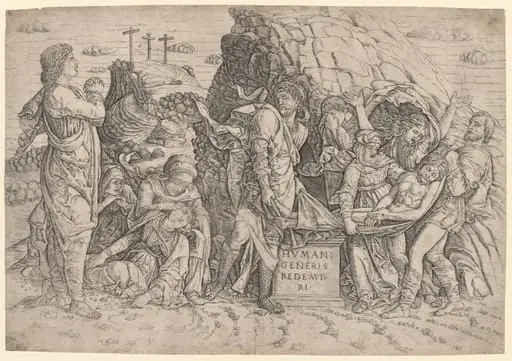
The Entombment is an ink print by the Renaissance artist Andrea Mantegna. It dates from 1472 and is held in the collection of the National Gallery of Art.
About this work
Overview
The Entombment is an engraving on laid paper created by Andrea Mantegna around 1472. It showcases the artist's skill in printmaking and his characteristic style.
Subject & Meaning
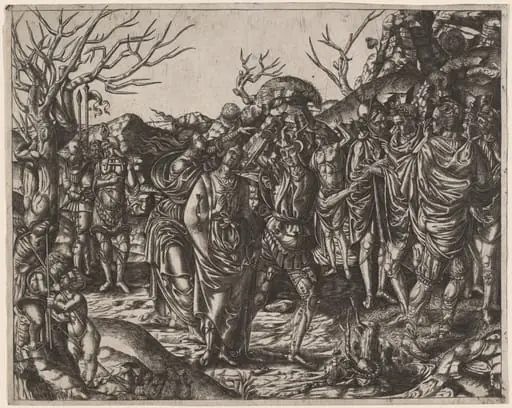
The engraving depicts the burial of Christ, with a crowded scene of figures around a rocky tomb. The Latin inscription 'Humani Generis Redemptio' on the tomb's base reinforces the scene's religious significance, emphasizing the redemptive aspect of the event.
Technique & Style
Mantegna's engraving is marked by sharp, angular forms and a precise spatial arrangement. The figures are depicted in dramatic poses with flowing robes, creating a sense of monumentality through the use of a lowered horizon.
History & Provenance
Produced in Mantegna's Venice workshop, a significant center for printmaking before 1500, The Entombment reflects the artist's background as a painter and printmaker influenced by classical culture and Roman archaeology.
Artist & collection
Artist
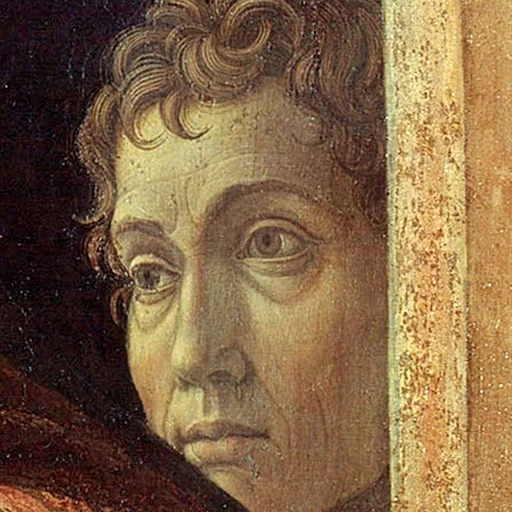
Andrea Mantegna (UK: , US: ; Italian: ; c. 1431 – September 13, 1506) was an Italian Renaissance painter, a student of Roman archaeology, and the son-in-law of Jacopo Bellini. Like other artists of the time, Mantegna…