Artwork
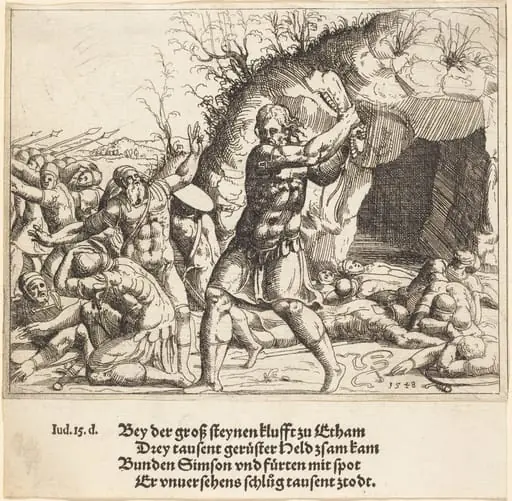
Samson Slays the Philistines
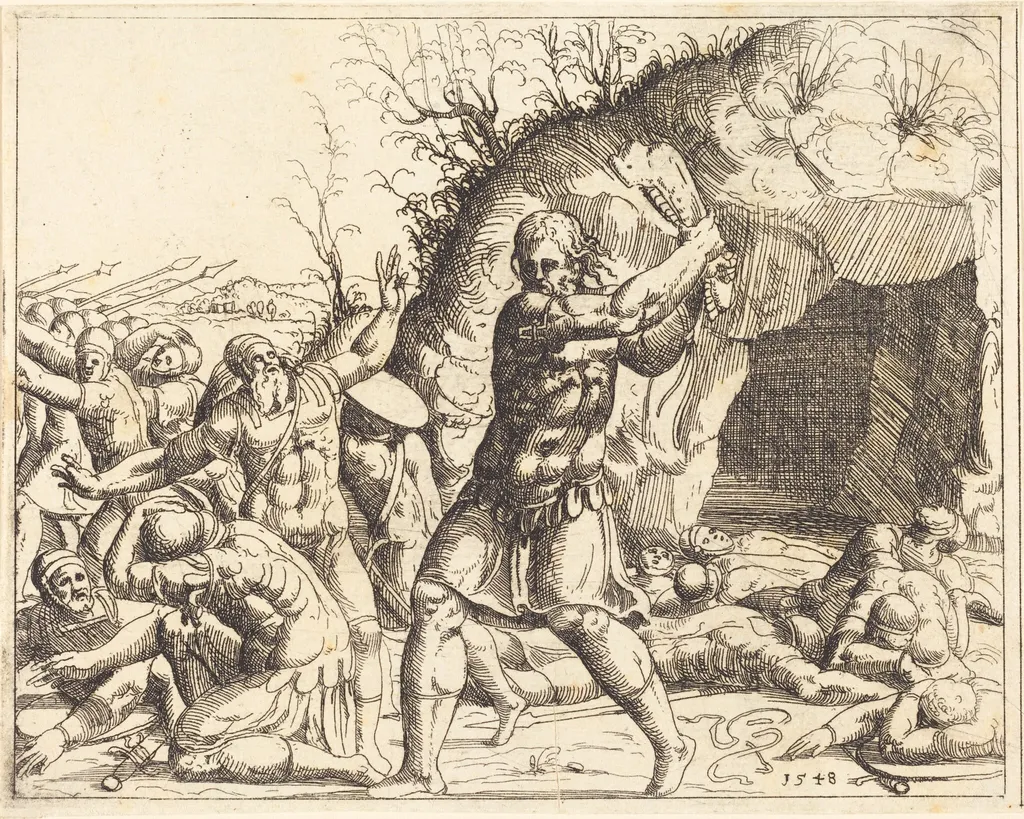
Samson Slays the Philistines is an ink print by the Renaissance artist Augustin Hirschvogel. It dates from 1528 and is held in the collection of the National Gallery of Art.
About this work
Overview
As a printmaker, Hirschvogel employed etching to translate complex narratives into fine, incised lines on metal, allowing for multiple impressions.
Created in 1528 by the German artist Augustin Hirschvogel, this etching captures a moment from the biblical story of Samson. Unlike his more common landscape works, this print presents a dynamic, crowded scene of violence and motion. As a printmaker, Hirschvogel employed etching to translate complex narratives into fine, incised lines on metal, allowing for multiple impressions. The work reflects his technical precision and interest in human movement.
Subject & Meaning
The scene illustrates Samson, the biblical judge, overpowering Philistine enemies with his strength after being betrayed. He stands over a fallen opponent, surrounded by writhing figures entangled in vines and branches. The composition emphasizes chaos and physical struggle, underscoring divine empowerment through human force. The vines may symbolize entrapment or the wildness of divine retribution, reinforcing the narrative’s tension between order and destruction.
Technique & Style
Hirschvogel used etching to carve fine lines into a metal plate, which held ink and transferred it to paper under pressure. The resulting image is characterized by dense, scratchy strokes that convey motion and texture. Unlike smooth painterly effects, the roughness of the lines enhances the sense of turmoil. The absence of color focuses attention on form and gesture, aligning with the print medium’s capacity for intricate detail over tonal variation.
History & Provenance
The print was made during Hirschvogel’s early career, before he became known primarily for cartography and topographical drawings. It belongs to a small group of narrative prints he produced in the late 1520s, likely intended for collectors interested in biblical themes. Its survival in multiple institutional collections suggests it was circulated among educated audiences in German-speaking regions, valued for its technical skill and dramatic content.
Context
Hirschvogel worked within the cultural orbit of the Danube School, a loose network of artists in southern Germany and Austria who favored expressive, often dramatic compositions. While many of his peers focused on landscapes, Hirschvogel’s choice of a violent biblical episode reflects broader Reformation-era interest in Old Testament stories. The print’s intensity aligns with a growing appetite for emotionally charged imagery in print form during the early 16th century.
Legacy
Though Hirschvogel is better remembered for his maps and landscapes, this etching remains a notable example of his narrative ambition. It demonstrates how printmaking could convey complex stories with minimal means, influencing later generations of engravers. Its survival in museum collections attests to its enduring value as a study in line, movement, and biblical interpretation within early modern German art.
Artist & collection
Artist
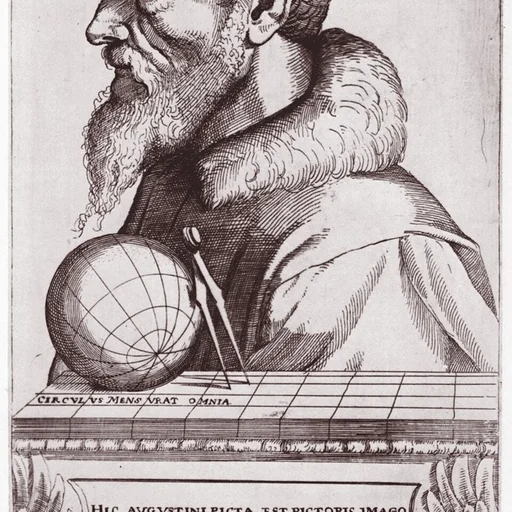
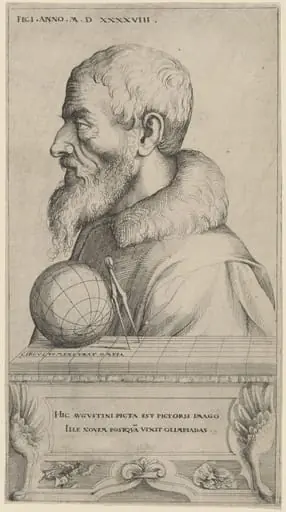
Augustin Hirschvogel (1503 – February 1553) was a German artist, mathematician, and cartographer known primarily for his etchings.

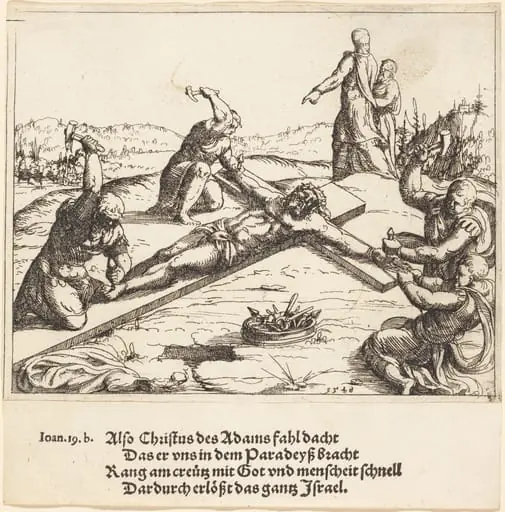
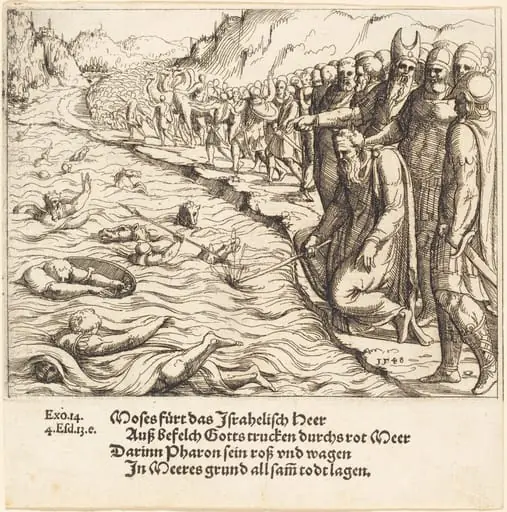
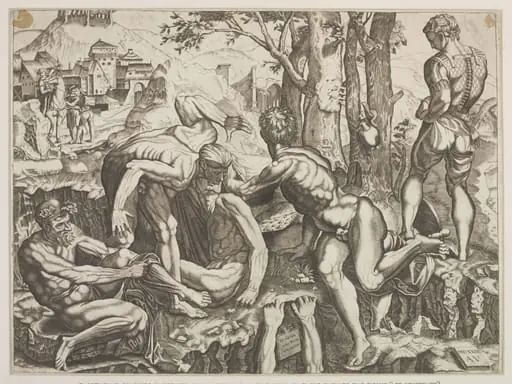 Untitled
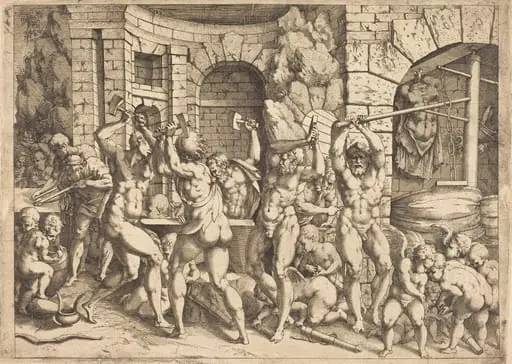 The Forge of Vulcan
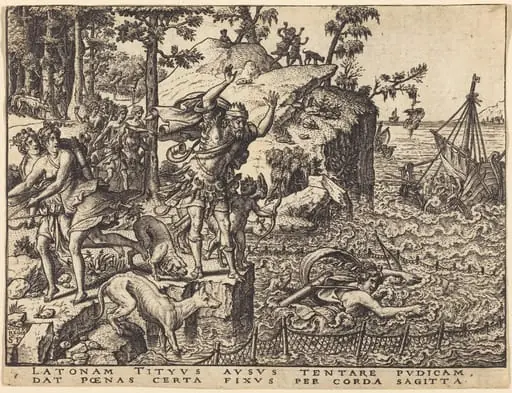 Britomartis Jumps into the Sea
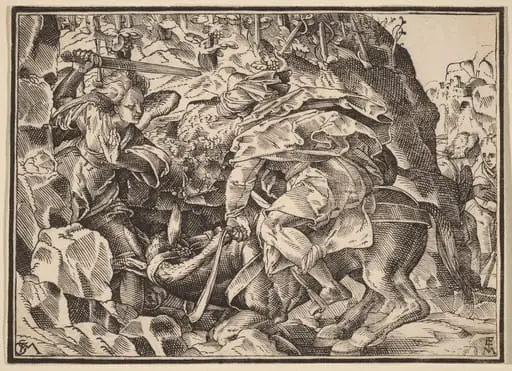 Christ Tells His Disciples of the Last Judgment
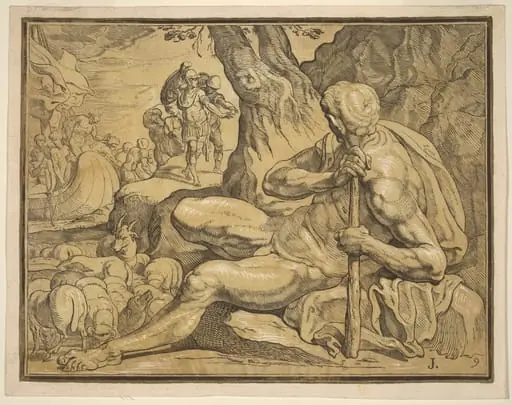 Ulysses and Polyphemus
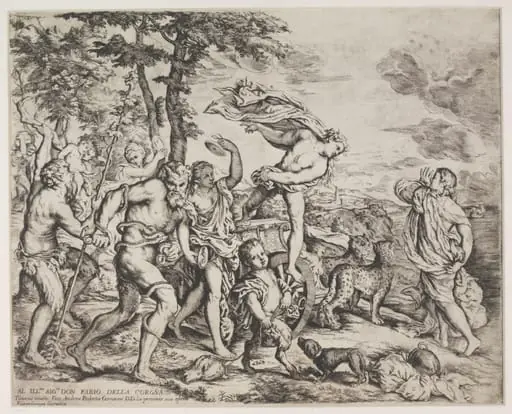 Bacchus and Ariadne
 Christ Tells His Disciples of the Last Judgment
 Christ Tells His Disciples of the Last Judgment
 David cutting off the head of Goliath
 The Ploughman
 The Parable of the Good Samaritan: The Robbers Attacking the Travelers
 Samson Slays the Philistines