Artwork
The Bacchanal
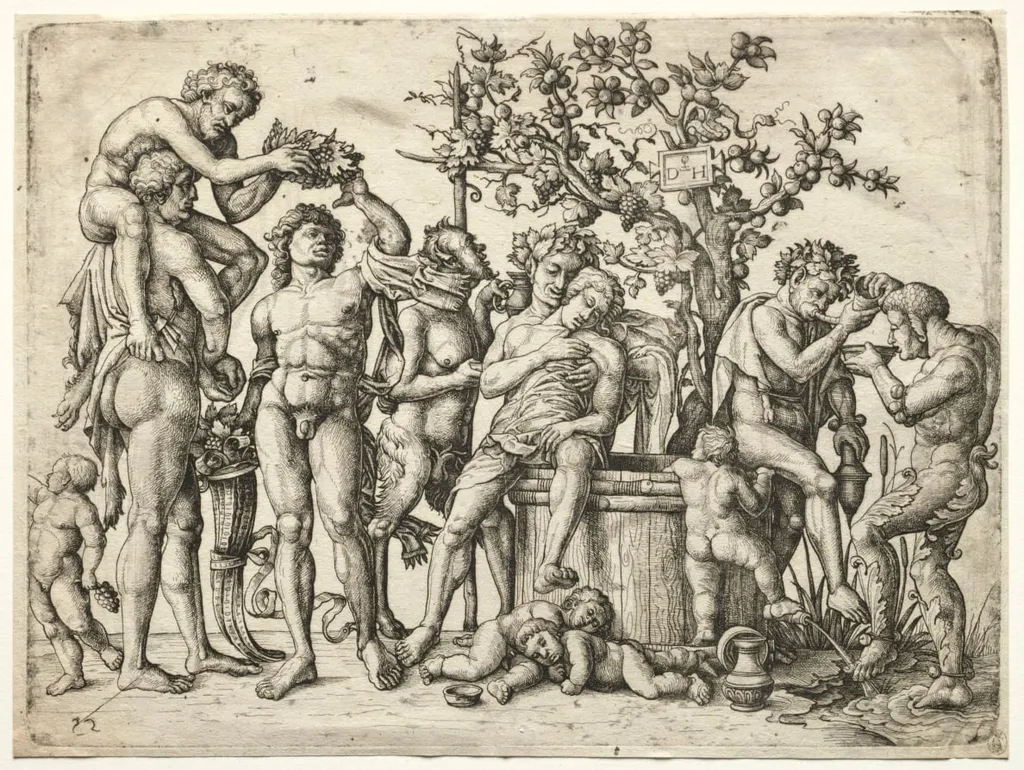
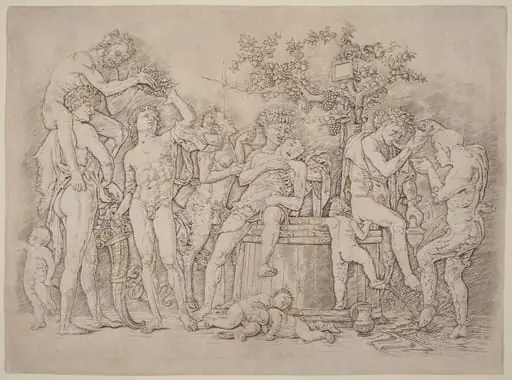
The Bacchanal is a print by the Renaissance artist Daniel Hopfer. It dates from 1510 and is held in the collection of the Cleveland Museum of Art.
About this work
Overview
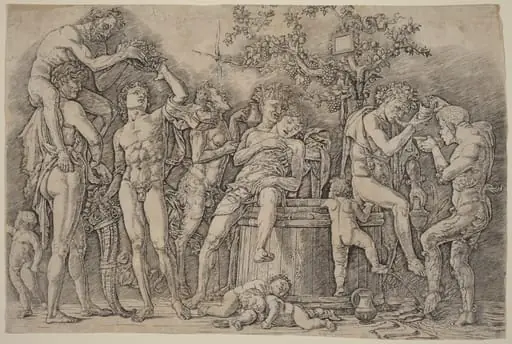
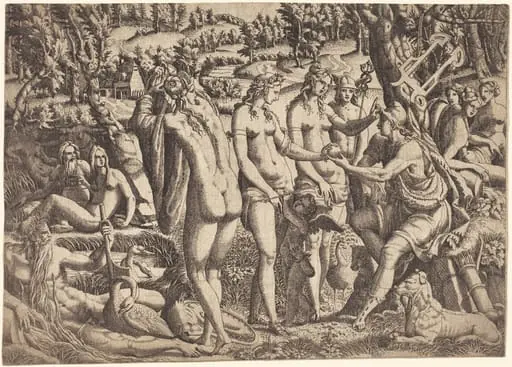
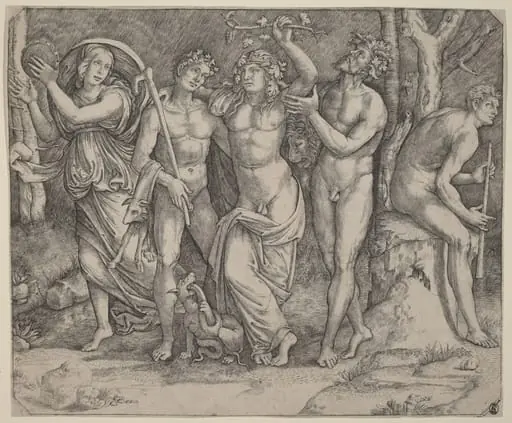
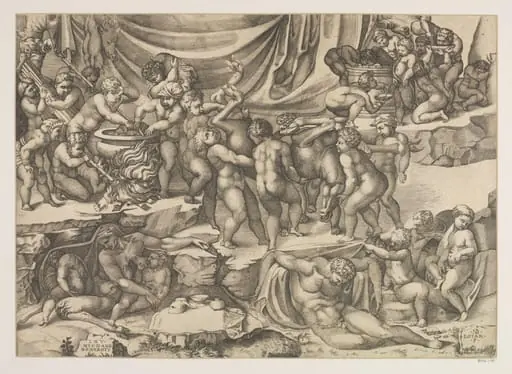
The Bacchanal is a print that depicts a raucous celebration associated with the Roman god of wine. Central to the composition is a figure holding a cornucopia, flanked by revelers who appear to stagger under vines and foliage. The scene is arranged on a shallow, stage‑like plane, recalling the relief style of ancient Roman sarcophagi.
Subject & Meaning
The work illustrates a bacchanalian feast, a motif drawn from classical mythology that emphasizes excess and the loss of self‑control. The central deity, identified as Bacchus, stands firm with his horn of plenty, while the surrounding figures succumb to intoxication, suggesting a moral contrast between divine moderation and human indulgence.
Technique & Style
Executed as an engraving, the image relies on fine, incised lines that retain ink during printing. The shallow depth of the plate produces uneven ink transfer, a characteristic imperfection of early Italian engravings. The composition’s flattened perspective and relief‑like arrangement reflect Mantegna’s interest in Roman funerary reliefs.
History & Provenance
Originally designed by Andrea Mantegna in the 1470s, the print was later copied by the German artist Daniel Hopfer. Hopfer, an early adopter of metal‑plate printing in Germany, employed etching techniques that allowed for finer lines and more consistent ink application, resulting in a version that differs noticeably from Mantegna’s original.
Context
Mantegna’s engravings were among the first in Italy to translate drawings into reproducible prints, facilitating the spread of his designs. Hopfer’s adaptation illustrates the transition from Italian engraving to the German tradition of metal‑plate etching, marking a shift in technical capabilities and material quality during the late 15th and early 16th centuries.
Artist & collection

Artist
Daniel Hopfer (c. 1470 – 1536) was a German artist who is widely believed to have been the first to use etching in printmaking, at the end of the 15th century. He also worked in woodcut. Although his etchings were…

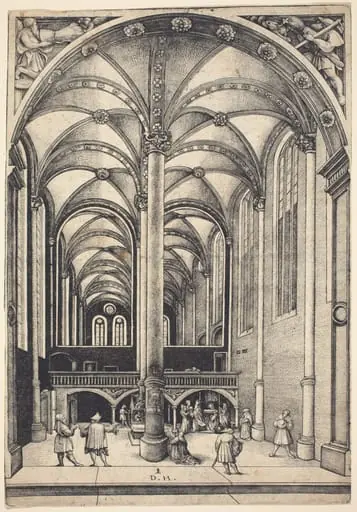 Interior of the Church of Saint Maria Magdalena with the Parable of the Offering of the Widow
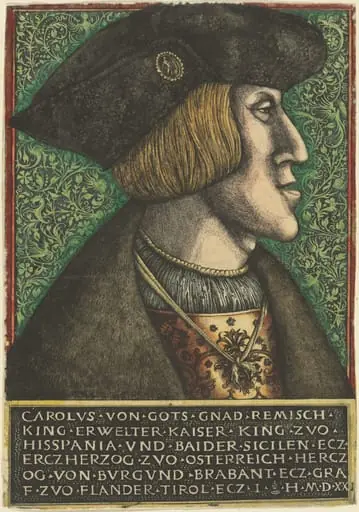 Emperor Charles V
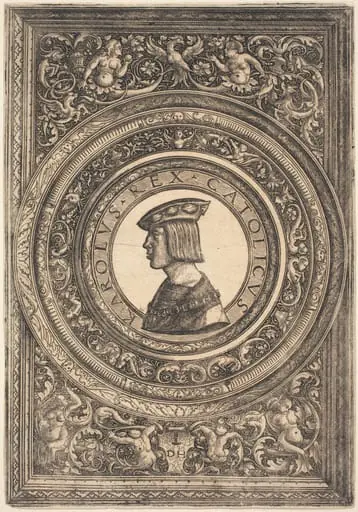 Emperor Charles V
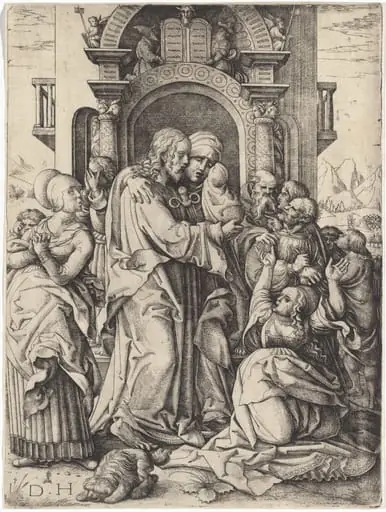 The Virgin Mary Taking Leave of Christ
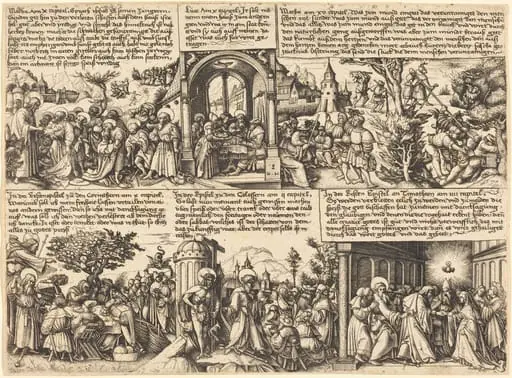 Jesus Christ Giving the Mission to the Apostles and Other New Testament Scenes
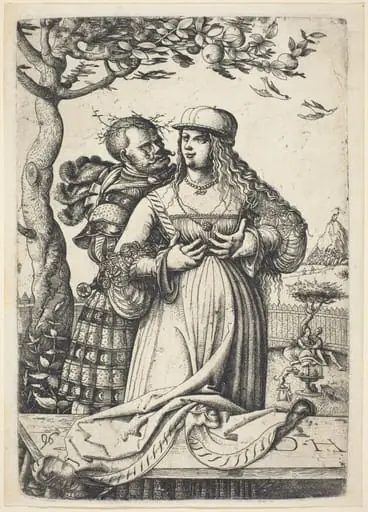 Soldier Embracing a Woman
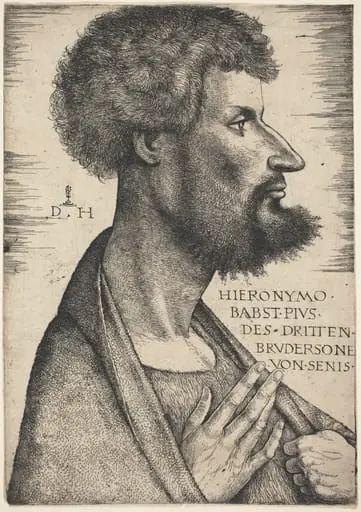 Girolamo da Siena
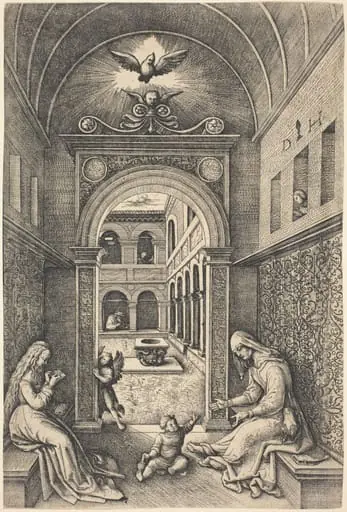 The Virgin and Child with Saint Anne by a Portal