Artwork
The Power of Love, or, Worship of Luna
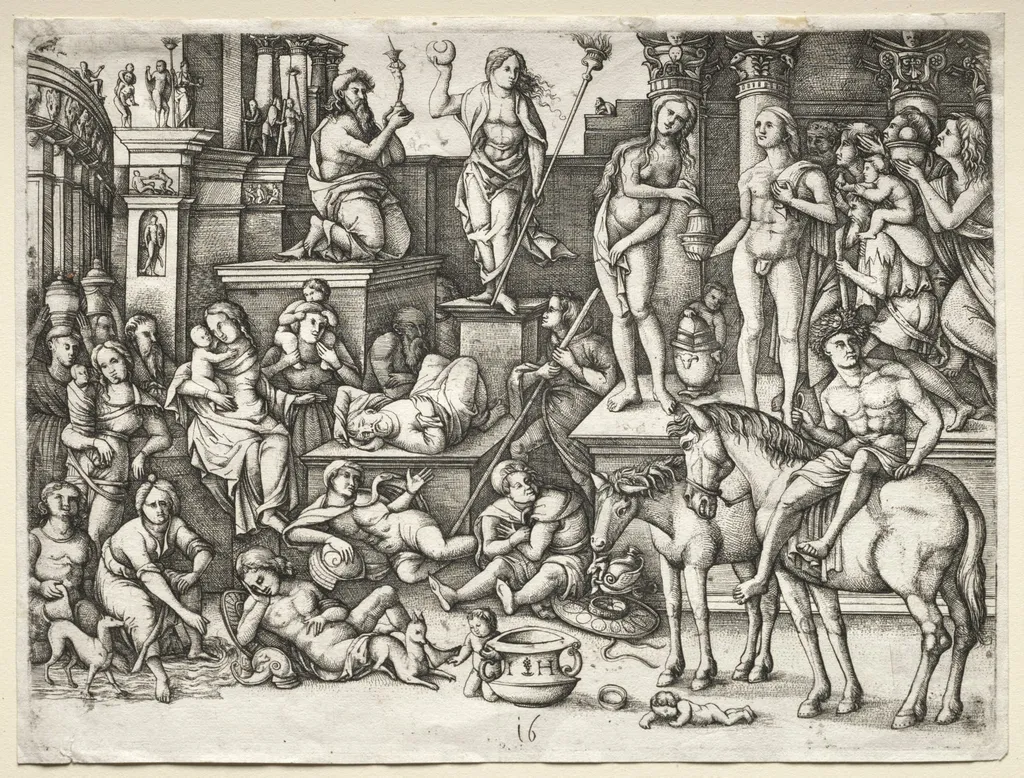
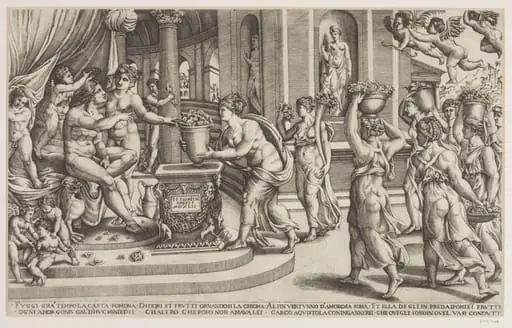
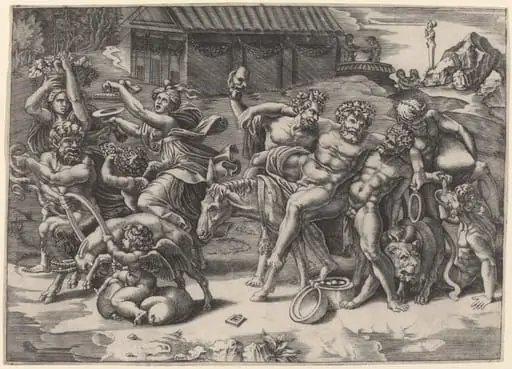
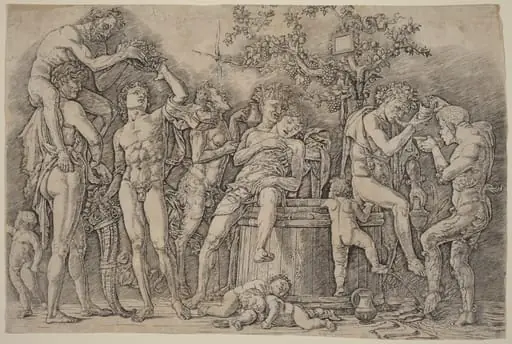
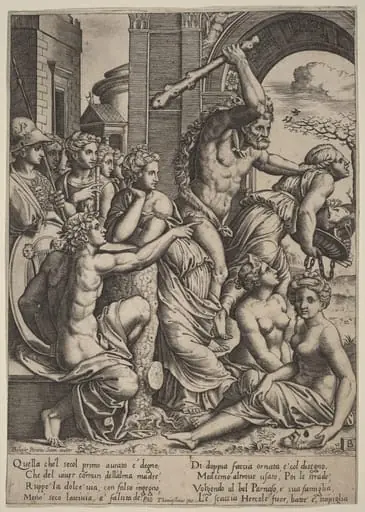
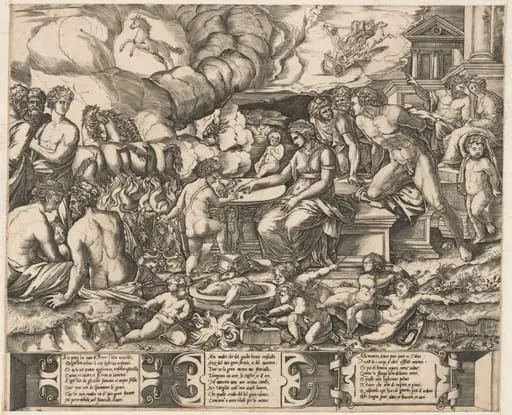
The Power of Love, or, Worship of Luna is a print by the Renaissance artist Hieronymus Hopfer. It dates from 1546 and is held in the collection of the Cleveland Museum of Art.
About this work
Overview
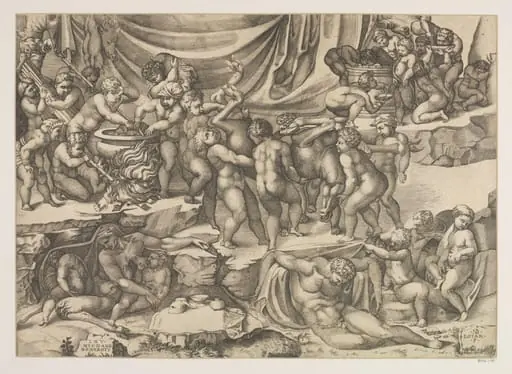
Created in 1546 by Hieronymus Hopfer, this print depicts a dense, animated scene blending human figures, animals, and symbolic elements.
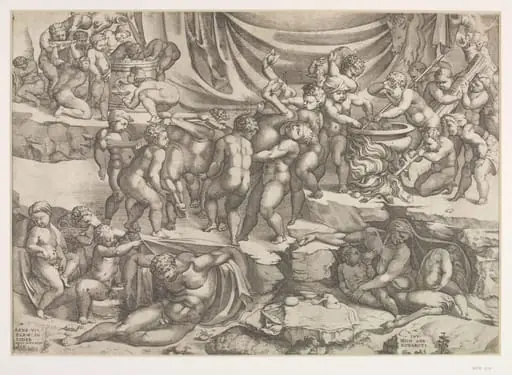
Created in 1546 by Hieronymus Hopfer, this print depicts a dense, animated scene blending human figures, animals, and symbolic elements. The composition is tightly packed, with overlapping postures and layered backgrounds that suggest movement and ritual. Though titled The Power of Love, or, Worship of Luna, the imagery resists straightforward interpretation, instead offering a complex visual narrative that fuses myth, devotion, and earthly chaos.
Subject & Meaning
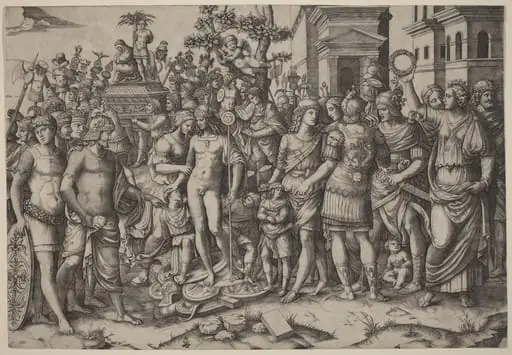
The central figure, a woman holding a torch and a globe atop a pedestal, likely symbolizes Luna, the moon goddess, while a bearded man gestures toward the heavens, invoking celestial influence. Surrounding figures—kneeling, reclining, or standing—appear engaged in a collective rite, their gestures and positions implying reverence or confusion. The inclusion of a donkey and cow grounds the scene in the physical world, possibly critiquing or complicating the spiritual atmosphere through earthly presence.
Technique & Style
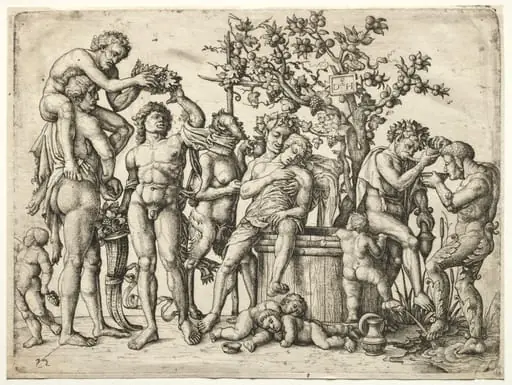
Executed as a detailed engraving, the work showcases fine, intersecting lines that model form and texture across varied surfaces: fabric, fur, stone, and skin. The crowded composition exploits the medium’s capacity for intricate detail, with no empty space left unoccupied. Figures are rendered with expressive, almost caricatured postures, enhancing the sense of theatricality and disorder, typical of Northern Mannerist aesthetics of the period.
History & Provenance
The print was produced in the mid-16th century and entered the collection of The Cleveland Museum of Art through documented acquisition. Its survival in good condition reflects careful preservation, though its original context—whether commissioned, circulated as satire, or used in private devotion—remains uncertain. No contemporary written records clarify its intended audience or purpose.
Context
Emerging during a time of religious upheaval and renewed interest in classical mythology, the print reflects the era’s fascination with allegory and syncretism. The blending of pagan symbols with Christian-like rituals mirrors broader cultural tensions. Hopfer, working in a tradition of printmaking that often mixed moral, mythological, and satirical themes, likely intended this image to provoke thought rather than convey a single doctrine.
Legacy
Though not widely reproduced or studied in mainstream art history, the print remains a compelling example of Northern Mannerist visual complexity. Its layered symbolism and unresolved narrative invite ongoing interpretation, offering insight into how 16th-century audiences engaged with myth, devotion, and the ambiguity of sacred imagery.
Artist & collection