Artwork
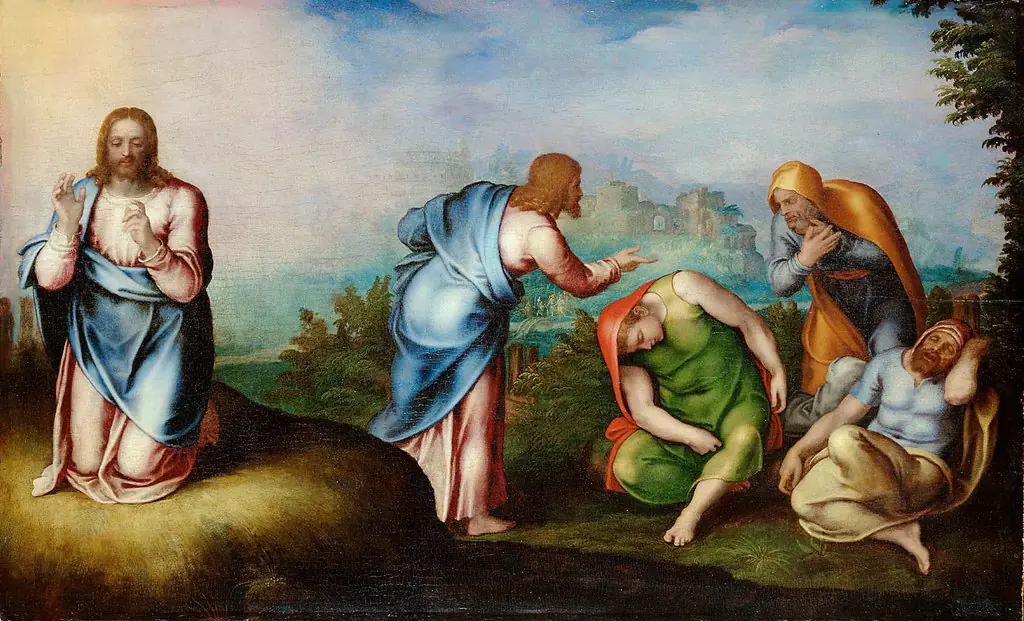
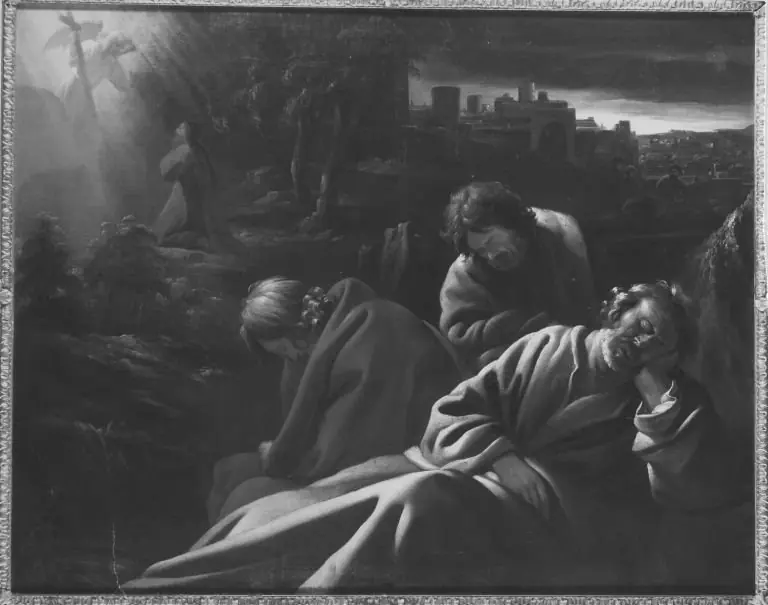
Christus am Ölberg (Kopie nach)
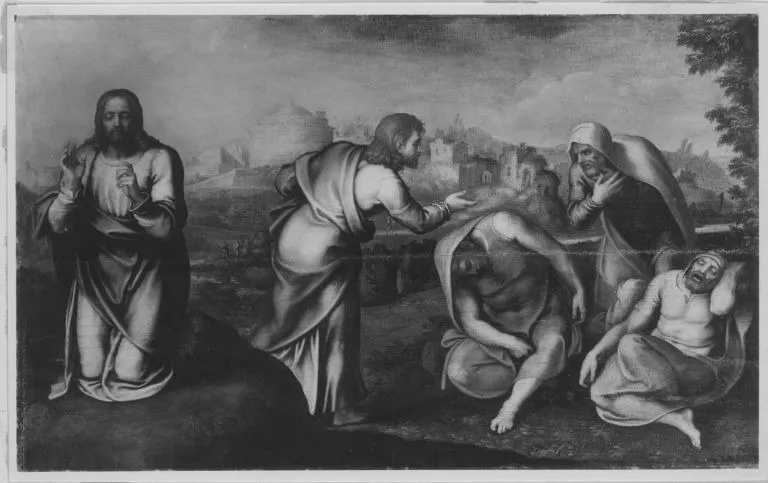
Christus am Ölberg (Kopie nach) is an unspecified painting by the Mannerist artist Marcello Venusti. It dates from 1547 and is held in the collection of the Bavarian State Painting Collections.
About this work
Overview
This oil painting is a 16th-century copy after a composition by Marcello Venusti, an Italian Mannerist active in Rome.
This oil painting is a 16th-century copy after a composition by Marcello Venusti, an Italian Mannerist active in Rome. Executed in 1547, it reflects Venusti’s practice of producing scaled reproductions of significant religious works. The piece is now part of the Alte Pinakothek’s collection, preserving a quiet yet emotionally charged interpretation of a biblical moment, rendered with the refined elegance characteristic of Roman Mannerism.
Subject & Meaning
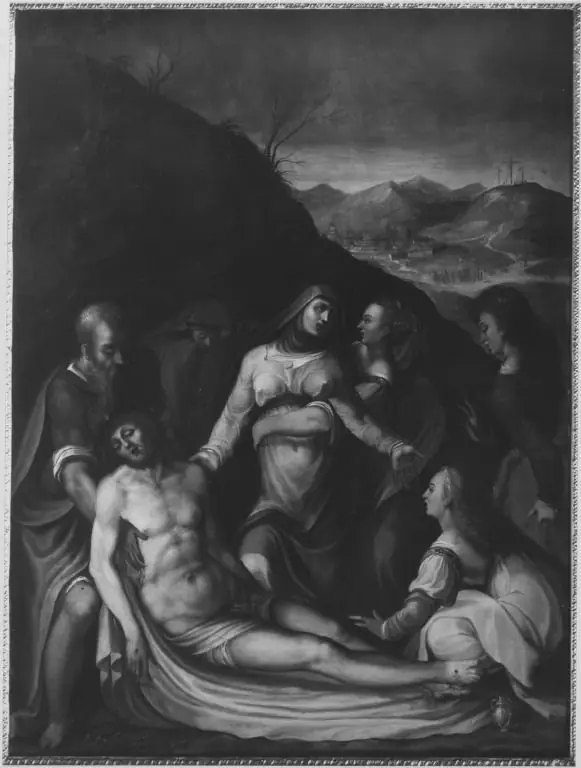
The scene portrays Christ in Gethsemane, moments after his arrest, as he lies unconscious on the ground. A figure with a wound at his side—likely Christ—lies supported by another, while a woman kneels nearby, her face turned away. The composition emphasizes solitude and inner turmoil, capturing the psychological weight of Christ’s surrender rather than dramatic action. The quiet tension reflects a devotional focus on human vulnerability in the face of divine fate.
Technique & Style
Venusti’s handling of form and light follows Mannerist conventions: elongated figures, subtle chiaroscuro, and restrained color. The dim, atmospheric setting enhances the somber mood, with soft transitions between shadow and tone. The figures are arranged in a compact, intimate group, drawing attention to their gestures and postures rather than spatial depth. The brushwork is controlled, avoiding overt drama in favor of introspective stillness.
History & Provenance
Marcello Venusti, trained in Rome under Perino del Vaga, was known for making faithful reproductions of major artworks, including Michelangelo’s *Last Judgment* for Cardinal Farnese. This version of *Christus am Ölberg* likely originated as a devotional aid or private commission. Its presence in the Alte Pinakothek suggests it entered a German collection during the 18th or 19th century, possibly through ecclesiastical or aristocratic channels.
Context
In mid-16th-century Rome, religious imagery was shaped by Counter-Reformation ideals, favoring clarity and emotional resonance over spectacle. Venusti’s work responded to this climate by translating monumental compositions into more accessible, intimate formats. His copies served both as study tools and spiritual aids, allowing patrons to engage with sacred narratives in private settings, away from the grandeur of public altarpieces.
Legacy
Venusti’s reproductions helped disseminate the visual language of High Renaissance and Mannerist art beyond Rome’s immediate circles. Though not original compositions, his versions preserved key iconographic elements and compositional solutions for later generations. This painting stands as an example of how artistic influence was transmitted through replication, sustaining devotional traditions across regions and decades.
Artist & collection
Artist
Marcello Venusti (1512 – 15 October 1579) was an Italian Mannerist painter active in Rome in the mid-16th century.