Artwork
Grotesque with a Satyr Feeding a Dragon (recto)
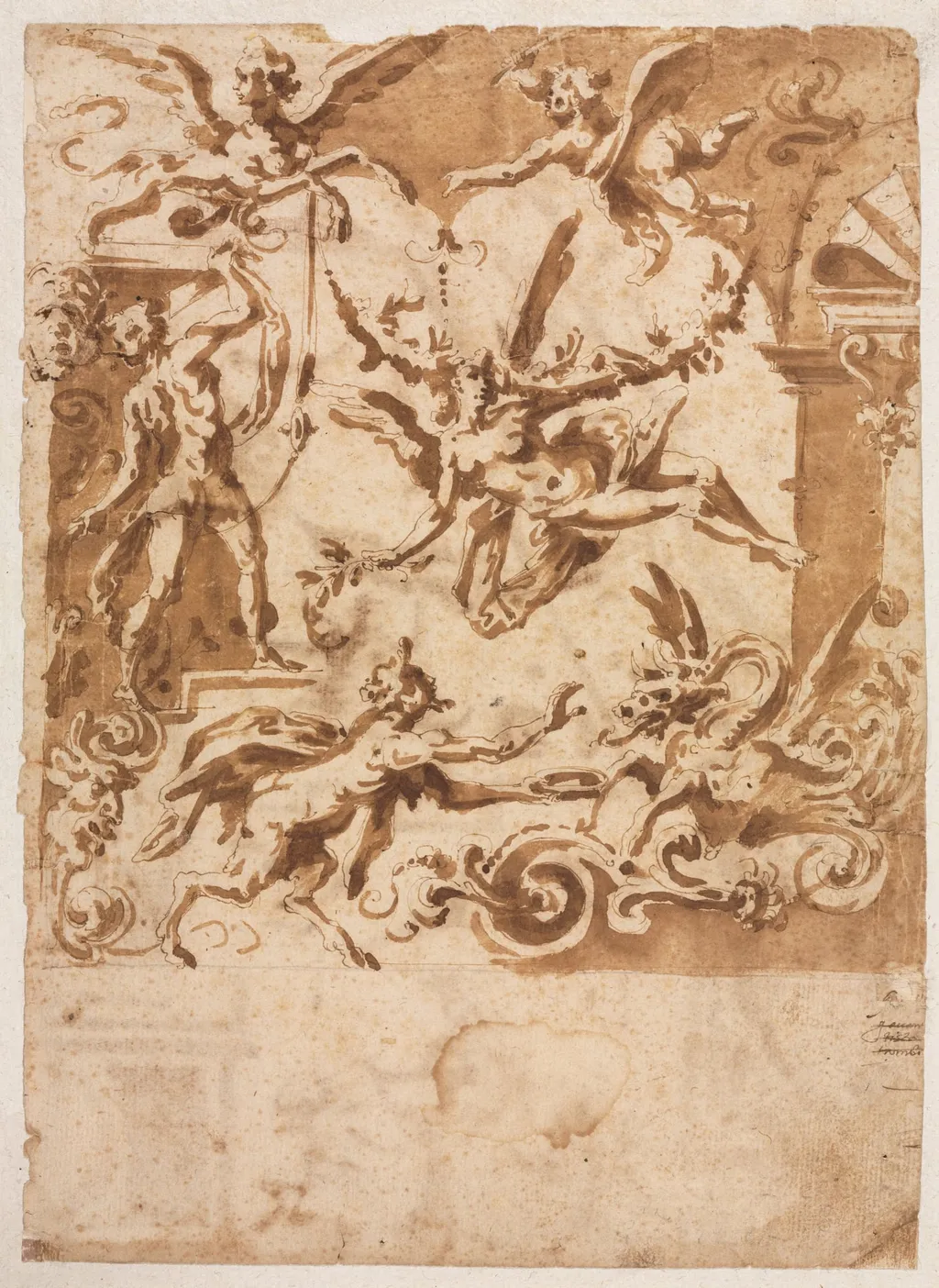
Grotesque with a Satyr Feeding a Dragon (recto) is a drawing by the Renaissance artist Marco Marchetti. It dates from 1576 and is held in the collection of the Cleveland Museum of Art.
About this work
Overview
The work is executed in a loose, energetic hand, suggesting it may have been a preparatory sketch or an independent exploration of imaginative motifs.
Created around 1576 by Marco Marchetti, this ink drawing on paper is part of the Cleveland Museum of Art’s collection. It exemplifies the Renaissance fascination with fantastical imagery, combining human, animal, and vegetal forms in a single dense composition. The work is executed in a loose, energetic hand, suggesting it may have been a preparatory sketch or an independent exploration of imaginative motifs.
Subject & Meaning
The drawing centers on a satyr, a mythological half-man, half-goat figure, feeding a coiled dragon amid swirling vines and ambiguous forms. The scene lacks clear narrative, instead evoking a dreamlike chaos where creatures interact without obvious logic. The satyr’s grin and the dragon’s scaled body suggest playful menace, possibly reflecting Renaissance interests in hybridity, the grotesque, and the boundaries between nature and myth.
Technique & Style
Marchetti employed fluid, rapid ink lines to construct a layered, almost chaotic composition. Swirling contours and irregular angles dominate, with minimal shading and no defined perspective. The sketchy quality implies spontaneity, as if the artist was exploring forms freely rather than rendering a fixed image. This technique aligns with the tradition of grotesque drawings, where line itself becomes a vehicle for imaginative play.
History & Provenance
The drawing entered the Cleveland Museum of Art’s collection through established channels, though its earlier ownership remains undocumented. It is one of several surviving works by Marchetti, a Florentine artist active in the late 16th century known for decorative and fantastical designs. Its survival suggests it was valued as a study or curiosity, possibly within a collector’s cabinet of curiosities.
Context
This work emerges from a broader Renaissance trend of grotesque ornamentation, inspired by ancient Roman wall paintings rediscovered in the 15th century. Artists like Raphael and his followers popularized such fantastical hybrids, which were used in architecture and manuscripts. Marchetti’s drawing reflects this legacy, adapting it into a personal, uncommissioned exploration that prioritizes invention over decorum.
Legacy
Though not widely exhibited, the drawing contributes to understanding how Renaissance artists engaged with the grotesque beyond formal commissions. Its informal style and imaginative freedom offer insight into private artistic experimentation during a period dominated by religious and classical themes. It stands as a quiet testament to the era’s appetite for visual curiosity and mythological play.
Artist & collection

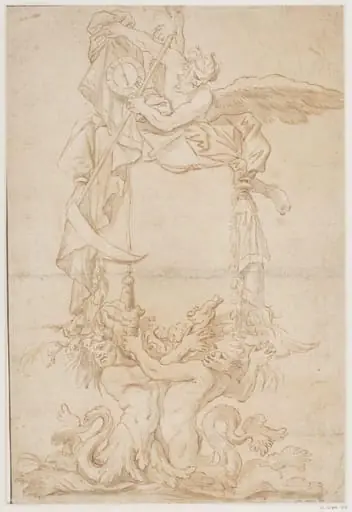 Ornamental design, probably for a title page: a figure of Time resting on a cartouche held up by a pair of tritons and holding a clock
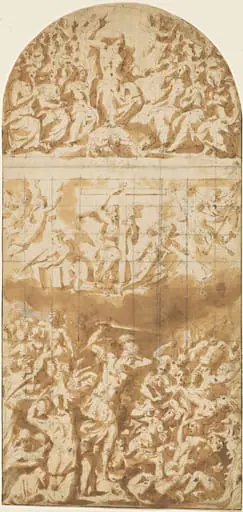 The Last Judgment
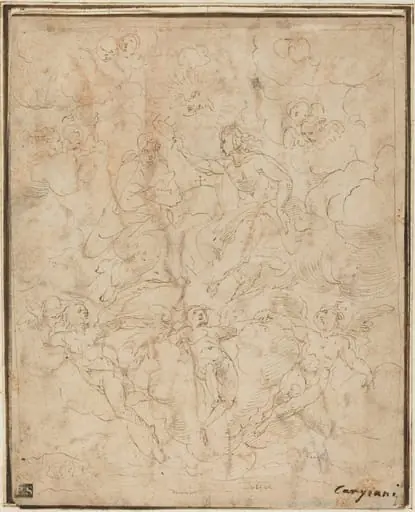 Coronation of the Virgin
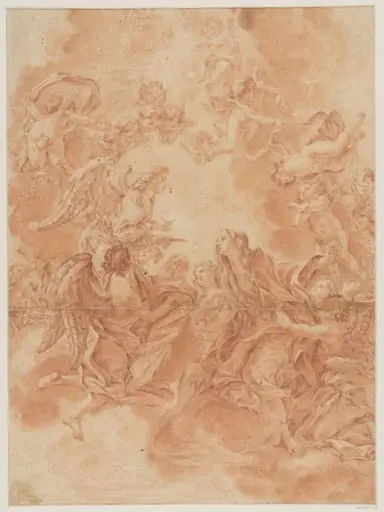 The Communion of St Mary Magdalene
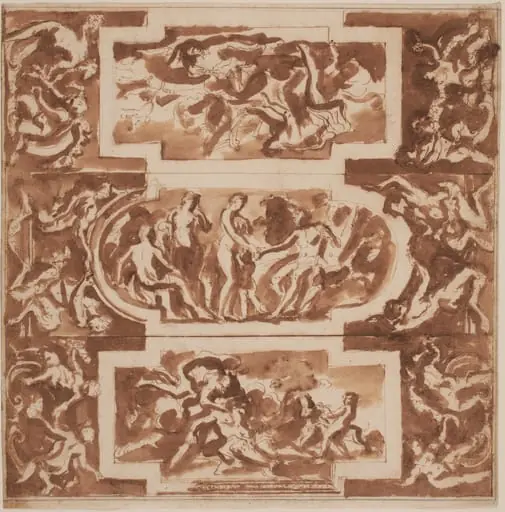 Modello for a Ceiling: Diana and the Dead Endymion, the Judgment of Paris, and the Death of Adonis
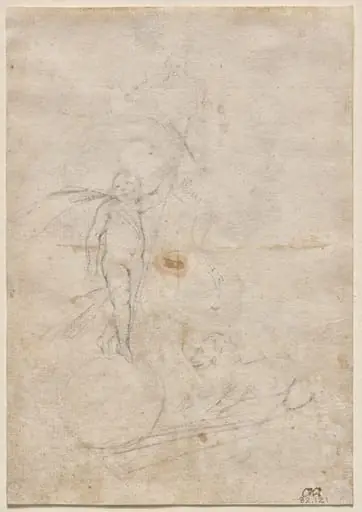 Resurrected Christ and Lamb of God (verso)
![The Fall of the Rebel Angels [recto], by Parmigianino](https://artifactworldgallery.com/img/parmigianino--the-fall-of-the-rebel-angels-recto--e9b082b33c001c66-w320.webp) The Fall of the Rebel Angels [recto]
The Fall of the Rebel Angels [recto]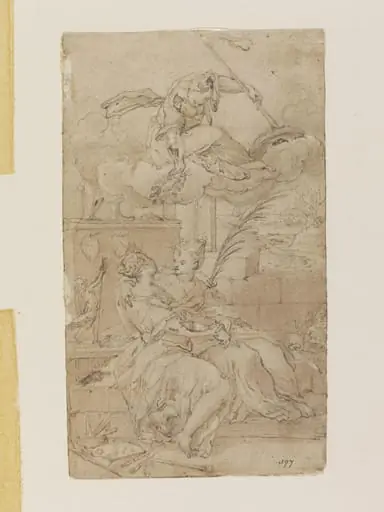 Allegory of the Union of Painting and Sculpture
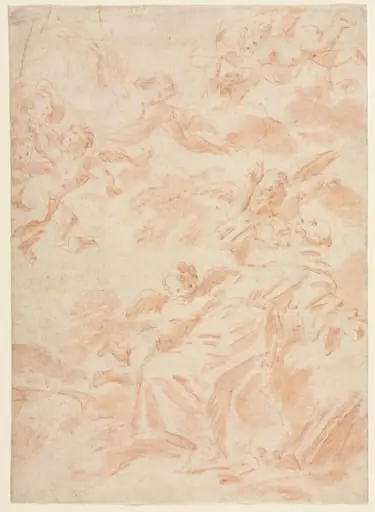 The Stigmatization of Saint Francis
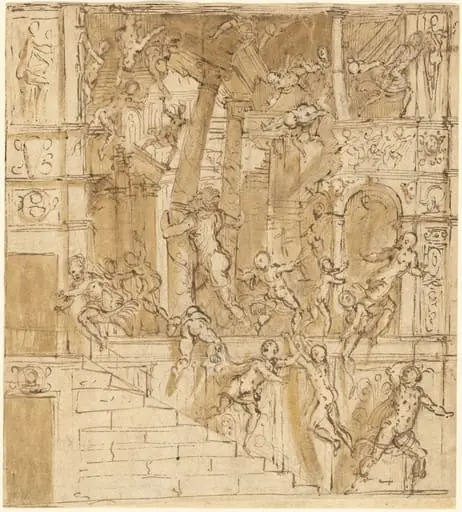 Samson Destroying the Temple