Artwork
The Banker and his Wife
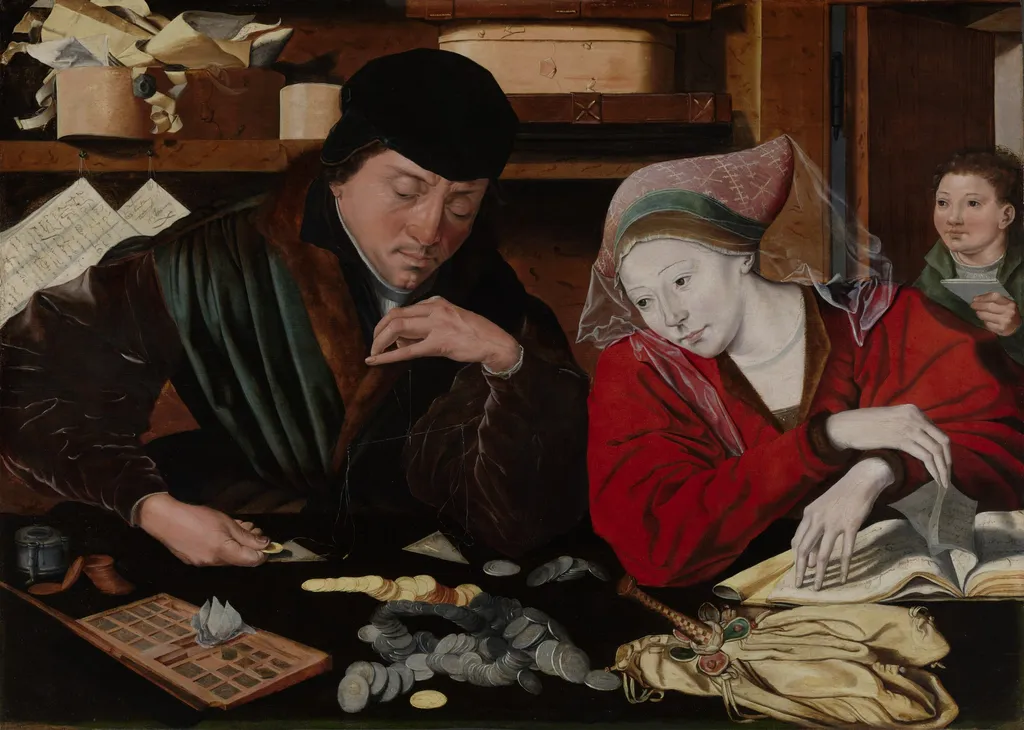
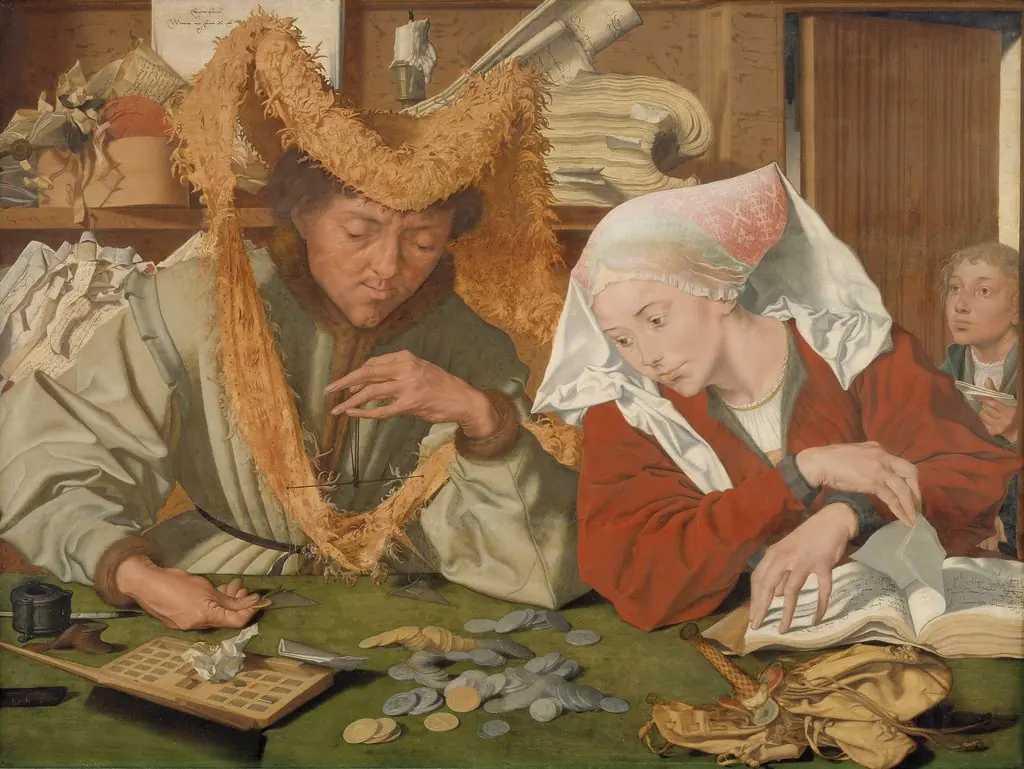
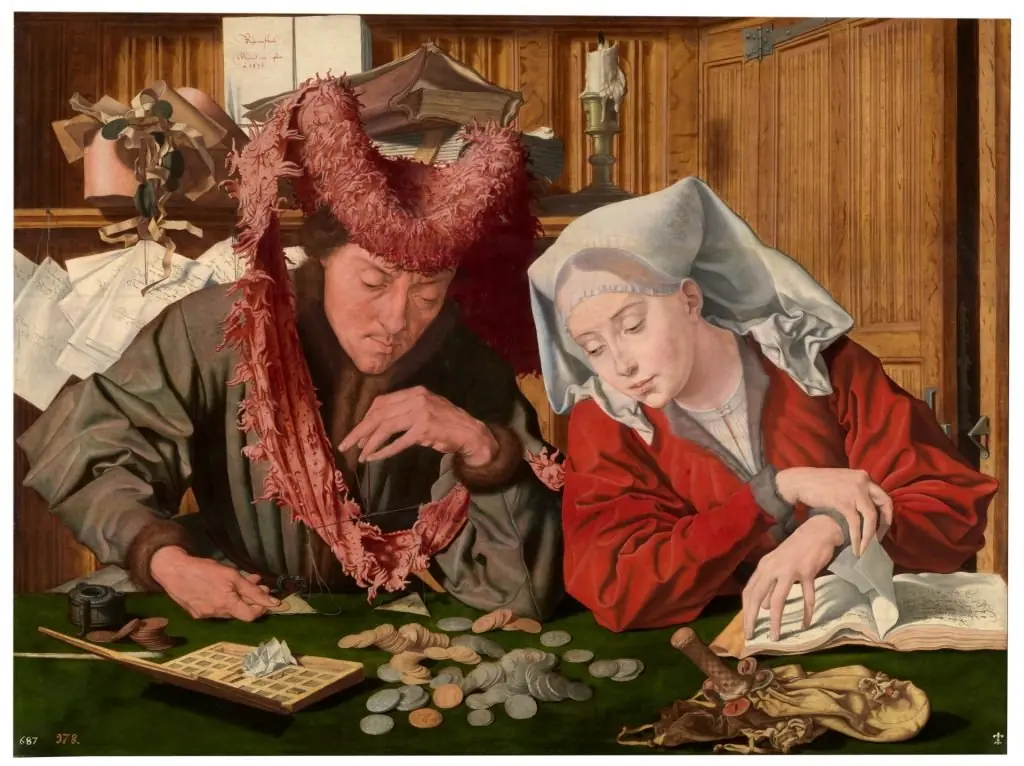
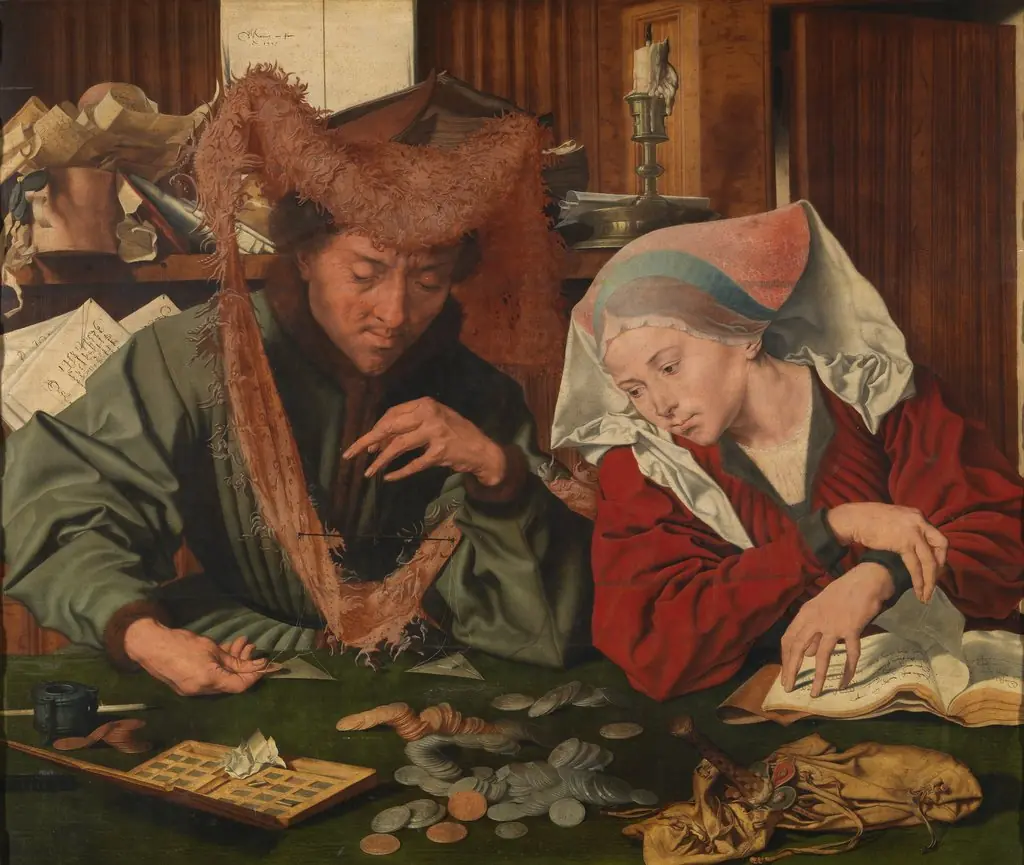
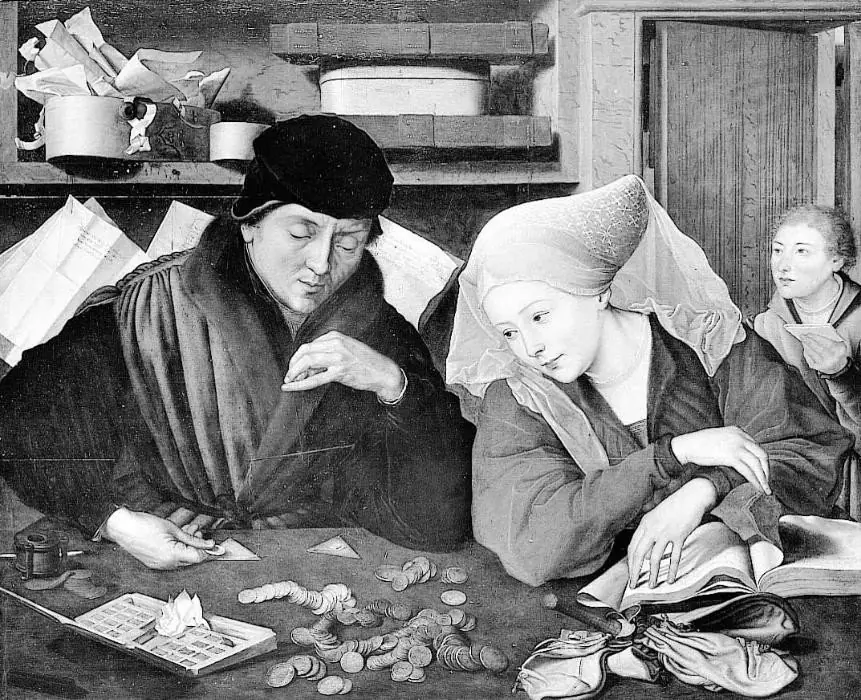
The Banker and his Wife is an oil painting by the Northern Renaissance artist Marinus van Reymerswaele. It is held in the collection of the Royal Museum of Fine Arts Antwerp.
About this work
Overview
1575) presents a domestic interior in which a senior male clerk, a woman in a vivid red garment, and a young attendant occupy a cramped, cluttered space.
Marinus van Reymerswaele’s oil painting *The Banker and his Wife* (c. 1575) presents a domestic interior in which a senior male clerk, a woman in a vivid red garment, and a young attendant occupy a cramped, cluttered space. The composition focuses on the act of counting money, surrounded by ledgers, a chessboard and assorted objects, offering a detailed glimpse into the commercial life of a Northern Renaissance workshop.
Subject & Meaning
The work portrays a money‑changer at work, assisted by his wife and a boy who carries a cup, suggesting a family‑run enterprise. The presence of coins, ledgers and a chessboard hints at the intertwining of financial transactions and strategic planning, while the attentive gaze of the figures underscores the seriousness of mercantile duties in a period when trade and law were central to urban life.
Technique & Style
Van Reymerswaele employs a pronounced chiaroscuro, using strong contrasts of light and shadow to model the metallic sheen of the coins and the flesh of the figures. The meticulous rendering of textures—fabric, metal, paper—demonstrates the Northern Renaissance’s interest in naturalistic detail, while the cramped composition and crowded surface echo the artist’s penchant for genre scenes that emphasize everyday activity.
History & Provenance
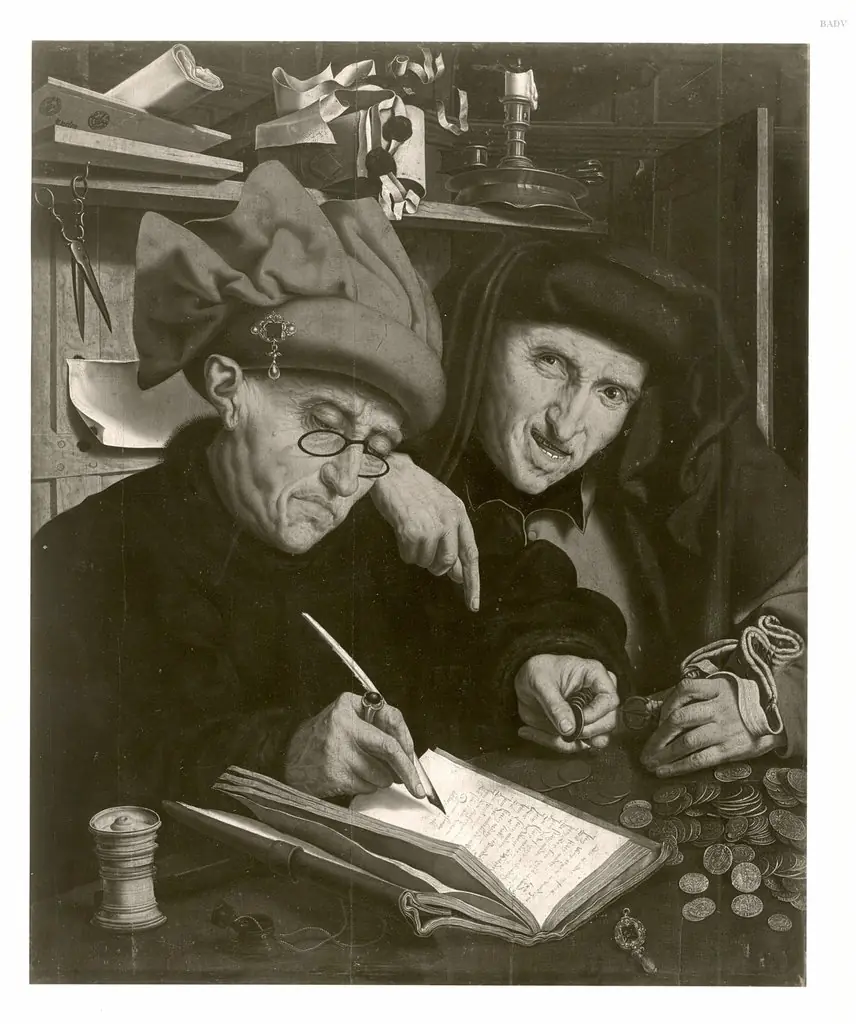
Trained in Leuven before establishing a workshop in Antwerp, van Reymerswaele produced several variations on this financial theme, reflecting his commercial success. *The Banker and his Wife* entered the collection of the Royal Museum of Fine Arts Antwerp, where it remains part of the museum’s holdings of Northern Renaissance paintings, illustrating the artist’s role in the city’s artistic production of the late 16th century.
Context
The painting belongs to a broader trend in Dutch and Flemish art that documented the rise of mercantile culture. By depicting a money‑changing office, van Reymerswaele aligns with contemporaneous genre painters who used everyday scenes to comment on the moral and economic dimensions of wealth, law, and social order during the early modern period.
Own this work as a print
Artist & collection
Artist
Marinus van Reymerswaele or Marinus van Reymerswale (c. 1490 – c. 1546) was a Dutch Renaissance painter mainly known for his genre scenes and religious compositions. After studying in Leuven and training and working as…