Artwork
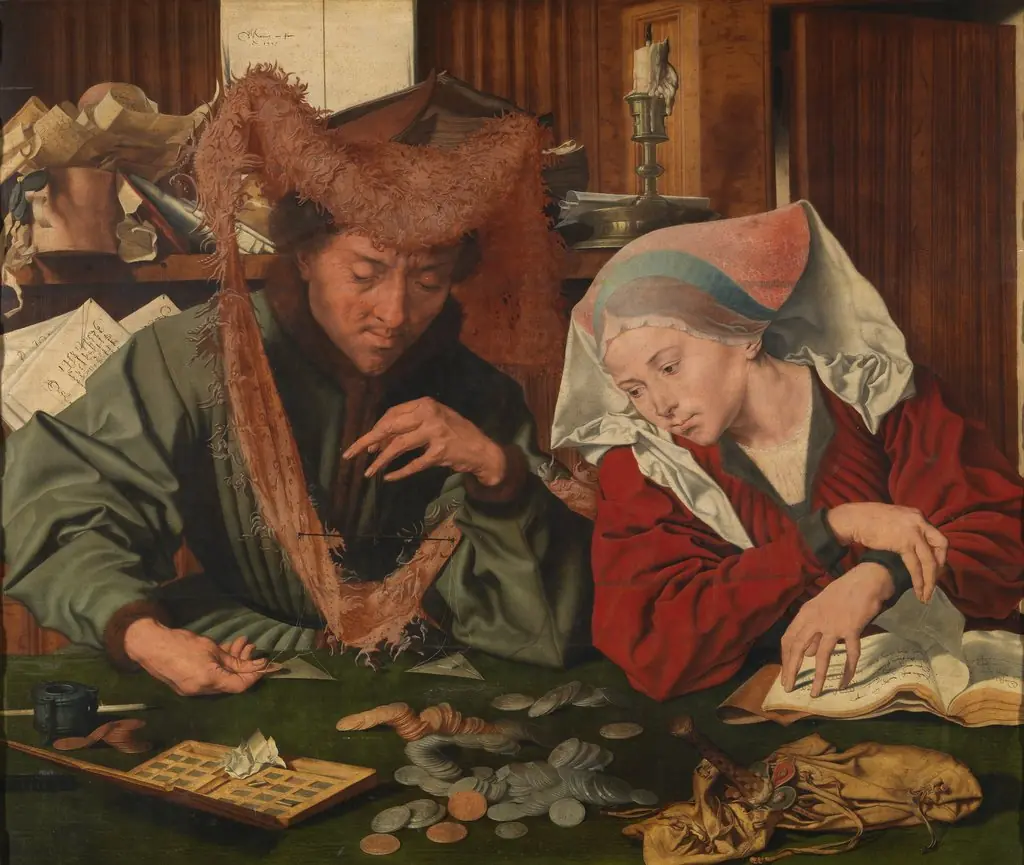
The Moneychanger and his Wife
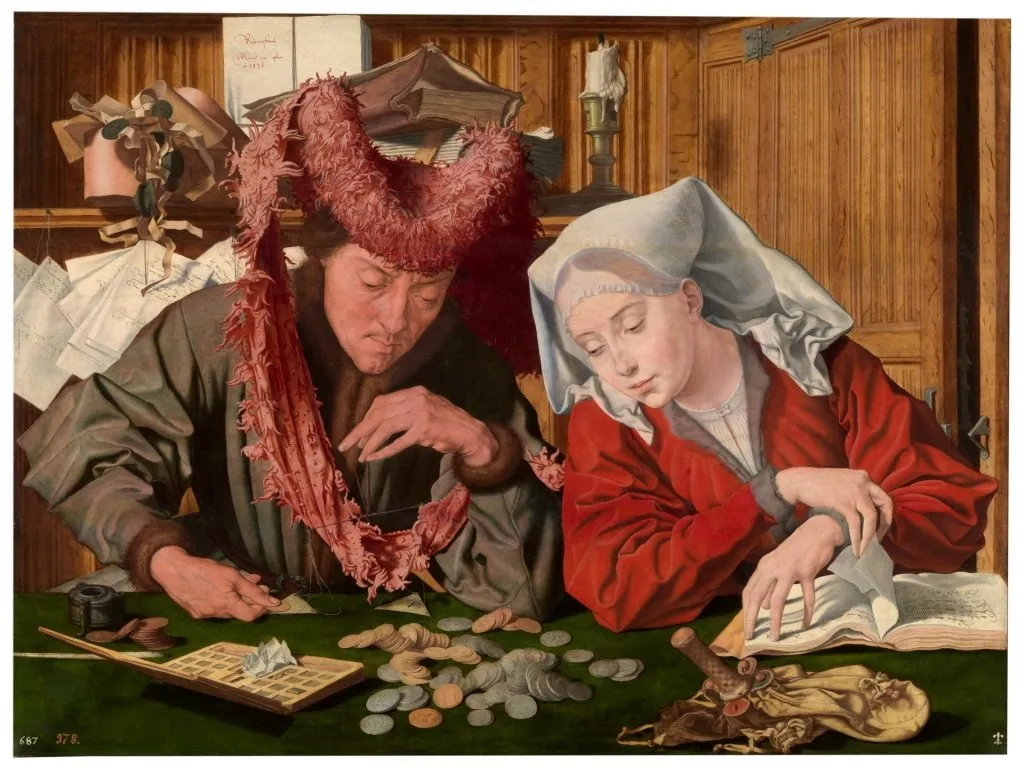
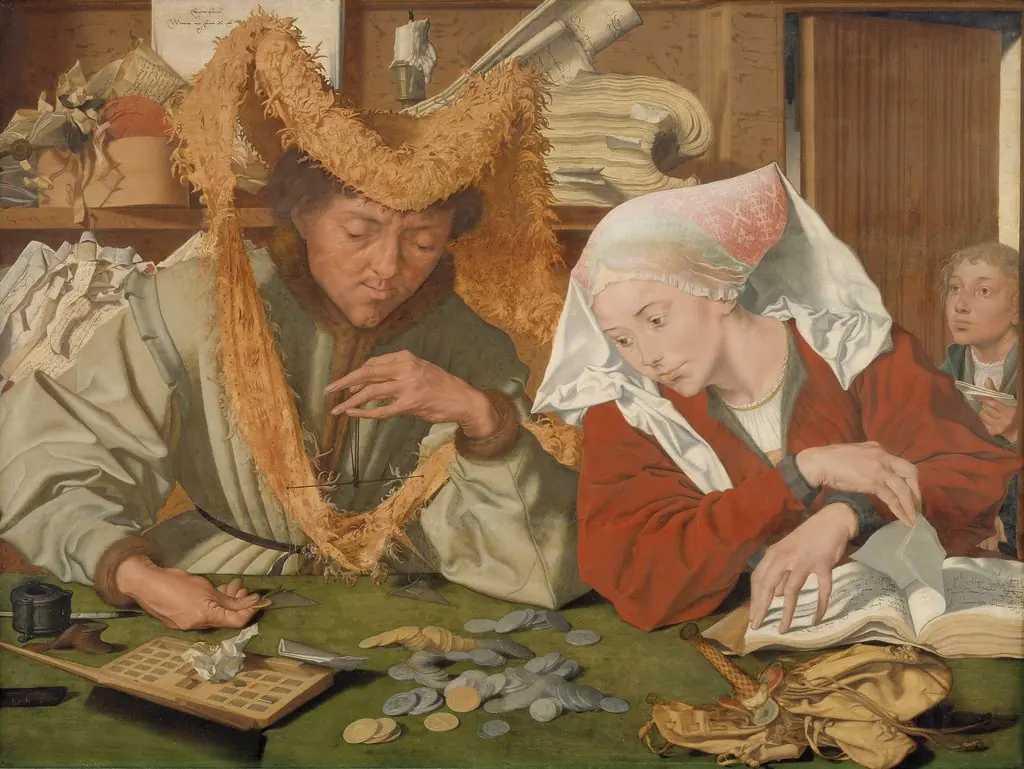
The Moneychanger and his Wife is an oil painting by the Northern Renaissance artist Marinus van Reymerswaele. It dates from 1538 and is held in the collection of the Museo del Prado.
About this work
Overview
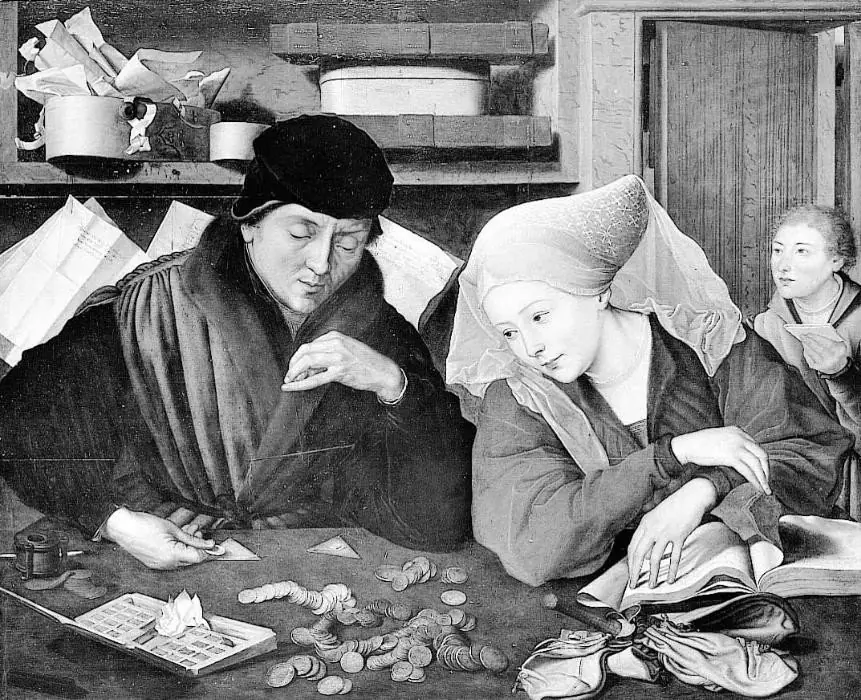
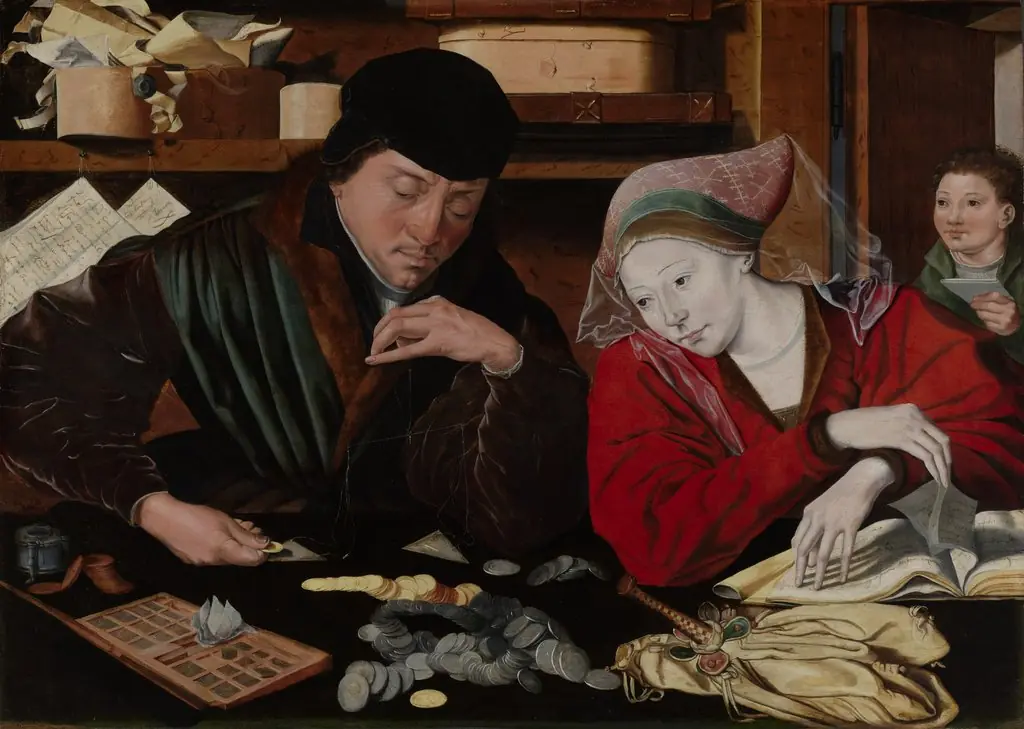
The man, clad in a brown jacket with a red scarf, handles a spread of coins, while his wife, dressed in a red jacket and white head covering, reads from a book.
Created in 1538 by the Dutch painter Marinus van Reymerswaele, this oil work shows a seated couple immersed in a financial transaction. The man, clad in a brown jacket with a red scarf, handles a spread of coins, while his wife, dressed in a red jacket and white head covering, reads from a book. The scene unfolds against a backdrop of wooden cabinets laden with papers and other accounting paraphernalia.
Subject & Meaning
The composition presents a domestic setting in which the male figure appears to be a money‑changer or tax collector, his activity suggested by the coins, inkwell and pen. The woman’s engagement with a book implies literacy and perhaps the recording of accounts, highlighting the collaborative nature of mercantile work and the moral undertones often associated with money‑handling professions in the period.
Technique & Style
Executed in oil on panel, the painting displays the meticulous detail characteristic of Northern Renaissance art. Van Reymerswaele employs a restrained palette of earthy browns, reds and muted whites, rendering textures—from the sheen of metal coins to the soft fabric of clothing—with precise brushwork. The careful modeling of light across the objects creates a calm, contemplative atmosphere.
History & Provenance
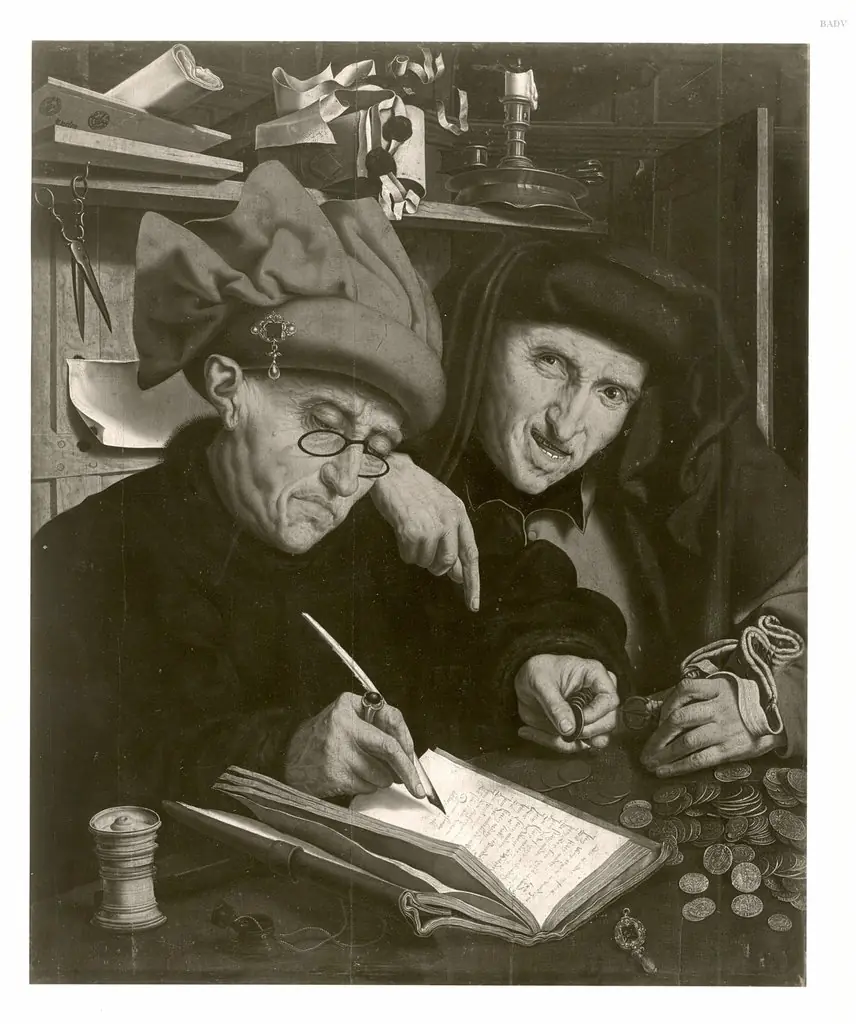
The work entered the collection of the Museo del Prado, where it remains on display. Like many of van Reymerswaele’s genre pieces, it was likely produced for a private patron interested in moralizing scenes of commercial life, and it survived the tumult of the 16th‑century market to be acquired by the Spanish royal collection before reaching the Prado.
Context
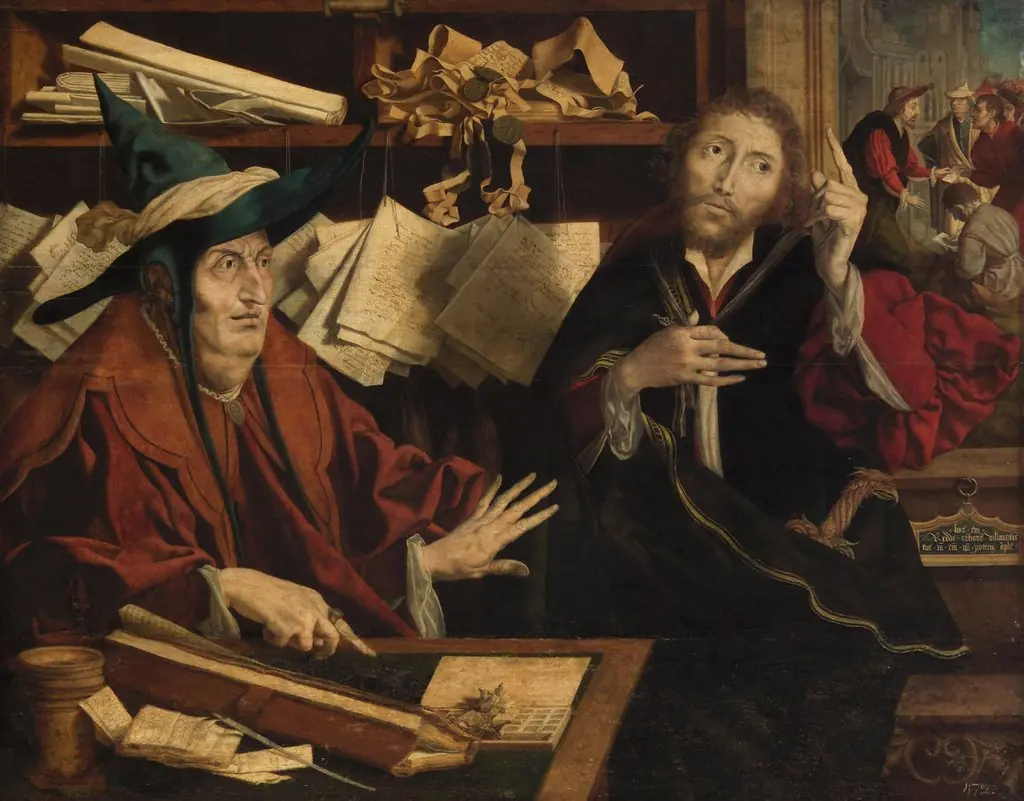
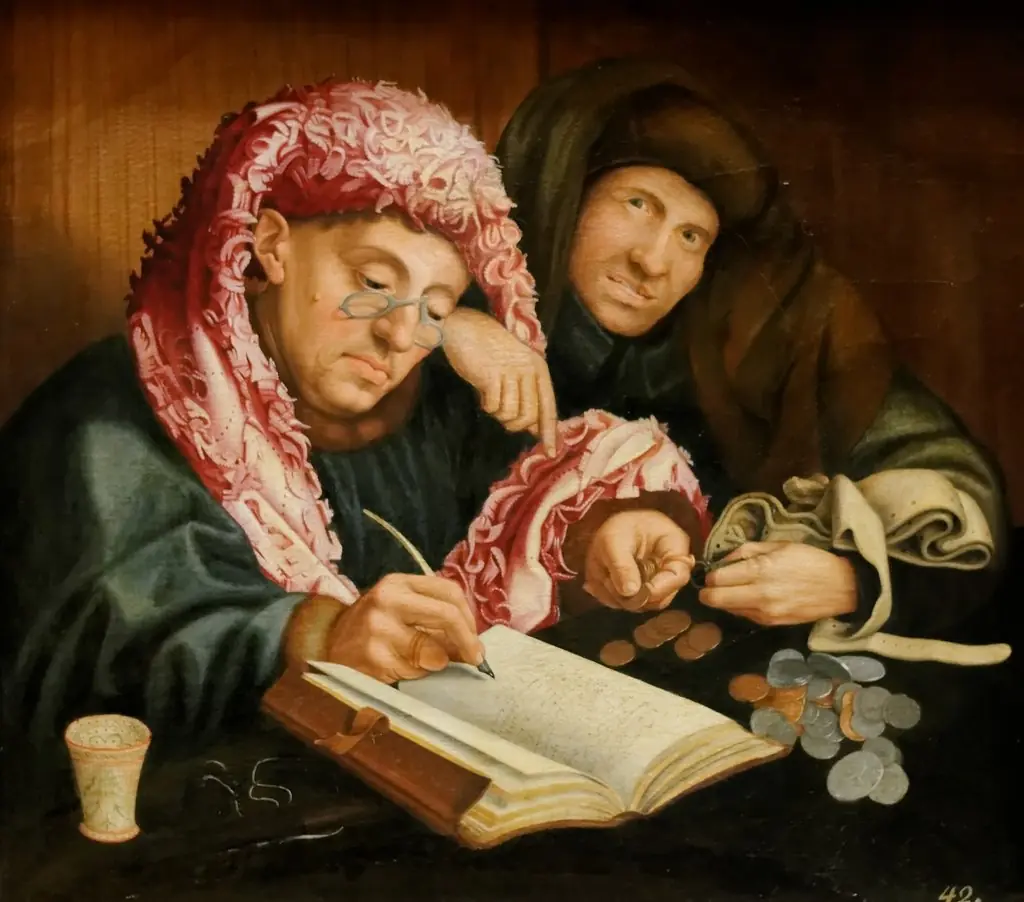
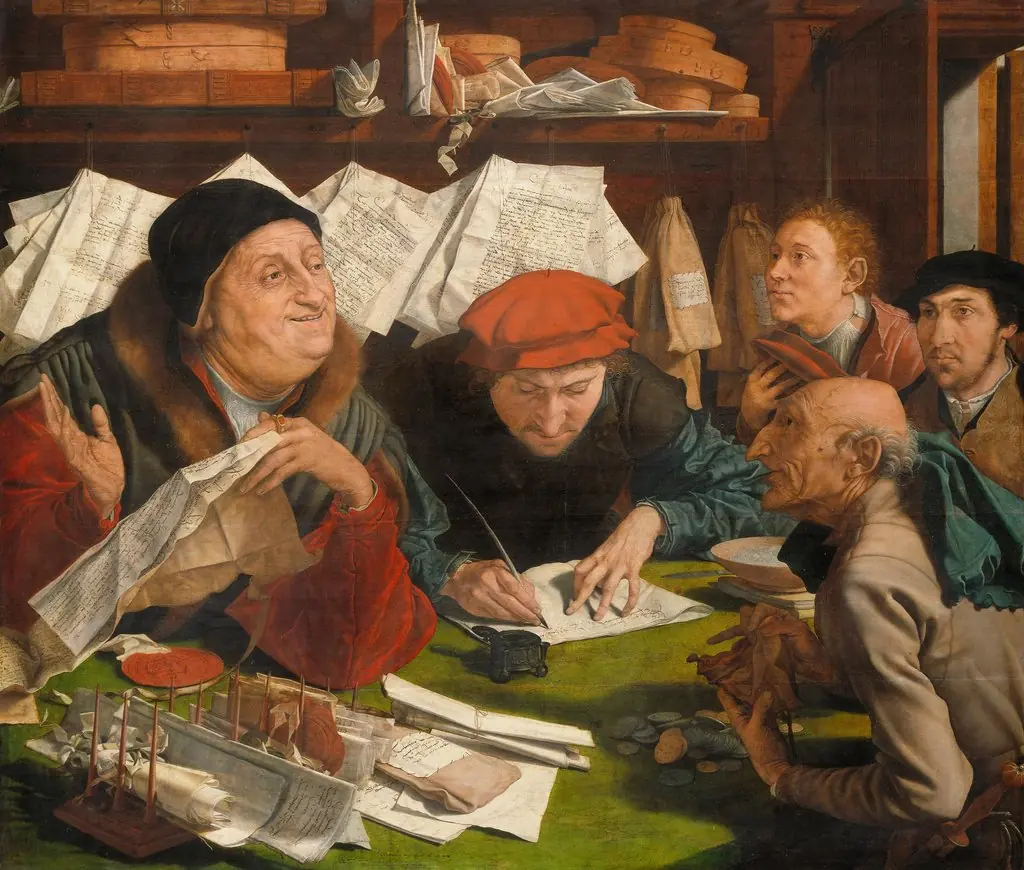
During the early 16th century, Dutch artists frequently portrayed the burgeoning mercantile class, reflecting the economic expansion of the Low Countries. Van Reymerswaele, known for repeatedly treating similar subjects such as tax collectors and lawyers, contributed to this visual discourse, using familiar motifs to comment on the ethical dimensions of trade and finance.
Artist & collection
Artist
Marinus van Reymerswaele or Marinus van Reymerswale (c. 1490 – c. 1546) was a Dutch Renaissance painter mainly known for his genre scenes and religious compositions. After studying in Leuven and training and working as…