Artwork
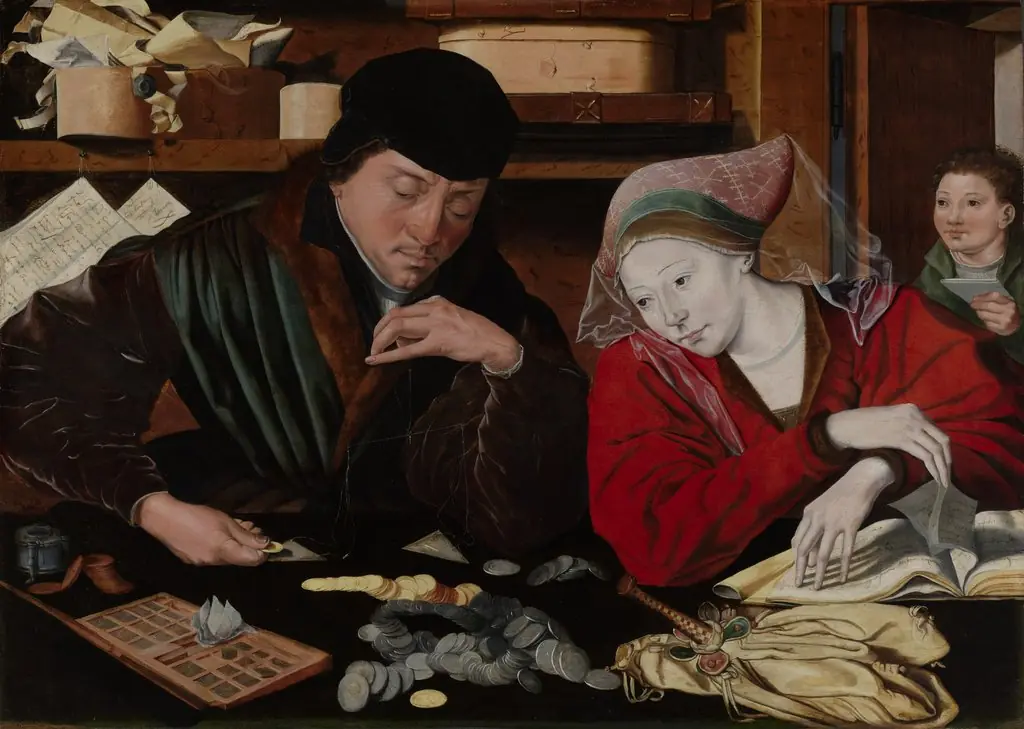
The Merchant and his Wife
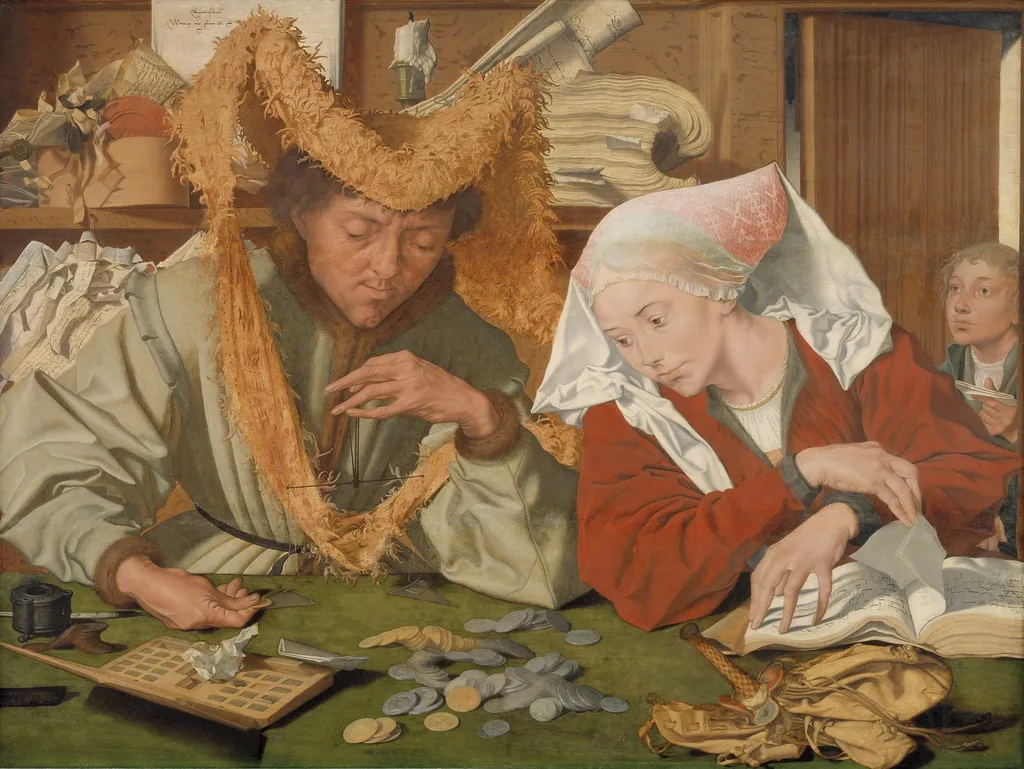
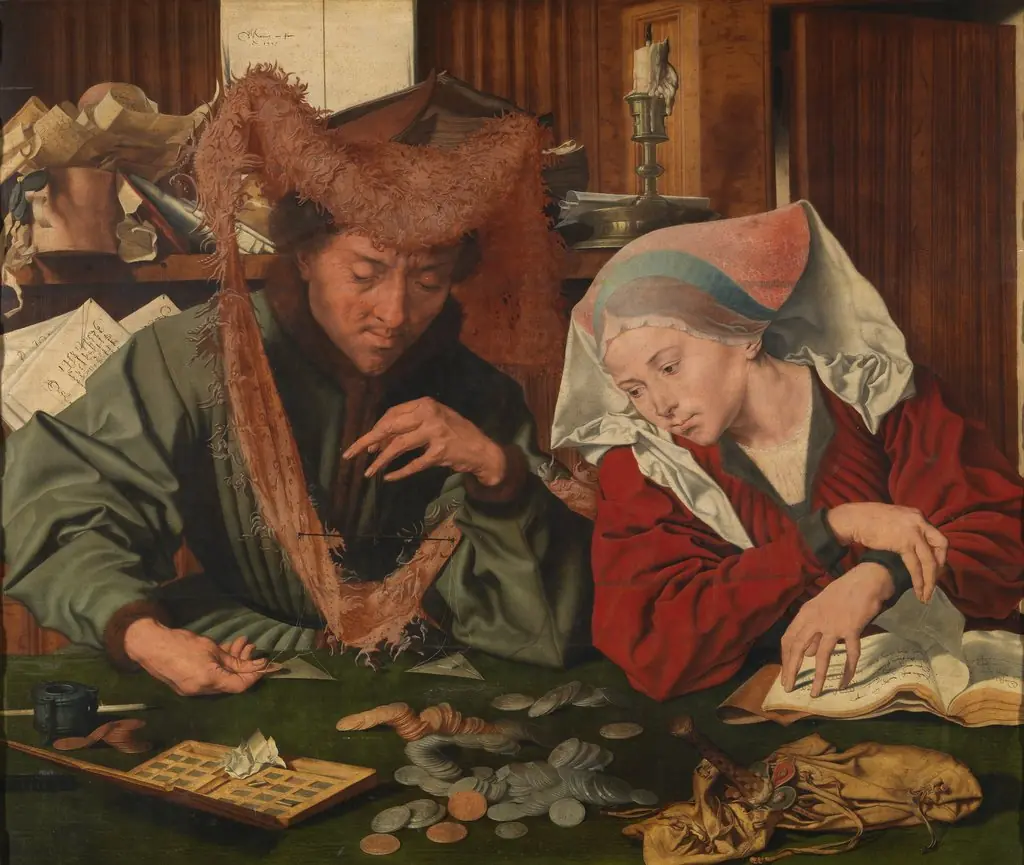
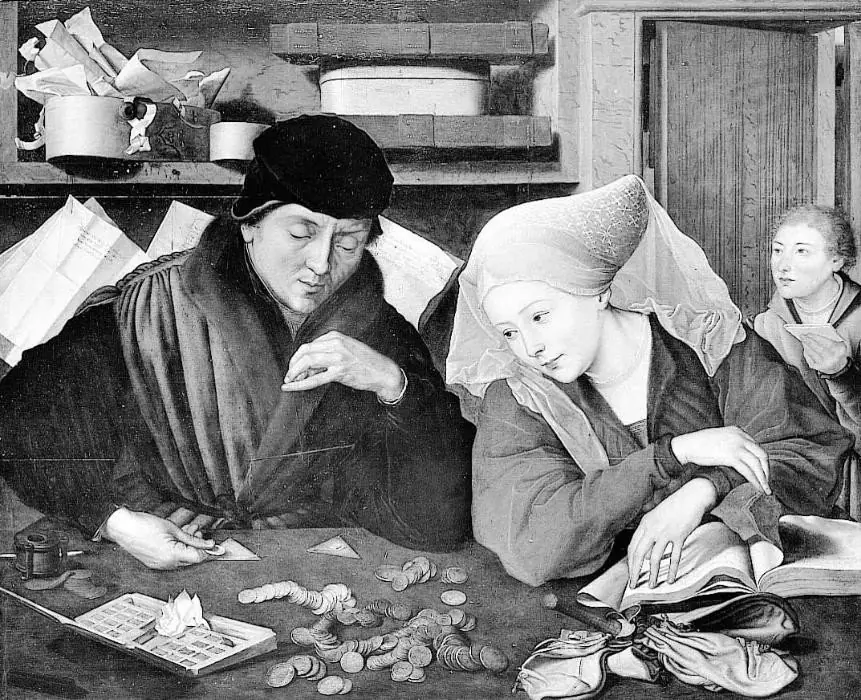
The Merchant and his Wife is an oil painting by the Northern Renaissance artist Marinus van Reymerswaele. It dates from 1540 and is held in the collection of the Statens Museum for Kunst.
About this work
Overview
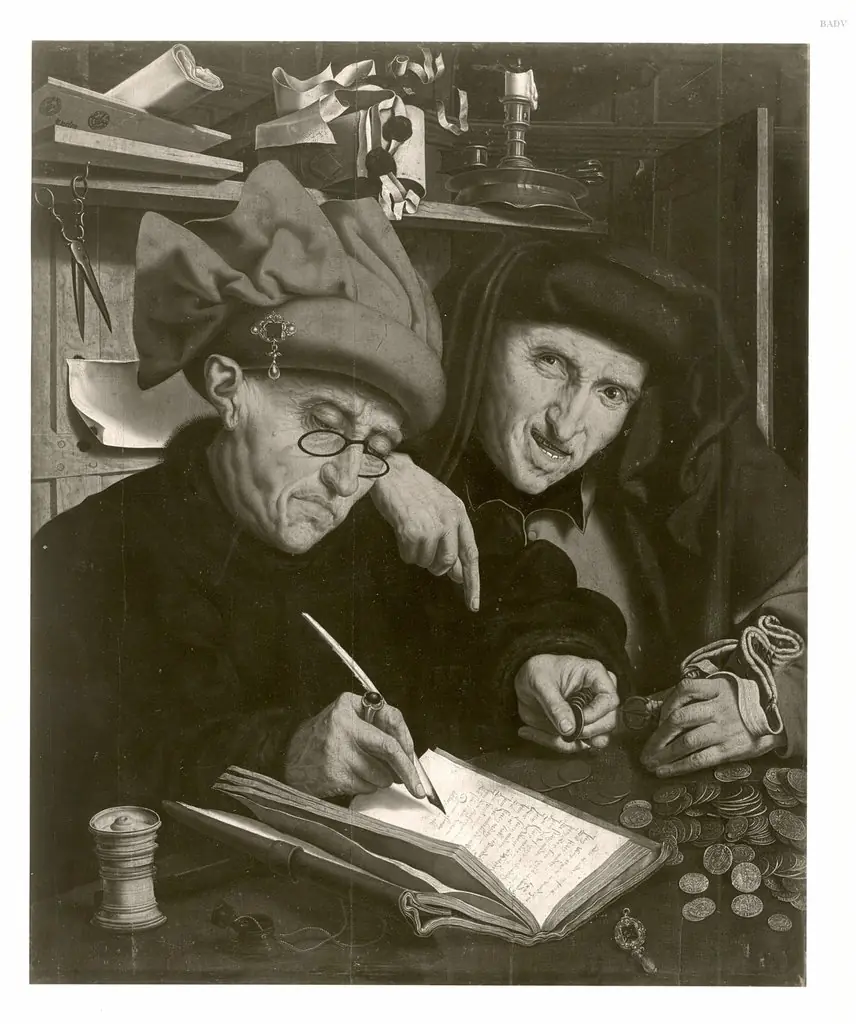
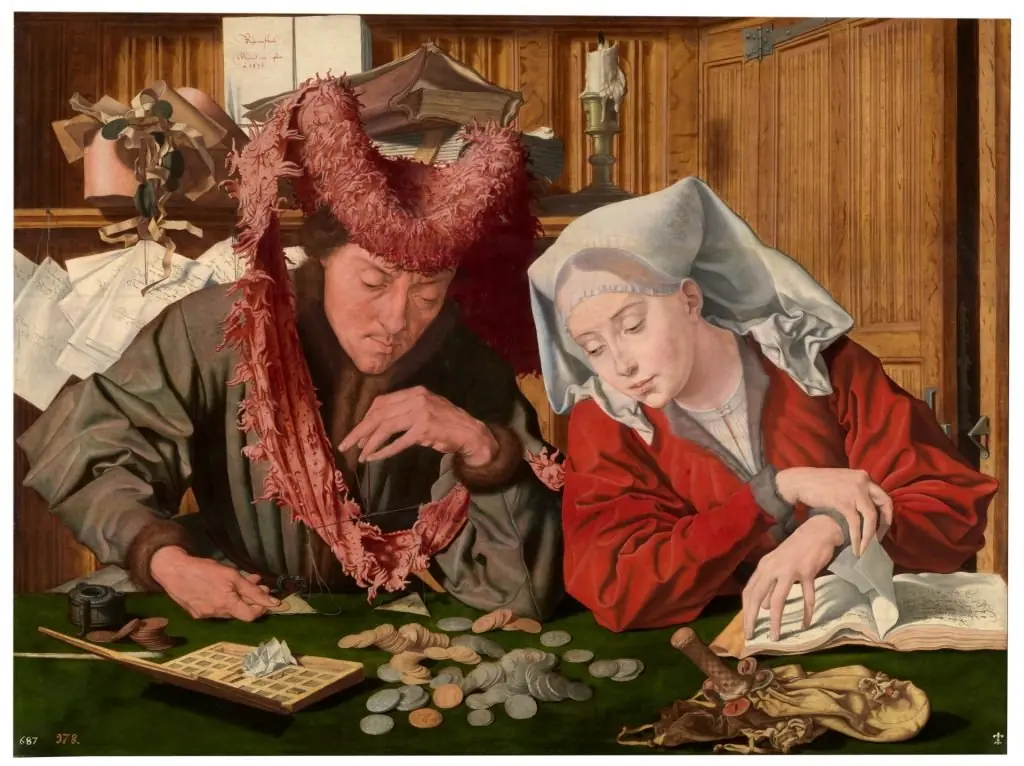
The male figure, barefoot and wearing a disheveled hat, is absorbed in counting coins, while his spouse, dressed in red with a white cap, studies an open book.
Marinus van Reymerswaele’s oil painting *The Merchant and his Wife* (c. 1540) presents a domestic interior in which a man and a woman share a crowded wooden table. The male figure, barefoot and wearing a disheveled hat, is absorbed in counting coins, while his spouse, dressed in red with a white cap, studies an open book. The composition is populated with scattered money, a chessboard, an inkwell, and shelves of rolled papers illuminated by a hanging lantern.
Subject & Meaning
The work illustrates a quotidian scene of financial activity, likely a money‑changer at work, accompanied by his wife who appears to be reviewing records. The juxtaposition of coins, a quill, and a book suggests the intertwining of commerce and literacy, while the chessboard hints at moments of leisure amid business. The careful observation of the figures’ gestures invites contemplation of the social roles of merchants and their families in the early modern economy.
Technique & Style
Executed in oil on panel, the painting reflects the Northern Renaissance’s attention to detail and texture. Van Reymerswaele renders the rough wooden surface, the sheen of metal coins, and the soft folds of fabric with precise brushwork. Light falls from the lantern, creating subtle chiaroscuro that models the figures and highlights the cluttered tabletop, while the muted palette of earth tones underscores the work’s realistic tone.
History & Provenance
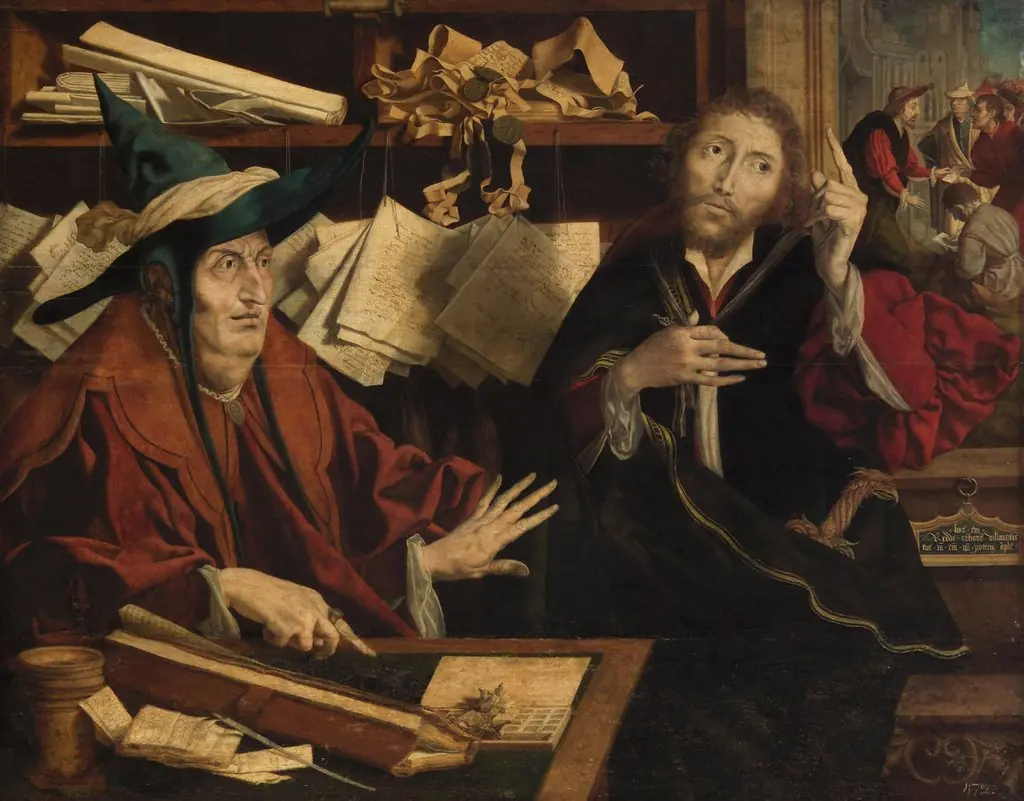
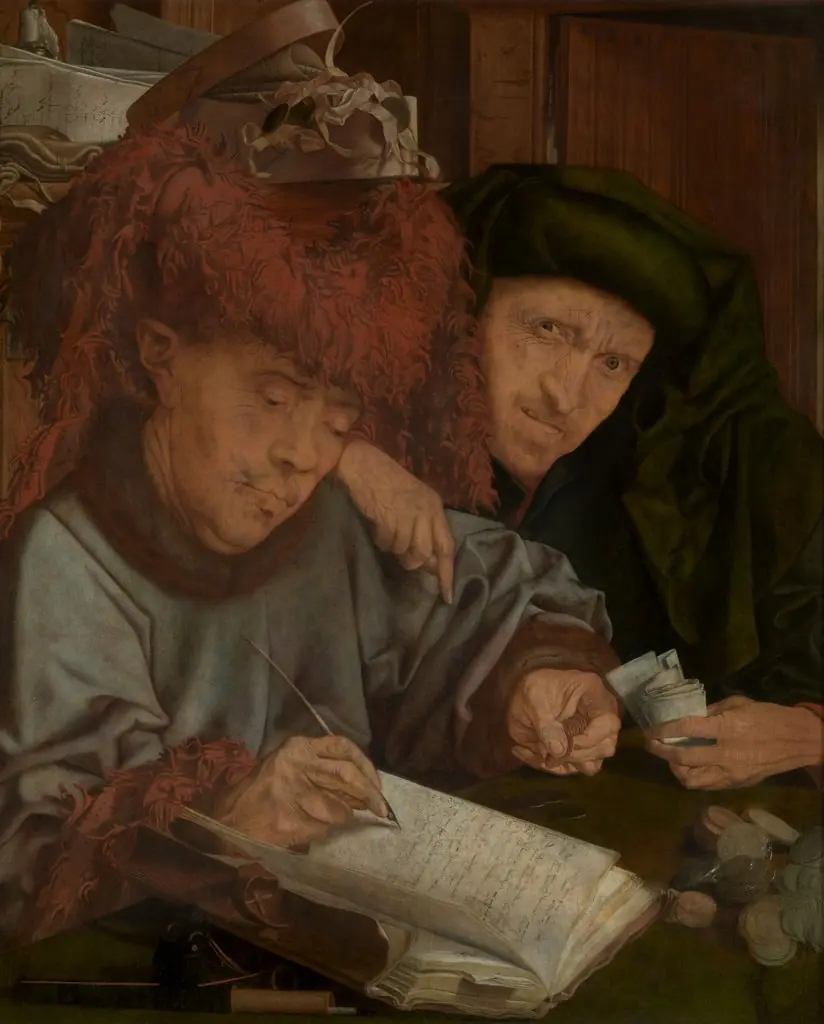
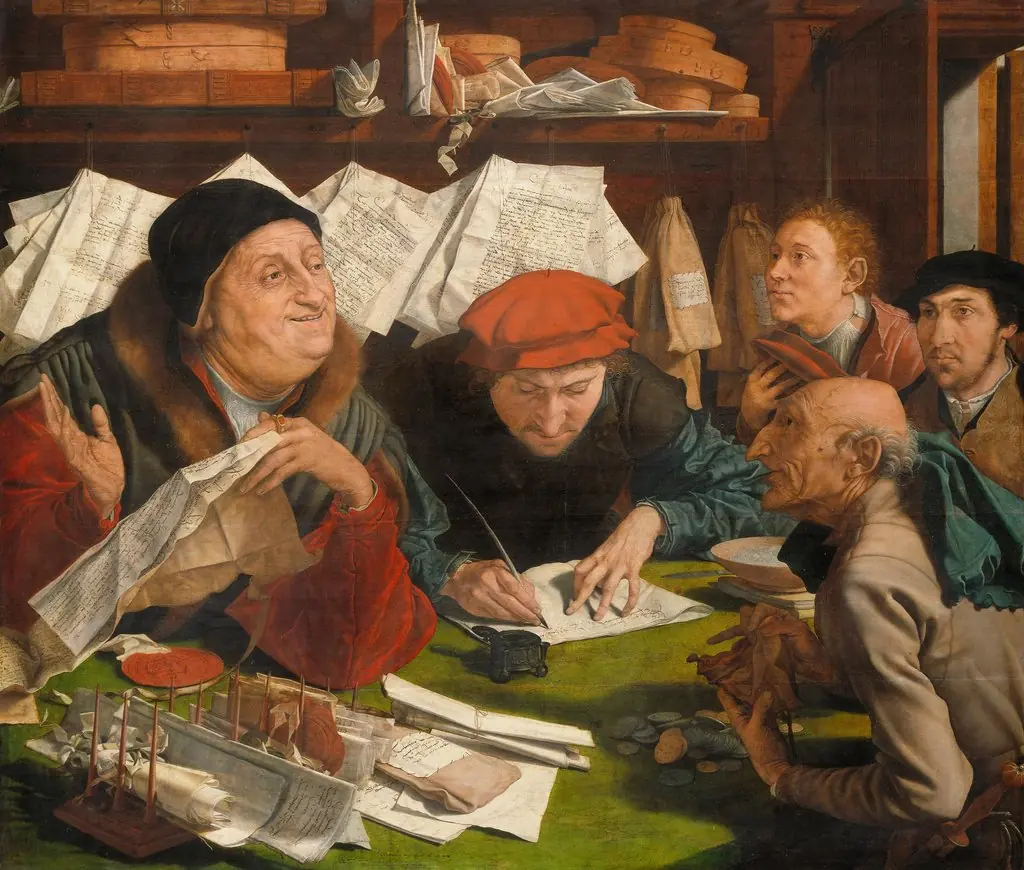
Created around 1540, the piece belongs to a series of genre scenes for which van Reymerswaele was known, alongside depictions of tax collectors and religious subjects. After the artist’s career in Leuven, Antwerp, and the Northern Netherlands, the painting entered various collections before being acquired by Denmark’s Statens Museum for Kunst, where it remains on public display.
Context
The composition aligns with the 16th‑century Dutch interest in portraying everyday commercial life, a theme shared by contemporaries such as Pieter Aertsen and Joachim Patinir. By focusing on a merchant’s household, the work reflects the growing importance of trade in the Low Countries and the moralizing tradition of genre painting that subtly comments on wealth, labor, and domestic order.
Own this work as a print
Artist & collection
Artist
Marinus van Reymerswaele or Marinus van Reymerswale (c. 1490 – c. 1546) was a Dutch Renaissance painter mainly known for his genre scenes and religious compositions. After studying in Leuven and training and working as…