Artist
Marinus van Reymerswaele
Dutch, 1490–1546
Marinus van Reymerswaele was a Dutch Northern Renaissance painter. 25 works are cataloged here, principally at Museo del Prado, most of them oil paintings. Marinus van Reymerswaele was born in Reimerswaal.
Overview
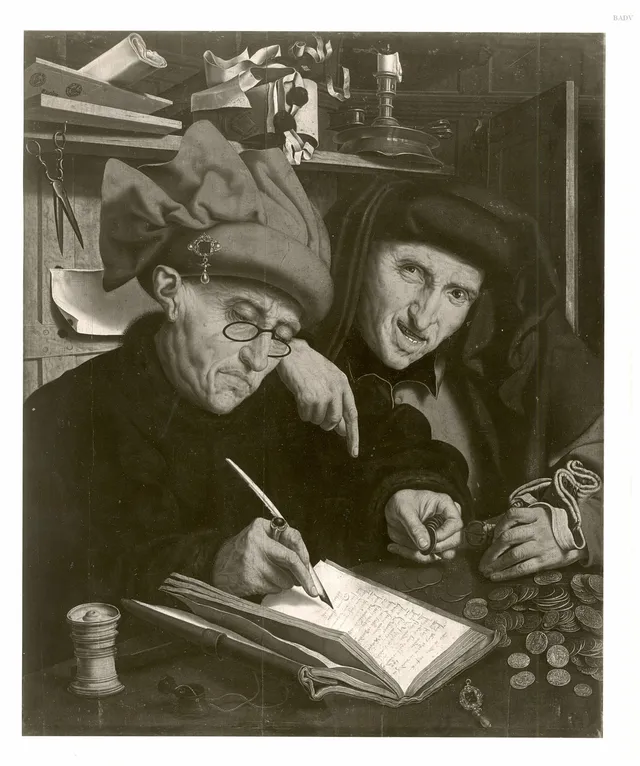
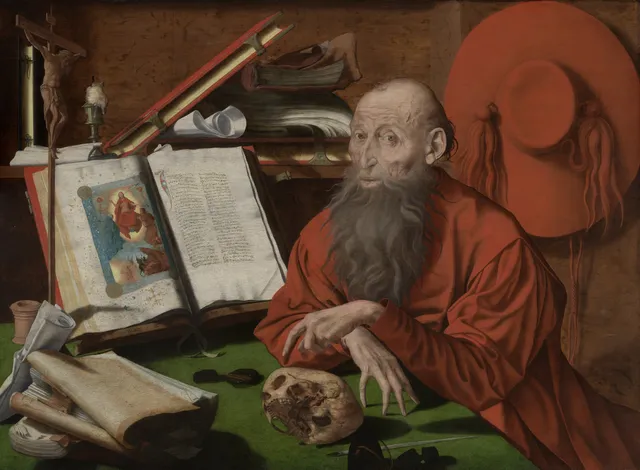
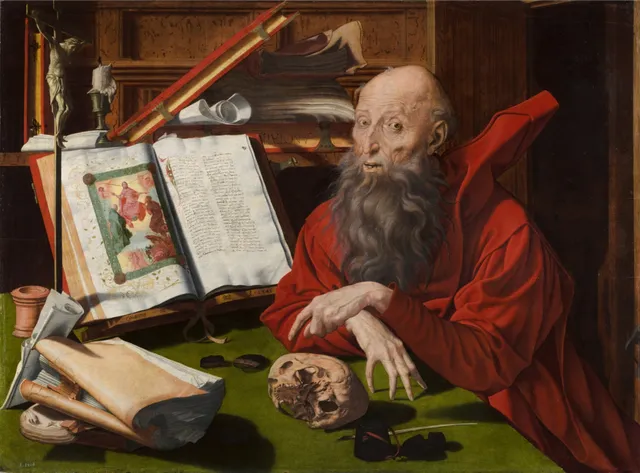
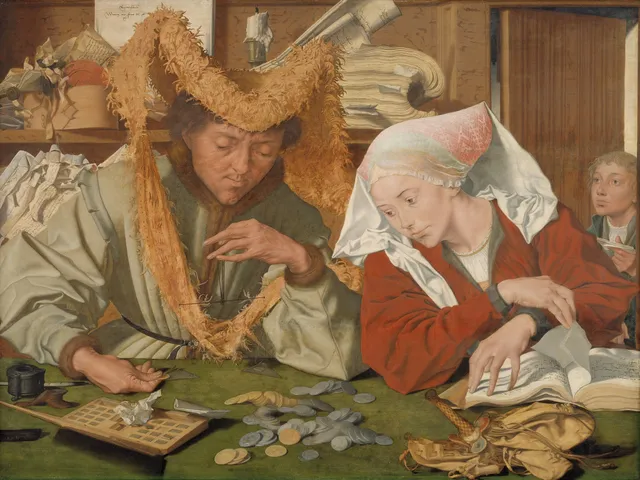
Marinus van Reymerswaele or Marinus van Reymerswale (c. 1490 – c. 1546) was a Dutch Renaissance painter mainly known for his genre scenes and religious compositions. After studying in Leuven and training and working as an artist in Antwerp, he returned later to work in his native Northern Netherlands. He operated a large workshop which produced many versions of mainly four themes: tax collectors, a money changer and his wife, a lawyer in his office, the calling of St. Matthew and St. Jerome in his study.
Biography
Marinus van Reymerswaele was born in the city of Reimerswaal and he also derives his last name from this city. He was registered in February 1504 as a student at the University of Leuven. He was registered in 1509 in the Liggeren of the Antwerp Guild of Saint Luke as a pupil of Symon van Daele, a glass painter.
He worked, at least from 1531 to 1540 in Antwerp. In the latter year he moved to Goes, where he died around 1546.
Work
The artist is known for a small number of signed panels. A number of other paintings are attributed to him on stylistic grounds. His works show the influence of the Antwerp painter Quentin Matsys. He painted a limited numbers of themes, mostly adapted from Quentin Massys and Albrecht Dürer:
The moneychanger and his wife Two tax collectors A lawyer in his office Saint Jerome in his study The calling of Matthew
A large group of paintings of tax collectors are wrongly attributed to van Reymerswaele. His themes were popular in the sixteenth century and many works were made after his paintings.
Works by Marinus van Reymerswaele
- The Tax Collector and His Assistant
- Saint Jerome in His Study
- Saint Jerome in his study
- The Merchant and his Wife
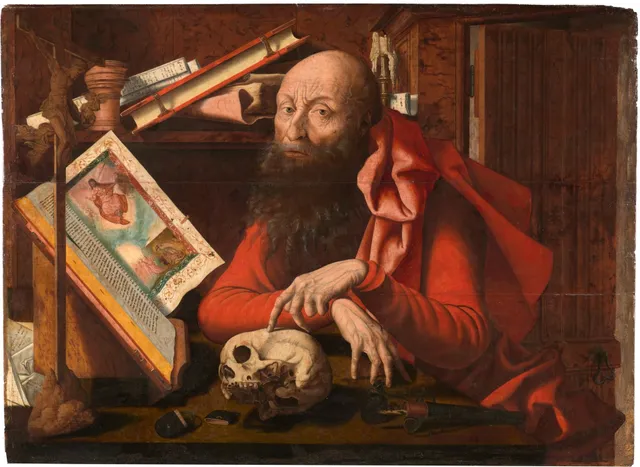 Saint Jerome in his Study
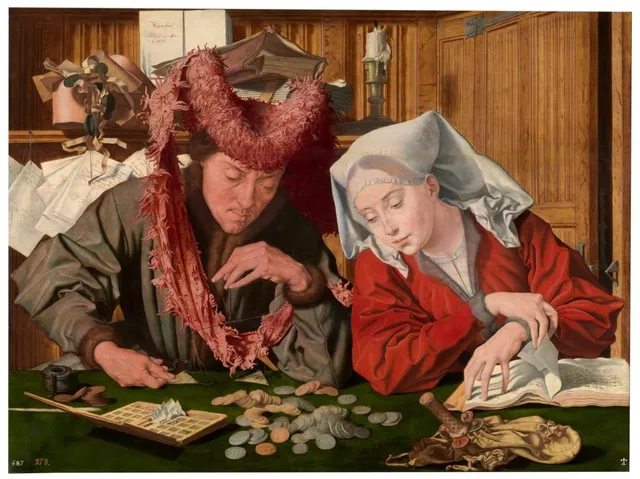 The Moneychanger and his Wife
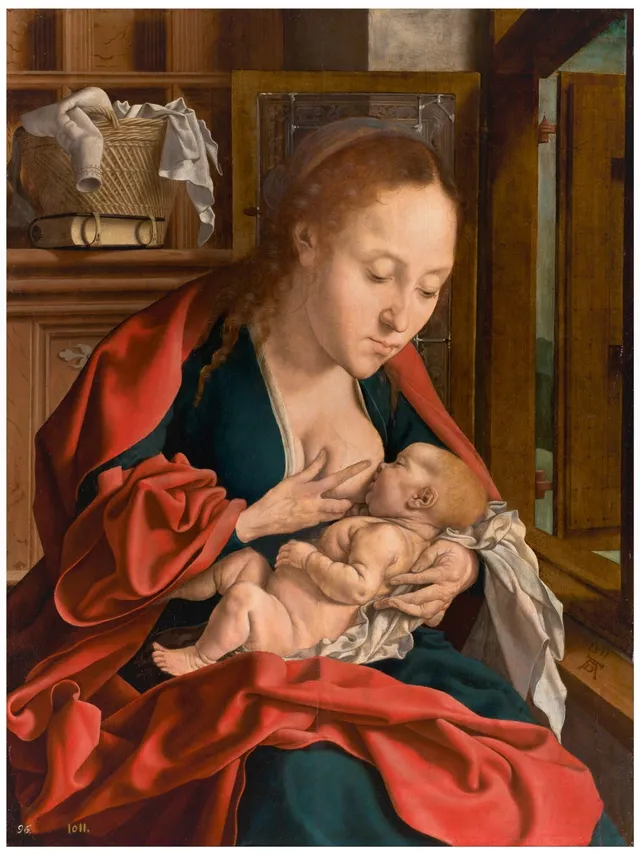 The Virgin Nursing the Child
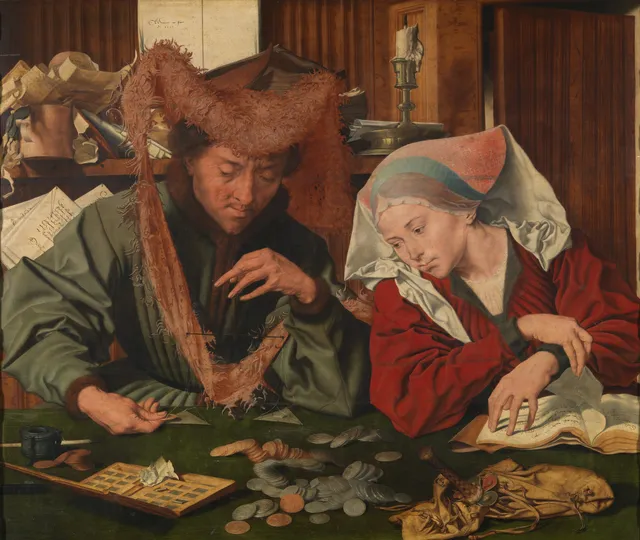 The Moneychanger and His Wife
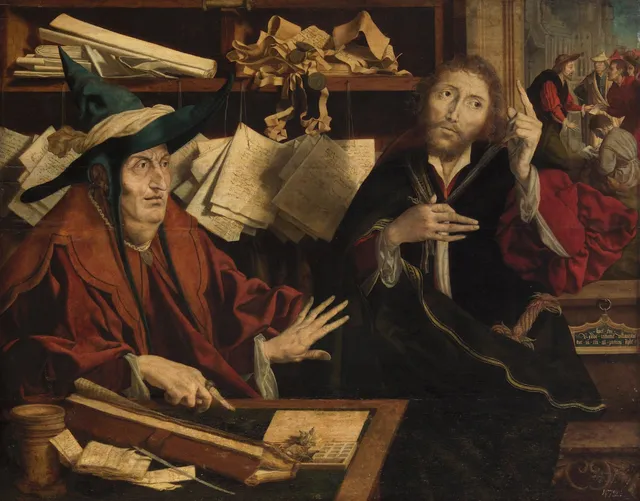 Parable of the unjust steward
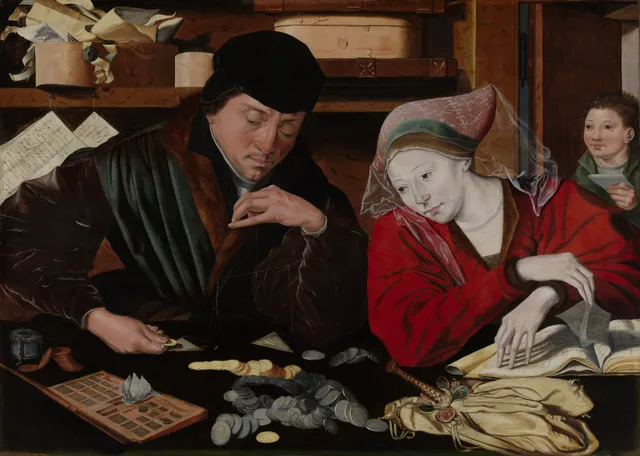 The Banker and his Wife
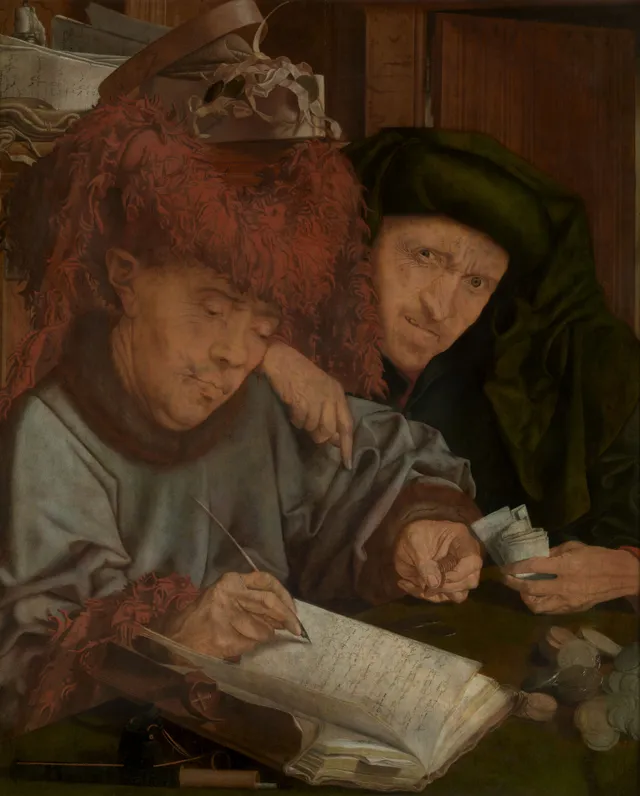 The Tax Collectors
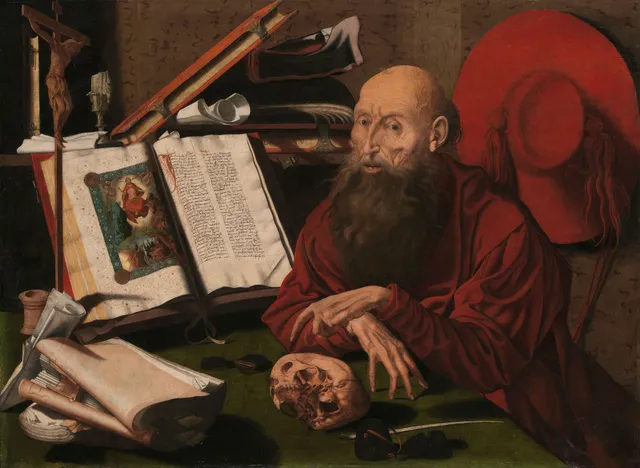 St Jerome in his study
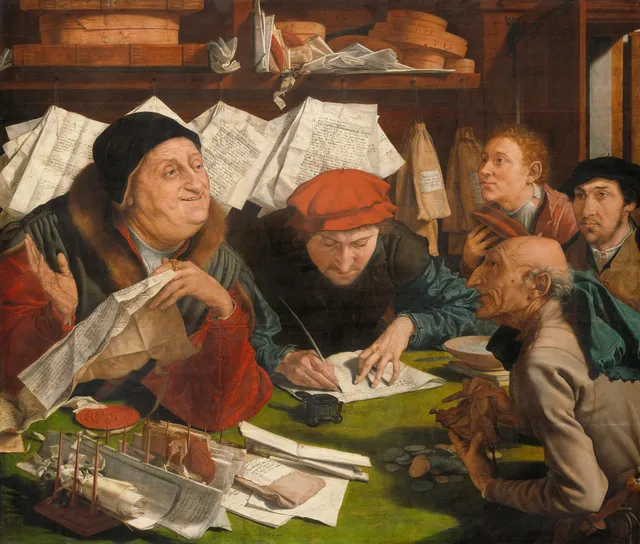 A Lawyer
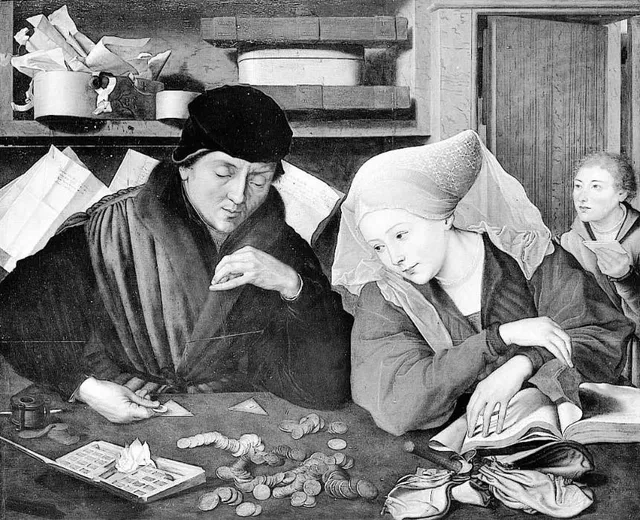 The Moneychanger and his wife
Collections represented

Museum


Museum

Museum
Artists in a similar vein