Artwork
Bändelkrämer (Ribbon Seller)
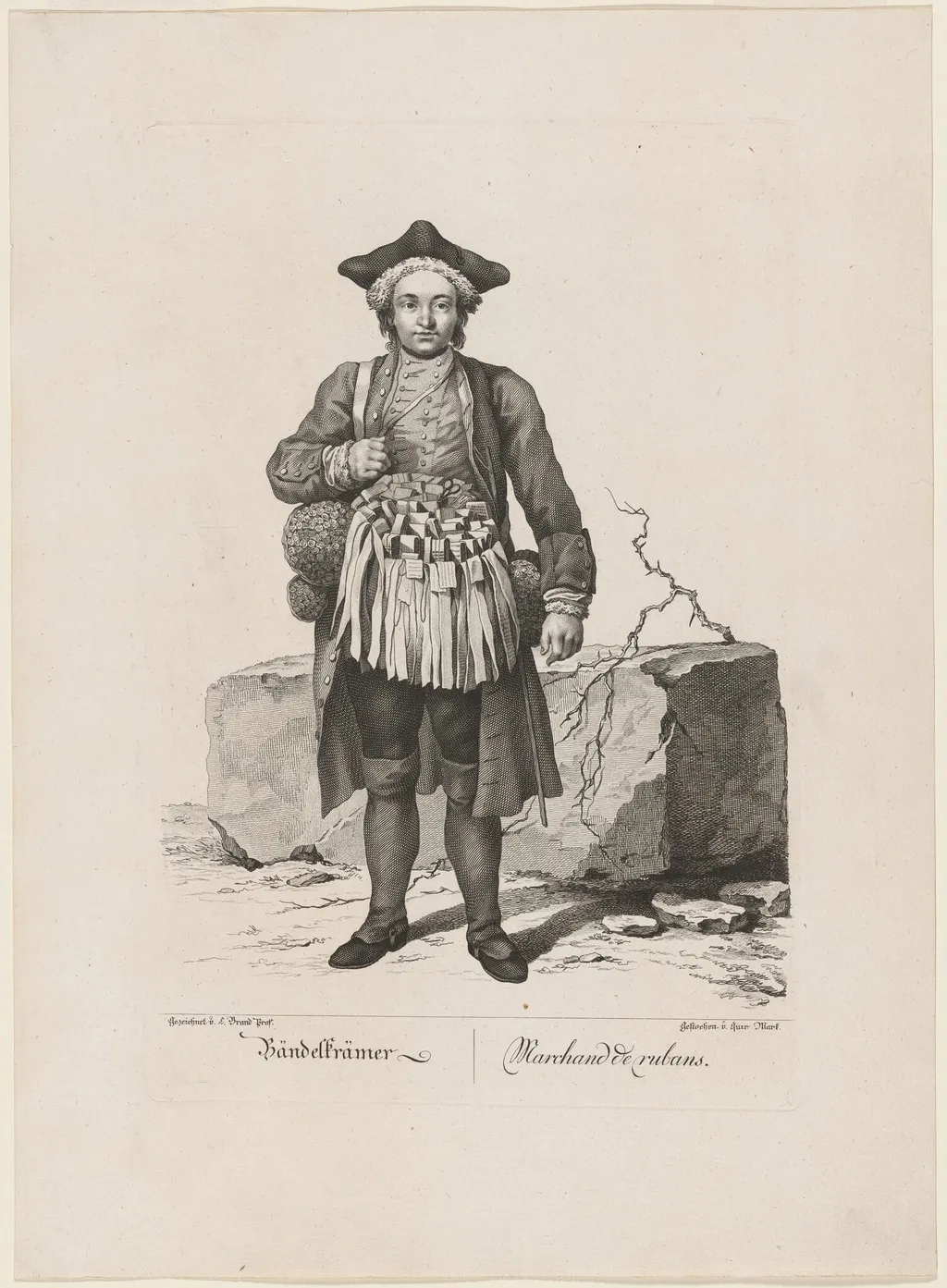
Bändelkrämer (Ribbon Seller) is an ink print by the Romanticist artist Quirin Mark. It dates from 1775 and is held in the collection of the National Gallery of Art.
About this work
Overview
Quirin Mark’s 1775 print, titled Bändelkrämer (Ribbon Seller), combines engraving and etching on laid paper. The composition centers on a solitary figure positioned before a stone wall, his attire marked by a hat, long coat, and a fringed apron. In his hands he grasps a bundle of colorful ribbons, indicating his trade as a street vendor.
Subject & Meaning
The work portrays a modest merchant engaged in the everyday commerce of ribbons, a common accessory in eighteenth‑century attire. By focusing on a single, unembellished individual, the image reflects the period’s interest in ordinary urban life and the social role of itinerant sellers within the public sphere.
Technique & Style
Mark employs a hybrid approach, using fine engraving lines for detailed rendering of the figure’s clothing and facial features, while broader etching washes suggest texture on the stone wall and the ribbons’ folds. The laid paper surface adds a subtle grain that enhances the tonal contrasts typical of late‑Baroque printmaking.
History & Provenance
Created in 1775, the print is documented as part of Mark’s output during a productive phase in his career. It has survived in several collections of German prints, indicating its circulation among connoisseurs of the period. No specific patron or exhibition history is recorded, but the work exemplifies the commercial genre scenes popular in Central Europe at the time.
Artist & collection

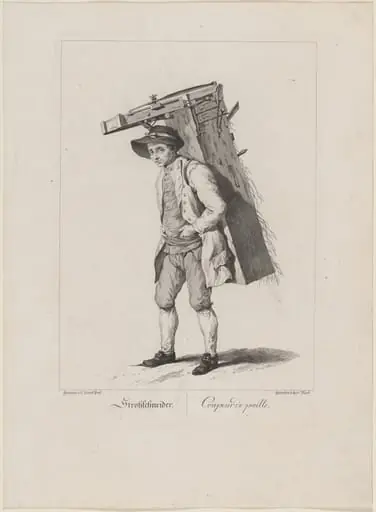 Strohschneider (Straw Cutter)
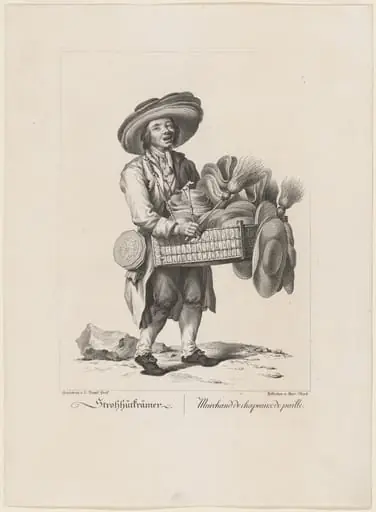 Strohhütkrämer (Straw Hat Seller)
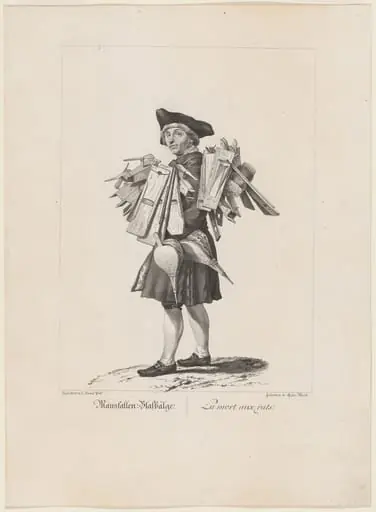 Mausfallen! Blasbälge! (Death to Mice)
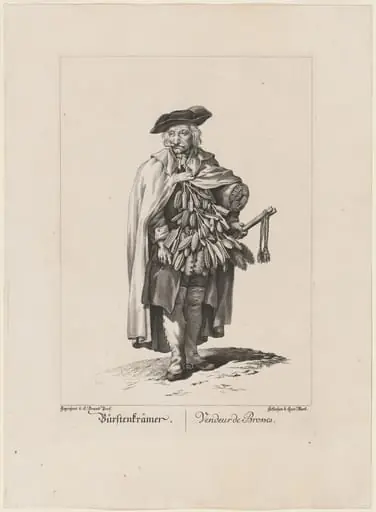 Bürstenkrämer/Vendeur de Brosses (Brush Seller)
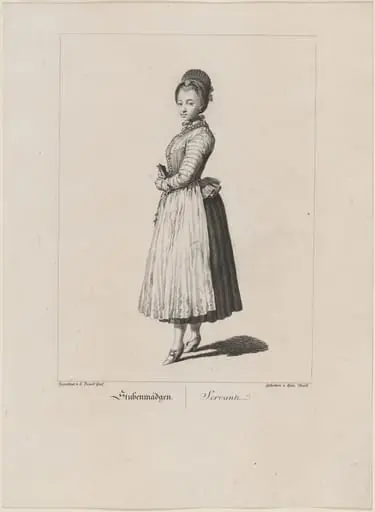 Stubenmädgen (Servant Girl)
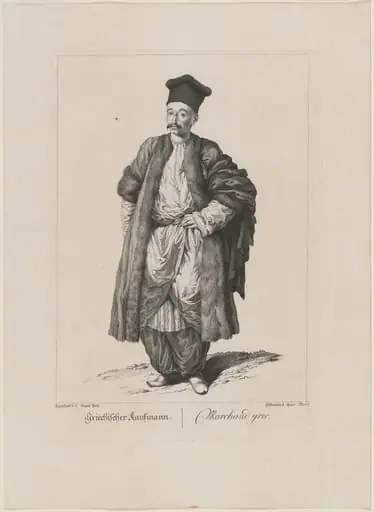 Griechischer Kaufman (Greek Merchant)
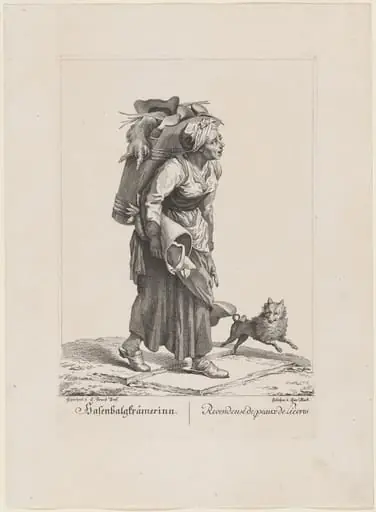 Hasenbalgkrämerinn/Revendeuse de peaux de Lièvres (Seller of Hares' Skins)
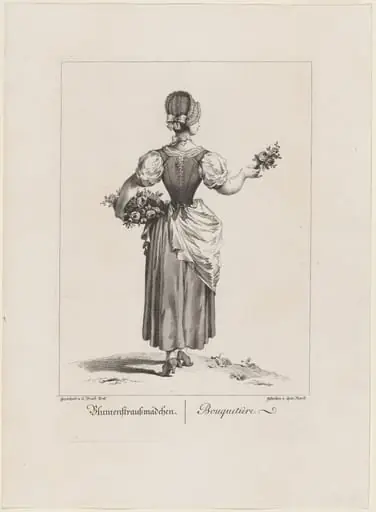 Blumenstraussmädchen (Flower Seller)