Artwork
Bürstenkrämer/Vendeur de Brosses (Brush Seller)
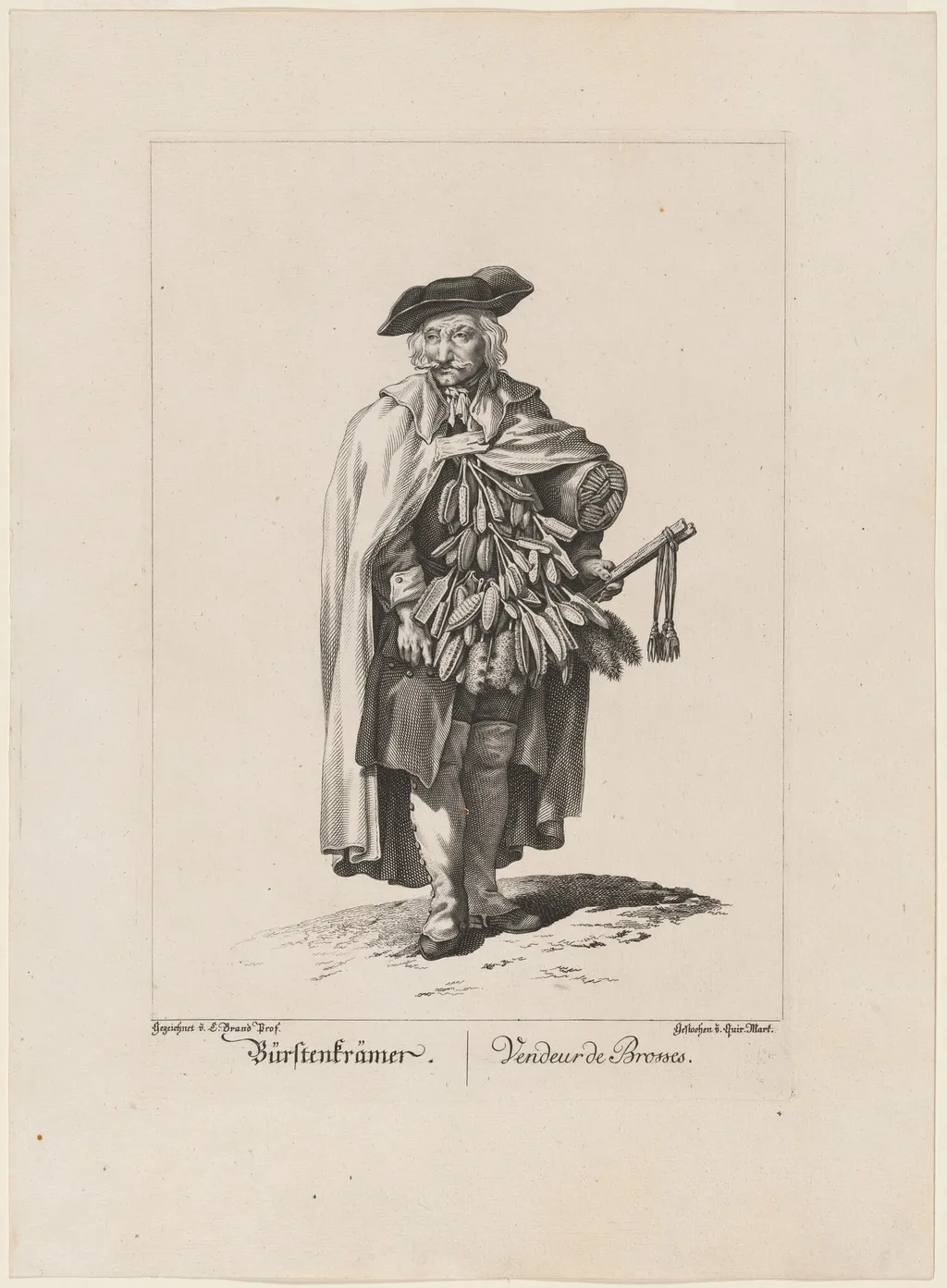
Bürstenkrämer/Vendeur de Brosses (Brush Seller) is an ink print by the Romanticist artist Quirin Mark. It dates from 1775 and is held in the collection of the National Gallery of Art.
About this work
Overview
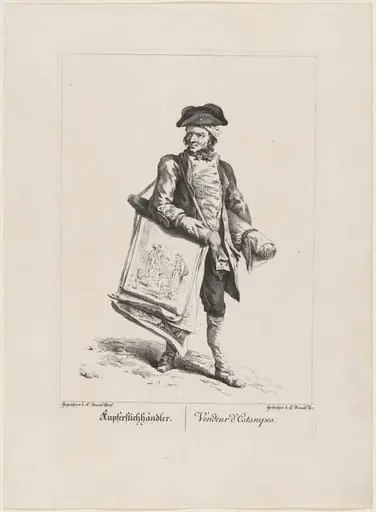
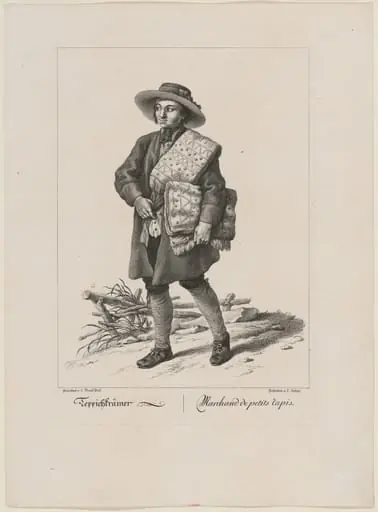
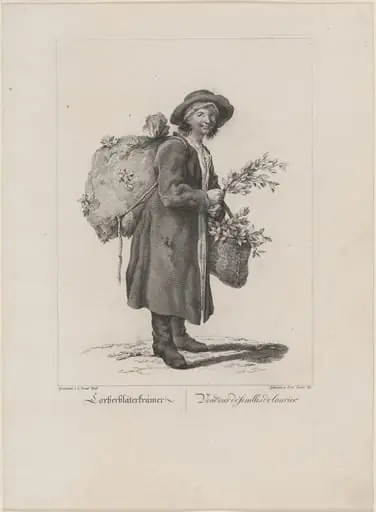
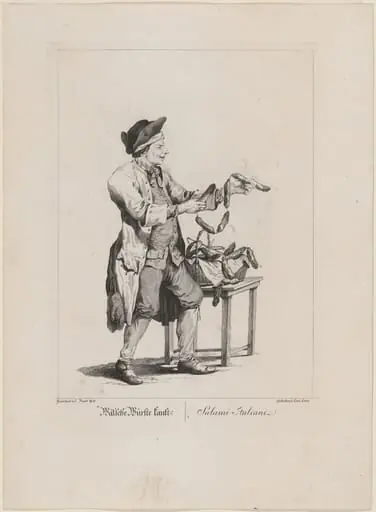
Quirin Mark’s 1775 engraving presents a solitary figure identified as a brush seller. The print captures the vendor in a modest stance, one hand resting on his hip while the other grips a broom, underscoring his trade. The composition is rendered in fine linear detail, typical of eighteenth‑century printmaking.
Subject & Meaning
The central character is a weary‑looking man dressed in a wide‑brimmed hat, a long coat, and a shoulder‑slung bag, suggesting the itinerant nature of his work. The broom he holds serves as both a literal tool and a visual cue to his occupation, reinforcing the everyday realism of the scene.
Technique & Style
Mark employs delicate incised lines and cross‑hatching to model texture and volume, from the folds of the coat to the rough surface of the broom. The shallow ground line anchors the figure without distracting from the intricate shading that defines the engraving’s tonal range.
History & Provenance
Created in 1775, the print reflects the period’s interest in genre scenes that document ordinary labor. While specific ownership records are scarce, the work has been catalogued among Mark’s known prints and appears in collections focusing on eighteenth‑century German engraving.
Context
During the late Enlightenment, artists frequently turned to depictions of common trades to illustrate social conditions and moral themes. This engraving aligns with that trend, offering a snapshot of a modest street vendor within the broader European visual culture of the era.
Artist & collection

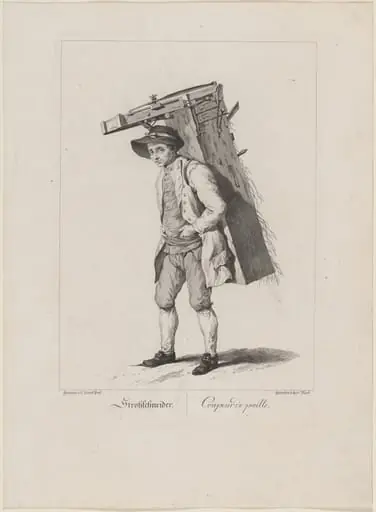 Strohschneider (Straw Cutter)
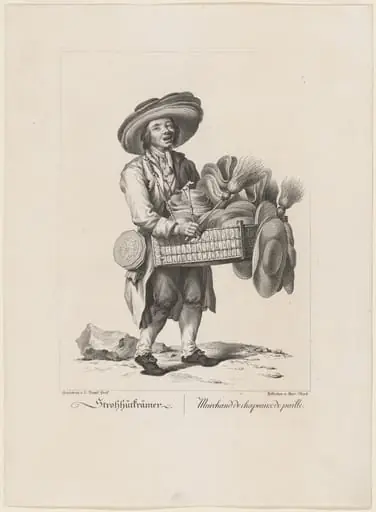 Strohhütkrämer (Straw Hat Seller)
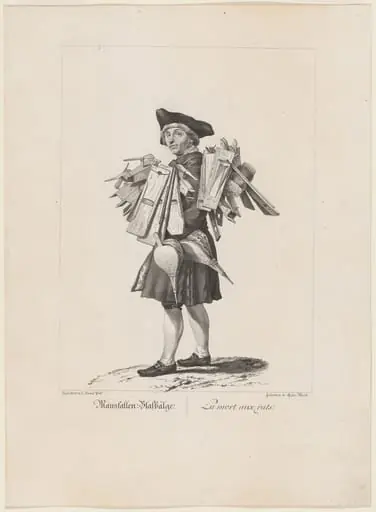 Mausfallen! Blasbälge! (Death to Mice)
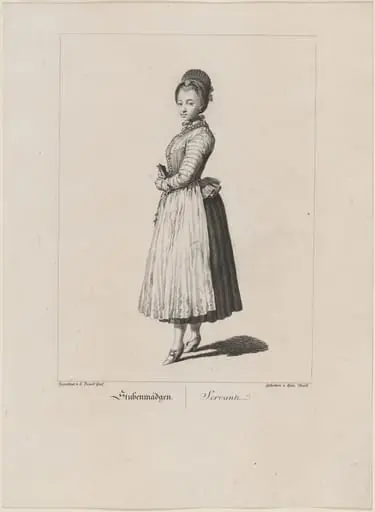 Stubenmädgen (Servant Girl)
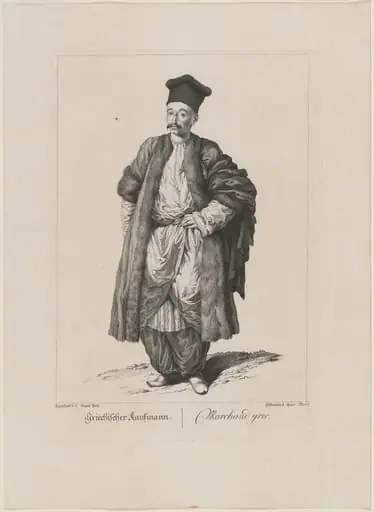 Griechischer Kaufman (Greek Merchant)
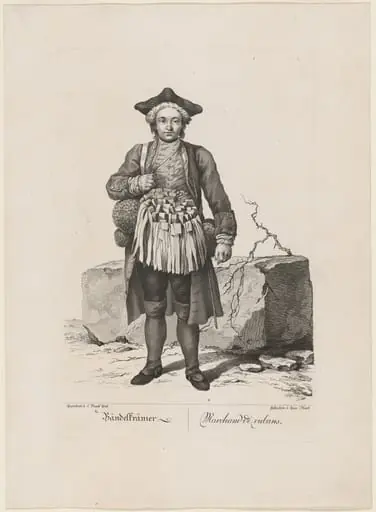 Bändelkrämer (Ribbon Seller)
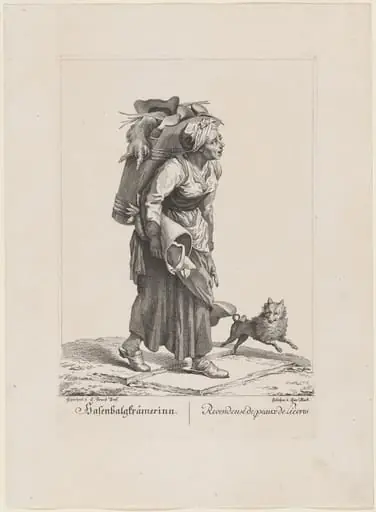 Hasenbalgkrämerinn/Revendeuse de peaux de Lièvres (Seller of Hares' Skins)
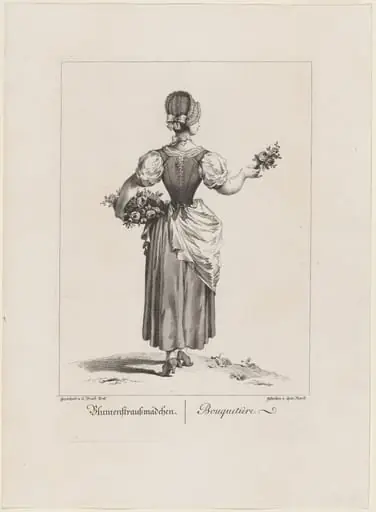 Blumenstraussmädchen (Flower Seller)