Artwork
Griechischer Kaufman (Greek Merchant)
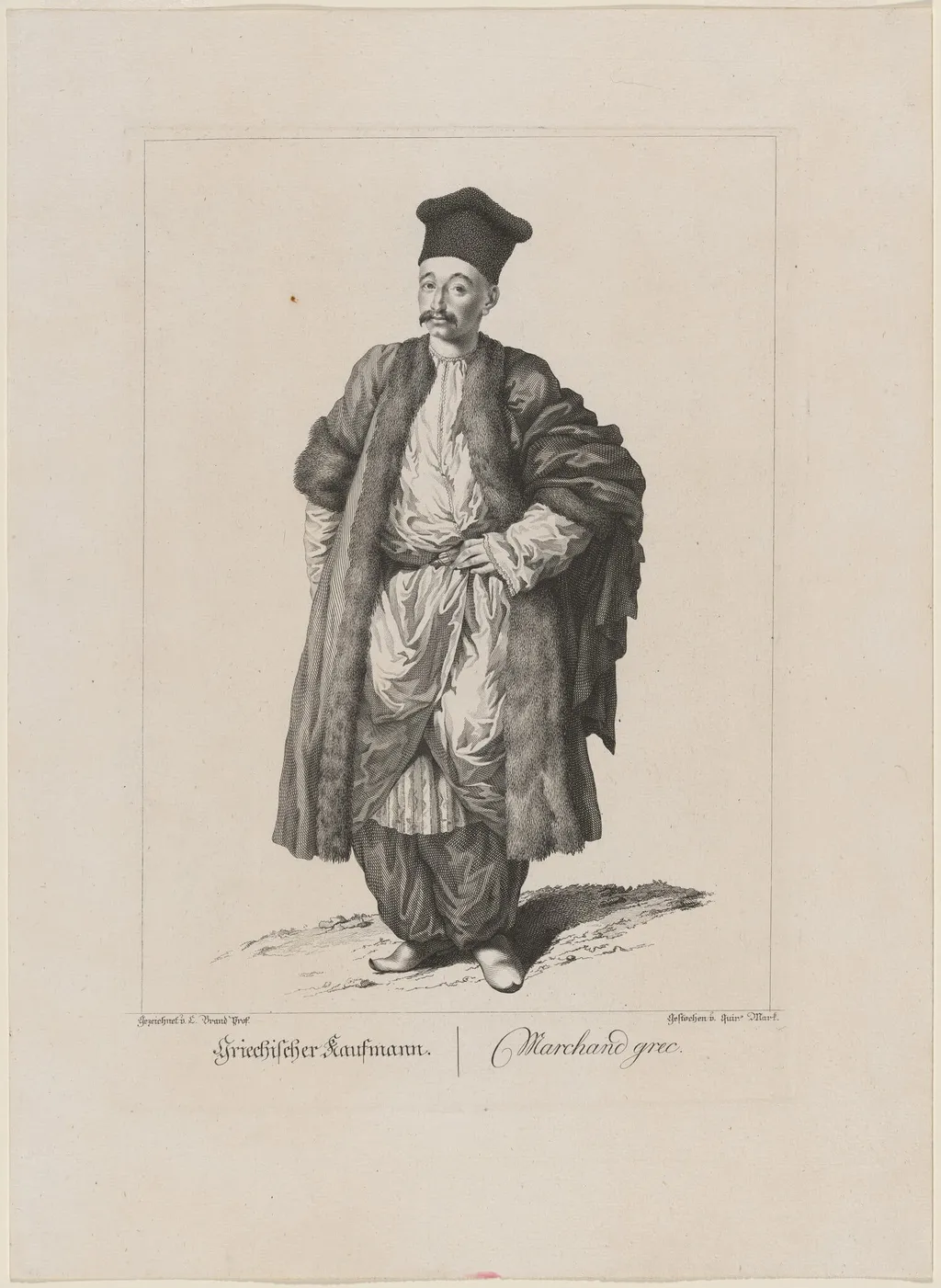
Griechischer Kaufman (Greek Merchant) is an ink print by the Romanticist artist Quirin Mark. It dates from 1775 and is held in the collection of the National Gallery of Art.
About this work
Overview
Rendered in fine linear detail, the composition captures the subject in a calm, natural stance, hands tucked into his pockets, conveying quiet self-possession.
Created in 1775 by Quirin Mark, this engraving with etching on laid paper depicts a solitary male figure identified as a Greek merchant. Rendered in fine linear detail, the composition captures the subject in a calm, natural stance, hands tucked into his pockets, conveying quiet self-possession. The work belongs to the broader tradition of 18th-century portraiture in print, emphasizing individual character over idealized form.
Subject & Meaning
The figure’s attire—dark coat with fur trim, tall hat, light undergarments, and polished shoes—aligns with the dress of Mediterranean traders in the late 18th century. His direct gaze and relaxed posture suggest confidence and familiarity with his surroundings. The title, Griechischer Kaufman, anchors the identity, implying cultural specificity and economic role, possibly reflecting contemporary European interest in Eastern Mediterranean commerce.
Technique & Style
Mark employed engraving and etching to achieve fine gradations of tone and texture, particularly in the folds of fabric and the sheen of leather. The lines are precise yet fluid, capturing the weight of the coat and the softness of the fur collar. Background elements are minimal, focusing attention on the figure’s form and expression, a hallmark of observational portraiture in print.
History & Provenance
The print was produced in 1775, during a period when European printmakers increasingly documented regional types and trades. While no early ownership records are widely documented, the work likely circulated among collectors interested in ethnographic imagery. Its survival in institutional collections suggests it was valued for its technical skill and cultural representation.
Context
In the decades before Romanticism fully emerged, artists like Mark engaged with realist portraiture that highlighted individual identity and occupational roles. Though often later associated with Romanticism, this print predates the movement’s emotional intensity; instead, it reflects Enlightenment-era curiosity about social types and regional dress, aligning with broader European efforts to catalog human diversity.
Legacy
The engraving remains a modest but clear example of 18th-century printmaking’s capacity to convey cultural specificity through detail. It contributes to a visual archive of non-elite figures, offering insight into how merchants from the Eastern Mediterranean were perceived in Western Europe. Its enduring presence in collections underscores its value as a record of material culture and artisanal technique.
Artist & collection

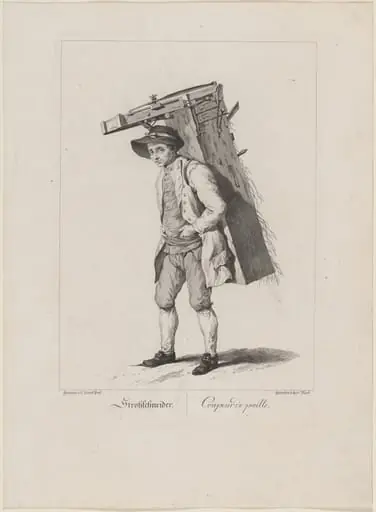 Strohschneider (Straw Cutter)
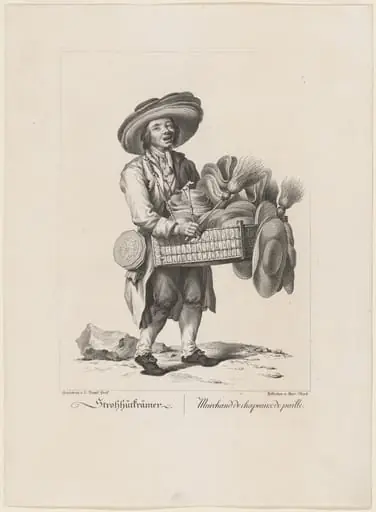 Strohhütkrämer (Straw Hat Seller)
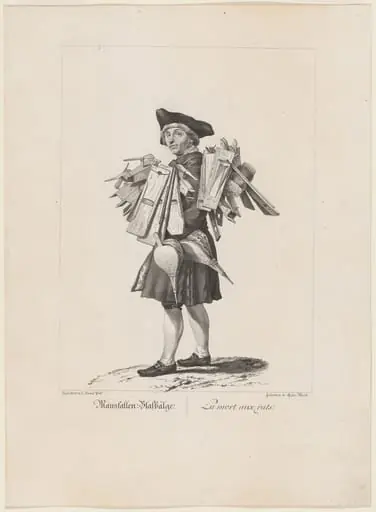 Mausfallen! Blasbälge! (Death to Mice)
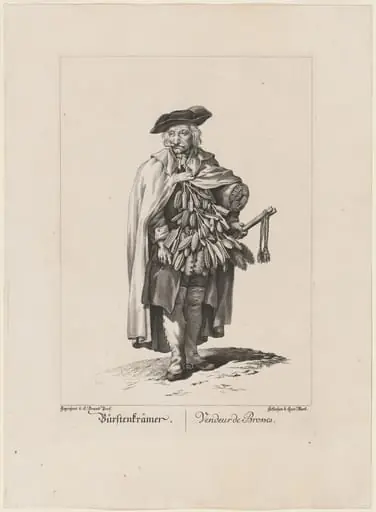 Bürstenkrämer/Vendeur de Brosses (Brush Seller)
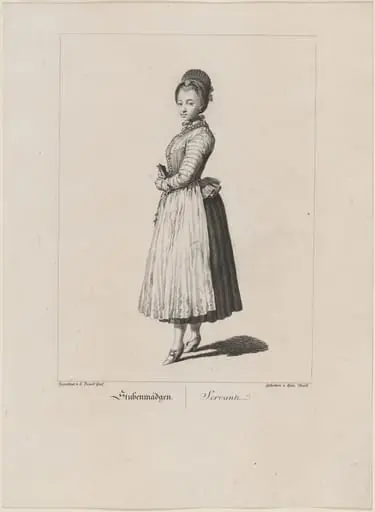 Stubenmädgen (Servant Girl)
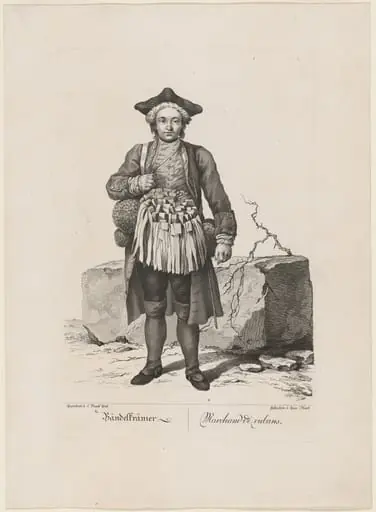 Bändelkrämer (Ribbon Seller)
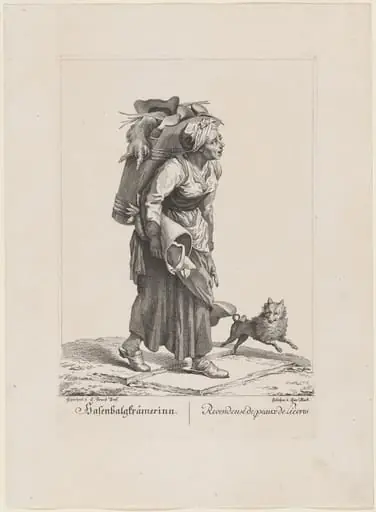 Hasenbalgkrämerinn/Revendeuse de peaux de Lièvres (Seller of Hares' Skins)
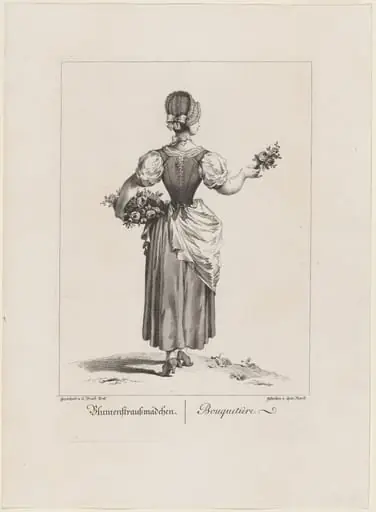 Blumenstraussmädchen (Flower Seller)