Artwork
Title Page from Xenophon’s Cyrupaedia
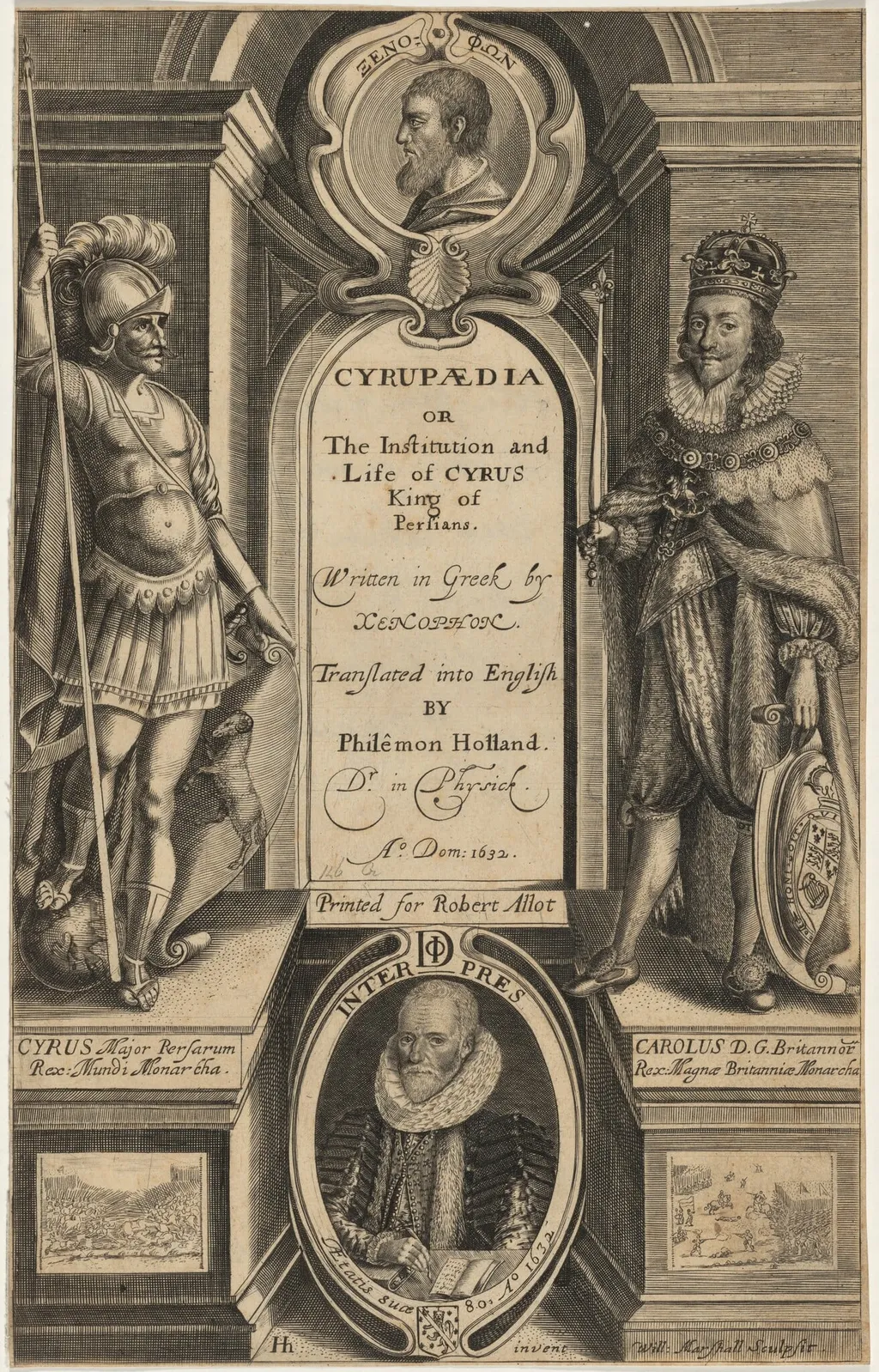
Title Page from Xenophon’s Cyrupaedia is an ink print by the Baroque artist William Marshall. It dates from 1632 and is held in the collection of the National Gallery of Art.
About this work
In the center, a book title reads *Cyropaedia* with a small portrait of a bearded man.
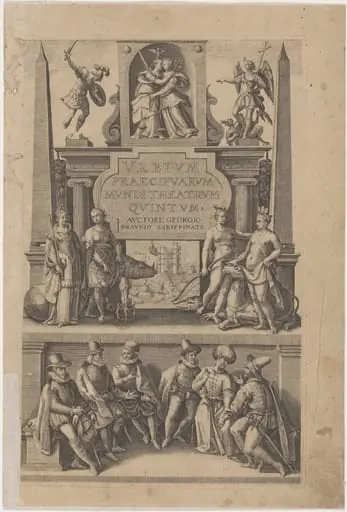
This engraving shows three men in a framed design. On the left, a soldier in armor holds a spear. In the center, a book title reads *Cyropaedia* with a small portrait of a bearded man. On the right, a king wears a crown and fancy robes, holding a scepter.
The middle section names the book’s translator, Philémon Holland, and the year 1632. The text hints this was a book about the life of Cyrus, a Persian king.
Try looking up engraving to see how artists carved these detailed lines.
Overview
The title page is an engraved frontispiece created in 1632 by the English printmaker William Marshall. It serves as the introductory illustration for an edition of Xenophon’s *Cyropaedia*, a classical work recounting the life and leadership of the Persian ruler Cyrus the Great.
Subject & Meaning
The composition is divided into three panels within a decorative frame. The left panel depicts a heavily armored soldier brandishing a spear, symbolising martial virtue. The central panel displays the book’s title and a small portrait of a bearded figure, likely representing Cyrus himself. The right panel shows a crowned monarch in elaborate robes holding a scepter, emphasizing royal authority.
Technique & Style
Marshall employed the traditional copperplate engraving technique, incising fine lines that render intricate details in the figures’ armor, clothing, and ornamental border. The linear precision and balanced arrangement reflect the early‑17th‑century English print aesthetic, where clarity of narrative and decorative elegance were paramount.
History & Provenance
The engraving was produced for the 1632 English translation of *Cyropaedia* by Philémon Holland. As a frontispiece, it would have been printed alongside the text in the first edition, linking the visual and literary presentation of Cyrus’s story for contemporary readers.
Context
During the early Stuart period, classical works were frequently reissued with elaborate frontispieces that reinforced the moral and political lessons of the texts. Marshall’s illustration aligns with this trend, using martial and regal imagery to underscore the virtues of leadership celebrated in Xenophon’s narrative.
Artist & collection

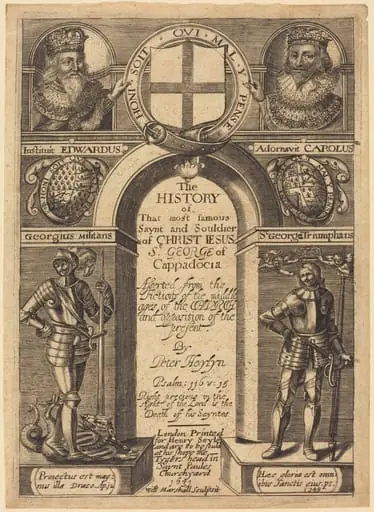 Frontispiece for Peter Heylyn's "The History of St. George of Cappadocia"
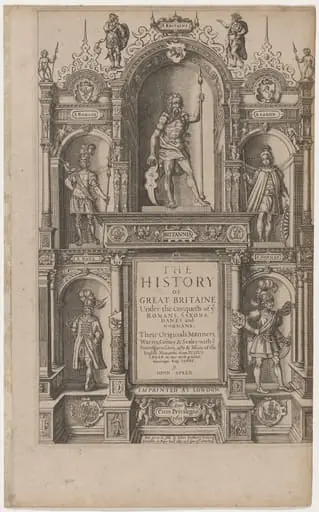 Title Page to "The History of Great Britaine" by John Speed
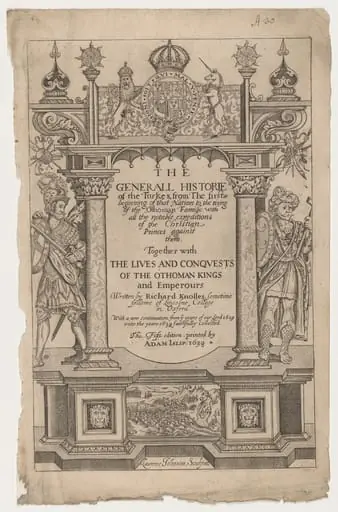 Title Page for R. Knolles Generall Historie of the Turkes
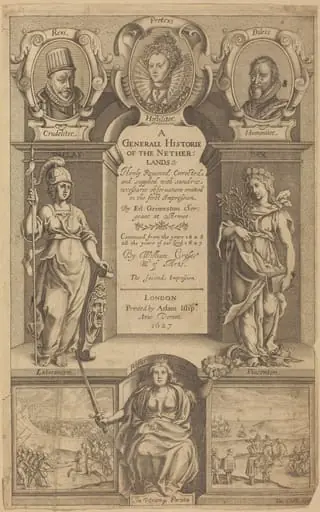 Frontispiece
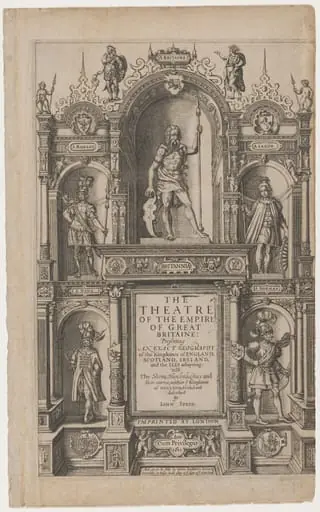 Title Page to "The Theatre of the Empire of Great Britaine" by John Speed
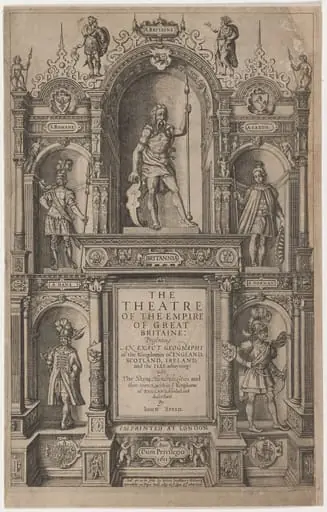 Title Page to "The Theatre of the Empire of Great Britaine" by John Speed
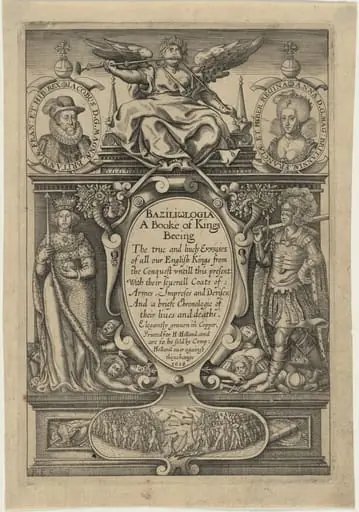 Title page, Baziliologia
 Philip II of Spain on His Throne
 Title Page. Jean de Serres, Generall Historie of France
 Francis Bacon
 Title Plate to John Hayward, Life and Reigne of King Edward the Sixth
 Title Page to Urbium Praecipuarum Mundi Theatrum Quintum