Artwork
Christ as the Man of Sorrows between the Virgin and St. John
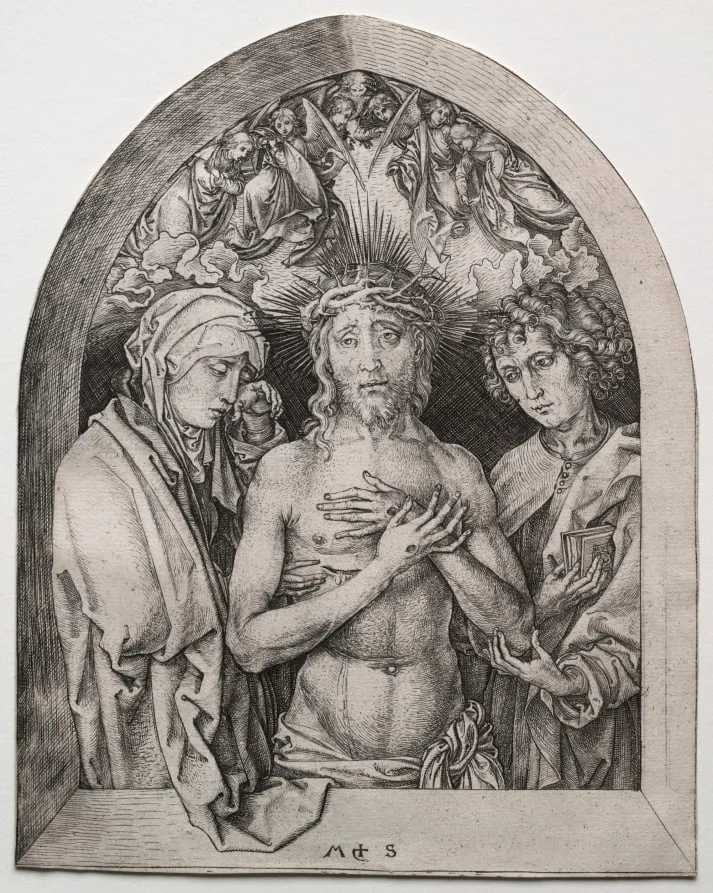
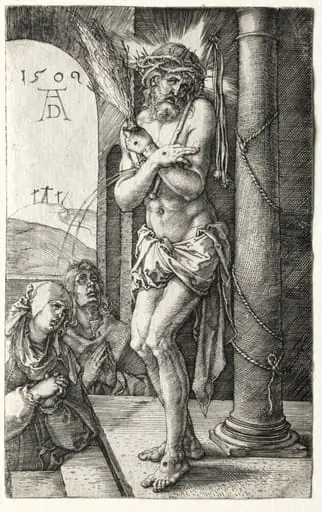
Christ as the Man of Sorrows between the Virgin and St. John is a print by the Renaissance artist Martin Schongauer. It dates from 1472 and is held in the collection of the Cleveland Museum of Art.
About this work
It shows Christ right after the crucifixion, but still alive—so viewers could feel his pain up close.
A thin, pale Christ stands between two mourners, his hands and side bleeding. His mother and Saint John look on, their faces tight with grief.
This kind of image was meant to help people pray. It shows Christ right after the crucifixion, but still alive—so viewers could feel his pain up close. The wounds are drawn with sharp lines, almost like a medical sketch.
For more quiet, detailed religious scenes like this, look up Martin Schongauer (German, c. 1450–1491).
Overview
This Northern European print from after the mid-15th century depicts a poignant scene of Christ as the Man of Sorrows, flanked by the Virgin Mary and Saint John the Evangelist, emphasizing Christ's suffering and the mourners' grief.
Subject & Meaning
The image shows Christ, naked above the waist and crowned with thorns, displaying his Passion wounds. The composition focuses attention on his suffering, with Christ's hand over his chest and the Virgin's hand on his side, while Saint John's empathetic gaze encourages viewer engagement.
Technique & Style
Characterized by sharp lines, particularly in the rendering of wounds, the print's detailed style is reminiscent of medical illustrations. For similar quiet, detailed religious scenes, compare with the works of Martin Schongauer (German, c. 1450–1491).
History & Provenance
Originating from Northern Europe post-mid-15th century, the print was part of a widespread devotional image type, with specific provenance details for this piece not provided.
Context
Such prints served as devotional tools, intended to facilitate meditation on Christ's suffering. The depiction of Christ alive yet wounded was designed to evoke a sense of immediate, shared pain among the faithful.
Legacy
As a representative of its devotional print type, this work reflects the religious practices and artistic preferences of Northern Europe in the late 15th century, influencing or echoing the broader tradition of Man of Sorrows imagery.
Artist & collection

Artist
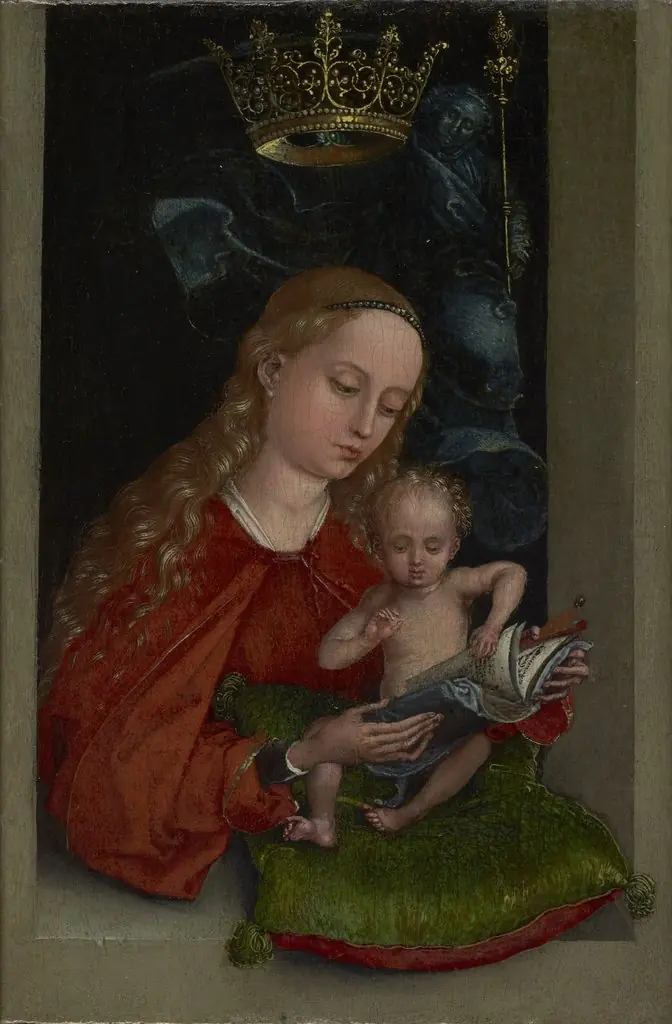
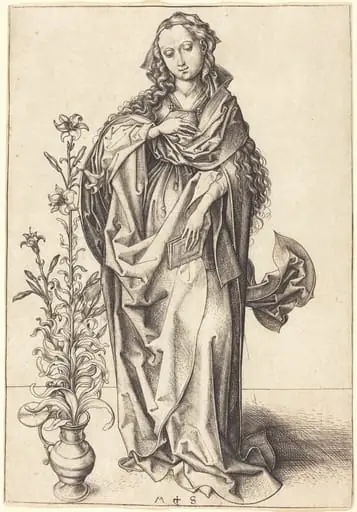
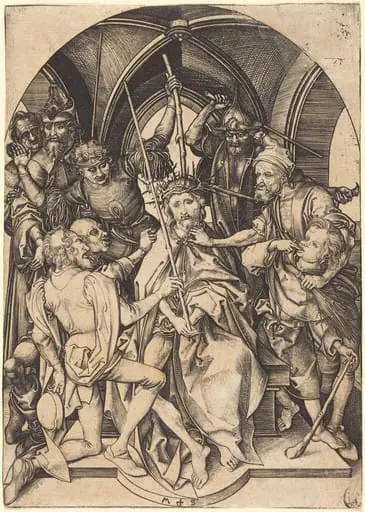
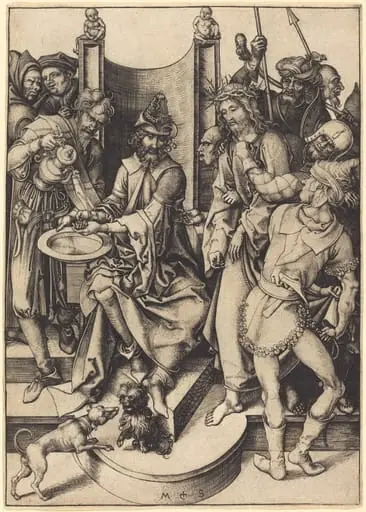
Martin Schongauer, also known as Martin Schön or Hübsch Martin by his contemporaries, was an Alsatian engraver and painter.