Artwork
The Baptism of Christ
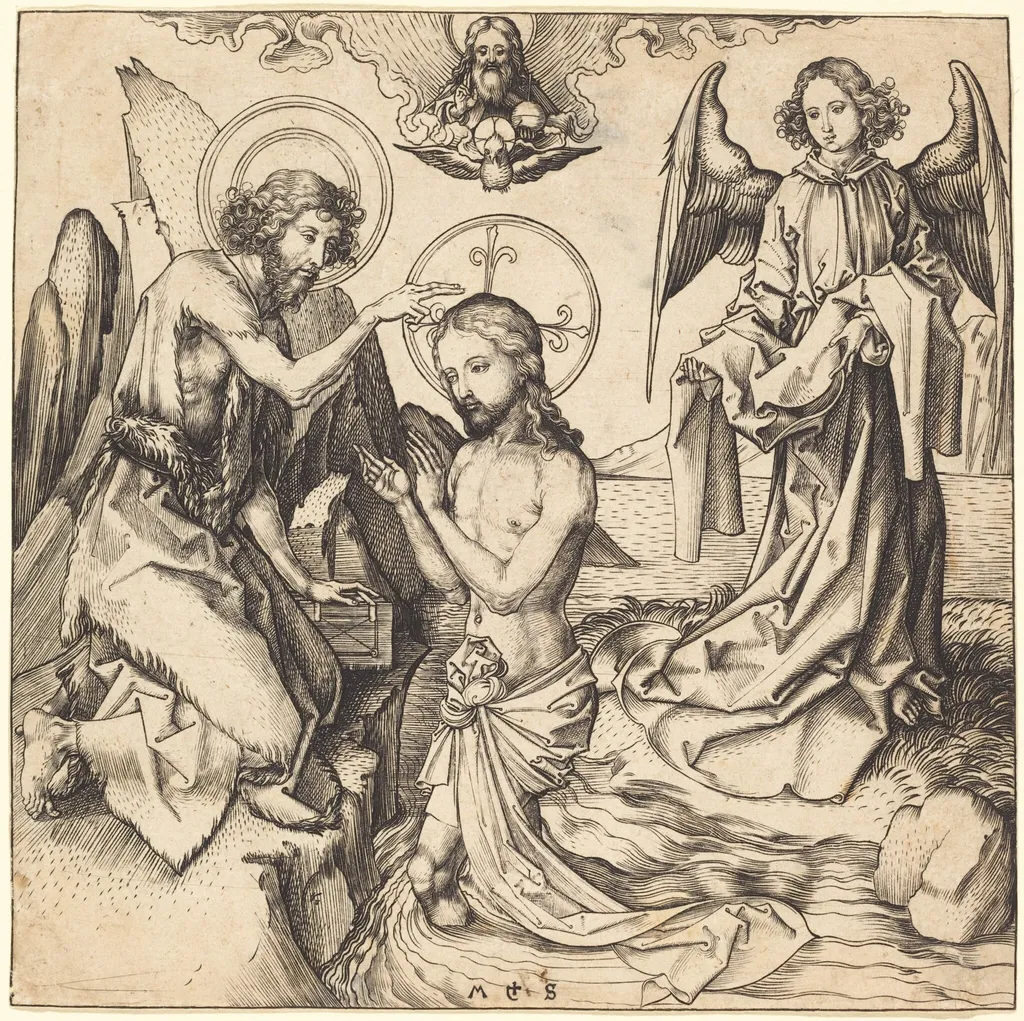
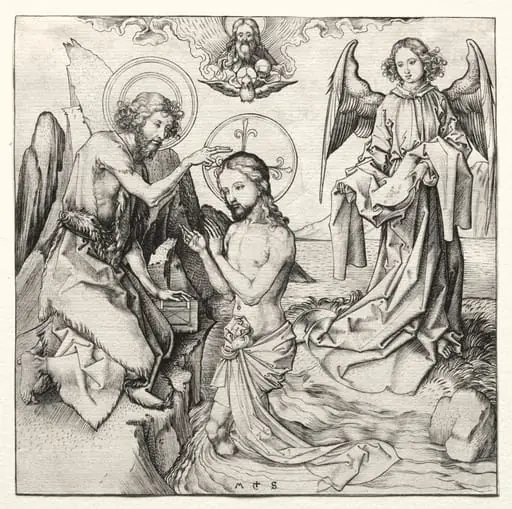
The Baptism of Christ is an ink print by the Renaissance artist Martin Schongauer. It dates from 1485 and is held in the collection of the National Gallery of Art. Created circa 1485, this copper‑plate engraving presents the biblical moment when John the Baptist immerses Jesus in the Jordan.
About this work
Overview
Created circa 1485, this copper‑plate engraving presents the biblical moment when John the Baptist immerses Jesus in the Jordan. The composition centers on the two figures in shallow water, with angels hovering above, their hands supporting Christ’s garments as the water is poured.
Subject & Meaning
The work visualizes the baptism of Christ, a pivotal event in Christian theology that signifies the inauguration of Jesus’ public ministry and the sanctification of humanity through water. The presence of attentive angels underscores the divine approval of the rite.
Technique & Style
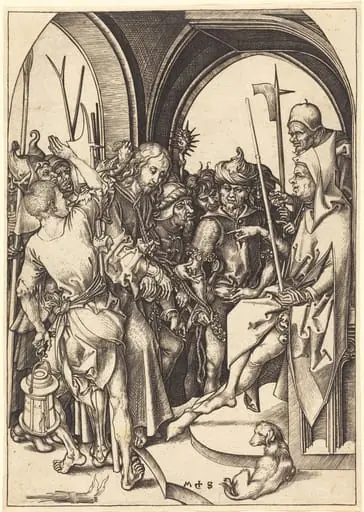
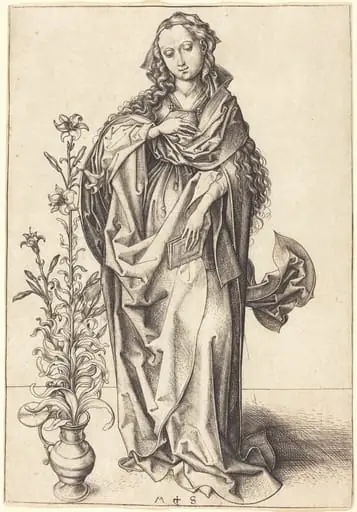
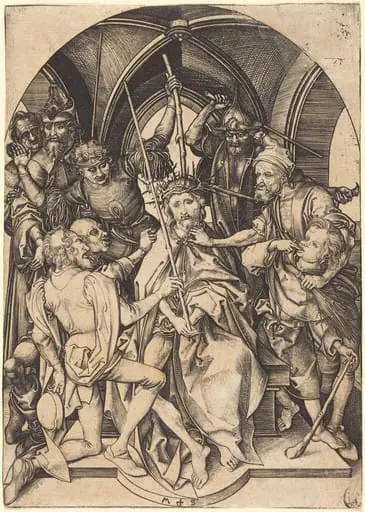
Schongauer employs fine, closely spaced lines to render muscular definition, the drapery’s folds, and subtle shadows, achieving a drawing‑like delicacy on the printed surface. His mastery of line engraving allows intricate texture and a sense of depth uncommon in earlier prints.
History & Provenance
The Alsatian artist Martin Schongauer (c.1450‑c.1491) produced most of his surviving oeuvre as engravings, and this piece exemplifies his pre‑Dürer reputation as the foremost Northern printmaker. The engraving was later collected by Albrecht Dürer, who admired Schongauer’s technique.
Context
Operating in the late Gothic period, Schongauer’s prints disseminated religious imagery beyond the reach of painted altarpieces. His innovations in line work and tonal modeling influenced subsequent generations of Northern European engravers, laying groundwork for the more complex prints of the early sixteenth century.
Artist & collection

Artist
Martin Schongauer, also known as Martin Schön or Hübsch Martin by his contemporaries, was an Alsatian engraver and painter.

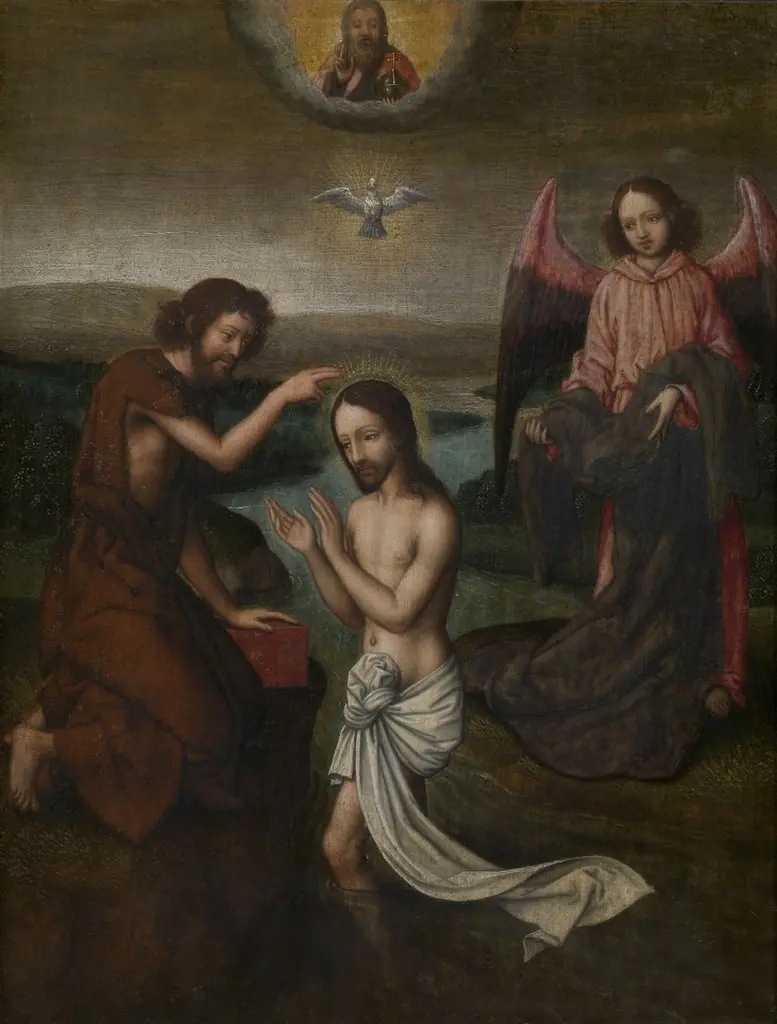 The Baptism of Christ
 The Baptism of Christ in the Jordan
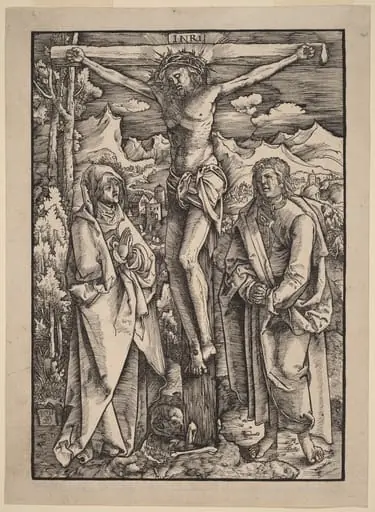 Christ on the Cross between the Virgin and Saint John
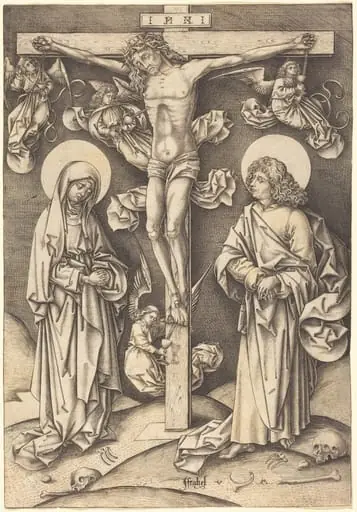 The Crucifixion
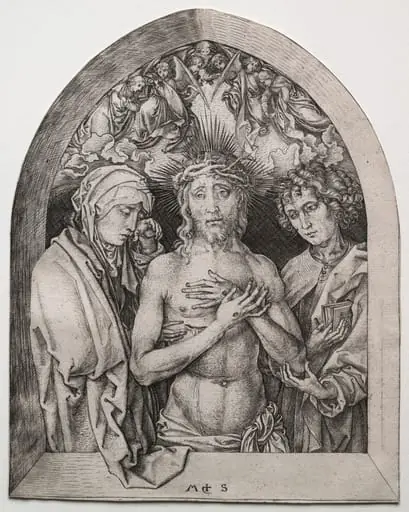 Christ as the Man of Sorrows between the Virgin and St. John
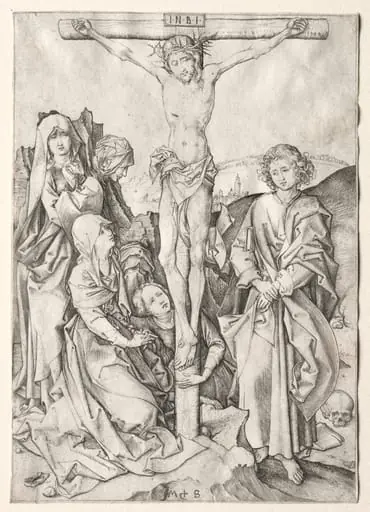 The Passion: Christ on the Cross
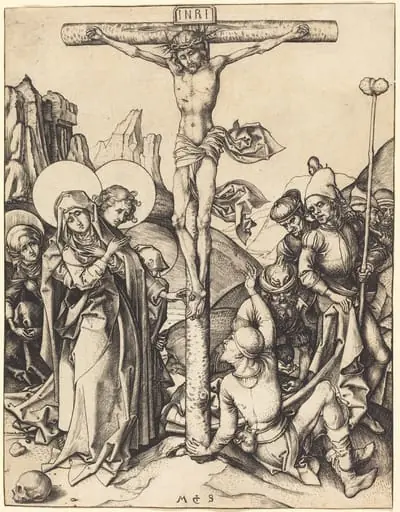 The Crucifixion
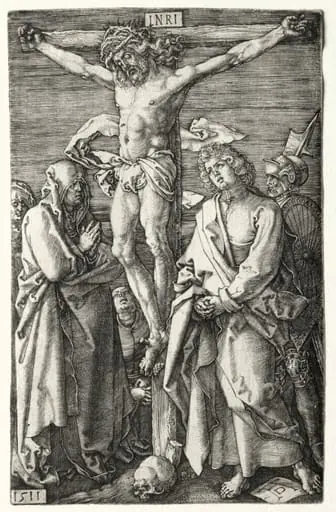 The Crucifixion
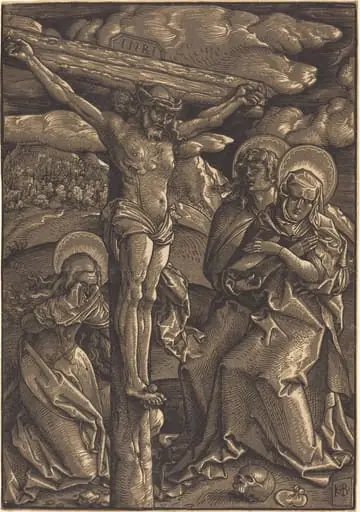 The Crucifixion
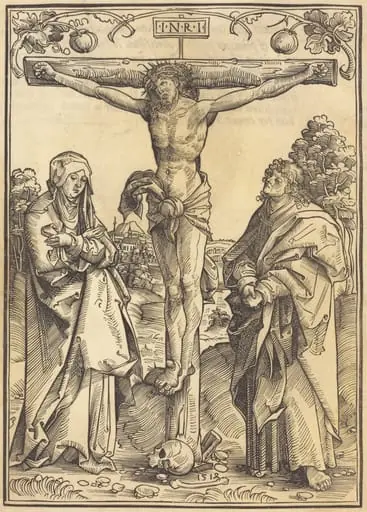 Christ on the Cross with the Virgin and Saint John the Evangelist
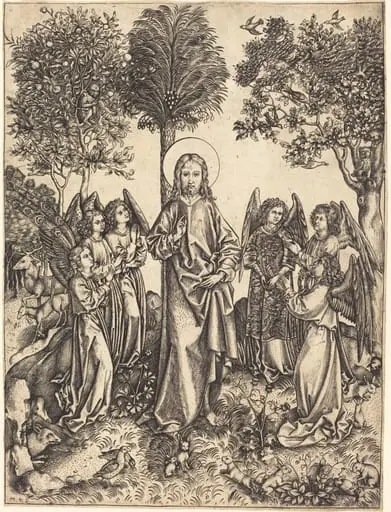 Christ in the Wilderness Served by Angels
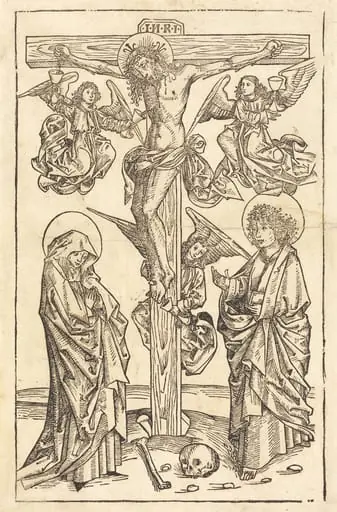 Christ on the Cross with Angels