Artwork
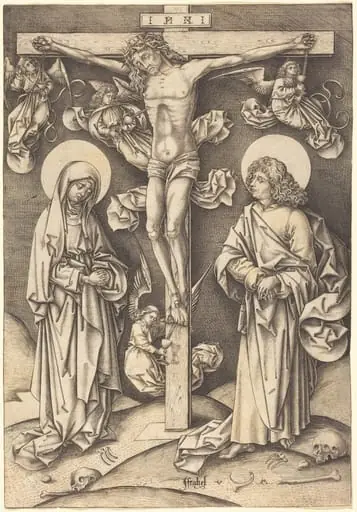
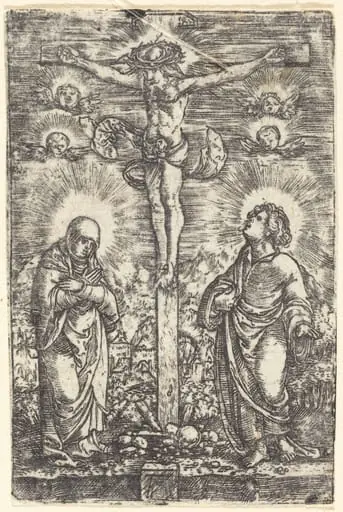
The Crucifixion with Four Angels
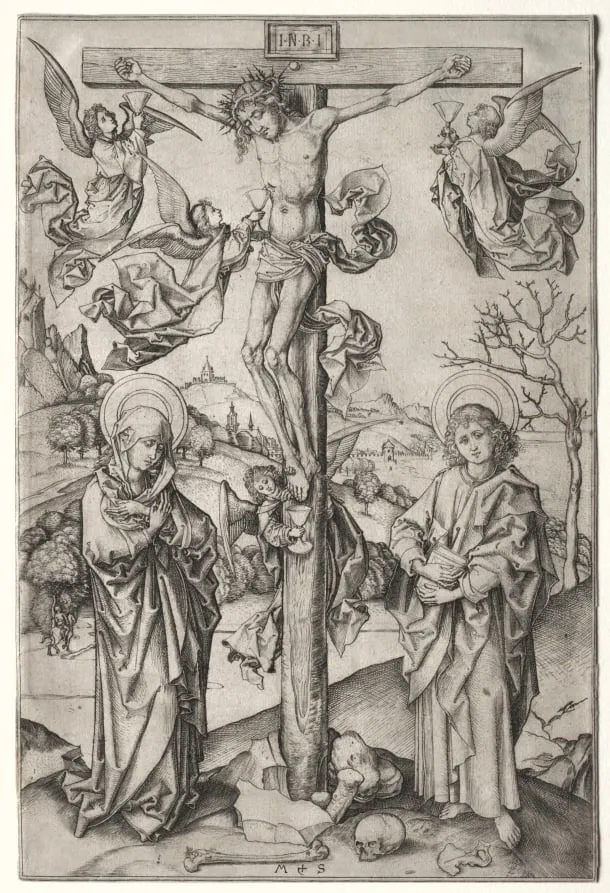
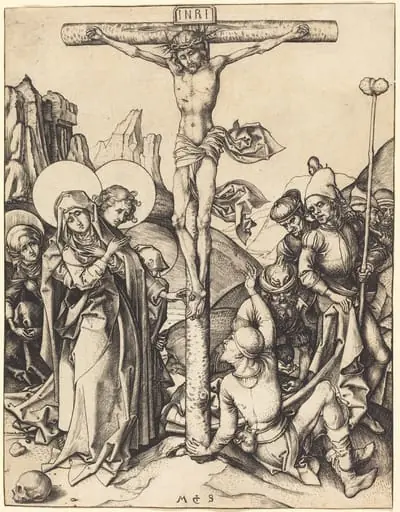
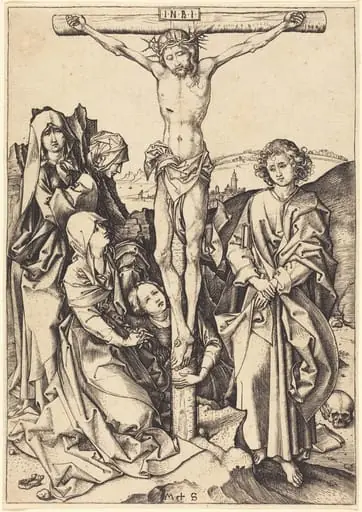
The Crucifixion with Four Angels is a print by the Renaissance artist Martin Schongauer. It dates from 1475 and is held in the collection of the Cleveland Museum of Art.
About this work
Schongauer made this scene feel real by carving tiny details—wrinkles in cloth, veins in Christ’s hands—into metal plates.
You see a thin, suffering Christ on the cross, with Mary and John weeping below. Four angels hover, catching his blood in golden cups. A skull and bone rest at the base of the cross.
Schongauer made this scene feel real by carving tiny details—wrinkles in cloth, veins in Christ’s hands—into metal plates. The prints could be copied and shared, spreading the image far beyond one church.
To see how other artists showed the same moment, look up Martin Schongauer (German, c. 1450–1491).
Overview
Martin Schongauer created this engraved print in the late 15th century, depicting the Crucifixion with precise detail and emotional restraint. Unlike painted altarpieces, this work was produced through intaglio printing, allowing multiple impressions to circulate widely. Its compact scale and intricate lines made it accessible for private devotion, bridging the gap between elite religious art and the growing literate middle class.
Subject & Meaning
The scene centers on Christ’s lifeless body, suspended in agony on the cross, flanked by the Virgin Mary and Saint John in silent grief. Above them, four angels collect his blood in chalices, symbolizing the sacramental significance of his sacrifice. At the foot of the cross, Adam’s skull and bone reference Golgotha as the site of original sin and its redemption through Christ’s death, reinforcing the theological link between fall and salvation.
Technique & Style
Schongauer employed fine, controlled engraving lines to render textures with unusual precision—wrinkles in fabric, the sinews of Christ’s hands, the delicate folds of angelic wings. The contrast between the stark, elongated figure of Christ and the softly modeled landscape creates a sense of spatial depth. His mastery of line allowed for subtle gradations of tone, enhancing the emotional gravity without overt drama.
History & Provenance
Produced around 1470–1480, this print was part of a series of Crucifixion compositions Schongauer developed based on Netherlandish models. Its popularity led to numerous copies and adaptations across Europe. Surviving impressions are held in major collections, including the British Museum and the Metropolitan Museum of Art, attesting to its widespread distribution and enduring use in devotional contexts during the late medieval period.
Context
In the decades before the Reformation, printed images like this served as affordable tools for personal piety. As literacy rose and printing technology expanded, devotional prints replaced costly illuminated manuscripts for many laypeople. The Crucifixion was a favored subject, chosen for its capacity to evoke empathy and contemplation, aligning with contemporary spiritual practices centered on Christ’s Passion.
Legacy
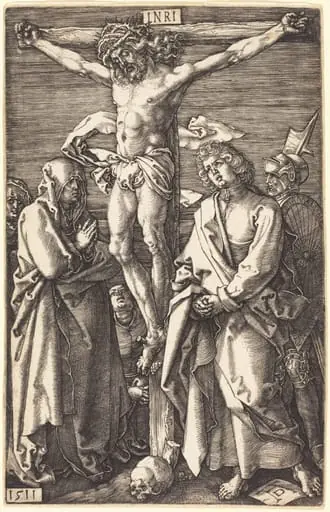
Schongauer’s engraving influenced generations of Northern artists, including Albrecht Dürer, who admired his technical precision. The composition’s emotional clarity and structural balance became a model for later Passion imagery. Though mass-produced, each impression retained a sense of intimacy, ensuring its role in shaping how ordinary believers visualized and internalized the central event of Christian faith.
Artist & collection

Artist
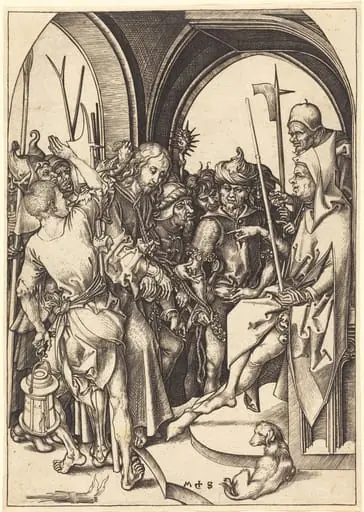
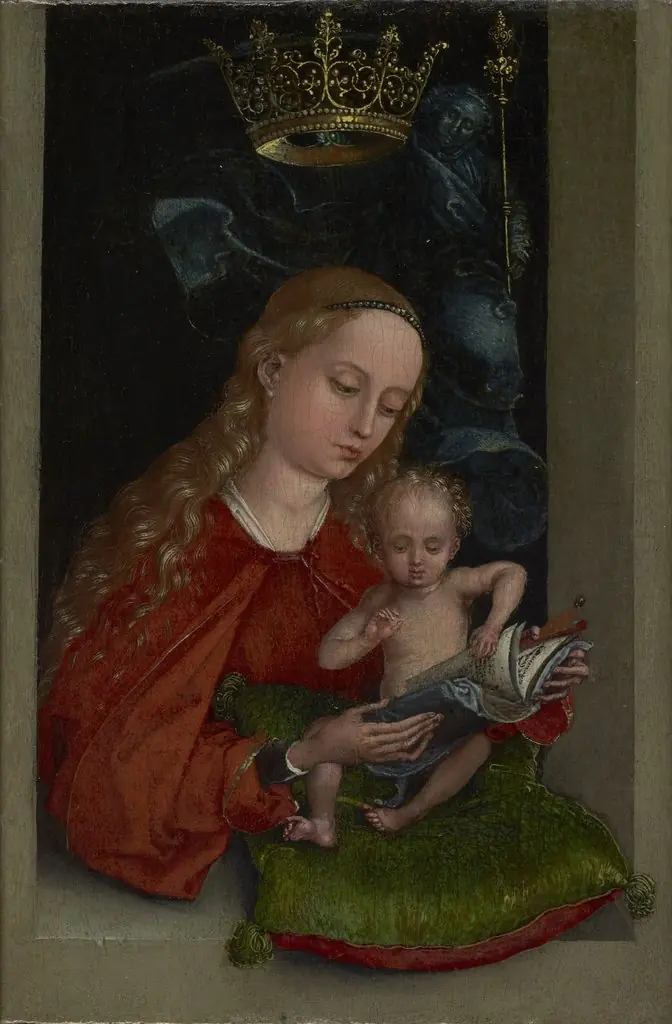
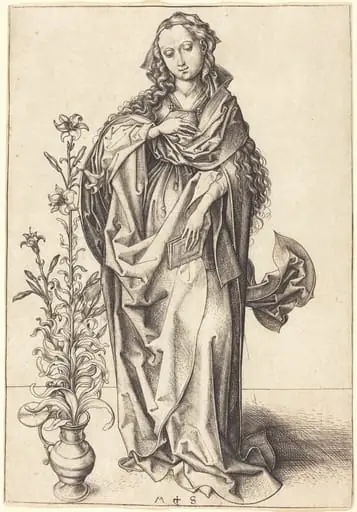
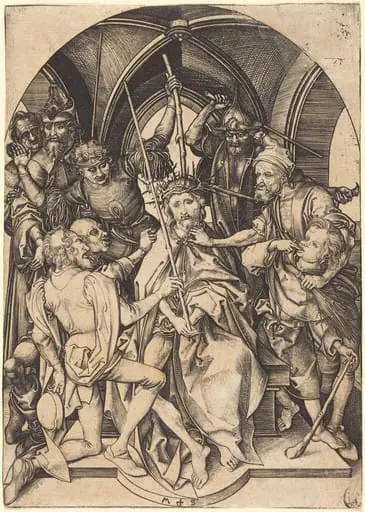
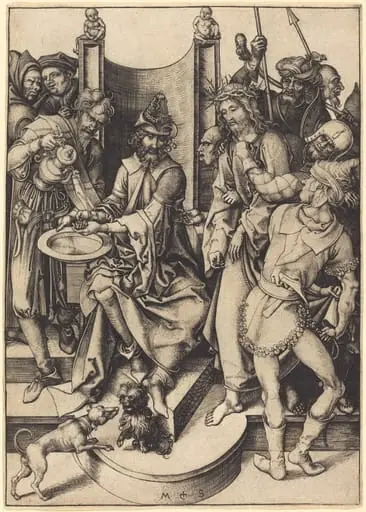
Martin Schongauer, also known as Martin Schön or Hübsch Martin by his contemporaries, was an Alsatian engraver and painter.