Artwork
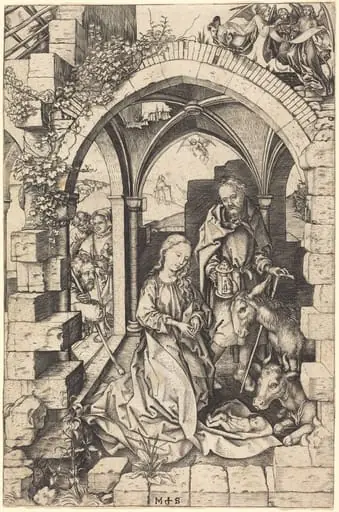
The Life of Christ: The Nativity
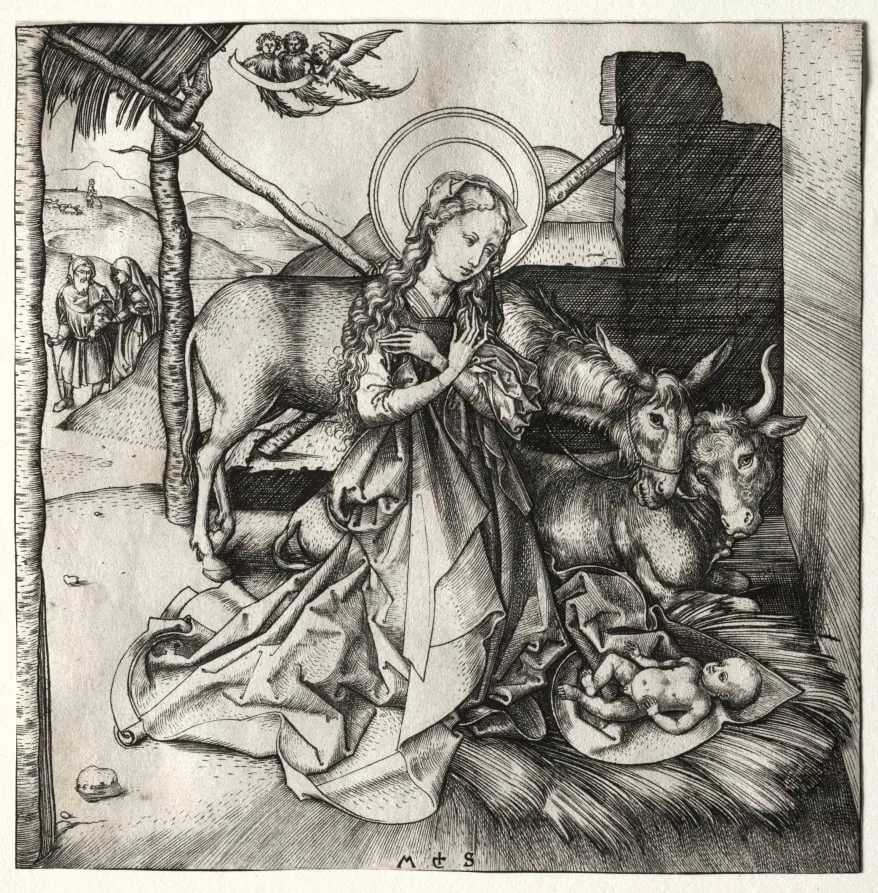
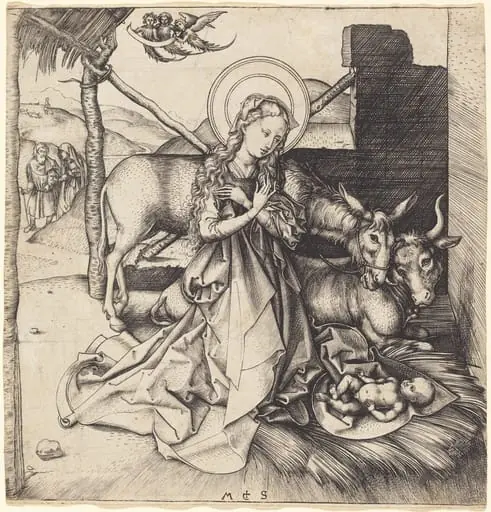
The Life of Christ: The Nativity is a print by the Renaissance artist Martin Schongauer. It dates from 1485 and is held in the collection of the Cleveland Museum of Art.
About this work
Overview
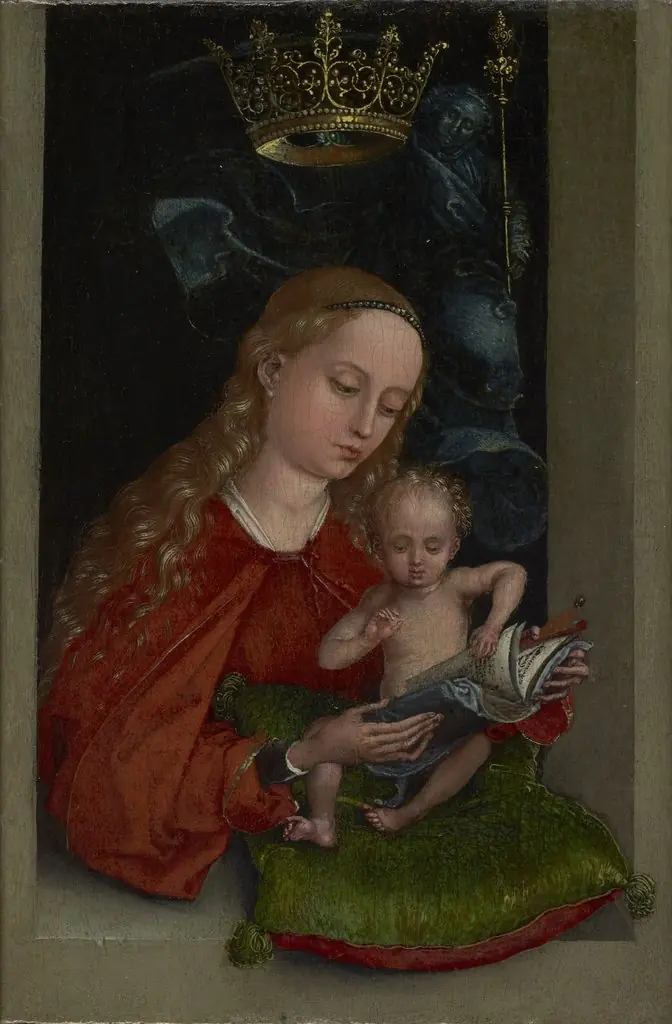
Martin Schongauer was a pioneering engraver who helped establish printmaking as a serious medium for religious narrative in the late 15th century.
Martin Schongauer was a pioneering engraver who helped establish printmaking as a serious medium for religious narrative in the late 15th century. His series on the Life of Christ, including this Nativity scene, demonstrated how intricate line work could convey complex spiritual stories. Unlike painting, engraving allowed multiple impressions, making sacred imagery more widely accessible across Europe.
Subject & Meaning
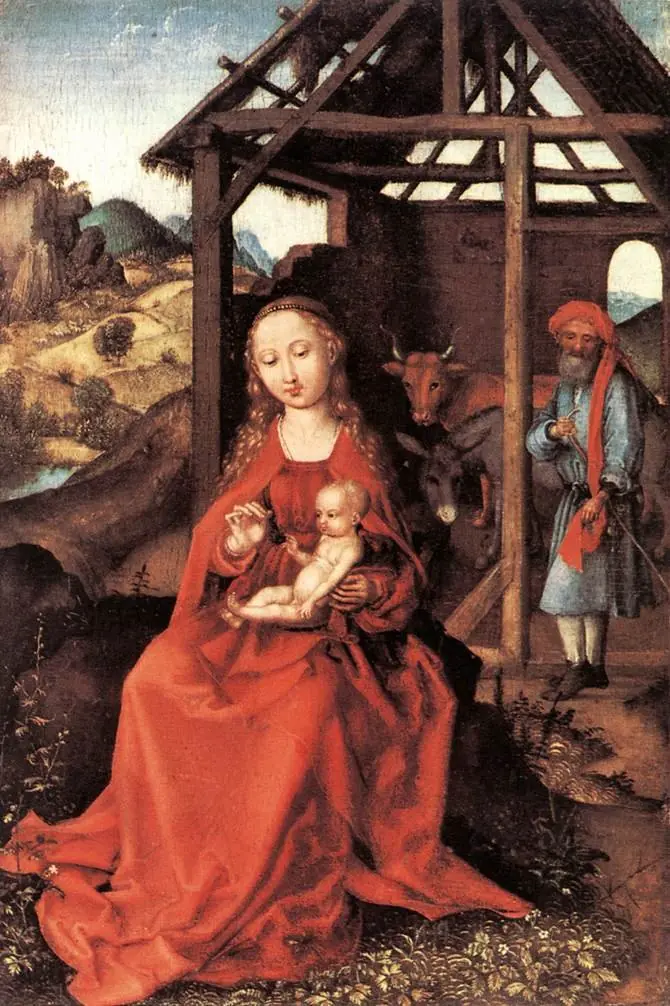
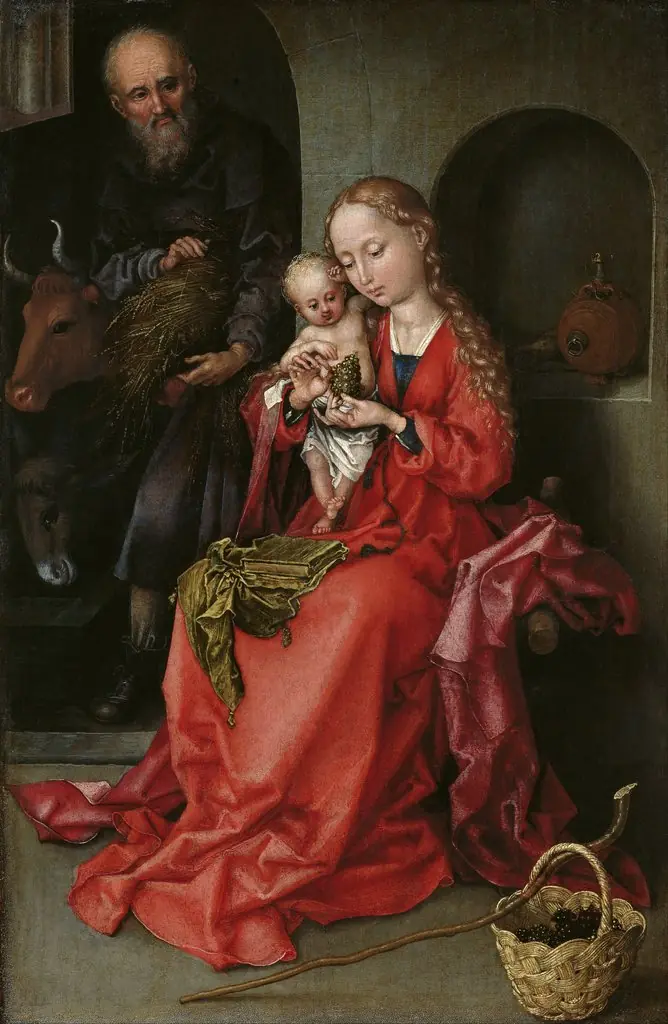
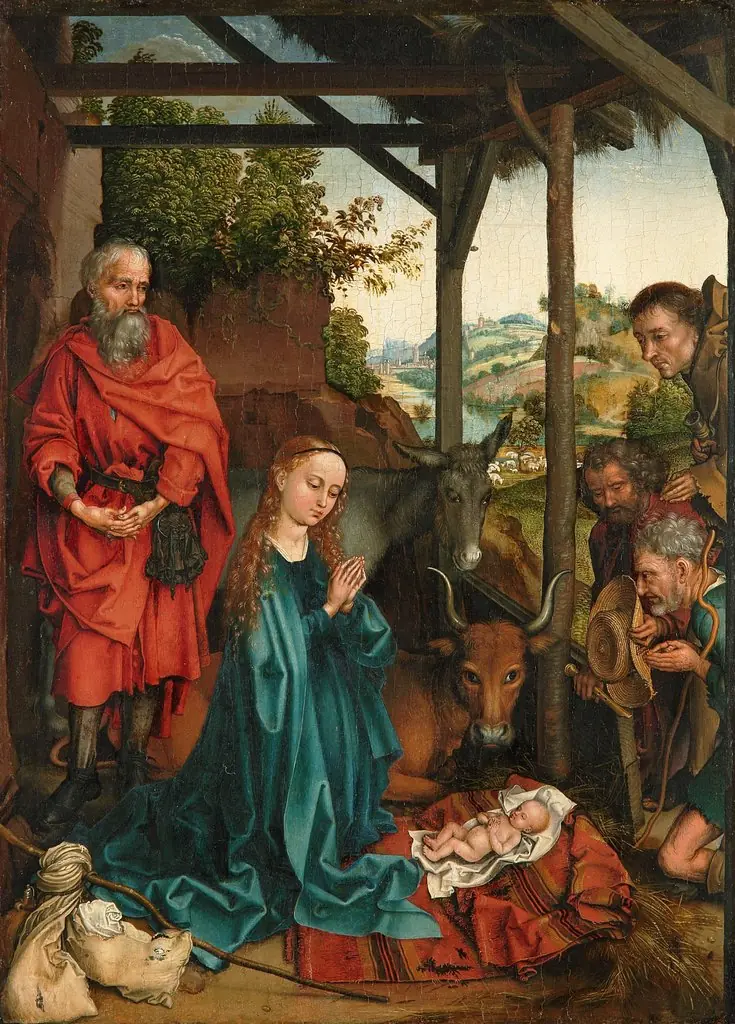
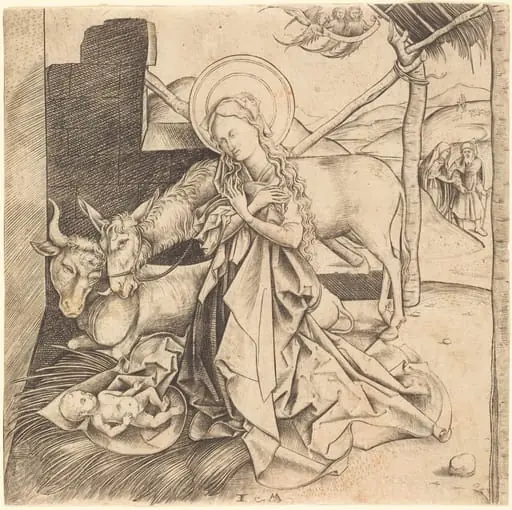
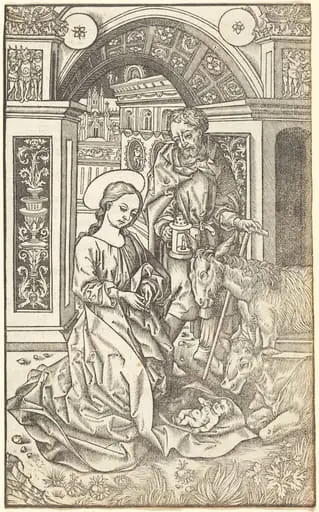
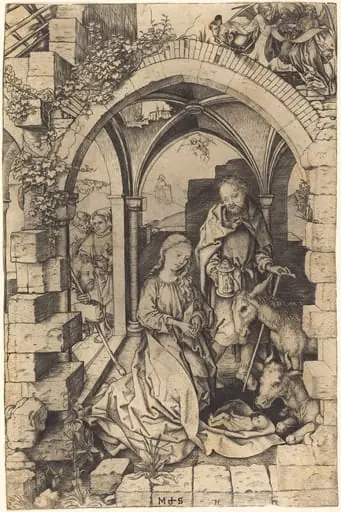
The scene depicts the Virgin Mary kneeling beside the newborn Christ in a modest stable, her gaze fixed on the child as Joseph stands quietly in the background. The simplicity of the setting contrasts with the reverence of the moment, emphasizing humility and divine presence. No grand architecture or celestial fanfare distracts; the focus remains on the intimate bond between mother and child, central to Christian devotion.
Technique & Style
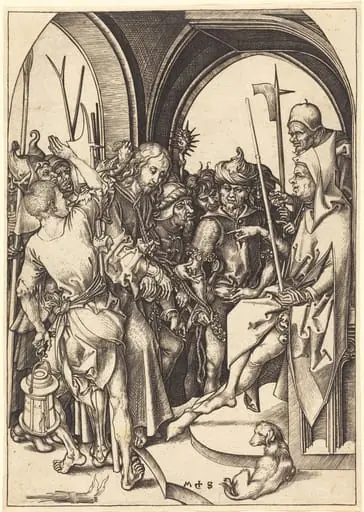
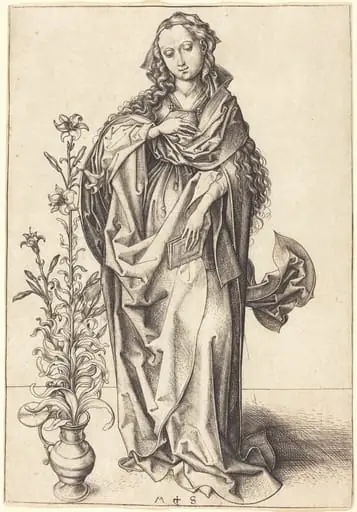
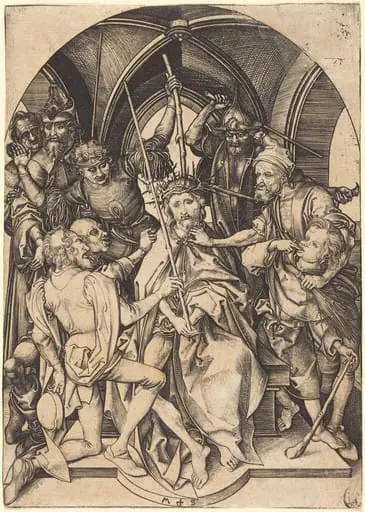
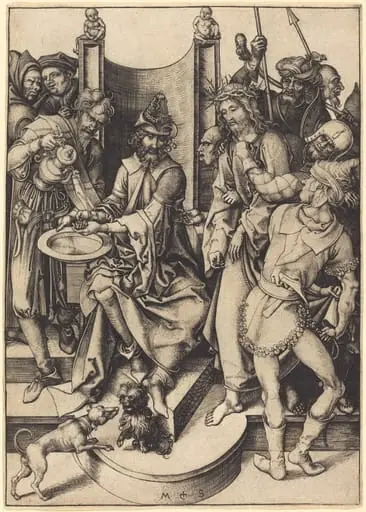
Schongauer carved fine lines directly into a copper plate, using controlled crosshatching and parallel strokes to model form and light. The delicate density of lines creates texture in Mary’s robes and subtle shadows on faces, achieving depth without color. This method required precision and patience, transforming metal into a surface capable of rendering softness, volume, and emotional nuance through ink alone.
History & Provenance
Created around 1470, this engraving was part of a larger cycle illustrating Christ’s life, likely intended for private devotion or teaching. Copies circulated widely, influencing artists across Germany and beyond. Its survival in multiple impressions attests to its popularity and the growing market for religious prints in the decades before the Reformation.
Context
In the late 15th century, printmaking emerged as a new way to disseminate religious imagery beyond church walls. Schongauer’s work responded to a rising demand for personal piety objects, especially among the urban middle class. His Nativity aligned with devotional trends that emphasized emotional connection to biblical events, making the sacred feel immediate and tangible.
Legacy
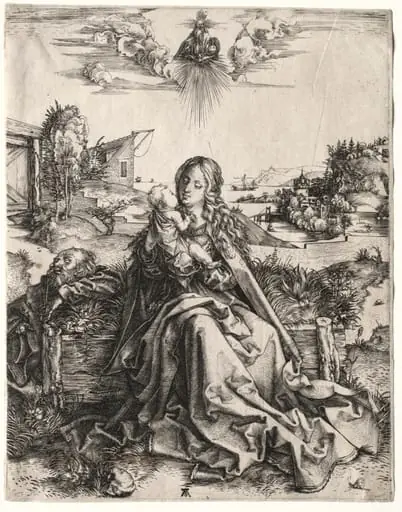
Albrecht Dürer, then a young artist, studied Schongauer’s engravings closely and later produced his own version of the Nativity, acknowledging his predecessor’s influence. Schongauer’s mastery of line set a standard for Northern Renaissance printmaking, inspiring generations to see engraving not merely as reproduction, but as a legitimate art form capable of profound expression.
Artist & collection

Artist
Martin Schongauer, also known as Martin Schön or Hübsch Martin by his contemporaries, was an Alsatian engraver and painter.