Artwork
The Nativity
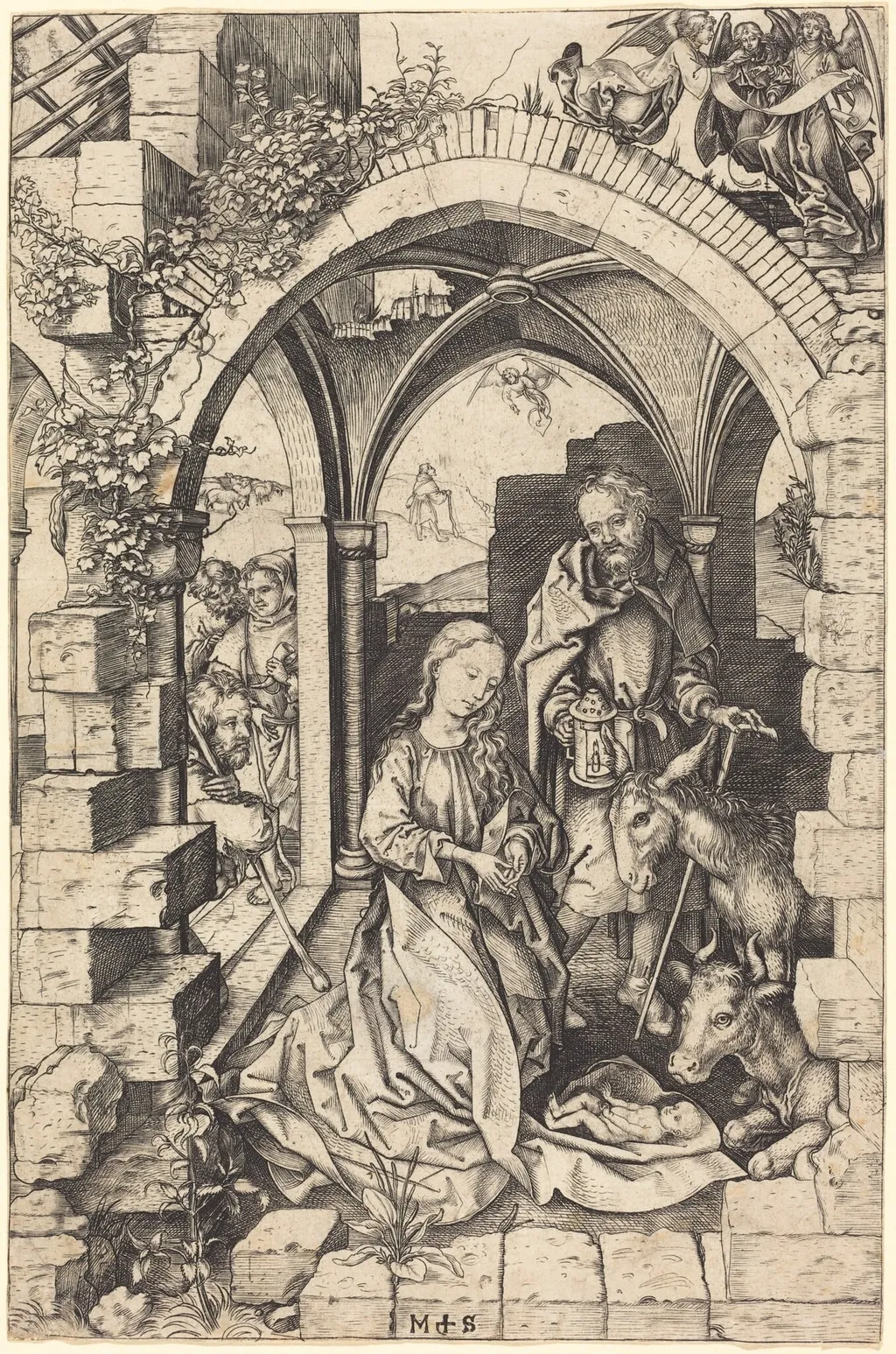
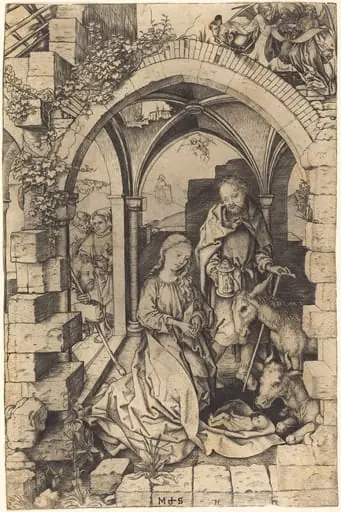
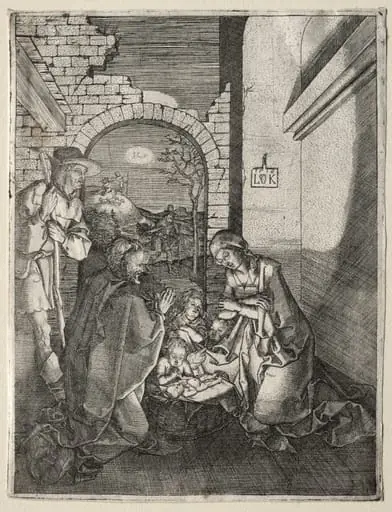
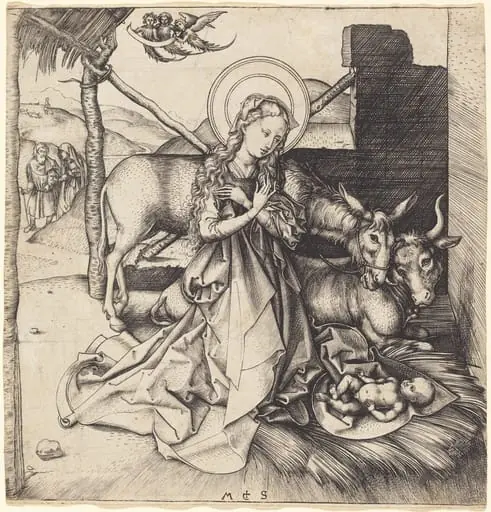
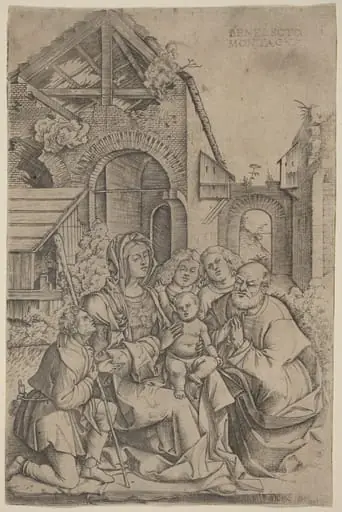
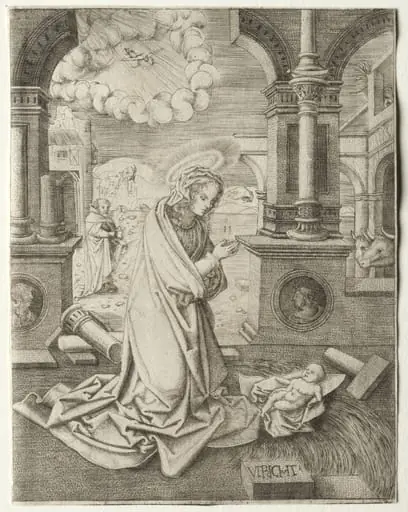
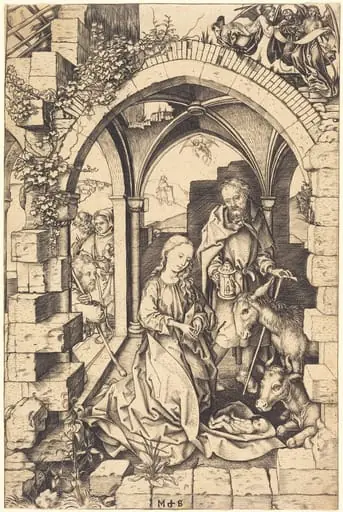
The Nativity is an ink print by the Renaissance artist Martin Schongauer. It dates from 1472 and is held in the collection of the National Gallery of Art.
About this work
Overview
Schongauer’s background in metalwork informed his precise line work, allowing intricate detail and tonal nuance in a format previously dominated by woodcut.
Martin Schongauer’s engraving of The Nativity, dated circa 1472, is one of 116 surviving engravings by the Alsatian artist. It exemplifies his technical command of the medium and stands as a pivotal work in northern European printmaking before Dürer’s rise. Schongauer’s background in metalwork informed his precise line work, allowing intricate detail and tonal nuance in a format previously dominated by woodcut.
Subject & Meaning
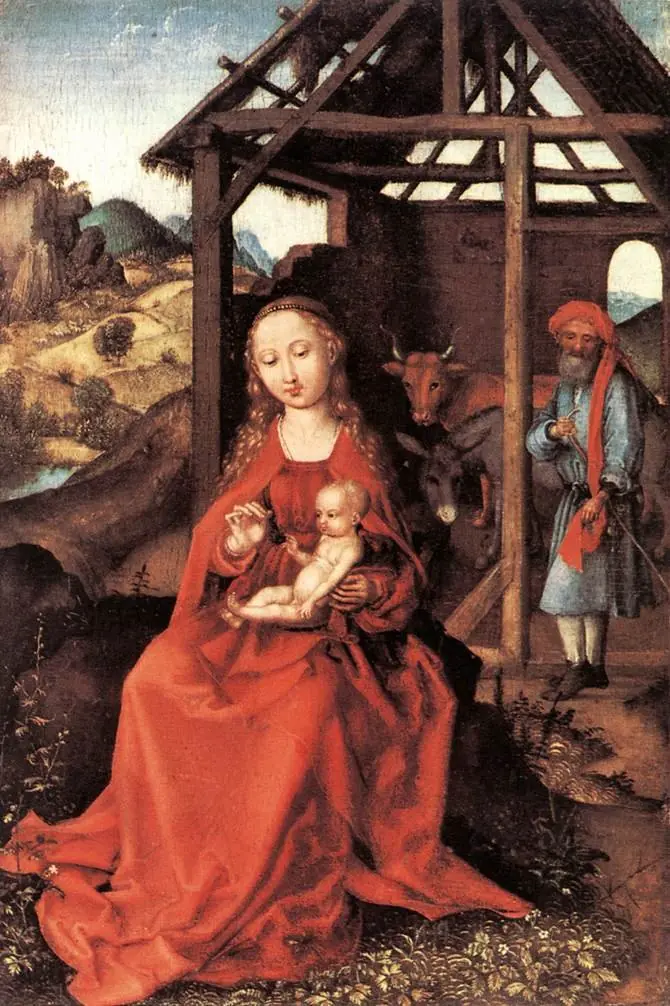
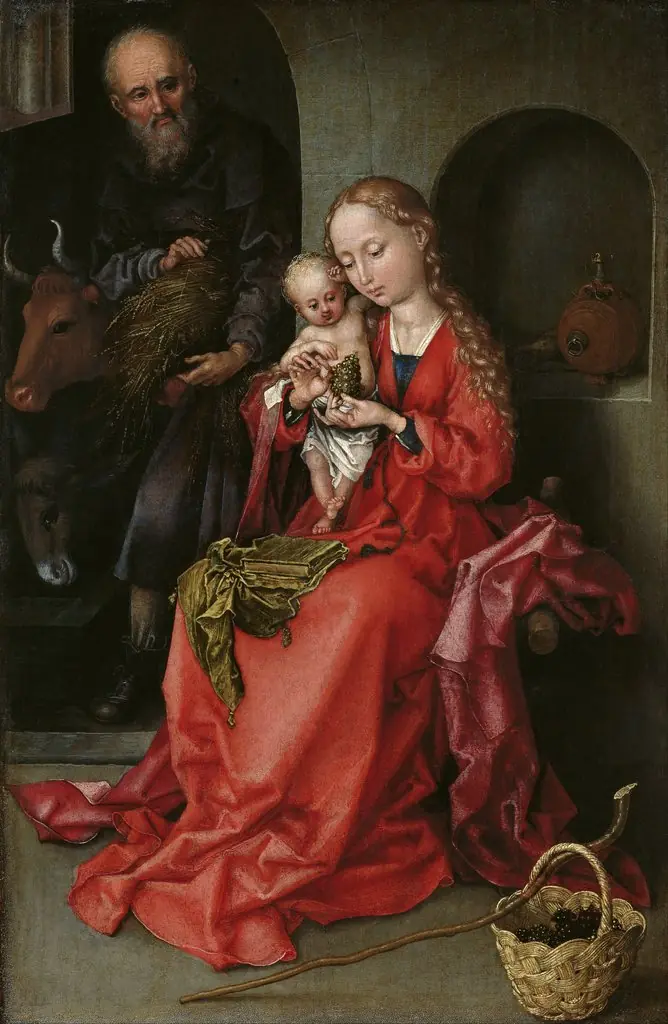
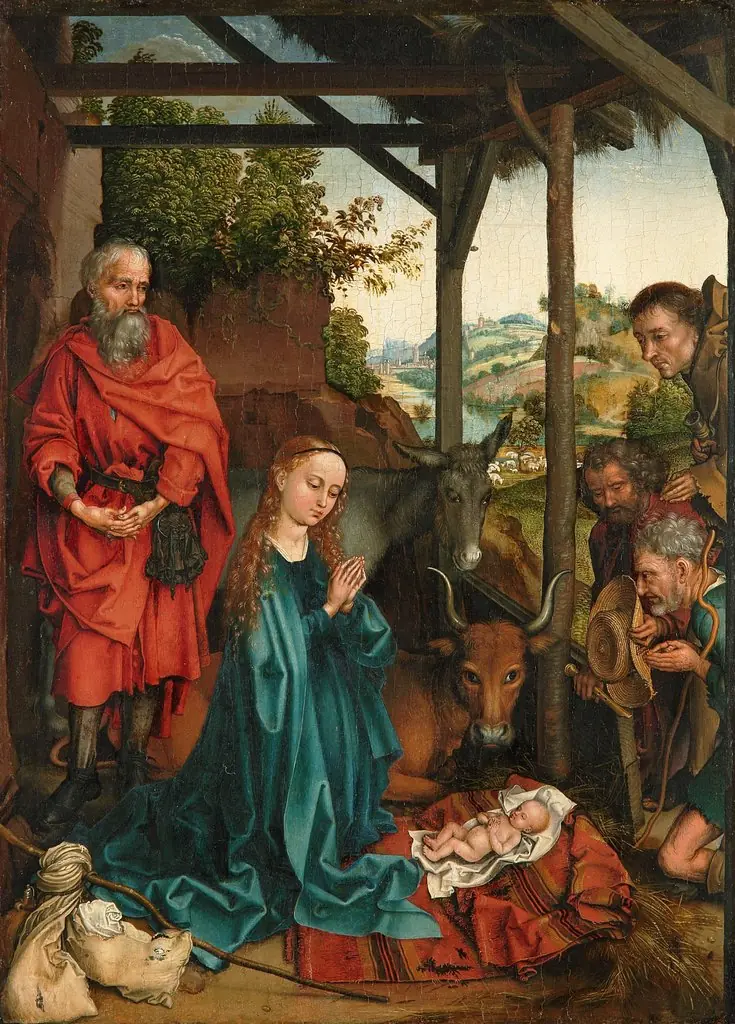
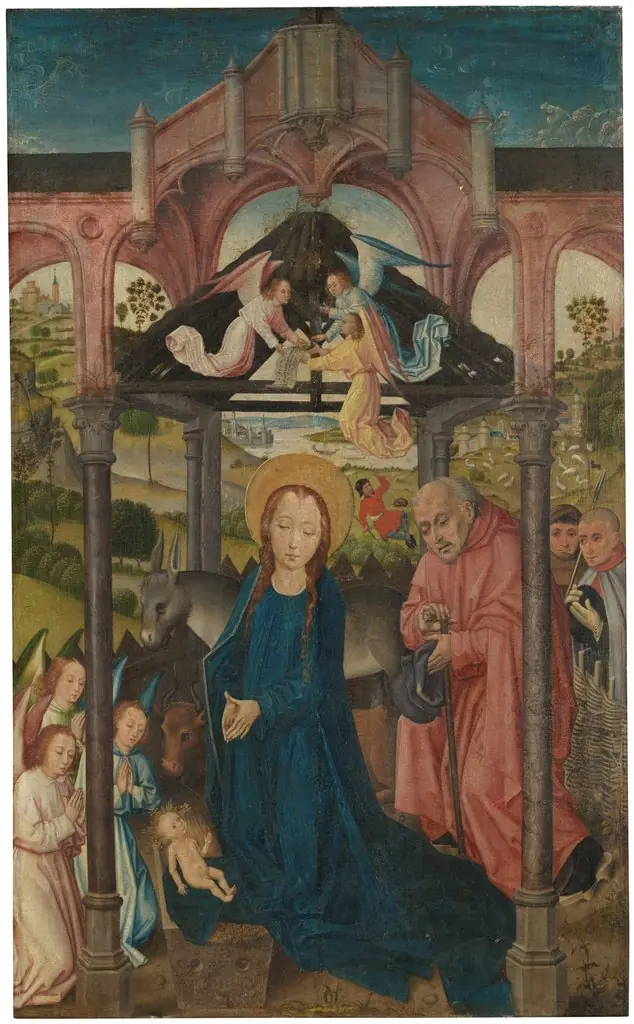
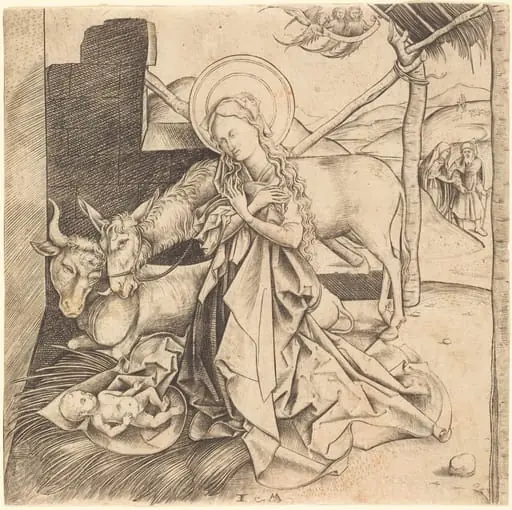
The scene portrays the birth of Christ in a modest stone stable, with Mary and Joseph kneeling beside the infant laid in a manger. Surrounding animals—ox, donkey, sheep—are rendered with close observation, grounding the sacred moment in tangible reality. The composition emphasizes humility and quiet reverence, avoiding overt grandeur to focus on the intimacy of the event, consistent with late medieval devotional ideals.
Technique & Style
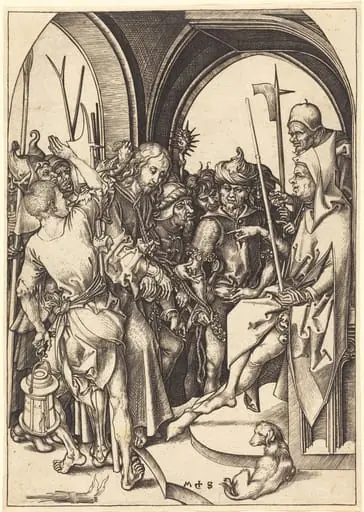
Schongauer employed fine cross-hatching to model form and suggest volume, creating subtle gradations of light and shadow. The stone architecture is defined by precise, parallel lines that build texture and depth, while the figures’ drapery folds are rendered with rhythmic, controlled strokes. His technique avoids the bold contrasts of woodcut, instead achieving a refined, almost metallic luminosity unique to engraving.
History & Provenance
Created during Schongauer’s active years in Colmar, the engraving circulated widely across Europe, influencing later artists including Dürer. Few original impressions survive, but its replication through prints ensured broad dissemination. The work remained in private and ecclesiastical collections, its reputation growing as northern printmaking gained recognition beyond regional boundaries.
Context
In the decades before the Reformation, devotional imagery in print form became increasingly accessible. Schongauer’s engravings met a rising demand for portable religious objects, blending traditional iconography with emerging naturalism. His work reflects the transition from medieval symbolism to Renaissance attention to physical detail, bridging regional styles across the Rhine valley.
Legacy
Schongauer’s Nativity established a visual standard for northern European printmakers. His technical innovations in line and tone became foundational for later engravers. Though overshadowed in popular memory by Dürer, his influence endured in the precision and emotional restraint of 16th-century religious prints, shaping the evolution of the medium for generations.
Artist & collection

Artist
Martin Schongauer, also known as Martin Schön or Hübsch Martin by his contemporaries, was an Alsatian engraver and painter.