Artwork
The Nativity
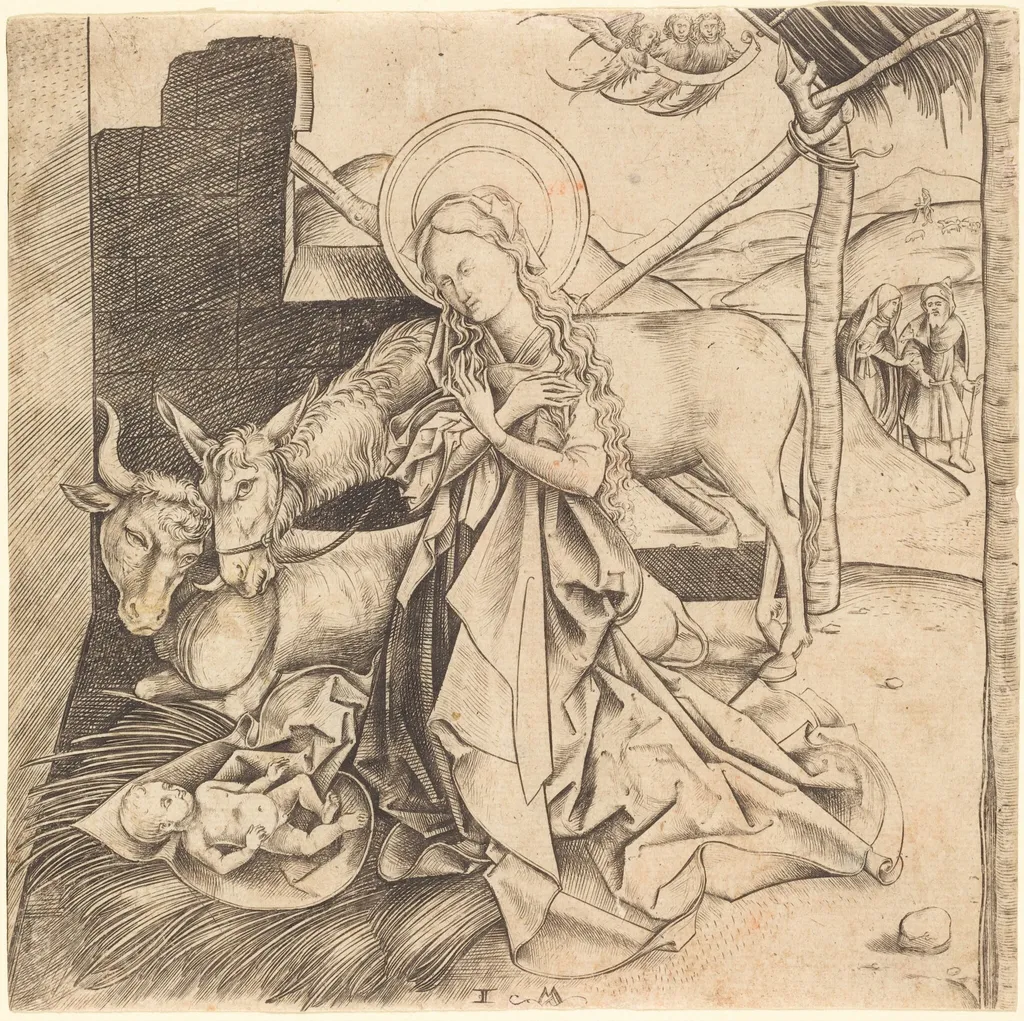
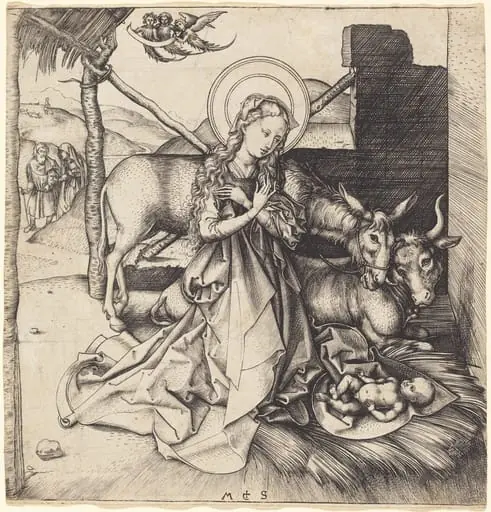
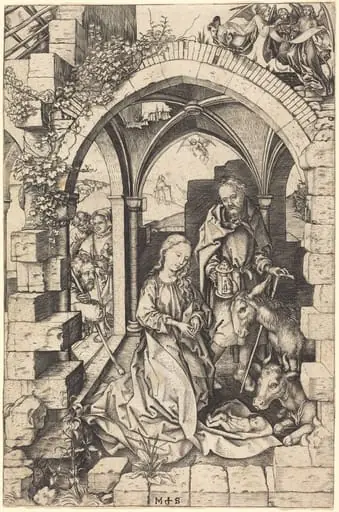
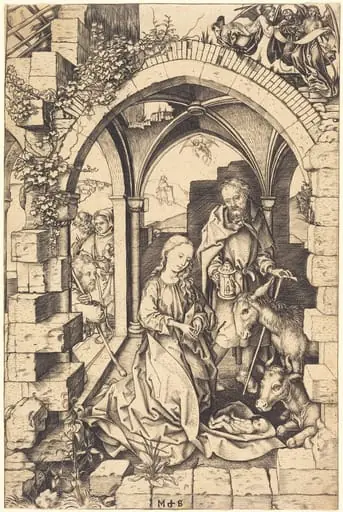
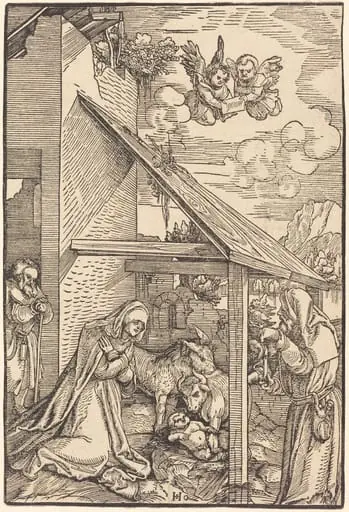
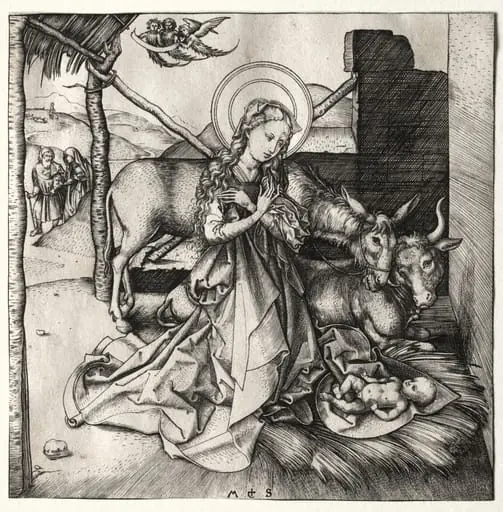
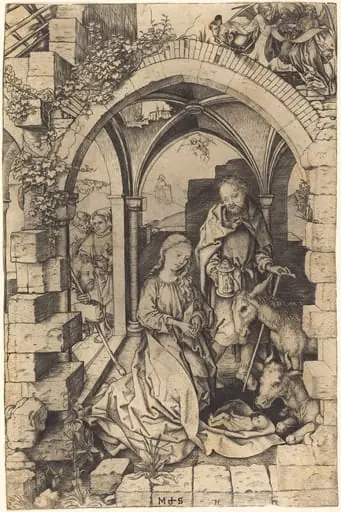
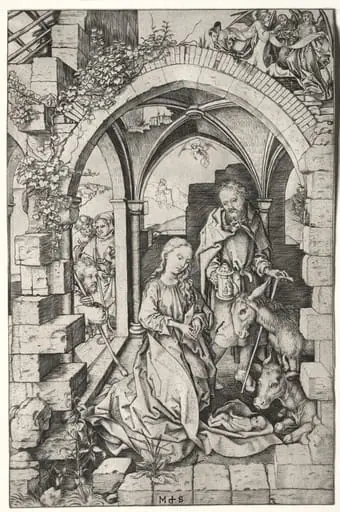
The Nativity is an ink print by the Renaissance artist Israhel van Meckenem. It dates from 1474 and is held in the collection of the National Gallery of Art.
About this work
Overview
The Nativity is an engraving on laid paper created by Israhel van Meckenem in 1474. As a prolific German printmaker and goldsmith, Meckenem was active from 1465 to 1503 and produced over 620 prints, often replicating existing works.
Subject & Meaning
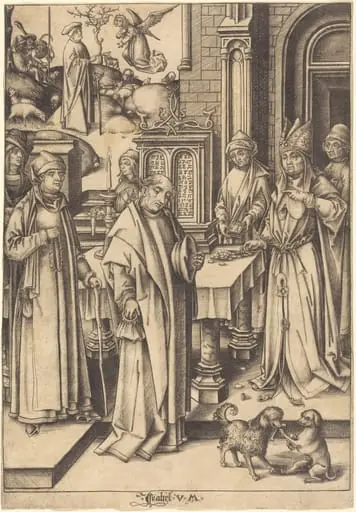
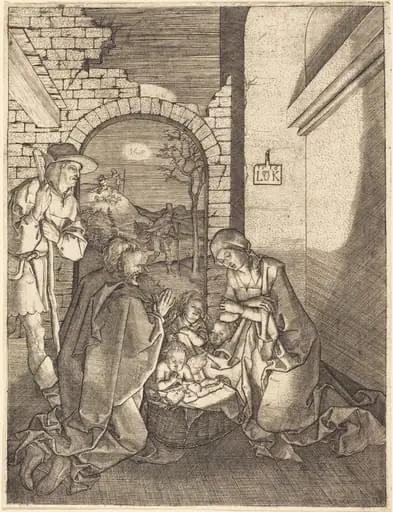
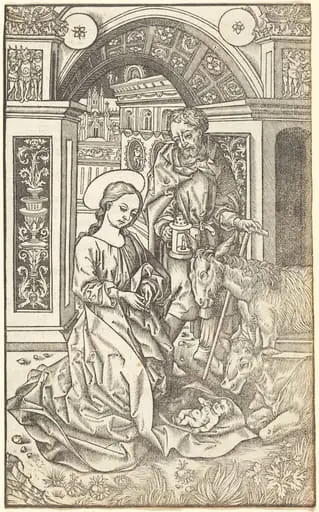
The engraving depicts a nighttime Nativity scene, characteristic of Northern European religious art. Key elements include a woman (likely Mary) holding a swaddled infant (Jesus), accompanied by a cow and sheep. Two figures walk in the background, while a haloed figure on a cross floats in the sky, symbolizing the divine.
Technique & Style
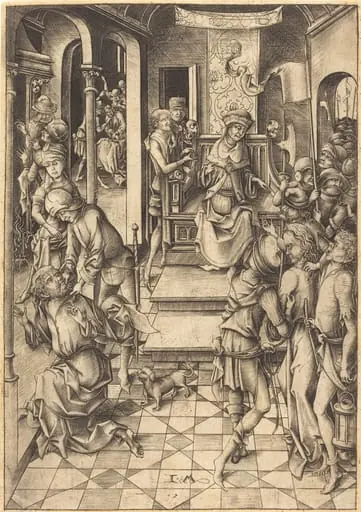
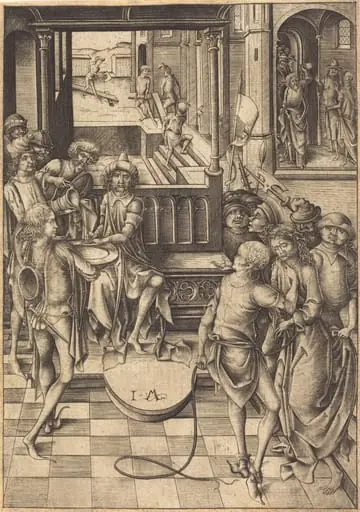
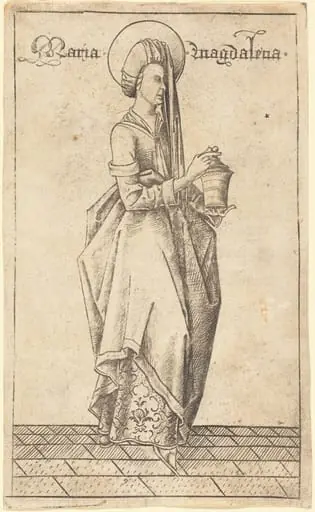
Meckenem employed intricate line work to achieve depth and texture, evident in the detailed rendering of the animals' fur and the woman's robes. Despite the scene's crowded composition, careful placement of figures and objects maintains balance.
History & Provenance
Created in 1474, The Nativity is one of Meckenem's numerous engravings. While specific provenance details are not provided, its style and subject matter align with his practice of producing religious and often copied designs.
Context
Understanding the engraving process, where images were carved into metal plates, provides insight into the technical skill required for Meckenem's work. This technique was central to the widespread production and dissemination of prints during the 15th century.
Artist & collection
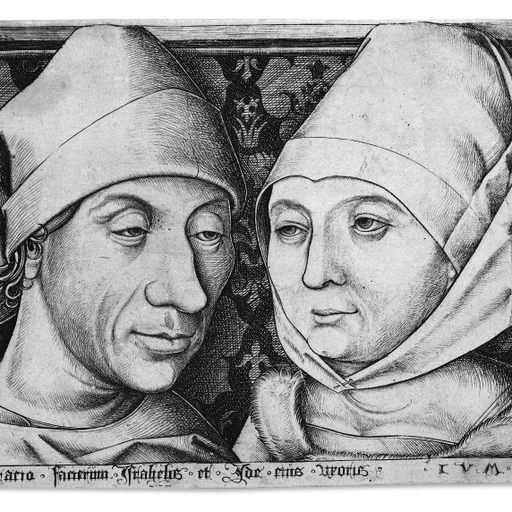
Artist
Israhel van Meckenem (c. 1445 – 10 November 1503), also known as Israhel van Meckenem the Younger, was a German printmaker and goldsmith, perhaps of a Dutch family origin. He was the most prolific engraver of the…